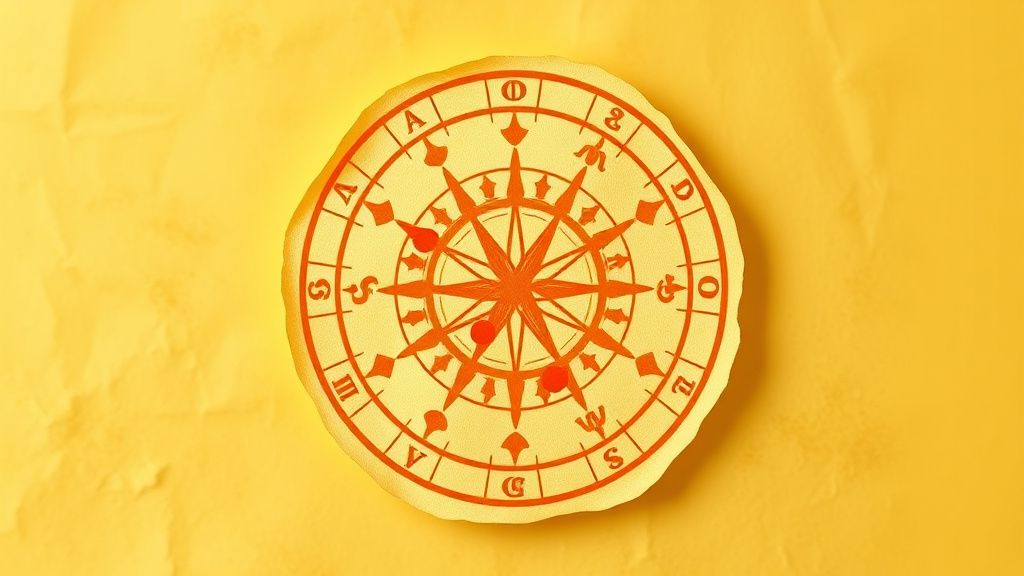
The 27 nakshatras are the lunar mansions of classical Hindu astronomy, each spanning 13°20′ of the ecliptic and grouped into nine sets of three under the navagrahas (Sun, Moon, Mars, Mercury, Jupiter, Venus, Saturn, Rahu, Ketu). The Moon completes one full circuit through the 27 nakshatras in roughly 27.3 days, which is why the system is the basis for the Hindu lunar calendar. The earliest astronomical text listing the nakshatras is the Vedanga Jyotisha (ca. 1400-1200 BCE in dating estimates), with extensive systematisation in Brihat Parashara Hora Shastra. Each nakshatra has a ruling planet, a presiding deity, a symbol, an animal yoni, a gana classification (deva, manushya, or rakshasa), and four padas of 3°20′ each.
The 27 nakshatras with their attributes
- 1. Ashwini (0°-13°20′ Aries): planet Ketu, deity Ashwin Kumaras, symbol horse’s head, gana deva. The first nakshatra, associated with healing and quick beginnings.
- 2. Bharani (13°20′-26°40′ Aries): planet Venus, deity Yama, symbol yoni, gana manushya. Associated with transformation and bearing burdens.
- 3. Krittika (26°40′ Aries-10° Taurus): planet Sun, deity Agni, symbol flame or razor, gana rakshasa. The fire of purification; nurses of Kartikeya.
- 4. Rohini (10°-23°20′ Taurus): planet Moon, deity Brahma (or Prajapati), symbol cart, gana manushya. Krishna’s Janma Nakshatra in tradition.
- 5. Mrigashira (23°20′ Taurus-6°40′ Gemini): planet Mars, deity Soma (Moon), symbol deer’s head, gana deva. The searcher.
- 6. Ardra (6°40′-20° Gemini): planet Rahu, deity Rudra, symbol teardrop, gana manushya. Storm and renewal.
- 7. Punarvasu (20° Gemini-3°20′ Cancer): planet Jupiter, deity Aditi, symbol quiver of arrows, gana deva. Rama’s Janma Nakshatra in Valmiki’s reading.
- 8. Pushya (3°20′-16°40′ Cancer): planet Saturn, deity Brihaspati, symbol cow’s udder, gana deva. Considered the most auspicious nakshatra; the “nourisher.”
- 9. Ashlesha (16°40′-30° Cancer): planet Mercury, deity Nagas, symbol coiled serpent, gana rakshasa. The embrace, with serpent-energy associations.
- 10. Magha (0°-13°20′ Leo): planet Ketu, deity Pitrs (ancestors), symbol royal throne, gana rakshasa. Regulus is the principal star.
- 11. Purva Phalguni (13°20′-26°40′ Leo): planet Venus, deity Bhaga, symbol hammock, gana manushya. Pleasure and rest.
- 12. Uttara Phalguni (26°40′ Leo-10° Virgo): planet Sun, deity Aryaman, symbol legs of a bed, gana manushya. Marriage and partnership; Sita’s Janma Nakshatra in some readings.
- 13. Hasta (10°-23°20′ Virgo): planet Moon, deity Savitr, symbol hand, gana deva. Skilled work; the hand that grasps.
- 14. Chitra (23°20′ Virgo-6°40′ Libra): planet Mars, deity Vishwakarma, symbol pearl, gana rakshasa. Beauty and craft.
- 15. Swati (6°40′-20° Libra): planet Rahu, deity Vayu, symbol shoot in wind, gana deva. Independence and movement.
- 16. Vishakha (20° Libra-3°20′ Scorpio): planet Jupiter, deity Indra-Agni, symbol triumphal arch, gana rakshasa. Goal-orientation; Sita’s Janma Nakshatra in a parallel tradition.
- 17. Anuradha (3°20′-16°40′ Scorpio): planet Saturn, deity Mitra, symbol lotus, gana deva. Devotion and friendship.
- 18. Jyeshtha (16°40′-30° Scorpio): planet Mercury, deity Indra, symbol circular amulet, gana rakshasa. The elder; Antares is the principal star.
- 19. Mula (0°-13°20′ Sagittarius): planet Ketu, deity Nirrti, symbol tied roots, gana rakshasa. Root and dissolution.
- 20. Purva Ashadha (13°20′-26°40′ Sagittarius): planet Venus, deity Apas (waters), symbol elephant tusk, gana manushya. Invincibility through water.
- 21. Uttara Ashadha (26°40′ Sagittarius-10° Capricorn): planet Sun, deity Vishvedevas, symbol elephant tusk, gana manushya. Universal victory.
- 22. Shravana (10°-23°20′ Capricorn): planet Moon, deity Vishnu, symbol ear, gana deva. Listening and learning.
- 23. Dhanishtha (23°20′ Capricorn-6°40′ Aquarius): planet Mars, deity Vasus, symbol drum, gana rakshasa. Rhythm and wealth.
- 24. Shatabhisha (6°40′-20° Aquarius): planet Rahu, deity Varuna, symbol empty circle, gana rakshasa. The hundred healers.
- 25. Purva Bhadrapada (20° Aquarius-3°20′ Pisces): planet Jupiter, deity Aja Ekapada, symbol funeral cot, gana manushya. Mystical purification.
- 26. Uttara Bhadrapada (3°20′-16°40′ Pisces): planet Saturn, deity Ahirbudhnya, symbol twins, gana manushya. Serpent of the depths.
- 27. Revati (16°40′-30° Pisces): planet Mercury, deity Pushan, symbol fish, gana deva. The shepherd; completion of the lunar cycle.
The three gana classifications
- Deva (divine) gana: Ashwini, Mrigashira, Punarvasu, Pushya, Hasta, Swati, Anuradha, Shravana, Revati. Nine nakshatras characterised by gentleness, devotion, and harmony.
- Manushya (human) gana: Bharani, Rohini, Ardra, Purva Phalguni, Uttara Phalguni, Purva Ashadha, Uttara Ashadha, Purva Bhadrapada, Uttara Bhadrapada. Nine nakshatras of balanced human temperament.
- Rakshasa (demonic) gana: Krittika, Ashlesha, Magha, Chitra, Vishakha, Jyeshtha, Mula, Dhanishtha, Shatabhisha. Nine nakshatras of intensity, fierceness, and unconventional power.
Why the system uses 27 instead of 28
The Moon’s sidereal period is approximately 27.32 days, which is closer to 27 than to 28. The Vedanga Jyotisha and most classical sources work with 27. A 28th nakshatra called Abhijit (Vega) is recognised in some special contexts, such as the muhurta of the same name and certain shanti rituals, but it is not part of the standard 27-element table used for daily panchang computation. Some older Vedic and Buddhist sources do use 28; the Hindu astrological mainstream settled on 27.
For what it’s worth, the practical reason 27 wins is computational. The Moon’s mean daily motion is 13°10′, which means each nakshatra is occupied for roughly 24 hours of mean motion. Twenty-seven such mansions tile the 360° ecliptic exactly. Twenty-eight would require irregular spacing.
Common questions
How is the Janma Nakshatra determined?
The Janma Nakshatra is the nakshatra in which the Moon was located at the moment of birth. Birth date, time to the minute, and place are needed. The Moon’s longitude is computed using the Lahiri ayanamsa (the standard sidereal correction used by most Indian astrologers), and the resulting longitude maps to one of the 27 nakshatras and one of its four padas.
What does the ruling planet represent?
The ruling planet (Nakshatra Lord or Nakshatra Swami) determines the Vimshottari Dasha sequence: the major life-period schedule used in Vedic astrology. A child born under Pushya begins life in a Saturn dasha because Pushya’s lord is Saturn. The dasha sequence repeats every 120 years (Ketu 7 + Venus 20 + Sun 6 + Moon 10 + Mars 7 + Rahu 18 + Jupiter 16 + Saturn 19 + Mercury 17 = 120).
Why are some nakshatras called Gandanta?
Gandanta is the junction between a water sign and a fire sign in the zodiac: end of Cancer to start of Leo (end of Ashlesha to start of Magha), end of Scorpio to start of Sagittarius (end of Jyeshtha to start of Mula), and end of Pisces to start of Aries (end of Revati to start of Ashwini). Births in the Gandanta minutes are traditionally considered to require Shanti rituals.
A limitation worth noting
The nakshatra system is an interpretive tradition of classical Jyotisha with substantial textual depth (Brihat Parashara Hora Shastra, Phaladeepika, Saravali, Jataka Parijata). The astronomical calculation of which nakshatra the Moon occupies at any moment is exact; the personality, career, and life-event readings derived from that occupation are tradition-based and not empirically validated. Readers should treat nakshatra-derived character interpretations as classical heuristics, not deterministic predictions.
Master reference for the full nakshatra table: Nakshatra on Wikipedia.
