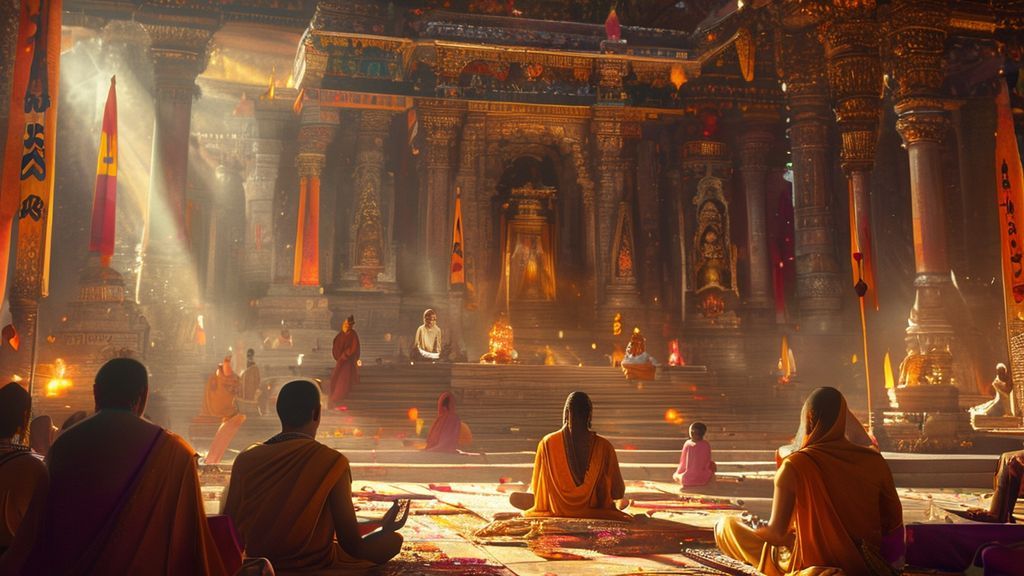
Hindus can indeed meditate using apps, which serve as valuable tools for guiding dhyana (meditation) in the modern age. While rooted in ancient Sanatan Dharma practices like Ashtanga Yoga, digital platforms offer accessibility to breathwork, guided visualizations, and mantra chanting, complementing but not replacing the profound wisdom of traditional Guru-shishya parampara.
| Attribute | Details |
|---|---|
| Aspect of Dharma | Dhyana (Meditation) – A core practice for mental clarity and spiritual advancement. |
| Core Practice | Chitta Vritti Nirodha (Cessation of mind-fluctuations) to attain inner peace and self-realization. |
| Traditional Context | Ashramas, Gurukulas, Tapasyā performed by Rishis and Sadhakas. |
| Key Scriptural Basis | Patanjali Yoga Sutras, Bhagavad Gita (Dhyana Yoga), various Upanishads, Dharma Shastras. |
The Sanatan Perspective on Dhyana and Modernity
Dhyana, or meditation, stands as a cornerstone of Sanatan Dharma, a profound spiritual discipline aimed at quieting the incessant chatter of the mind (Chitta Vritti Nirodha) to perceive the true nature of the Self, the Atman. From the ancient Rishis who meditated in dense forests to the earnest householders seeking solace, the quest for inner stillness has remained constant. In our Kali Yuga, where distractions abound, the question naturally arises: Can technology, specifically meditation apps, genuinely aid this sacred pursuit? Sanatan Dharma, ever-adaptable and timeless, embraces tools that facilitate righteous living and spiritual growth, provided they do not compromise the fundamental principles of purity (Shaucha), devotion (Bhakti), and proper conduct (Dharma).
The Ancient Roots of Meditation in Our Itihasas and Shastras
The practice of meditation is deeply interwoven into the fabric of Vedic and Puranic narratives. The concept of Tapasya, austere meditation and penance, is lauded throughout our scriptures. Sage Vishwamitra performed rigorous Tapasya for thousands of years, as detailed in the Valmiki Ramayana, to attain the status of a Brahmarishi. Similarly, Lord Shiva is often depicted as the supreme Yogi, immersed in profound Dhyana on Mount Kailash, embodying the ultimate state of meditative absorption. The Saptarishis, the seven divine sages, attained their wisdom and spiritual powers through intense meditation, guiding humanity through their divine insights.
The philosophical underpinnings of Dhyana are meticulously laid out in the Upanishads, which teach the unity of Atman and Brahman, realizable through contemplative practices. The Bhagavad Gita, a foundational text, dedicates an entire chapter, the Sixth Chapter, to Dhyana Yoga. Lord Krishna instructs Arjuna on the correct posture, control of the senses (Indriya Nigraha), and the one-pointed focus of the mind (Ekagrata) to achieve inner tranquility and connect with the divine. He states, “योगा युज्यते चेतसः” (Yoga yujyate chetasah) – “Yoga is attained when the mind is controlled.”
Patanjali’s Yoga Sutras provide the most systematic exposition of Dhyana within the framework of Ashtanga Yoga. Dhyana is the seventh limb, preceded by Yama (ethical restraints), Niyama (observances), Asana (posture), Pranayama (breath control), Pratyahara (withdrawal of senses), and Dharana (concentration). The Sutras define Dhyana as “तत्र प्रत्ययैकतानता ध्यानम्” (Tatra pratyayaikatānatā dhyānam) – “The continuous flow of the mind on that one point is Dhyana.” These ancient principles form the bedrock upon which any modern meditation aid must be evaluated.
The Science of Sanatan Meditation & Digital Facilitation
Sanatan Dharma’s understanding of the mind predates modern psychology by millennia. The practice of Dhyana is not merely spiritual; it’s a sophisticated science of consciousness. Ancient Rishis recognized the profound impact of breath on the mind (Pranayama) and the stages of mental absorption. Modern science now validates many of these insights, observing changes in brainwave patterns (alpha, theta, gamma states), reduction in stress hormones like cortisol, enhanced neuroplasticity, and improved emotional regulation in meditators.
While traditional Dhyana involves a Guru’s direct guidance, meditation apps can act as a contemporary tool to facilitate initial steps into this profound science. They can provide structured guidance for correct posture, timed breathing exercises, and consistent reminders—elements crucial for establishing a meditation routine. Apps can deliver calming frequencies (like binaural beats, though this should be used cautiously and not seen as a substitute for mantra), guided visualizations rooted in Vedic concepts, and a framework for tracking progress, which can be particularly beneficial for beginners struggling with consistency. They democratize access to basic meditative instruction, bringing the foundational principles of Dhyana to a broader audience, thereby helping to preserve and propagate Sanatan wisdom.
Traditional Dhyana Practice (Dhyana Vidhi) and App Integration
The traditional path of Dhyana is a methodical journey. Here’s how an app can potentially assist:
- Yama & Niyama: These ethical precepts are foundational. While an app cannot instill these, personal reflection guided by Sanatan teachings, often found within reputable apps or websites like Hindutva.online, can help align one’s conduct.
- Asana (Posture): Apps can offer visual guides and verbal cues for maintaining a stable and comfortable meditative posture, such as Sukhasana (easy pose) or Padmasana (lotus pose), ensuring the spine is erect and relaxed.
- Pranayama (Breath Control): Many apps provide guided breathing exercises (e.g., Anulom Vilom, Bhramari) with timers and visual cues, helping practitioners regulate their breath—a crucial step in calming the mind.
- Pratyahara (Sensory Withdrawal): Guided meditations in apps often encourage detaching from external stimuli, drawing attention inwards. Calming ambient sounds or silence options aid this process.
- Dharana (Concentration): Apps frequently offer focal points such as a mantra, the breath, or an internal visualized deity (Ishta Devata). Timed sessions help build the capacity for sustained concentration.
- Dhyana (Meditation Proper): After establishing Dharana, the mind naturally flows in uninterrupted focus. Apps can provide continued gentle guidance, timers, or simply silence, allowing the practitioner to deepen their meditative state. While true Dhyana transcends mechanical guidance, apps serve as excellent training wheels.
Sacred Mantras and Chants for Dhyana
Mantra Japa is an integral part of Sanatan meditation, purifying the mind and elevating consciousness. Apps can assist by providing audio for correct pronunciation and rhythmic repetition. Here are some fundamental mantras:
- Om (ॐ): The primordial sound, representing the entirety of the cosmos and the ultimate reality, Brahman. Chanting Om calms the nervous system and unifies mind-body-spirit.
- Gayatri Mantra (ॐ भूर्भुवः स्वः तत्सवितुर्वरेण्यं भर्गो देवस्य धीमहि धियो यो नः प्रचोदयात् ॥): A universal prayer for enlightenment and wisdom, found in the Rig Veda (Mandala 3, Hymn 62, Verse 10). It invokes the illuminating power of the Sun (Savita) to inspire our intellect.
- Mahamrityunjaya Mantra (ॐ त्र्यम्बकं यजामहे सुगन्धिं पुष्टिवर्धनम्। उर्वारुकमिव बन्धनान् मृत्योर्मुक्षीय माऽमृतात्॥): A powerful mantra for longevity, healing, and freedom from the cycle of birth and death, dedicated to Lord Shiva.
- Ishta Devata Mantras: Chanting the name or a specific mantra of one’s chosen deity (e.g., “Om Namah Shivaya” for Shiva, “Om Namo Bhagavate Vasudevaya” for Vishnu, “Om Aim Hrim Klim Chamundaye Vichche” for Durga) deepens devotion and provides a focused point for meditation.
Dos and Don’ts for Using Meditation Apps
- Dos:
- Maintain sanctity: Approach the app as a tool for a sacred practice, not mere entertainment.
- Find a quiet space: Ensure your environment is conducive to undisturbed meditation.
- Be consistent: Regularity is key. Use the app to build a daily habit.
- Set intentions (Sankalpa): Begin each session with a clear spiritual purpose.
- Seek authenticity: Choose apps that align with genuine Sanatan principles and are free from syncretic or New Age distortions.
- Eventually seek a Guru: Apps are a bridge; the ultimate guidance comes from a realized teacher.
- Don’ts:
- Treat it as a casual pastime: Meditation is a serious spiritual discipline.
- Substitute for personal effort: The app is a guide; your inner work is paramount.
- Become overly reliant: Develop your internal capacity to meditate without constant external prompting.
- Neglect traditional wisdom: Always verify app content against scriptural teachings.
- Use apps for distraction: Avoid using them as an escape; engage with the practice mindfully.
Frequently Asked Questions
Are meditation apps a substitute for a Guru?
No, meditation apps are not a substitute for a living Guru. A Guru offers personalized guidance, clarifies doubts, corrects errors, and transmits spiritual energy (Shaktipat) that no app can replicate. Apps are excellent for foundational learning and consistency, but the profound depths of Dhyana require the direct wisdom and grace of a realized teacher, embodying the Guru-shishya parampara.
Can apps genuinely help beginners in Sanatan meditation?
Absolutely. For beginners, apps can demystify the initial stages of meditation, providing structure for posture, breathwork, and concentration. They help establish a routine, reduce initial anxieties about ‘doing it wrong,’ and introduce various techniques in an accessible format, making the journey into Dhyana less daunting.
How can one choose a suitable meditation app from a Sanatan perspective?
When selecting an app, prioritize those that offer content rooted in authentic Vedic and Yogic traditions. Look for apps that emphasize traditional mantras, offer guidance on Pranayama and Asana, and encourage self-reflection rather than passive consumption. Examine the credentials of the creators or the sources of their guided meditations to ensure they align with Sanatan Dharma principles. Reputable organizations sometimes offer their own app-based resources.
Dharmic Significance: Embracing Tools for Sanatan Revival
The ability of Hindus to meditate using apps underscores the timeless and adaptable nature of Sanatan Dharma. Our tradition has always embraced appropriate tools that foster Dharma (righteousness), Artha (prosperity), Kama (desire), and Moksha (liberation). In an increasingly digital world, these apps act as gateways, introducing ancient wisdom to new generations and making spiritual practice accessible to those unable to attend physical ashrams or classes. By leveraging technology mindfully, we can ensure that the profound benefits of Dhyana continue to enrich lives globally, preserving the spiritual heritage meticulously documented on platforms like Hindutva.online for future seekers. It is a testament to the enduring strength of Sanatan Dharma to maintain its essence while evolving in its expression, guiding humanity towards inner peace and self-realization.
