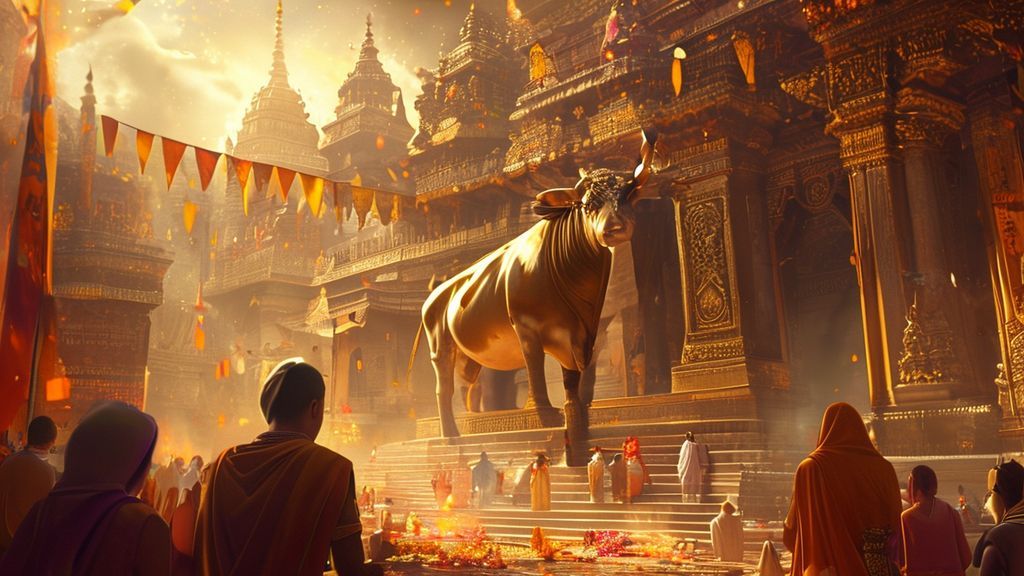
Cow in a dream, known as Gau Mata, is profoundly auspicious in Sanatan Dharma, symbolizing prosperity, fertility, divine nourishment, and the very embodiment of Dharma. Such dreams often signify impending blessings, spiritual growth, maternal protection, and a deep connection to the cosmic energies that sustain life, urging reflection on one’s actions towards purity and dharma.
| Attribute | Details |
|---|---|
| Deity/Manifestation | Kamadhenu (Surabhi), Gau Mata, wish-fulfilling divine cow |
| Sacred Status | Mother Goddess, embodiment of all deities (Devi, Deva), purity, prosperity |
| Key Symbolism | Nourishment, fertility, abundance, dharma, maternal love, selflessness |
| Scripture Reference | Vedas (Rigveda, Atharvaveda), Puranas (Vishnu Purana, Brahma Vaivarta Purana), Mahabharata |
Introduction: Gau Mata – The Cosmic Mother in Sanatan Dharma
In the vast tapestry of Sanatan Dharma, few symbols hold as profound and revered a position as the cow, affectionately known as Gau Mata – the Divine Mother. More than just an animal, the cow is considered a living embodiment of the divine, a sustainer of life, and a fount of purity. Her presence, whether in waking life or in the mystical realm of dreams, carries immense spiritual weight, offering deep insights into our spiritual journey and karmic trajectory. To envision a cow in one’s dream is not a mere subconscious flicker; it is often interpreted as a direct message from the divine, laden with auspicious omens, guidance, and sometimes, a call to introspection and righteous action.
This guide aims to unravel the multifaceted symbolism of the cow in Hindu dreams, drawing upon the rich wisdom enshrined in our ancient scriptures. We delve beyond superficial interpretations, exploring the Puranic narratives, the metaphysical dimensions, and the practical implications for a sincere seeker. Understanding these divine signals strengthens our connection to the eternal truths of Sanatan Dharma and guides us toward a more dharmic existence.
Puranic History & Legend: The Divine Origins of Gau Mata
The sacred status of the cow is deeply etched in our Itihasas and Puranas, narrating her divine origin and unparalleled significance. The most prominent legend recounts the emergence of Kamadhenu, the wish-fulfilling divine cow, during the cosmic churning of the ocean, the Samudra Manthan. As described in the Vishnu Purana and Mahabharata (Adi Parva), Kamadhenu, also known as Surabhi, rose from the milky ocean alongside other precious treasures, a direct gift from the Devas for the welfare of humanity. She was subsequently offered to the Saptarishis (Seven Sages), particularly Sage Vashistha, who utilized her boundless abundance for the sustenance of all beings.
Further, the Brahma Vaivarta Purana explicitly states that all deities reside within the cow. Lord Krishna, the supreme protector of cows, declares in the Gopala-tapani Upanishad that He Himself is the protector of cows and Brahmins. The five sacred products of the cow – milk, curd, ghee, urine, and dung – collectively known as Panchagavya, are highly revered for their purifying and medicinal properties, as detailed in texts like the Garuda Purana and Charaka Samhita. They are integral to numerous Vedic rituals and purification ceremonies, signifying the cow’s role as a perpetual source of sanctity.
Stories abound where Rishis like Jamadagni and Vishwamitra waged battles over the possession of Kamadhenu, attesting to her immense power and significance. Her progeny, the cows of the earthly realm, are seen as manifestations of this divine mother, carrying her blessings and sacred attributes. Thus, dreaming of a cow connects us to this profound lineage of divine giving and boundless compassion.
The Metaphysical and Spiritual Dimensions of Gau Mata
While not an architectural marvel in the conventional sense, the cow embodies a profound metaphysical architecture that underpins Sanatan Dharma. Each part of her body is believed to house various deities and cosmic principles, making her a walking temple. The Skanda Purana illustrates this beautifully, stating that Brahma resides in her horns, Shiva in her head, Vishnu in her mouth, Lakshmi in her dung, and all 33 crore Devas in her body. This holistic view elevates the cow to a microcosm of the entire cosmos, a living representation of interconnectedness and divine immanence.
Gau Mata symbolizes Dharma itself. Her gentle nature, her selfless giving of milk (which nourishes without taking life), and her unwavering patience represent the highest ideals of ethical living. She is a provider, a protector, and a silent teacher of ahimsa (non-violence) and compassion. The very economic and ecological well-being of ancient Vedic society revolved around the cow, highlighting a sophisticated understanding of sustainable living, where the cow was not merely livestock but an integral part of the spiritual and material fabric of existence. Her presence in a dream, therefore, often resonates with the dreamer’s alignment with dharmic principles and their capacity for selfless contribution to society.
Rituals & Puja Vidhi: Honoring Gau Mata in Waking Life
When Gau Mata graces your dream, it is often an invitation to deepen your reverence and service in waking life. Performing Go-seva (service to cows) is considered highly meritorious and can amplify the blessings indicated by your dream. Here is a simple guide to honor Gau Mata:
- Offer Food: Gently offer fresh green grass, hay, or roti (unleavened bread) to a cow. Ensure the food is clean and wholesome. This act of feeding is considered equivalent to feeding all Devas.
- Perform Go-Puja: On auspicious days like Friday or during festivals like Gopashtami, perform a simple Puja. Clean the cow, adorn her with vermillion (kumkum) and turmeric (haldi) on her forehead, offer flowers, and light an incense stick. Circumambulate her (Pradakshina) three or seven times, silently praying for welfare.
- Maintain Cleanliness: If you have access to a cowshed or a place where cows are kept, contribute to keeping their environment clean. A clean cow is a happy cow, reflecting well-being for all.
- Practice Non-Violence: Uphold the principle of Ahimsa towards cows. Support initiatives for cow protection (Go-raksha) and advocate for their dignified treatment.
- Reflect on Your Actions: Use the dream as an impetus to reflect on your own contribution to society, your acts of nourishment, and your adherence to dharmic values, much like the selfless nature of Gau Mata.
Mantras & Chants for Gau Mata
Chanting specific mantras can further invoke the blessings of Gau Mata and align your energy with her divine attributes. These chants purify the mind and express gratitude for her boundless grace:
- Kamadhenu Mantra:
ॐ सर्वदेवि महादेवि सर्वकामधेनु नमोऽस्तुते।
Om Sarva Devi Mahadevi Sarvakaamadhenu Namostute.
(Salutations to you, O Kamadhenu, the great Goddess, the wish-fulfilling cow of all gods.)
- Gau Mata Pranam Mantra:
नमो गोभ्यः श्रीमतीभ्यः सौरभेयीभ्य एव च।
नमो ब्रह्मदुग्धाभ्यः पवित्राभ्यो नमो नमः॥Namo Gobhyah Shreematibhyah Saurabheyibhya Eva Cha.
Namo Brahmdugdhabhyah Pavitrabhyo Namo Namah.(Salutations to the auspicious cows, the progeny of Surabhi. Salutations to those who give divine milk, again and again salutations to the pure ones.)
- Simple Invocation:
ॐ श्री कामधेनुभ्यो नमः
Om Shri Kamadhenubhyo Namah
(Salutations to the divine Kamadhenu.)
Dos and Don’ts Regarding Cow Dreams and Gau Mata
- Dos:
- Do offer reverence and respect to cows in your waking life.
- Do interpret the dream as a call for spiritual introspection and adherence to Dharma.
- Do engage in acts of kindness and service (Go-seva) towards cows.
- Do maintain purity in thoughts, words, and deeds, mirroring the cow’s sanctity.
- Do seek guidance from learned scholars or priests for deeper understanding of specific dream contexts.
- Don’ts:
- Don’t disrespect or harm a cow, whether physically or through negligence.
- Don’t ignore the spiritual message a cow dream might convey.
- Don’t engage in activities that exploit or abuse cows for profit.
- Don’t dismiss the cow as just an animal; recognize her divine status in Sanatan Dharma.
What does a white cow in a dream mean?
A white cow in a dream is exceptionally auspicious. White symbolizes purity, peace, spiritual enlightenment, and truth (Satya). This dream often indicates profound spiritual growth, incoming blessings of peace and clarity, and a strong connection to divine wisdom. It may signify purification from past karma or a new beginning marked by serenity and righteousness.
What if the cow is aggressive or ill in a dream?
If a cow appears aggressive or ill in your dream, it is typically a caution rather than a curse. An aggressive cow might suggest internal conflict, unaddressed anger, or a warning against neglecting your dharmic duties. An ill cow could symbolize a need to address your own health, well-being, or a neglect of the spiritual principles Gau Mata represents. It serves as a reminder to reassess your actions, seek purity, and perhaps offer extra care to actual cows or engage in specific prayers for well-being. This is an opportunity for course correction.
Is it always auspicious to see a cow in a dream?
Generally, seeing a cow in a dream is considered highly auspicious, symbolizing blessings, prosperity, and maternal protection. However, the specific context, condition, and actions of the cow in the dream are crucial. While the underlying symbolism of the cow is positive, an ill or distressed cow might convey a need for attention to certain aspects of your life or a call for increased spiritual practice. Always remember the cow’s inherent sacredness, even in a cautionary dream.
Why This Matters for Every Hindu
Understanding the symbolism of Gau Mata in dreams transcends mere superstition; it is an affirmation of our profound connection to the divine mother principle, to the Earth, and to the very essence of Dharma. Such dreams serve as celestial messages, guiding us towards a life steeped in purity, compassion, and spiritual growth. The reverence for the cow is not an archaic custom but a living, breathing testament to our ancient civilization’s wisdom, recognizing the interconnectedness of all life and the sanctity of creation.
By interpreting these divine signals and integrating the message of Gau Mata into our daily lives through Go-seva and adherence to Dharmic values, we not only invite blessings but also contribute to the preservation of Sanatan Dharma. The cow’s presence, whether in a dream or in the world, is a constant reminder of selfless nourishment, prosperity, and the eternal spiritual truths that guide humanity. Explore more such profound insights and spiritual wisdom on Hindutva.online, where we delve deeper into the rich heritage that shapes our spiritual journey. Our commitment to Go-raksha is a commitment to upholding the very fabric of our civilization, ensuring that the blessings of Gau Mata continue to enrich all creation. For further guidance on living a Dharmic life, visit Hindutva.online.