Ashtavinayak (अष्टविनायक) refers to the eight sacred temples of Lord Ganesha situated in Maharashtra, with the term derived from Sanskrit “Ashta” (eight) + “Vinayak” (name for Ganesha), together forming one of Hinduism’s most revered pilgrimages believed to fulfill both spiritual and material aspirations. These eight temples are spread across Pune, Raigad, and Ahmednagar districts—five temples in Pune district, two in Raigad district, and one in Ahmednagar district—creating a sacred circuit covering approximately 650-700 km when starting from Pune or about 800-850 km from Mumbai.
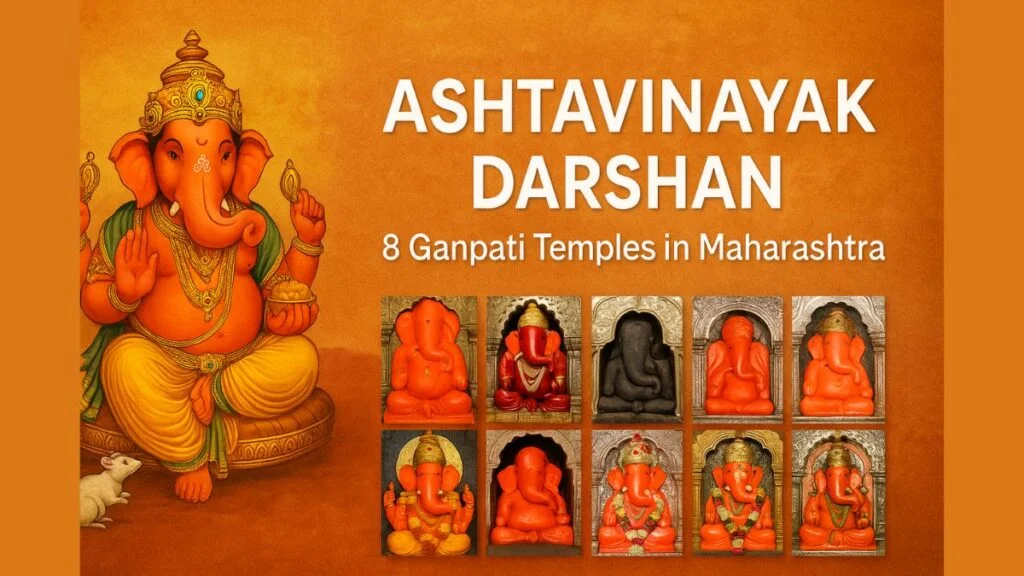
Each of the eight Ganesha idols is swayambhu (self-manifested) and distinct, with differences in trunk direction (left or right), posture, and features, and every temple holds its own historical significance and legendary tale connected to different avatars and divine incidents of Lord Ganesha.
The Ashtavinayak Yatra traditionally begins and ends at Shri Mayureshwar Temple in Morgaon (the first Ashtavinayaka), where Lord Ganesha killed the demon Moreshwar/Sindhu and appeared riding a peacock, establishing the importance of starting with proper Sankalp Pooja (vow-taking ritual) performed by temple priests to formalize the pilgrimage intention. The complete pilgrimage sequence following shastraic guidelines visits: 1) Mayureshwar (Morgaon), 2) Siddhivinayak (Siddhatek), 3) Ballaleshwar (Pali), 4) Varadvinayak (Mahad), 5) Chintamani (Theur), 6) Girijatmaj (Lenyadri), 7) Vighnahar (Ozar), 8) Mahaganapati (Ranjangaon), before returning to Morgaon to complete the sacred circuit.
Visiting all eight temples is considered extremely auspicious, with devotees believing that completing the yatra at least once in a lifetime removes obstacles (vighnas), grants wish fulfillment, brings prosperity, ensures success in endeavors, and provides spiritual merit. This comprehensive guide explores each of the eight Ashtavinayak temples with their unique legends and features, the traditional pilgrimage route and modern itineraries, practical touring information for 2026 pilgrims, the spiritual significance of Ganesha worship and swayambhu idols, tour packages and logistics from Mumbai/Pune, and what this sacred journey reveals about Hindu philosophy‘s devotion to Vighneshwara (the remover of obstacles).
The Eight Ashtavinayak Temples
1. Shri Mayureshwar (Moreshwar) – Morgaon
Location: Morgaon village, Pune District, Maharashtra
Distance: ~80 km southeast of Pune, ~250 km from Mumbai
Deity Name: Mayureshwar (also spelled Moreshwar or Mayureshwar)
Significance: The first and last temple in the Ashtavinayak pilgrimage
- King Chakrapani of Gandaki city and Queen Ugra were childless for years
- After worshiping Sun God, Ugra conceived but couldn’t nurture the radiant fetus
- She released the embryo into the sea, where it was swallowed by demon Sindhu
- The fetus born as Sindhu’s son became so powerful he conquered heaven
- Gods requested Lord Ganesha to kill Sindhu
- Ganesha promised to take birth as Parvati’s son and defeat Sindhu
- Parvati worshipped a clay Ganesha idol on Bhadrapada Shukla Chaturthi
- The idol came to life, and Ganesha came riding on a peacock (mayur) and killed Sindhu with his Parashu (axe)
- Thus named “Mayureshwar” – the one riding a peacock
- Ganesha decided to reside at Morgaon in his Mayureshwar form for devotees
- Built by Ganesha devotee Gosavi, a saint deeply devoted to Lord Ganesha
- Ganesha appeared in Gosavi’s dream asking him to build the temple
- Estimated to be over 400 years old
Ritual: The pilgrimage begins with Sankalp Pooja (vow-taking ceremony) performed by temple priest at Morgaon
Other Deities: Temple also houses Khandoba and Prati Balaji shrines
2. Shri Siddhivinayak – Siddhatek
Location: Siddhatek village, Ahmednagar District, Maharashtra
Distance: ~110 km from Pune, ~280 km from Mumbai
Deity Name: Siddhivinayak (Bestower of Success)
Significance: The only Ashtavinayak temple in Ahmednagar district
Order: Second temple to be visited according to Shastras
Unique Feature:
- The idol is believed to grant siddhi (spiritual powers and success) to devotees
- Associated with fulfillment of wishes and achievement of goals
Legend:
- Lord Vishnu worshipped Ganesha here before his incarnation
- Ganesha blessed Vishnu with success in his divine missions
- The temple marks the spot where siddhi was granted
3. Shri Ballaleshwar – Pali
Location: Pali village, Raigad District, Maharashtra (in Konkan region)
Distance: ~150-170 km from Pune, ~180 km from Mumbai
Deity Name: Ballaleshwar (named after devotee Ballal)
Unique Significance: The only Ganesha temple named after a devotee
Order: Third temple in the pilgrimage
Legend:
- A young boy named Ballal was an ardent devotee of Lord Ganesha
- He and his friends would sing devotional songs to Ganesha
- Ballal’s father, angered by his devotion, beat him
- Lord Ganesha appeared and blessed Ballal
- Ganesha promised to be known by his devotee’s name at this location
- Thus the deity became “Ballaleshwar” – Lord of Ballal
Location Note: In the scenic Konkan area of Raigad district
4. Shri Varadvinayak – Mahad
Location: Mahad, Raigad District, Maharashtra
Distance: ~180-200 km from Pune, ~150 km from Mumbai
Deity Name: Varadvinayak (Giver of Boons/Blessings)
Order: Fourth temple in the sequence
Significance:
- “Varad” means “giver of boons”
- Known for granting wishes and blessings to devotees
- Associated with prosperity and material fulfillment
Legend:
- Sage Vishwamitra and other sages sought Ganesha’s blessings here
- Indra (king of gods) also worshipped here to regain his lost glory
- Ganesha granted boons to all who worshipped sincerely
5. Shri Chintamani – Theur
Location: Theur, Pune District, Maharashtra
Distance: ~25 km from Pune, ~160 km from Mumbai
Deity Name: Chintamani (Reliever of Worries)
Order: Fifth temple in the pilgrimage
Significance:
- “Chinta” means worry/anxiety, “mani” means jewel
- Chintamani removes worries and mental anxieties
- Most accessible from Pune city
Legend:
- Sage Kapila’s ashram was located here
- Lord Ganesha appeared to bless the sage
- The deity relieves devotees from mental stress and worries
Proximity: Closest Ashtavinayak temple to Pune, making it popular for day visits
6. Shri Girijatmaj – Lenyadri
Location: Lenyadri (also Lenyakhali), Pune District, Maharashtra
Distance: ~90-100 km from Pune, ~250 km from Mumbai
Deity Name: Girijatmaj (meaning “Son of Girija/Parvati”)
Order: Sixth temple in the circuit
- The only Ashtavinayak temple located on a mountain
- Built in the locale of Buddhist caves
- Situated in a cave shrine carved out of rock
- Devotees must climb approximately 307 steps to reach the temple
Significance:
- “Girija” is another name for Goddess Parvati
- “Atmaj” means son
- Represents Ganesha as beloved son of Parvati
Legend:
- This is the spot where Ganesha was born to Parvati
- Ancient Buddhist caves surround the temple, showing religious harmony
- The cave setting represents spiritual introspection
Architecture: The cave temple and Buddhist heritage create a unique spiritual atmosphere
7. Shri Vighnahar (Vighneshwar) – Ozar
Location: Ozar (also spelled Ojhar), Pune District, Maharashtra
Distance: ~85-95 km from Pune, ~240 km from Mumbai
Deity Name: Vighnahar or Vighneshwar (Remover of Obstacles)
Order: Seventh temple in the yatra
Significance:
- “Vighna” means obstacle, “har” means remover
- Primary deity for removing all obstacles in life
- Invoked at the beginning of new ventures
Legend:
- Demon king Vignasur created obstacles for gods and sages
- Lord Ganesha battled and defeated Vignasur
- Ganesha established himself here as Vighnahar
- Specially worshipped before starting any important work
8. Shri Mahaganapati – Ranjangaon
Location: Ranjangaon, Shirur Taluka, Pune District, Maharashtra
Distance: ~50-60 km from Pune, ~200 km from Mumbai
Deity Name: Mahaganapati (The Great Ganesha)
Order: Eighth and final temple before returning to Morgaon
- The most powerful representation of Lord Ganesha
- “Maha” means great/supreme
- Represents Ganesha in his most complete, powerful form
- During Ganesh Jayanti (Chaturthi) days, lots of small shops for shopping
- Famous for sweet Pedha prasad
Legend:
- Demon Tripurasur terrorized the world
- Lord Shiva destroyed him with Ganesha’s help
- Ganesha manifested as Mahaganapati at this location
- Represents ultimate divine power and protection
Note: Visiting Mahaganapati completes the eight temples, after which pilgrims return to Morgaon to close the yatra
Traditional Pilgrimage Route
The Correct Shastraic Sequence
According to scriptures, the Ashtavinayak Yatra must begin and end at Morgaon:
- Mayureshwar (Morgaon) – Start with Sankalp Pooja
- Siddhivinayak (Siddhatek)
- Ballaleshwar (Pali)
- Varadvinayak (Mahad)
- Chintamani (Theur)
- Girijatmaj (Lenyadri)
- Vighnahar (Ozar)
- Mahaganapati (Ranjangaon)
- Return to Mayureshwar (Morgaon) – Complete the circuit
Why Start and End at Morgaon?:
- Mayureshwar is considered the Adi (first) Vinayak
- Completing the full circle symbolizes spiritual completeness
- Returning to the starting point honors the tradition
- Final darshan at Morgaon seals the pilgrimage blessings
Route Flexibility
While the traditional order is prescribed, some tours follow route-optimized sequences:
Route-Based Itinerary (minimizes backtracking):
- Start: Morgaon → Siddhatek → back toward Pune
- Then: Pali → Mahad (both in Raigad district)
- Return route: Theur → Ranjangaon → Ozar → Lenyadri
- End: Return to Morgaon
Practical Consideration: Most modern tours balance tradition with travel efficiency
Tour Itineraries and Packages
2 Nights / 3 Days Tour from Mumbai
- Pickup: Early morning from Mumbai (Borivali, Andheri, Bandra, Sion, Chembur, Mulund, Thane, Kalamboli)
- 12:00 PM: Arrive Morgaon (Shri Mayureshwar Temple)
- Perform Sankalp Pooja by temple priest
- Lunch at Morgaon
- 4:00 PM: Reach Siddhatek (Shri Siddhivinayak Temple)
- Evening tea
- Dinner & Night Halt at hotel in Pune
- 5:00 AM: Start from hotel
- 9:00 AM: Pali (Shri Ballaleshwar Temple)
- 11:00 AM: Mahad (Shri Varadvinayak Temple)
- Lunch at Mahad
- 4:00 PM: Theur (Shri Chintamani Temple)
- Dinner & Night Halt at hotel in Pune
- Early morning start
- Lenyadri (Shri Girijatmaj Temple) – 307 steps climb
- Ozar (Shri Vighnahar Temple)
- Ranjangaon (Shri Mahaganapati Temple)
- Return to Morgaon (complete the circuit)
- Evening: Drop back to Mumbai/Pune
Total Distance: ~800-850 km from Mumbai
2 Nights / 3 Days Tour from Pune
- Shorter total distance: 650-700 km
- Most temples closer to Pune
- More relaxed schedule
Route:
Pune → Mayureshwar (Morgaon) → Siddhivinayak (Siddhatek) → Chintamani (Theur) → Mahaganapati (Ranjangaon) → Vighnahar (Ozar) → Girijatmaj (Lenyadri) → Ballaleshwar (Pali) → Varadvinayak (Mahad) → back to Mayureshwar (Morgaon)
Day Distribution: Similar to Mumbai tour but with shorter travel times
Can It Be Done in 2 Days?
- Requires early starts and minimal breaks
- Focus on temple darshan rather than leisurely exploration
- Best for physically fit pilgrims comfortable with long hours
- However, 3 days is recommended for a more relaxed, devotional experience
One-Day Express Tour
Possible but extremely rushed:
- Start before dawn (4-5 AM)
- Visit only nearest temples or split into multiple one-day trips
- Not recommended for complete Ashtavinayak circuit
- Better to do partial yatra than rush all eight temples
Practical Information for Pilgrims
Best Time to Visit
Year-Round Destination: Ashtavinayak can be visited throughout the year
Peak Seasons:
- Ganesh Chaturthi (August-September): Most auspicious but extremely crowded
- Diwali and Ganesh Jayanti: Special celebrations but heavy crowds
- Maghi Chaturthi (January-February): Traditional Ganesha festival
Recommended:
- October to March: Pleasant weather, moderate crowds
- Weekdays: Less crowded than weekends
- Early morning visits: Peaceful darshan, beat the crowds
Avoid:
- Peak summer (April-May): Intense heat
- Major festival days if you dislike crowds
- Monsoon (June-September): Roads may be slippery, especially for Lenyadri steps
Temple Timings
General Schedule (varies slightly by temple):
- Morning: 5:00/6:00 AM – 12:00 PM
- Afternoon break: 12:00 PM – 4:00 PM (deity rests)
- Evening: 4:00/5:00 PM – 8:00/9:00 PM
Tip: Arrive during morning hours for peaceful darshan and better access
What to Carry
Essential Items:
- Comfortable walking shoes (remove at temple entrance)
- Modest traditional clothing (dhoti/kurta for men, saree/salwar for women)
- Hat/umbrella for sun protection
- Water bottle (stays hydrated on long journey)
- Small backpack for prasad and offerings
For Worship:
- Coconut, flowers, incense sticks (available at temple shops)
- Modak (Ganesha’s favorite sweet) for offering
- Small cash for offerings and prasad purchases
Documents: ID proof for hotel check-in
Accommodation Options
Pune:
- Most convenient base for Ashtavinayak circuit
- Wide range: Budget lodges (₹800-1500), mid-range hotels (₹2000-4000), luxury hotels
- Tour packages usually include 2 nights in Pune
Near Individual Temples:
- Morgaon, Mahad, Theur have basic accommodation
- Dharamshalas (pilgrim rest houses) available at some temples
- Budget-friendly for independent travelers
Food and Dining
Vegetarian Meals: All Ashtavinayak tour packages provide pure vegetarian food
Local Specialties:
- Modak: Sweet dumplings (Ganesha’s favorite)
- Pedha: Milk-based sweet (especially at Ranjangaon)
- Traditional Maharashtrian thali
Prasad: Each temple offers unique prasad to devotees
Tour Package Costs (2026 Estimates)
From Mumbai (2N/3D):
- Budget Package: ₹4,000-6,000 per person (bus, basic hotel, meals)
- Standard Package: ₹7,000-10,000 per person (AC bus, decent hotel, all meals)
- Premium Package: ₹12,000-15,000 per person (luxury bus, 3-star hotel, comprehensive services)
From Pune (2N/3D):
- Approximately ₹1,000-2,000 less than Mumbai packages due to shorter distances
What’s Included:
- Transportation (AC/Non-AC bus or private vehicle)
- 2 nights accommodation
- All meals (breakfast, lunch, dinner)
- Temple entry and darshan arrangements
- Sankalp Pooja at Morgaon
Self-Drive/Private Car:
- Car rental: ₹3,500-6,000 for 3 days
- Accommodation: ₹1,500-4,000 per night
- Food: ₹500-1,000 per person per day
- Total: ₹8,000-15,000 per person (for 2-3 people sharing)
Booking Tour Packages
- Many operators offer direct company-to-consumer rates without travel agents
- Online booking available
- Pickup/drop points in Mumbai and Pune
Travel Agents:
- Available in Mumbai and Pune
- Can customize itineraries
- Group discounts for larger pilgrim groups
Temple Trusts:
- Some temples organize group yatras during festivals
- Community-oriented, economical options
Transportation Options
Organized Tours:
- Bus tours: Most economical, 30-40 passengers
- Mini-bus: 12-15 passengers, more comfortable
- Private car/SUV: 4-7 passengers, maximum flexibility
Self-Drive:
- Rent car in Pune or Mumbai
- GPS navigation recommended
- Roads generally good condition
- Parking available at all temples
Public Transport:
- State transport buses connect major temple towns
- Requires multiple changes, time-consuming
- Not recommended for complete circuit in 2-3 days
Spiritual Significance of Ashtavinayak Yatra
Ganesha as Vighnaharta
Lord Ganesha – The Remover of Obstacles:
- First deity worshipped before any undertaking
- Grants wisdom, prosperity, and success
- Removes physical, mental, and spiritual obstacles
Eight Forms, Eight Powers:
- Each Ashtavinayak represents different aspect of Ganesha’s divine powers
- Visiting all eight ensures comprehensive blessings
- Complete circuit harmonizes all life areas
Swayambhu Idols
- All eight Ashtavinayak idols are swayambhu (self-manifested)
- Not carved by humans but naturally formed
- Considered more powerful due to divine origin
- Each idol has unique appearance and energy
Trunk Directions:
- Some idols have left-facing trunk
- Others have right-facing trunk
- Each direction has specific significance
- Represents different divine attributes
Benefits of Completing the Yatra
Spiritual Benefits:
- Removal of all obstacles (vighnas) in life
- Purification of mind and karma
- Spiritual merit (punya)
- Divine blessings for spiritual evolution
Material Benefits:
- Success in education, career, business
- Fulfillment of wishes and desires
- Prosperity and wealth
- Good health and longevity
Family Blessings:
- Harmony in relationships
- Protection for children
- Resolution of family disputes
- Overall well-being
Cultural Value:
- Connecting with Maharashtra’s heritage
- Experiencing Ganesha bhakti tradition
- Witnessing temple architecture and rituals
- Participating in living spiritual tradition
Tradition and Faith
- Considered extremely auspicious to complete at least once in lifetime
- Devotees return multiple times for continued blessings
- Family pilgrimages strengthen bonds
- Passing tradition to next generation
Sankalp and Commitment:
- Beginning with Sankalp Pooja formalizes sacred vow
- Completing full circuit fulfills the commitment
- Returning to Morgaon closes the spiritual circle
- Demonstrates dedication and devotion
Frequently Asked Questions
What is Ashtavinayak Yatra?
Ashtavinayak Yatra is a sacred pilgrimage covering eight temples of Lord Ganesha in Maharashtra (Ashta = eight, Vinayak = Ganesha), spread across Pune, Raigad, and Ahmednagar districts. The temples are: 1) Mayureshwar (Morgaon), 2) Siddhivinayak (Siddhatek), 3) Ballaleshwar (Pali), 4) Varadvinayak (Mahad), 5) Chintamani (Theur), 6) Girijatmaj (Lenyadri), 7) Vighnahar (Ozar), and 8) Mahaganapati (Ranjangaon). Each idol is swayambhu (self-manifested) and represents unique aspects of Ganesha’s divine powers. Visiting all eight is considered extremely auspicious and essential at least once in a lifetime.
Where should the Ashtavinayak Yatra start and end?
The Ashtavinayak Yatra must traditionally begin and end at Shri Mayureshwar Temple in Morgaon, considered the Adi (first) Vinayak. Pilgrims perform Sankalp Pooja (vow-taking ritual) by temple priests at Morgaon to formalize their pilgrimage intention before visiting the remaining seven temples. After completing darshan at all eight temples, devotees return to Morgaon to close the sacred circuit, symbolizing spiritual completeness. This circular journey honors tradition and seals the pilgrimage blessings properly.
How many days are needed for Ashtavinayak tour?
A comfortable Ashtavinayak pilgrimage requires 2 nights/3 days with proper time for temple darshan and rituals. The tour from Pune covers 650-700 km, while from Mumbai it’s approximately 800-850 km. A 2-day trip is possible with early starts and minimal breaks, but 3 days is recommended for a more relaxed, devotional experience. Day 1 typically covers Morgaon (with Sankalp Pooja) and Siddhatek; Day 2 covers Pali, Mahad, and Theur; Day 3 covers Lenyadri (307 steps), Ozar, Ranjangaon, and return to Morgaon.
Which is the only Ashtavinayak temple on a mountain?
Shri Girijatmaj Temple at Lenyadri is the only Ashtavinayak temple located on a mountain and built in the locale of Buddhist caves. Devotees must climb approximately 307 steps to reach this sixth temple in the circuit. “Girijatmaj” means “son of Girija (Parvati),” and the cave temple represents the spot where Ganesha was born to Goddess Parvati. The ancient Buddhist caves surrounding the temple showcase religious harmony and create a unique spiritual atmosphere combining Shaivite and Buddhist heritage.
What is special about Ballaleshwar Temple?
Ballaleshwar Temple at Pali is the only Ganesha temple in the Ashtavinayak circuit named after a devotee rather than a divine attribute. According to legend, a young boy named Ballal was an ardent devotee who sang devotional songs to Ganesha despite his father’s anger and beatings. Lord Ganesha appeared and blessed Ballal, promising to be known by his devotee’s name at this location. The temple is located in the scenic Konkan area of Raigad district and demonstrates Ganesha’s special love for sincere devotees, making it particularly meaningful for Ganesha bhaktas.
What is the cost of Ashtavinayak tour packages?
Ashtavinayak tour packages for 2 nights/3 days range from ₹4,000-15,000 per person depending on service level. From Mumbai: Budget packages ₹4,000-6,000 (bus, basic hotel, meals), Standard packages ₹7,000-10,000 (AC bus, decent hotel, all meals), Premium packages ₹12,000-15,000 (luxury bus, 3-star hotel, comprehensive services). From Pune packages cost ₹1,000-2,000 less due to shorter distances (650-700 km vs 800-850 km from Mumbai). Self-drive costs ₹8,000-15,000 per person including car rental (₹3,500-6,000), accommodation (₹1,500-4,000/night), and food (₹500-1,000/day).
What is the legend of Mayureshwar Temple at Morgaon?
Lord Ganesha killed the demon Sindhu (also called Moreshwar) at Morgaon while riding a peacock (mayur), thus earning the name “Mayureshwar”. According to legend, Queen Ugra’s radiant fetus was swallowed by demon Sindhu, who later became so powerful he conquered heaven. Gods requested Ganesha’s help, and he promised to take birth as Parvati’s son. Parvati worshipped a clay Ganesha idol on Bhadrapada Shukla Chaturthi which came to life, and Ganesha came riding a peacock and killed Sindhu with his Parashu (axe). The temple, built by devotee Gosavi over 400 years ago, marks where Ganesha decided to reside for devotees.
Can Ashtavinayak be completed from Mumbai in 2 days?
Yes, a 2-day Ashtavinayak trip from Mumbai is possible with efficient planning, early starts, and minimal breaks. However, the standard recommendation is 2 nights/3 days for a more relaxed and devotional pilgrimage experience that allows proper time for temple darshan, rituals, and absorption of spiritual atmosphere without exhausting travel. The 2-day option requires very early morning departures (4-5 AM), quick temple visits, and long driving hours, making it physically demanding. Most organized tour packages offer 3-day itineraries to balance spiritual experience with practical travel considerations.
Conclusion
The Ashtavinayak Yatra represents one of Maharashtra’s most beloved spiritual journeys—a sacred circuit connecting eight ancient Ganesha temples where swayambhu (self-manifested) idols embody different aspects of Vighneshwara’s divine power to remove obstacles, grant success, relieve worries, bestow boons, and protect devotees across all life dimensions. The pilgrimage’s structure—beginning with Sankalp Pooja at Morgaon, visiting seven more temples each with unique legends and blessings, then returning to Morgaon to complete the sacred circle—creates a comprehensive spiritual experience that honors tradition while providing practical benefits to millions of devotees who undertake this journey annually seeking Ganesha’s grace for education, career, business, marriage, health, and overall prosperity.
The temples’ geographic distribution across Pune’s accessible plains, Raigad’s Konkan coast, and Ahmednagar’s countryside—from Theur just 25 km from Pune to distant Siddhatek, from sea-level Mahad to mountain-top Lenyadri with its 307 steps—creates a pilgrimage that physically traverses Maharashtra’s diverse landscapes while spiritually traversing the complete spectrum of Ganesha’s manifestations, from Mayureshwar riding a peacock after slaying demons to Mahaganapati representing supreme divine power, from Ballaleshwar honoring devoted children to Chintamani relieving anxious minds, from Vighnahar removing all obstacles to Girijatmaj as Parvati’s beloved son born in mountain caves.
Whether completed in 2 days through intensive travel or savored over 3 days with leisure for contemplation, whether undertaken as organized bus tour from Mumbai sharing devotion with fellow pilgrims or as private family journey from Pune creating intimate memories, the Ashtavinayak Yatra offers transformative pilgrimage accessible to all economic levels, all ages, and all spiritual backgrounds who seek Hindu philosophy‘s promise that sincere devotion to Vighneshwara—the elephant-headed deity who writes destiny with his broken tusk, who rides the humble mouse teaching humility,
who removes obstacles while teaching that challenges strengthen character—brings not just wish fulfillment and material success but deeper spiritual growth, recognition that all obstacles ultimately serve divine purpose, and the profound peace that comes from surrendering life’s difficulties to the loving wisdom of Ganapati Bappa Morya, whose eight sacred manifestations across Maharashtra’s heartland continue blessing devotees as they have for centuries, inviting each generation to undertake this timeless journey, complete the sacred circuit, and discover that the greatest blessing is not obstacle removal but the devotion itself that flowers when pilgrims bow before swayambhu idols, offer modaks with love, and feel Ganesha’s presence in their hearts long after the yatra ends.
About the Author
Sunita Reddy – Cultural Heritage & Temple Architecture Specialist
Sunita Reddy is an accomplished writer and researcher specializing in Hindu festivals, temple architecture, and India’s rich cultural traditions. With a Master’s degree in Indian Art History from Maharaja Sayajirao University, she has extensively documented pilgrimage sites, temple iconography, and folk traditions across India. Her work focuses on making India’s spiritual heritage accessible to contemporary audiences while preserving authentic cultural narratives.
