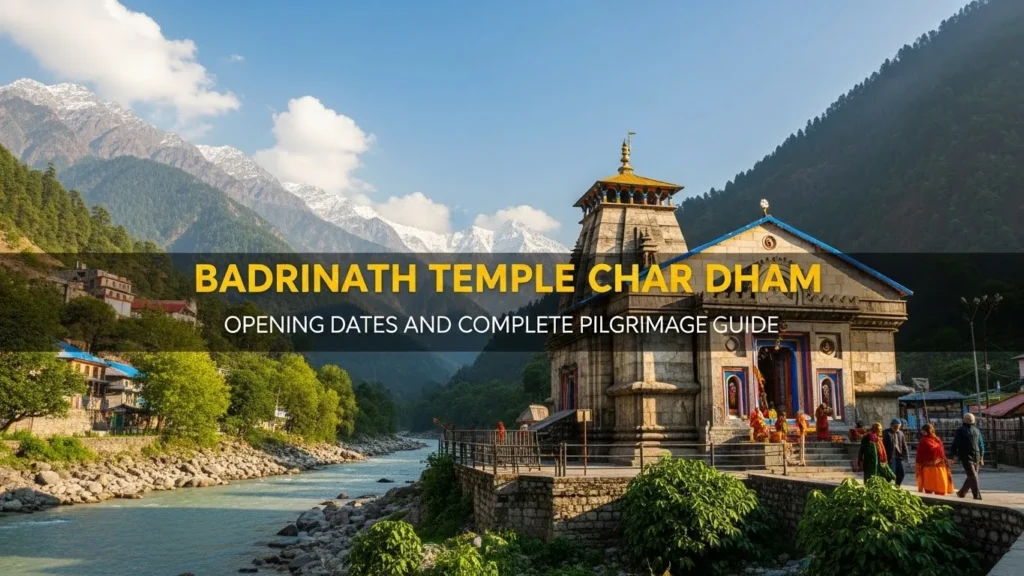
The sacred Badrinath Temple opens its doors on April 24, 2026, at 6:00 AM during Brahma Muhurta, marking the commencement of one of Hinduism’s most spiritually significant pilgrimages. Nestled at an elevation of 10,279 feet in the Garhwal Himalayas along the banks of the Alaknanda River, this ancient shrine dedicated to Lord Vishnu attracts millions of devotees annually who seek divine blessings and spiritual liberation. The temple, revitalized by Adi Shankaracharya in the 8th century, represents the northern point of the sacred Char Dham circuit and embodies centuries of devotional tradition, architectural brilliance, and profound spiritual significance.
Understanding the opening and closing dates, planning your pilgrimage journey, and knowing the temple’s rituals and nearby sacred sites ensures a fulfilling spiritual experience in this abode of Lord Badrinarayan. The 2026 pilgrimage season offers devotees approximately seven months to complete this transformative journey before the temple closes in mid-November due to harsh Himalayan winter conditions. This comprehensive guide provides essential information for pilgrims preparing to undertake this sacred odyssey in the year 2026.
Badrinath Temple Opening and Closing Dates 2026
The Badrinath Temple kapaat (doors) will open on April 24, 2026, during the auspicious Akshaya Tritiya festival, with ceremonies beginning at 6:00 AM in Brahma Muhurta (the most spiritually potent pre-dawn period). This opening date is announced annually on Basant Panchami (January/February) by the Badrinath-Kedarnath Temple Committee (BKTC) after consulting the Hindu Panchang and astrological calculations. The precise timing ensures alignment with cosmic energies believed most favorable for initiating the pilgrimage season.
The closing ceremony will occur on November 13, 2026 (tentative date subject to final announcement), coinciding with the Diwali period when priests perform elaborate rituals before shutting the temple doors for the winter months. During the closing ceremony, a jyoti (divine light) is ceremonially lit before the deity, and the idol’s winter seat shifts to the Narsingh Temple in Joshimath, where worship continues throughout the closed season. This sacred transfer ensures continuous devotion to Lord Badrinarayan even when the main temple remains inaccessible due to heavy snowfall and extreme weather conditions.
| Temple Opening & Closing Schedule 2026 | Date | Timing |
|---|---|---|
| Opening Date (Akshaya Tritiya) | April 24, 2026 | 6:00 AM (Brahma Muhurta) |
| Closing Date (Diwali Period) | November 13, 2026 (Tentative) | Evening ceremony |
| Morning Darshan | Daily | 4:30 AM – 1:00 PM |
| Temple Break | Daily | 1:00 PM – 4:00 PM |
| Evening Darshan | Daily | 4:00 PM – 9:00 PM |
| Mangala Aarti | Daily | 4:30 AM |
| Sandhya Aarti | Daily | 7:00 PM – 8:30 PM |
The opening ceremony attracts thousands of devotees who witness the sacred moment when priests first unveil Lord Badrinarayan after months of winter closure. Pilgrims consider attending this inaugural darshan especially auspicious, though the massive crowds require advance planning and accommodation booking. The Badrinath Temple Committee coordinates logistics, security, and crowd management to ensure smooth proceedings during both opening and closing ceremonies.
Complete Char Dham Yatra Opening Dates 2026
The Char Dham Yatra 2026 encompasses four sacred shrines in Uttarakhand—Yamunotri, Gangotri, Kedarnath, and Badrinath—each opening on specific auspicious dates determined by the temple committee. This pilgrimage circuit, established by Adi Shankaracharya in the 8th century, represents the four cardinal directions and offers devotees a complete spiritual journey through the Himalayas. Completing the Char Dham Yatra is believed to wash away accumulated sins and grant moksha (liberation from the cycle of birth and death).
| Char Dham Shrine | Deity | Opening Date 2026 | Closing Date 2026 | Direction |
|---|---|---|---|---|
| Yamunotri | Goddess Yamuna | April 19, 2026 | November 11, 2026 | West |
| Gangotri | Goddess Ganga | April 19, 2026 | November 10, 2026 | West |
| Kedarnath | Lord Shiva | April 22, 2026 | November 10, 2026 | South |
| Badrinath | Lord Vishnu (Badrinarayan) | April 24, 2026 | November 13, 2026 | North |
The traditional pilgrimage sequence begins with Yamunotri (dedicated to Goddess Yamuna, source of the Yamuna River), proceeds to Gangotri (honoring Goddess Ganga at the origin of the sacred Ganges), continues to Kedarnath (Lord Shiva’s abode at 11,755 feet), and culminates at Badrinath. This clockwise circuit follows ancient traditions that maximize spiritual benefits and align with Himalayan geography. However, modern pilgrims may adjust the sequence based on weather conditions, road accessibility, and personal itinerary constraints.
The spiritual significance of undertaking the Char Dham Yatra extends beyond visiting temples to encompass the transformative journey itself. Traversing rugged mountain paths, crossing rivers, and enduring physical challenges symbolize the pilgrim’s internal journey of overcoming ego, desires, and worldly attachments. Each shrine offers unique spiritual blessings—Yamunotri and Gangotri provide purification through holy waters, Kedarnath grants Lord Shiva’s grace for transformation, and Badrinath represents the ultimate goal of divine communion and inner peace.
Historical and Spiritual Significance of Badrinath Temple
The Badrinath Temple’s origins trace back to approximately 500 BCE, though its prominence as a major pilgrimage center was established when Adi Shankaracharya discovered the sacred black stone idol of Lord Badrinarayan in the Alaknanda River during the 8th century. According to tradition, Shankaracharya found the deity submerged in the river and installed it in a cave near Tapt Kund, transforming what had been a Buddhist shrine into a Hindu temple dedicated to Lord Vishnu. This act of revival formed part of his broader mission to reestablish Sanatana Dharma across India through philosophical discourse and institutional reorganization.
The present temple structure was constructed primarily during the 16th and 17th centuries by the Garhwal kings, who enhanced its grandeur and incorporated distinctive North Indian Nagara architectural style elements. The temple underwent significant reconstruction following the devastating 1803 earthquake, which damaged portions of the original structure. The vibrant facade, sloping roofs designed to shed heavy Himalayan snow, towering shikhara (spire), and intricate carvings demonstrate sophisticated engineering techniques adapted to extreme mountain conditions.
Legendary associations enhance Badrinath’s spiritual mystique beyond historical documentation. According to the Skanda Purana, Lord Vishnu performed intense meditation at this site under a badri (Indian jujube) tree, which gave the location its name. When Goddess Lakshmi saw her consort exposed to harsh Himalayan elements, she transformed into a badri tree to provide shade—thus “Badri-nath” means “Lord of the Badri.” Another legend recounts how Lord Shiva originally resided here, but when Vishnu chose the location for tapasya (meditation), Shiva graciously relocated to nearby Kedarnath, demonstrating divine cooperation between Vaishnavite and Shaivite traditions.
The temple’s philosophical significance centers on its representation of dharma (righteous duty) and spiritual discipline. Lord Badrinarayan is depicted in a meditative posture, symbolizing the yogic path to self-realization and the importance of inner contemplation. The deity’s black stone image, carved from saligram shila (sacred fossil stone), embodies Vishnu’s transcendent and immanent aspects—simultaneously beyond worldly concerns yet accessible to devoted seekers. Pilgrims believe that sincere darshan of Badrinarayan purifies consciousness and accelerates spiritual evolution toward moksha.
Architecture and Sacred Features of Badrinath Temple
The Badrinath Temple exemplifies Nagara-style architecture adapted brilliantly to Himalayan environmental challenges. The structure rises approximately 50 feet in height with a distinctive conical shikhara adorned with a gold-gilt roof and cupola. The main entrance features an ornate arched gateway painted in vibrant colors—reds, blues, and yellows—creating striking contrast against the snow-covered Neelkanth peak backdrop. This colorful facade, unusual for Hindu temples, reflects Buddhist architectural influences from the shrine’s pre-Shankaracharya period.
The temple’s construction employs specialized corbelling techniques where successive stone courses project slightly beyond those below, gradually narrowing to form the spire without requiring central support. Timber framing with intricate joinery (accomplished without metal fasteners) provides structural integrity for multi-storied sections and reinforces the sloping roofs. These engineering adaptations enable the building to withstand heavy snow loads, earthquakes, and temperature extremes that characterize high-altitude Himalayan environments.
Key architectural and sacred features within the temple complex include:
- Garbhagriha (Sanctum Sanctorum): Houses the 3.3-foot black stone idol of Lord Badrinarayan in padmasana (lotus position) with four arms holding conch, discus, mace, and lotus
- Garuda Stambha: A pillar with Garuda (Vishnu’s eagle mount) positioned directly in front of the shrine
- Fifteen Idols: Additional deities including Nara-Narayana, Lakshmi-Narayana, Kubera, Narada, Udhava, and others surround the main sanctum
- Badrivan: The grove of badri (jujube) trees surrounding the temple, believed to be the original meditation forest
- Alaknanda River: The sacred river flowing beside the temple, considered spiritually purifying
The temple’s exterior features intricate carvings depicting scenes from Hindu scriptures, celestial beings, and geometric patterns characteristic of medieval Indian temple artistry. Three temples—dedicated to Lakshmi (Vishnu’s consort), Garuda, and other deities—complement the main shrine within the complex. The Singh Dwaar (Lion Gate) serves as the primary entrance, welcoming pilgrims into this sacred space where temporal concerns dissolve before divine presence.
Daily Rituals and Worship Practices
The Badrinath Temple follows an elaborate daily ritual schedule called Nitya Niyam, prescribed by ancient Vedic traditions and maintained with precision by hereditary Rawal priests. These rituals begin well before sunrise and continue throughout the day, creating an atmosphere of continuous devotion. The head priest (Rawal), always a Nambudiri Brahmin from Kerala (as established by Adi Shankaracharya), oversees all ceremonies assisted by local priests from the Dimri and Semwal communities.
Daily Worship Sequence:
- Dwar Puja (4:00 AM): Temple doors open with prayers symbolizing the awakening of Lord Badrinarayan
- Mangala Aarti (4:30 AM): Dawn worship invoking the deity’s blessings for the day, accompanied by bells, conch shells, and devotional hymns
- Abhishekam (5:00 AM): Ritual bathing of the deity using panchamrit (mixture of milk, curd, honey, sugar, and ghee), Ganga water, and sacred substances
- Alankara (6:00 AM): Adorning Lord Badrinarayan with elaborate garments, jewelry, and flower garlands appropriate to the season
- Gopuram Puja: Worship of the temple’s spire and architectural elements
- Naivedya/Bhog (Multiple times): Food offerings including fruits, sweets, and specially prepared dishes presented to the deity and later distributed as prasad
- Sandhya Aarti (7:00-8:30 PM): Evening worship concluding daily activities with devotional songs and ceremonial lamp offerings
- Temple Closure (9:00 PM): Doors close after final rituals, symbolizing the deity’s rest
During special festivals including Janmashtami (Lord Krishna’s birth), Badri Kedar Utsav, and Diwali, additional elaborate pujas and extended darshan hours accommodate increased devotee participation. The Bhagavata Saptaaha (seven-day recitation of Bhagavata Purana) occurs on particular occasions, offering pilgrims intensive spiritual immersion in Vishnu’s divine pastimes. Mata Murti Mela, held annually in August/September, honors Lord Vishnu’s mother with a special fair and ceremonies.
The Agni Puja performed each evening symbolizes divine protection of the temple through sacred fire worship. Priests also conduct daily worship of nearby sacred mountains—Nara, Narayana, and Kubera—as well as Mana village (ancient Manibhadrapur), integrating the entire landscape into devotional practice. This holistic approach recognizes that Hindu philosophy views the Himalayas themselves as manifestations of divine consciousness, with each peak, river, and forest grove possessing spiritual significance.
Sacred Sites Near Badrinath Temple
Tapt Kund, a natural thermal hot spring located immediately in front of the temple, serves as an essential purification site where pilgrims bathe before darshan. The sulfurous water, maintaining temperatures around 55°C (131°F) year-round, is believed to possess medicinal properties that cure skin diseases and purify the body-mind complex for temple entry. According to tradition, Tapt Kund represents Lord Agni’s abode, and bathing here removes both physical impurities and spiritual obstacles accumulated through worldly existence. Despite the cold Himalayan climate, devotees immerse themselves in these sacred waters as an act of devotion and preparation.
Mana Village, located just 3 kilometers from Badrinath, holds the distinction of being India’s last village before the Indo-Tibetan border. This ancient settlement, known in scriptures as Manibhadrapur, is worshiped daily as part of temple rituals. Mana contains several pilgrimage sites including Vyas Gufa (cave where Ved Vyasa composed the Mahabharata), Ganesh Gufa (where Lord Ganesha served as scribe), Bhim Pul (a massive rock bridge allegedly placed by Bhima across the Saraswati River), and Vasudhara Falls (a sacred waterfall with spiritual significance). The village’s traditional architecture and Bhotiya tribal culture provide cultural enrichment alongside religious significance.
Nearby spiritual destinations enhancing the Badrinath pilgrimage experience include:
- Narad Kund: Small glacial pond where pilgrims take holy dips, believed to be where Adi Shankaracharya discovered the Badrinarayan idol
- Valley of Flowers National Park: UNESCO World Heritage Site showcasing extraordinary high-altitude biodiversity, located approximately 25 kilometers away
- Hemkund Sahib: Revered Sikh pilgrimage site at 15,200 feet elevation, accessible via challenging trek from Govindghat
- Joshimath: Important town 45 kilometers from Badrinath housing Shankaracharya’s math (monastery) and winter seat of Lord Badrinarayan
- Neelkanth Peak: Majestic 21,640-foot mountain dominating the Badrinath skyline, representing Lord Shiva’s presence
These complementary sites create a comprehensive pilgrimage geography where devotees experience diverse aspects of Himalayan spirituality—from Vaishnavite devotion at Badrinath to Shaivite traditions at nearby shrines, Buddhist influences in architectural styles, and Sikh devotion at Hemkund Sahib. This religious pluralism reflects the inclusive character of Sanatana Dharma and demonstrates how Hindu temple practices across India accommodate regional variations while maintaining essential spiritual principles.
Travel and Pilgrimage Planning Guide
Reaching Badrinath requires careful planning due to challenging Himalayan terrain and limited accessibility. The nearest airport is Jolly Grant Airport in Dehradun (approximately 314 kilometers away), while the closest railway station is Rishikesh (297 kilometers distant). From these points, pilgrims must travel by road through winding mountain routes that offer spectacular scenery alongside considerable physical demands. The journey typically follows this route: Rishikesh → Devprayag → Rudraprayag → Karnaprayag → Chamoli → Joshimath → Govindghat → Badrinath.
Transportation options include:
- State Transport Buses: Government-operated buses depart from Rishikesh and Haridwar daily during pilgrimage season, requiring 10-12 hours to reach Badrinath. Buses must complete the journey before sunset as night travel beyond Joshimath is prohibited for safety reasons
- Private Taxis/Vehicles: Hiring experienced local drivers familiar with mountain roads is strongly recommended over self-driving. Tour operators offer complete packages including transportation, accommodation, and guided darshan
- Shared Jeeps: Available from intermediate towns like Joshimath, providing flexible and economical transport for final journey segments
- Helicopter Services: For time-constrained or elderly pilgrims, helicopter services operate from Dehradun and Phata to Badrinath during peak season
Accommodation in Badrinath ranges from simple dharamshalas (pilgrim guesthouses) offering basic amenities to mid-range hotels with modern facilities. During peak season (May-June), securing accommodation becomes extremely challenging due to massive pilgrim influx, with even basic beds difficult to obtain. Booking well in advance through official temple websites or registered tour operators is essential. Some ashrams provide low-cost or free accommodation for pilgrims, though prior arrangements are advisable. Alternative lodging in Joshimath (45 kilometers away) allows day trips to Badrinath while ensuring guaranteed accommodation.
Best time to visit depends on individual preferences and physical capabilities. May and June constitute peak pilgrimage season with favorable weather but enormous crowds and premium accommodation prices. September and October offer pleasant conditions, reduced crowds, and lower costs, though early November brings cold temperatures signaling season’s end. Monsoon months (July-August) present landslide risks and travel disruptions, though some devotees prefer this period for its spiritual intensity and relative solitude.
Essential Pilgrimage Tips and Safety Guidelines
Altitude acclimatization represents the most critical health consideration for Badrinath pilgrims. At 10,279 feet elevation, many visitors experience symptoms of Acute Mountain Sickness (AMS) including headaches, nausea, dizziness, and shortness of breath. Spending at least one day at intermediate altitude locations like Joshimath (6,150 feet) before ascending to Badrinath significantly reduces AMS risk. Staying well-hydrated, avoiding alcohol and heavy meals, and ascending gradually helps the body adjust to reduced oxygen levels.
Safety precautions for Char Dham pilgrims include:
- Group Travel: Traveling in groups rather than solo enhances safety and provides assistance during emergencies
- Avoid Night Travel: Never trek or travel mountain roads after dark due to limited visibility and increased accident risk
- Follow Official Guidelines: Adhere strictly to instructions from the Badrinath Temple Committee and local authorities regarding route safety, weather warnings, and restricted areas
- Emergency Contacts: Maintain updated emergency contact information and know locations of medical facilities along the route
- Travel Insurance: Consider comprehensive travel insurance covering high-altitude medical emergencies and evacuation
- Physical Fitness: Prepare physically through regular walking and cardio exercises before undertaking the pilgrimage
Health preparations should include carrying basic medications for altitude sickness (such as Diamox after medical consultation), digestive issues, headaches, and any personal prescription medicines. Pack warm clothing in layers as temperatures fluctuate dramatically between day and night, with mornings and evenings extremely cold even during summer months. Comfortable walking shoes with good grip, rain protection, sunscreen, and sunglasses are essential. Portable oxygen canisters, available for purchase at intermediate stops, provide relief for severe altitude discomfort.
Respectful conduct within the temple premises maintains sacred atmosphere and honors ancient traditions. Dress modestly covering shoulders and legs, remove shoes before entering temple areas, maintain silence during rituals, follow queue discipline during darshan, and avoid photography where prohibited. Donate according to personal capacity through official temple donation boxes rather than unofficial intermediaries. Environmental responsibility—disposing waste properly, avoiding plastic usage, and respecting fragile Himalayan ecosystems—ensures these sacred sites remain pristine for future generations of pilgrims.
Frequently Asked Questions
When does Badrinath Temple open in 2026?
Badrinath Temple opens on April 24, 2026, at 6:00 AM during Brahma Muhurta, coinciding with the auspicious Akshaya Tritiya festival. The Badrinath-Kedarnath Temple Committee announces the precise opening date on Basant Panchami after consulting the Hindu calendar and astrological calculations. The opening ceremony attracts thousands of devotees witnessing the first darshan after winter closure.
What are the daily darshan timings at Badrinath Temple?
The temple offers darshan from 4:30 AM to 1:00 PM (morning session) and 4:00 PM to 9:00 PM (evening session), with a midday break from 1:00-4:00 PM. Mangala Aarti occurs at 4:30 AM while Sandhya Aarti takes place around 7:00-8:30 PM. These timings may vary slightly during special festivals or peak pilgrimage periods, and devotees should verify current schedules upon arrival.
How long does the Char Dham Yatra take to complete?
A complete Char Dham Yatra typically requires 10-14 days depending on transportation mode, weather conditions, and time spent at each shrine. Standard itineraries include travel days from Haridwar/Rishikesh, visits to Yamunotri, Gangotri, Kedarnath, and Badrinath, plus contingency time for weather delays. Helicopter services can compress the yatra to 5-7 days, though many pilgrims prefer traditional road journeys for deeper spiritual immersion.
What is the significance of bathing in Tapt Kund?
Tapt Kund, a natural thermal spring with temperatures around 55°C, is believed to represent Lord Agni’s abode and possesses purifying spiritual and medicinal properties. Pilgrims traditionally bathe here before entering Badrinath Temple to cleanse both physical impurities and spiritual obstacles. The sulfurous water is said to cure skin diseases and prepare devotees for sacred darshan of Lord Badrinarayan.
Can senior citizens and children visit Badrinath Temple safely?
Yes, with proper precautions senior citizens and children can safely visit Badrinath. Helicopter services eliminate strenuous travel for elderly or physically challenged pilgrims, while good accommodation and medical facilities support diverse age groups. However, consulting physicians about high-altitude travel suitability, allowing extra acclimatization time, and monitoring for altitude sickness symptoms remain essential. Many families successfully complete the pilgrimage with careful planning.
What should I pack for Badrinath pilgrimage?
Essential items include warm layered clothing (temperatures drop significantly at night even in summer), comfortable walking shoes, rain protection, sunscreen, sunglasses, personal medications including altitude sickness remedies, water bottle, flashlight, and basic toiletries. Pack light as excessive luggage complicates mountain travel. Carrying portable oxygen canisters, energy snacks, and minimal cash (many locations lack ATMs) proves beneficial.
Is accommodation available in Badrinath?
Badrinath offers diverse accommodation from simple dharamshalas to mid-range hotels, but advance booking is absolutely essential during peak season (May-June) when even basic beds become unavailable. Off-season travel provides easier accommodation access. Alternative lodging in Joshimath (45 km away) ensures guaranteed rooms with option for day trips. Some ashrams offer low-cost stays for pilgrims with prior arrangement.
What is the best time to visit Badrinath?
September-October offers optimal conditions with pleasant weather, reduced crowds, lower accommodation costs, and scenic autumn landscapes. May-June constitutes peak season with favorable weather but massive crowds and premium prices. Avoid monsoon months (July-August) due to landslide risks and travel disruptions. The temple closes in mid-November as Himalayan winter arrives, making summer through early autumn the practical visiting window.
Conclusion
The Badrinath Temple pilgrimage represents far more than a religious tourism experience—it constitutes a transformative spiritual journey that connects contemporary seekers with millennia of devotional tradition, philosophical wisdom, and Himalayan sacred geography. The 2026 pilgrimage season, opening April 24 and extending through November 13, offers devotees seven months to undertake this profound odyssey toward divine communion and self-realization. Whether completed as part of the comprehensive Char Dham circuit or as a focused visit to Lord Badrinarayan’s abode, the pilgrimage challenges participants physically while nourishing them spiritually.
Proper planning—understanding opening dates, arranging transportation and accommodation, preparing for altitude and weather challenges, and approaching with devotional sincerity—ensures a fulfilling and safe experience. The temple’s daily rituals, maintained with precision by hereditary priests following Adi Shankaracharya’s prescriptions, create an atmosphere where temporal concerns dissolve before the eternal presence of Lord Vishnu in meditative repose. Complementary sacred sites including Tapt Kund, Mana Village, and nearby Himalayan shrines enrich the spiritual journey with diverse devotional expressions.
As India’s sacred traditions navigate contemporary realities in 2026, the Badrinath pilgrimage endures as a living bridge between ancient wisdom and modern aspiration. The physical hardships of mountain travel mirror the internal challenges of spiritual discipline, while the spectacular Himalayan landscapes inspire contemplation of consciousness beyond ordinary perception. For millions of pilgrims annually, witnessing Lord Badrinarayan’s serene countenance amid snow-crowned peaks fulfills deep spiritual longings and affirms the eternal relevance of dharma in human life.
About the Author
Neha Kulkarni – Cultural Heritage & Temple Architecture Specialist
Neha Kulkarni is an accomplished writer and researcher specializing in Hindu festivals, temple architecture, and India’s rich cultural traditions. With a Master’s degree in Indian Art History from Maharaja Sayajirao University, she has extensively documented pilgrimage sites, temple iconography, and folk traditions across India. Her work focuses on making India’s spiritual heritage accessible to contemporary audiences while preserving authentic cultural narratives.