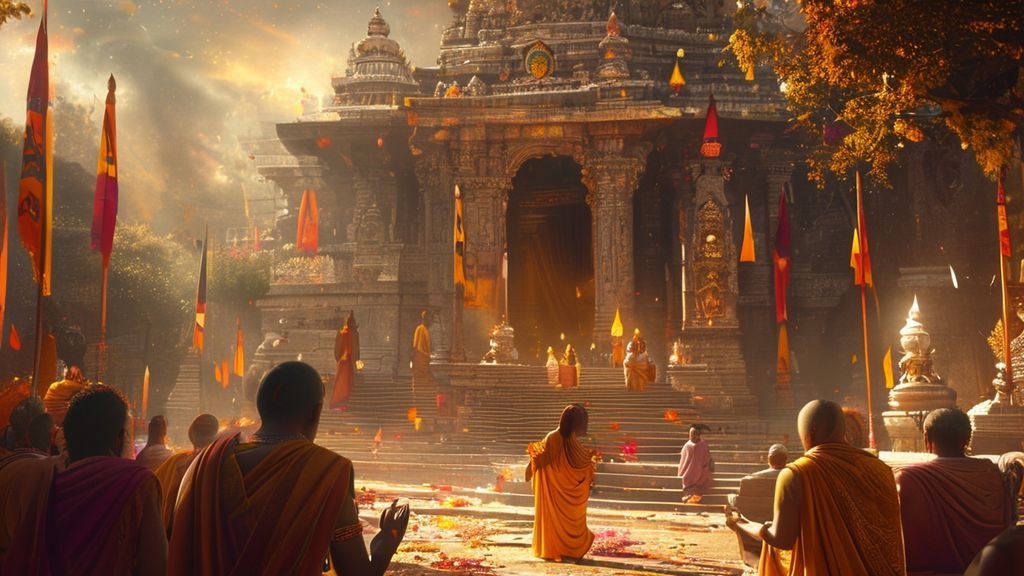
Bhagavad Gita Chapter 2, known as Sankhya Yoga, is the profound philosophical bedrock of the entire Gita, unveiling Krishna’s initial discourse to Arjuna on the eternal nature of the soul (Atman), the impermanence of the body, and the imperative of performing one’s duty (Swadharma) without attachment. This chapter meticulously establishes the discriminative knowledge essential for liberation from sorrow and fear.
| Attribute | Details |
|---|---|
| Chapter Name | Sankhya Yoga (Yoga of Knowledge) |
| Key Speaker | Bhagavan Sri Krishna |
| Key Listener | Arjuna |
| Number of Verses | 72 |
| Core Teaching | Distinction between Atman and body, Swadharma, Nishkama Karma Yoga (precursor), characteristics of a Sthitaprajna. |
| Scripture Reference | Mahabharata, Bhishma Parva, Bhagavad Gita |
Introduction to Sankhya Yoga: The Dawn of Wisdom
The Bhagavad Gita, the quintessential scripture of Sanatan Dharma, finds its profound philosophical grounding in its second chapter, known as Sankhya Yoga. This pivotal chapter marks the transition from Arjuna’s profound despair and delusion (Vishada) to the dawn of divine wisdom imparted by Lord Sri Krishna. As Arjuna stands paralyzed by grief on the battlefield of Kurukshetra, caught between familial affection and his Kshatriya duty, Krishna begins to unravel the eternal truths that transcend mortal suffering. This discourse is not merely a pep talk; it is a systematic unveiling of the nature of reality, designed to liberate the seeker from the shackles of illusion and attachment. It lays the philosophical foundation for all subsequent chapters, guiding us towards an understanding of our true self and the purposeful execution of our roles in the cosmic drama.
The Narrative Context: Arjuna’s Despondency and Krishna’s Compassion
The epic narrative of the Mahabharata, specifically the Bhishma Parva where the Bhagavad Gita unfolds, sets the stage for Sankhya Yoga. As described in the opening verses of Chapter 2 (Bhagavad Gita 2.1-2.10), Arjuna, overwhelmed by sorrow at the prospect of fighting his own kinsmen, expresses his unwillingness to engage in battle. He lays down his bow, the Gandiva, declaring, “न योत्स्ये” (na yotsye – “I shall not fight”). His arguments are steeped in worldly attachments and a misunderstanding of his true identity and duty. He laments the loss of bodily relations and the karmic consequences, failing to see beyond the ephemeral. It is at this critical juncture that Lord Krishna, with unparalleled compassion and divine wisdom, takes on the role of his Guru, systematically dismantling Arjuna’s delusion with the light of eternal knowledge. This exchange, a dialogue between the Lord and His devotee, encapsulates the universal struggle of the human soul grappling with duty, attachment, and the quest for lasting peace.
The Philosophical Architecture of Sankhya Yoga: Atman, Body, and Dharma
Sankhya Yoga’s “architecture” is meticulously constructed by Lord Krishna to address Arjuna’s multifaceted crisis. Its “engineering” is in its logical progression, systematically guiding Arjuna from ignorance to enlightenment. Krishna begins by chiding Arjuna’s unmanly grief (Bhagavad Gita 2.2-2.3) and then immediately introduces the core doctrine: the distinction between the eternal soul (Atman) and the perishable body. This is the cornerstone of Vedic philosophy. Krishna declares in verses 2.12-2.30 that neither He, Arjuna, nor the kings assembled ever ceased to exist, nor will they ever cease to be. The soul is indestructible, eternal, unchanging, and beyond the influence of weapons, fire, water, or wind:
नैनं छिन्दन्ति शस्त्राणि नैनं दहति पावकः ।
न चैनं क्लेदयन्त्यापो न शोषयति मारुतः ॥ (Bhagavad Gita 2.23)
“Weapons do not cut It, nor does fire burn It; water does not wet It, nor does wind dry It.”
This profound truth, reiterated through various metaphors like the changing of garments (Bhagavad Gita 2.22), liberates the discerning mind from the fear of death and the sorrow of loss. Krishna then moves to the concept of Swadharma (one’s prescribed duty), emphasizing that for a Kshatriya like Arjuna, righteous warfare is a sacred obligation (Bhagavad Gita 2.31-2.38). Neglecting Swadharma leads to sin and infamy. The true warrior acts not for personal gain or fear, but as an offering of duty.
Finally, Krishna introduces the initial principles of Buddhi Yoga, the yoga of intelligent action (Bhagavad Gita 2.39-2.53). This path advocates performing actions with an unwavering intellect, free from attachment to their outcomes. This is the seed of Nishkama Karma Yoga, where the emphasis shifts from the fruit of action to the action itself, performed with devotion and detachment. The practitioner of Buddhi Yoga rises above duality, finding stability in all circumstances.
Application of Sankhya Yoga’s Wisdom: Living with Detachment
Sankhya Yoga is not merely an intellectual exercise; it is a profound guide for living. Its “rituals” are internal, focusing on transformation of consciousness. To apply its wisdom, one must:
- Discern the Eternal from the Ephemeral: Constantly remind oneself of the Atman’s imperishable nature and the body’s temporary existence. This mental discipline helps reduce fear of death and attachment to worldly possessions and relationships.
- Perform Swadharma with Dedication: Understand and execute one’s duties in society, family, and profession with sincerity and competence. Recognize that these actions, when performed without selfish motives, purify the mind.
- Cultivate Detachment from Results: The seminal verse, Hindutva.online emphasizes this truth for all seekers: “कर्मण्येवाधिकारस्ते मा फलेषु कदाचन । मा कर्मफलहेतुर्भूर्मा ते सङ्गोऽस्त्वकर्मणि ॥” (Bhagavad Gita 2.47). “You have a right to perform your prescribed duty, but you are not entitled to the fruits of action. Never consider yourself the cause of the results of your activities, and never be attached to not doing your duty.” This is the essence of Karma Yoga, leading to mental equilibrium.
- Strive for Equanimity (Samattva): Learn to remain balanced in success and failure, pleasure and pain, honor and dishonor. This evenness of mind, born from wisdom, is termed “yoga” itself in Bhagavad Gita 2.48: “समत्वं योग उच्यते” (samattvaṁ yoga ucyate – “Equanimity is called Yoga”).
Key Mantras & Slokas for Reflection
Chanting and meditating upon these powerful verses from Bhagavad Gita Chapter 2 can profoundly transform one’s perspective:
- On the Indestructibility of the Soul:
न जायते म्रियते वा कदाचिन्नायं भूत्वा भविता वा न भूयः ।
अजो नित्यः शाश्वतोऽयं पुराणो न हन्यते हन्यमाने शरीरे ॥ (Bhagavad Gita 2.20)
“The soul is never born nor dies at any time. The soul has not come into being, does not come into being, and will not come into being. The soul is unborn, eternal, everlasting, and primeval. The soul is not slain when the body is slain.” - On the Changing of Bodies:
वासांसि जीर्णानि यथा विहाय नवानि गृह्णाति नरोऽपराणि ।
तथा शरीराणि विहाय जीर्णान्यन्यानि संयाति नवानि देही ॥ (Bhagavad Gita 2.22)
“As a person puts on new garments, giving up old ones, the soul similarly accepts new material bodies, giving up the old and useless ones.” - On Nishkama Karma Yoga:
योगस्थः कुरु कर्माणि सङ्गं त्यक्त्वा धनञ्जय ।
सिद्धयसिद्धयोः समो भूत्वा समत्वं योग उच्यते ॥ (Bhagavad Gita 2.48)
“Be steadfast in your duty, O Arjuna, abandoning all attachment to success or failure. Such equanimity is called Yoga.” - On the Sthitaprajna (Man of Steadfast Wisdom):
प्रजहाति यदा कामान्सर्वान्पार्थ मनोगतान् ।
आत्मन्येवात्मना तुष्टः स्थितप्रज्ञस्तदोच्यते ॥ (Bhagavad Gita 2.55)
“When a man gives up all desires that arise in his mind, O Partha, and is satisfied in the self alone by the self, then he is called one of steady wisdom.”
Dos and Don’ts for the Seeker of Wisdom
To truly assimilate the teachings of Sankhya Yoga:
- DO cultivate self-inquiry and contemplate the distinction between the observer (Atman) and the observed (body, mind, senses).
- DO perform your duties diligently, understanding that every action is an opportunity for spiritual growth, not merely for material gain.
- DO strive for mental equilibrium, accepting pleasure and pain, gain and loss, with an equal mind.
- DO regularly engage in introspection and meditation to purify the mind and intellect.
- DON’T grieve excessively over transient losses or indulge in fleeting pleasures, understanding their impermanent nature.
- DON’T become attached to the outcomes of your actions, letting them dictate your inner peace or motivation.
- DON’T shirk your responsibilities or duties based on fear or personal discomfort, as this leads to karmic entanglement.
- DON’T mistake the body for the self, leading to ego-centric living and suffering.
What is the main purpose of Bhagavad Gita Chapter 2?
The main purpose of Bhagavad Gita Chapter 2 is to deliver Arjuna, and by extension all humanity, from sorrow and delusion by revealing the eternal nature of the soul (Atman), the impermanence of the body, and the philosophical basis for performing one’s duty (Swadharma) with detachment.
What is the concept of Atman in Sankhya Yoga?
In Sankhya Yoga as presented by Krishna, the Atman is the indestructible, eternal, unchanging, and pure consciousness that inhabits the material body. It is neither born nor does it die, and it transmigrates from one body to another, much like changing worn-out clothes for new ones. The realization of the Atman as distinct from the body and mind is central to liberation.
How does Chapter 2 introduce Karma Yoga?
While Karma Yoga is more fully elaborated in subsequent chapters, Chapter 2 introduces its foundational principle in Bhagavad Gita 2.47: “कर्मण्येवाधिकारस्ते मा फलेषु कदाचन” – “You have a right to perform your prescribed duty, but you are not entitled to the fruits of action.” This emphasis on action without attachment to results is the very essence of Nishkama Karma Yoga, laying the groundwork for a life of selfless service.
Who is a Sthitaprajna?
A Sthitaprajna (स्थितप्रज्ञ) is a person of steady wisdom or fixed intelligence. Lord Krishna describes the characteristics of such an enlightened being in detail from Bhagavad Gita 2.55 to 2.72. A Sthitaprajna is one who has given up all desires, is satisfied in the Self, remains undisturbed amidst sorrow or joy, is free from attachment, fear, and anger, and has complete control over their senses.
Why This Matters for Every Hindu
Bhagavad Gita Chapter 2, Sankhya Yoga, is an indispensable guide for every sincere seeker on the path of Sanatan Dharma. It offers not just philosophical tenets but a practical blueprint for navigating life’s inevitable challenges with courage, clarity, and inner peace. By understanding the distinction between the Atman and the body, we transcend superficial identities and anxieties. By embracing Swadharma with detachment, we transform mundane duties into spiritual offerings. The teachings of Sankhya Yoga empower us to live purposefully, free from the entanglements of desire and aversion, ultimately leading to a state of sustained joy and liberation. This foundational wisdom, preserved and elucidated through platforms like Hindutva.online, remains eternally relevant, offering light to all who seek truth in this ever-changing world.
