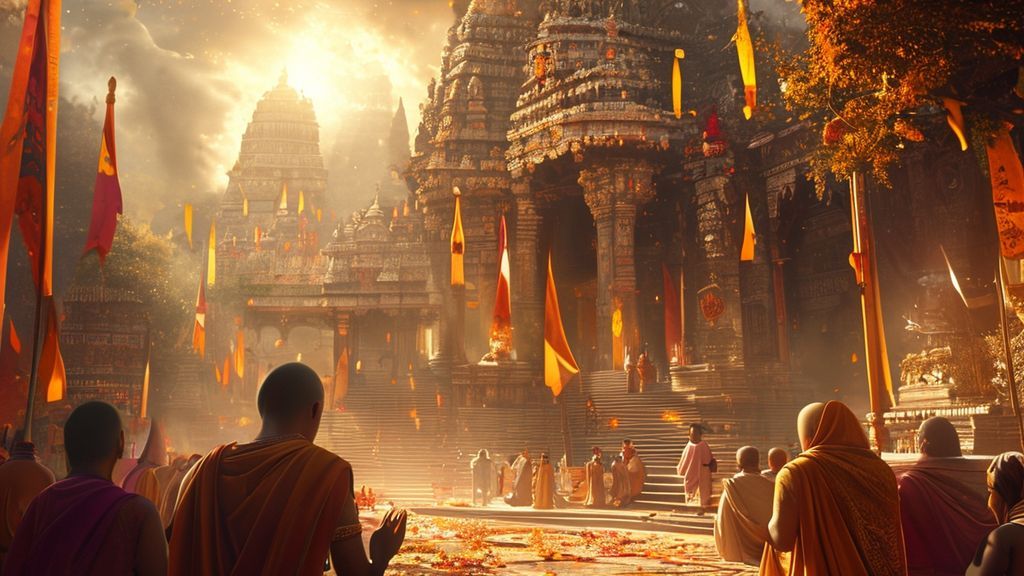
Yes, an individual can absolutely embrace Sanatana Dharma and become a Hindu. Hinduism, as the eternal way of life, does not historically rely on a formal conversion process but welcomes sincere seekers who adopt its principles, practices, and spiritual worldview, often marked by a personal commitment and the guidance of a Guru or community.
| Attribute | Details |
|---|---|
| Core Identity | Sanatana Dharma (The Eternal Righteous Path) |
| Entry Mechanism | Individual spiritual journey, adoption of principles, and often a formal sanskara (sacrament) or diksha (initiation) |
| Guiding Principle | Universal Truths of Dharma, Karma, and the pursuit of Moksha |
| Key Concepts | Shraddha (Faith), Sadhana (Spiritual Practice), Seva (Selfless Service) |
Embracing Sanatana Dharma: A Journey of the Soul
Sanatana Dharma, often known as Hinduism, is not merely a religion but a profound way of life, a vast ocean of philosophical thought, spiritual practices, and cultural traditions that have flourished for millennia. It is the eternal pursuit of Truth, an inner quest that transcends geographical boundaries and birthright. Unlike proselytizing religions, Sanatana Dharma has historically welcomed all who sincerely seek its wisdom, not through forced conversion, but through an individual’s voluntary adoption of its principles and practices. This profound openness is rooted in the understanding that the divine is immanent in all beings, and the path to realizing this truth is multifaceted, personal, and ultimately, universal. The journey into Sanatana Dharma is a spiritual homecoming for many, a discovery of ancient wisdom that resonates with the deepest aspirations of the human heart, guiding one towards righteousness, liberation, and profound peace.
The Universal Call of Dharma: Insights from Our Sacred Texts
While the concept of “conversion” in the Abrahamic sense is not intrinsic to Sanatana Dharma, our scriptures consistently emphasize the universal applicability of Dharma (righteous conduct), Karma (action and its consequences), and the pursuit of Moksha (liberation). The Rig Veda (I.164.46) proclaims, “Ekam Sat Vipra Bahudha Vadanti” (Truth is One, the sages call it by many names), indicating an inherent pluralism and acceptance of diverse paths to the ultimate reality. This philosophical bedrock allows for the assimilation of sincere seekers from all backgrounds.
The Bhagavad Gita, particularly in Chapter 9, Verse 32, states: “Mam hi Partha vyapasritya ye’pi syuh papa-yonayah, striyo vaisyas tatha sudras te’pi yanti param gatim.” (O son of Pritha, those who take refuge in Me, though they be of lower birth—women, Vaishyas, as well as Shudras—can approach the supreme destination). While this verse is primarily about devotion (Bhakti) transcending social distinctions of the time, its essence points to the divine’s accessibility to all, irrespective of birth or previous standing. The stories within the Itihasas and Puranas further illustrate this. For instance, the revered sage Vishwamitra, originally a Kshatriya king, attained the status of a Brahmarishi through intense penance (tapasya) and spiritual discipline, as narrated in the Valmiki Ramayana. His transformation underscores that spiritual merit and dedication to Dharma supersede birthright. Similarly, the wise Vidura, born of a maidservant, was revered for his profound adherence to Dharma and counsel in the Mahabharata. These narratives, alongside the philosophical tenets, affirm that Sanatana Dharma is open to all who align themselves with its eternal principles through sincere effort and faith (shraddha).
The Philosophical and Practical Framework: Building a Dharmic Life
Embracing Sanatana Dharma involves constructing an inner architecture grounded in its profound philosophical underpinnings and practical applications. It is not about adopting a dogma, but about internalizing a worldview. The four Purusharthas – Dharma (righteousness), Artha (prosperity), Kama (pleasure), and Moksha (liberation) – provide a holistic framework for human endeavor, guiding one to live a balanced and purposeful life. A seeker learns to integrate these principles, understanding that rightful action (Dharma) is the foundation for all other pursuits.
The practical path is structured around sadhana (spiritual practice). This includes Yoga (union), encompassing various paths like Karma Yoga (path of action), Bhakti Yoga (path of devotion), Jnana Yoga (path of knowledge), and Raja Yoga (path of meditation), as expounded in texts like the Yoga Sutras of Patanjali and the Bhagavad Gita. A sincere seeker builds their spiritual foundation by gradually adopting practices such as daily worship (puja), meditation (dhyana), scripture study (swadhyaya), and cultivating virtues like truthfulness (satya), non-violence (ahimsa), and compassion (karuna). This progressive integration of mind, body, and spirit into the Dharmic way of life forms the core of one’s journey.
Rituals and Formal Acceptance: The Path of Samskara and Diksha
While there is no single, universally mandated “conversion ritual” for all of Sanatana Dharma, sincere seekers often formalize their commitment through various traditional means. The most common approach involves a deeply personal journey leading to an optional but spiritually significant public declaration or initiation.
- Study and Immersion: Begin by deeply studying the Vedas, Upanishads, Puranas, and Itihasas. Engage with the philosophy, ethics, and practices. Visit temples, participate in festivals, and learn from experienced devotees or Gurus.
- Adoption of Dharmic Practices: Start integrating daily sadhana, such as chanting mantras, performing simple puja, meditation, and practicing ethical living (Yamas and Niyamas of Yoga).
- Seeking a Guru: Many traditions within Hinduism emphasize the importance of a Guru (spiritual teacher). A Guru can provide guidance, impart sacred knowledge, and initiate a seeker into a specific lineage (sampradaya). This is a profound step, as outlined in the Mundaka Upanishad (I.2.12), which advises seeking knowledge from a Guru who is “shrotriyam brahma-nishtam” (learned in the scriptures and established in Brahman).
- Sanskara (Sacrament): For those born outside Hindu families, a purification or acceptance ritual, sometimes called Shuddhikaran (purification) or Ghar Wapsi (return home) in certain contexts, may be performed. Historically, communities would absorb new members through various samskaras, adapting them to the local traditions. These rites purify and formally acknowledge the individual’s commitment to the Hindu way of life. They may involve a fire ritual (homa) and the taking of a sacred thread (Yajnopaveeta) for men, signifying spiritual rebirth.
- Diksha (Initiation): If joining a specific lineage or sect (e.g., Shaivism, Vaishnavism, Shaktism), a Diksha ceremony is often performed by a Guru. This initiation involves the Guru transmitting a mantra (mantra-diksha) and formally accepting the disciple into the spiritual family. This is a profound spiritual pledge, often accompanied by vows to uphold the principles of that tradition.
The specific rituals can vary widely, but the underlying intent is always a sincere, voluntary commitment to the principles of Sanatana Dharma. For deeper insights into specific traditions and their initiation processes, one can explore resources at Hindutva.online.
Mantras and Chants for Every Seeker
Chanting mantras is a powerful spiritual practice (japa) that purifies the mind, invokes divine energy, and fosters inner peace. Here are some universal mantras suitable for all seekers:
- Om (ॐ): The primordial sound of the universe, representing the absolute reality (Brahman). Chanting “Om” calms the mind and connects one to the cosmic vibration.
- Gayatri Mantra (गायत्री मंत्र): A revered Vedic mantra from the Rig Veda (3.62.10), dedicated to Savitr, the solar deity, for spiritual enlightenment.
“Om Bhur Bhuvah Svah Tat Savitur Varenyam Bhargo Devasya Dhimahi Dhiyo Yo Nah Prachodayat.”
(We meditate on the adorable glory of the Resplendent Vivifier, Savitr. May He stimulate our intellects.)
- Mahamrityunjaya Mantra (महामृत्युंजय मंत्र): A powerful mantra from the Rig Veda (7.59.12) dedicated to Lord Shiva, for health, longevity, and liberation.
“Om Tryambakam Yajamahe Sugandhim Pushtivardhanam Urvarukamiva Bandhanan Mrityor Mukshiya Maamritat.”
(We worship the three-eyed Lord Shiva, who is fragrant and nourishes all beings. May He liberate us from death for the sake of immortality, just as the cucumber is severed from its bondage to the creeper.)
- Hare Krishna Mahamantra (हरे कृष्ण महामंत्र): A popular mantra, especially in the Vaishnava tradition, for cultivating devotion and love for the Divine.
“Hare Krishna, Hare Krishna, Krishna Krishna, Hare Hare, Hare Rama, Hare Rama, Rama Rama, Hare Hare.”
Dos and Don’ts for a Dharmic Lifestyle
Embracing Sanatana Dharma involves adopting certain ethical and cultural practices that foster spiritual growth and harmony:
- Do: Cultivate Ahimsa (non-violence) in thought, word, and deed.
- Do: Practice Satya (truthfulness) and Asteya (non-stealing).
- Do: Observe Shaucha (purity) and Santosha (contentment).
- Do: Engage in daily spiritual practice (sadhana), however simple, such as meditation or chanting.
- Do: Show respect for all forms of life and the environment.
- Do: Seek knowledge (Jnana) and wisdom from scriptures and enlightened beings.
- Don’t: Criticize or disrespect other spiritual paths, for Sanatana Dharma believes in the plurality of paths.
- Don’t: Engage in harmful speech or gossip (apavada).
- Don’t: Consume intoxicants or engage in activities that cloud the mind and hinder spiritual progress, especially when observing specific vows.
- Don’t: Assume a Guru or a specific tradition without proper research and heartfelt resonance.
Frequently Asked Questions About Embracing Hinduism
Is it necessary to change my name?
While not strictly mandatory for every individual, many who formally embrace Sanatana Dharma choose to adopt a Sanskrit name. This is often seen as a symbolic act of spiritual rebirth and a clear statement of identity within the Dharmic tradition. It helps in shedding the old identity and fully embracing the new spiritual path. Your Guru, if you have one, may suggest a name.
Can I continue to observe my old cultural traditions?
Sanatana Dharma is remarkably eclectic and inclusive. While adopting core Hindu practices and worldview, minor personal cultural traditions that do not conflict with Dharmic principles can often be maintained. The emphasis is on the spiritual transformation and adherence to Dharma rather than a complete erasure of personal history. However, traditions conflicting with Dharmic ethics, such as consumption of forbidden foods or violent practices, would naturally be renounced.
Do I have to become vegetarian?
While many Hindu traditions strongly advocate vegetarianism (Ahara-niyama) based on the principle of Ahimsa (non-violence) and for spiritual purity (sattva), it is not an absolute, universal requirement for all who identify as Hindu. However, for serious spiritual aspirants, especially those initiated into specific Vaishnava or yogic lineages, a lacto-vegetarian diet is often a fundamental practice to cultivate purity of mind and body. It is a path one gradually adopts as part of their spiritual journey, understanding its benefits.
The Eternal Embrace: Why Sanatana Dharma Welcomes All Seekers
The journey of embracing Sanatana Dharma is a testament to its enduring universality and timeless wisdom. It is a path of self-discovery, righteous living, and ultimately, the realization of one’s true, divine nature. This tradition does not seek to convert by force or coercion, but rather to inspire and guide those who, of their own volition and inner calling, resonate with its profound truths. By welcoming seekers from all walks of life, Sanatana Dharma continues to affirm its foundational principle: that the divine spark resides within all beings, and the path to realizing it is open to any sincere heart. This expansive and inclusive nature ensures the preservation and flourishing of Sanatana Dharma, not as a static dogma, but as a living, evolving spiritual tradition that continues to offer solace and liberation to humanity across all ages. We at Hindutva.online celebrate every such spiritual journey.
