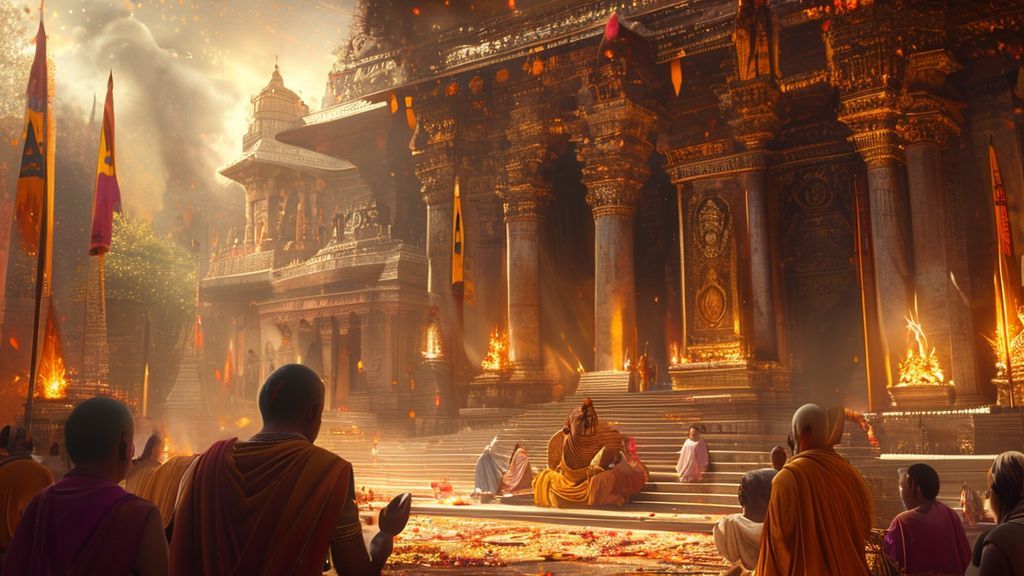
Charaka, revered as the Father of Ayurvedic Medicine, was an ancient Indian sage and physician whose monumental work, the Charaka Samhita, codified the holistic science of Ayurveda. His teachings, deeply rooted in Vedic philosophy, provide timeless wisdom on preventative care, diagnosis, and treatment, emphasizing the balance of body, mind, and spirit for enduring health and spiritual well-being.
| Attribute | Details |
|---|---|
| Deity (or Revered Sage) | Maharishi Charaka, part of the divine lineage of Ayurveda originating from Brahma and Dhanvantari. |
| Location/Origin | Ancient India, likely associated with the Kuru kingdom, a profound center of Vedic learning. |
| Key Commemoration | Ayurveda Day (Dhanvantari Jayanti) honors the entire tradition, including Charaka’s invaluable contribution. |
| Scripture Reference | Primarily the Charaka Samhita; also referenced in historical texts and commentaries on Ayurveda. Connects to Atharva Veda as an Upaveda. |
The Timeless Radiance of Maharishi Charaka and Ayurveda
In the vast tapestry of Sanatan Dharma, where spiritual wisdom intertwines seamlessly with practical science, stands the colossal figure of Maharishi Charaka. His name resonates not merely as a historical physician but as a divine conduit for the eternal science of life—Ayurveda. For millions of sincere seekers and devotees, Charaka is the embodiment of holistic health, a guiding light whose teachings illuminate the path to physical vitality, mental clarity, and spiritual harmony. His magnum opus, the Charaka Samhita, is not just a medical treatise; it is a profound philosophical discourse, a living scripture that underscores the intrinsic connection between the microcosm (human body) and the macrocosm (universe), echoing the very essence of Vedic thought. To understand Charaka is to understand the very breath of ancient Indian wisdom, a wisdom that continues to heal and inspire across millennia.
The Divine Lineage and Puranic Context of Ayurveda
The history of Ayurveda, as recounted in the *Charaka Samhita* itself (Sutrasthana, Chapter 1, verses 3-27), is not a mere chronological account but a sacred transmission of knowledge. It begins with Lord Brahma, the creator, who first comprehended this complete knowledge of life. Brahma imparted Ayurveda to Prajapati Daksha, who then taught it to the Ashwini Kumaras, the celestial physicians. From the Ashwini Kumaras, Lord Indra received this divine science. Witnessing humanity’s suffering, a great assembly of Rishis, led by Bharadvaja, approached Indra to learn the secrets of health and longevity. Bharadvaja, by his intense Tapas and devotion, successfully received the full scope of Ayurveda directly from Indra.
Bharadvaja then transmitted this knowledge to a host of other sages, prominent among them being Punarnasu Atreya. Atreya, in turn, had six brilliant disciples: Agnivesha, Bhela, Jatukarna, Parashara, Harita, and Ksharapani. Each of them composed their own treatises, but it was Agnivesha’s Tantra that was considered the most comprehensive and authoritative. Maharishi Charaka, centuries later, meticulously redacted, refined, and expanded upon Agnivesha’s original text, earning him the revered title of *pratisanskarta* (reviser/redactor). His work, the Charaka Samhita, thus represents the distilled essence of this unbroken, divinely-inspired lineage, making it the foundational pillar of internal medicine in Ayurveda.
The Scientific & Philosophical Marvels of the Charaka Samhita
The Charaka Samhita is a masterpiece of ancient Indian scientific inquiry, presented in a structured, logical, and poetic style that mirrors the profound intellectual rigor of the Vedic age. It is divided into eight primary sections, known as *Sthana*s, each addressing a specific domain of Ayurvedic knowledge:
- Sutrasthana: The foundational principles, philosophy, etiology, and basic therapeutic approaches. It outlines the core concepts like Tridosha (Vata, Pitta, Kapha), Panchamahabhutas (five elements), Dhatus (seven bodily tissues), and the concept of Agni (digestive fire).
- Nidanasthana: Focused on pathology and diagnosis, detailing the causes and symptoms of various diseases.
- Vimanasthana: Deals with specific diagnostics, measures, tastes, and the importance of appropriate dosages and the physician-patient relationship.
- Sharirasthana: Anatomy, embryology, and the intricate structure of the human body, viewed holistically with the mind and soul.
- Indriyasthana: Prognosis, focusing on signs and symptoms that indicate the severity and curability of diseases, including terminal signs.
- Chikitsasthana: The most extensive section, detailing specific treatments and therapeutic interventions for a vast array of diseases, including rejuvenation (Rasayana) and aphrodisiacs (Vajikarana).
- Kalpasthana: Pharmaceutical preparations, focusing on the composition and administration of various herbal medicines and their purgative and emetic properties.
- Siddhisthana: Discusses the successful administration of Panchakarma therapies (purification procedures) and the importance of ethical conduct in medical practice.
Charaka’s brilliance lies not only in his exhaustive cataloging of diseases and remedies but in his profound emphasis on the individual constitution (Prakriti), the influence of diet (Ahara), lifestyle (Vihara), and mental state (Manas) on health. He introduced a sophisticated system of diagnostics based on direct observation (*Pratyaksha*), inference (*Anumana*), and authoritative statements (*Aptopadesha*). The ethical code for physicians outlined in the *Charaka Samhita* is remarkably modern, stressing compassion, integrity, continuous learning, and selfless service, reflecting the highest Dharmic values.
Principles of Ayurvedic Living & Wellness (as per Charaka)
Charaka’s wisdom transcends mere medicine; it is a guide for a complete Dharmic life. His emphasis on preventative care (*Swasthavritta*) is paramount. Here are key principles for living a balanced life:
- Dinacharya (Daily Routine): Wake before sunrise (Brahma Muhurta), perform self-massage (Abhyanga), clean the tongue, practice oil pulling, and engage in daily prayer and meditation.
- Ritucharya (Seasonal Routine): Adjust diet and lifestyle according to the changing seasons to maintain harmony with nature. For instance, consuming lighter foods in summer and warming, nourishing foods in winter.
- Ahara (Diet): Emphasize fresh, wholesome, seasonal, and locally sourced foods. Eat mindfully, in moderation, and at regular times. Understand your Prakriti and choose foods that balance your Doshas. Avoid incompatible food combinations (Viruddha Ahara).
- Vihara (Lifestyle): Maintain regular sleep patterns, engage in appropriate physical activity, manage stress through yoga and meditation, and cultivate positive relationships. Avoid excessive sensory input or emotional extremes.
- Sadvritta (Ethical Conduct): Live a life of truthfulness (Satya), non-violence (Ahimsa), compassion (Karuna), and self-control (Brahmacharya). These ethical guidelines are considered fundamental for mental and spiritual health, directly impacting physical well-being.
These guidelines, meticulously detailed in the *Charaka Samhita*, are designed to align the individual with the natural rhythms of the universe, fostering sustained health and spiritual growth. More insights can be found on Hindutva.online.
Mantras & Chants for Health and Well-being
While there are no specific Mantras dedicated *to* Charaka himself, the invocation of Lord Dhanvantari, the divine physician and progenitor of Ayurveda, is central to seeking health and healing within the Dharmic tradition. Reciting the Dhanvantari Mantra is an act of devotion and a plea for divine intervention in health matters.
Dhanvantari Mantra:
ॐ नमो भगवते वासुदेवाय धन्वन्तरये अमृतकलशहस्ताय सर्व भय विनाशाय सर्व रोग निवारणाय त्रैलोक्यपतये त्रैलोक्यनिधये श्री महाविष्णु स्वरूपाय श्री धन्वन्तरि स्वरूपाय श्री श्री श्री औषधचक्राय नमः॥
Om Namo Bhagavate Vasudevaya Dhanvantaraye Amrita Kalasha Hastaya Sarva Maya Vinashanaya Sarva Roga Nivaranaaya Trailokya Pataye Trailokya Nidhaye Shri Mahavishnu Swarupaya Shri Dhanvantari Swarupaya Shri Shri Shri Aushadha Chakraaya Namaha.
This mantra invokes Lord Dhanvantari, who holds the pot of nectar (Amrita Kalasha), praying for the removal of all fears, alleviation of all diseases, and for overall well-being. Additionally, a sloka from the *Charaka Samhita* itself (Sutra Sthana, Chapter 1, verse 28) beautifully encapsulates the essence of Ayurveda:
हिताहितं सुखं दुःखमायुस्तस्य हिताहितम्।
मानं च तच्च यत्रोक्तमायुर्वेदः स उच्यते॥
Hitāhitaṁ sukhaṁ duḥkhamāyustasya hitāhitam।
Mānaṁ ca tacca yatproktamāyurvedaḥ sa ucyate॥
“That science is called Ayurveda, which describes the beneficial and harmful life, happy and unhappy life, and what is wholesome and unwholesome for life, and its measure.”
Ayurvedic Dos and Don’ts for a Harmonious Life
Embracing Charaka’s wisdom requires conscious choices in daily life:
- Do:
- Eat freshly prepared, warm meals.
- Drink warm water throughout the day.
- Practice self-massage (Abhyanga) with appropriate oils.
- Sleep and wake at consistent times, aligning with natural cycles.
- Engage in daily physical activity suited to your constitution.
- Practice meditation, Pranayama, or prayer daily.
- Cultivate a calm mind and positive thoughts.
- Seek knowledge and live by Dharmic principles.
- Don’t:
- Eat processed, cold, or stale food.
- Suppress natural urges (e.g., hunger, thirst, sleep, urination).
- Overeat or eat while emotionally distressed.
- Engage in excessive sensory stimulation.
- Stay up late or sleep excessively.
- Consume incompatible food combinations (e.g., milk with fish/sour fruits).
- Expose yourself to extreme weather without adequate protection.
- Entertain negative thoughts, jealousy, or anger excessively.
Frequently Asked Questions About Charaka and Ayurveda
Who was Maharishi Charaka and what is his primary contribution?
Maharishi Charaka was an ancient Indian physician and sage, revered as the Father of Ayurvedic Medicine, particularly internal medicine. His primary contribution is the meticulous redaction and expansion of Agnivesha’s Tantra into the monumental *Charaka Samhita*, which systematically codifies the principles, diagnostics, and treatments of Ayurveda, profoundly influencing global medicine.
What is the significance of the Charaka Samhita in Sanatan Dharma?
The *Charaka Samhita* is not merely a medical text but a philosophical exposition rooted in Vedic thought. It champions a holistic understanding of life, integrating physical health with mental, emotional, and spiritual well-being, aligning perfectly with the Dharmic emphasis on balancing Purusharthas (Dharma, Artha, Kama, Moksha) for a fulfilling life. It asserts that health is a prerequisite for pursuing all other goals.
How does Charaka’s work emphasize prevention over cure?
Charaka’s work places immense importance on *Swasthavritta*, the maintenance of health for a healthy person. He provides extensive guidelines on daily routines (Dinacharya), seasonal routines (Ritucharya), proper diet (Ahara), and ethical conduct (Sadvritta) to prevent disease before it manifests, reflecting a profound understanding of proactive health management rather than reactive treatment.
Is Charaka the only ancient Ayurvedic authority?
While Charaka is paramount for *Kayachikitsa* (internal medicine), other great sages like Sushruta (father of surgery, *Sushruta Samhita*) and Vagbhata (author of *Ashtanga Hrudayam*, synthesizing both) are equally revered. Together, these three form the “Great Triad” or *Vriddha Trayi* of Ayurveda, each contributing uniquely to the comprehensive science of life.
Why Charaka’s Legacy Matters for Sanatan Dharma
The legacy of Maharishi Charaka is an enduring testament to the depth and foresight of Sanatan Dharma. His work reminds us that true health is not merely the absence of disease but a state of profound balance—of the Doshas, Dhatus, and Malas within the body, and of the mind, senses, and soul with the universal consciousness. Charaka teaches us that the pursuit of health is inherently a spiritual journey, a commitment to self-care as a form of Dharma.
In an age riddled with fragmented and symptomatic approaches to health, the holistic vision of Charaka stands as a beacon, guiding us back to fundamental truths: that nature holds the answers, that individual constitution is paramount, and that ethical living is the bedrock of well-being. By preserving and practicing the wisdom of Charaka, we not only secure our physical vitality but also uphold a priceless facet of our ancestral heritage, ensuring the timeless relevance of Sanatan Dharma for future generations. His teachings are a living wellspring, eternally refreshing the spirit and body, available to all who seek genuine healing and harmony through Hindutva.online.