Ganesha tattoos, when placed on body parts considered impure or treated without proper reverence, are generally considered disrespectful within Sanatan Dharma, as they can trivialize the divine form of Vighnaharta. The sacred imagery of Lord Ganesha demands profound respect, reflecting His supreme status as the remover of obstacles and bestower of wisdom, making His representation on the body a matter of deep spiritual consideration.
| Attribute | Details |
|---|---|
| Deity | Lord Ganesha (Ganapati, Vighnaharta, Vinayaka) |
| Origin of Concept | Ancient India, with roots in Vedic traditions and elaborated in Puranas. |
| Key Festival | Ganesh Chaturthi (Vinayaka Chaturthi), celebrating His birth. |
| Primary Scripture Reference | Ganesha Purana, Mudgala Purana, Skanda Purana, Shiva Purana. |
Introduction: The Sanctity of Divine Form
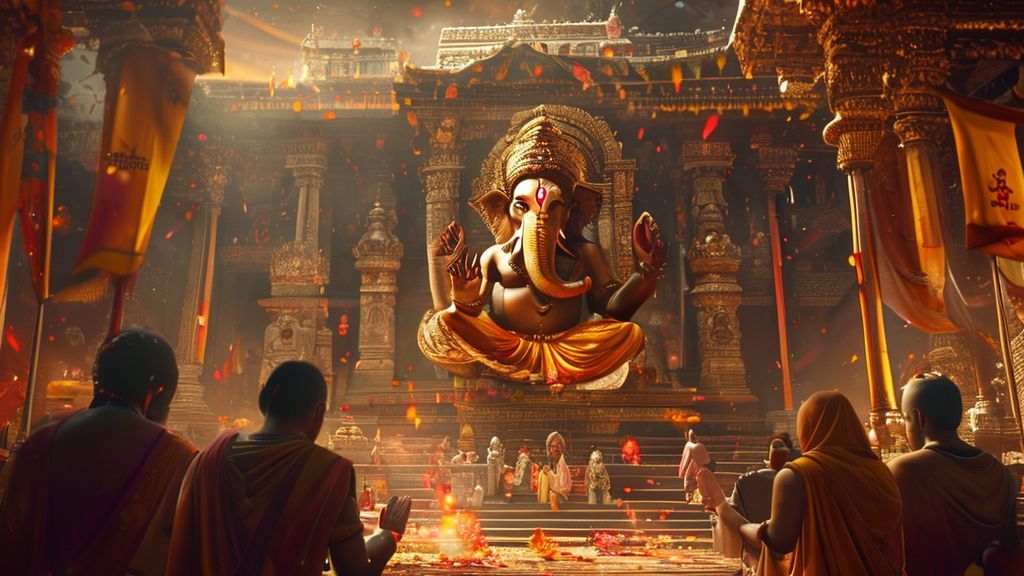
In Sanatan Dharma, the form of a deity is not merely an artistic representation but a sacred conduit, a Pratima, through which the devotee connects with the divine essence. Lord Ganesha, the elephant-headed son of Shiva and Parvati, holds a paramount position as Vighnaharta (the remover of obstacles) and Siddhidata (the bestower of success and accomplishments). He is the first to be worshipped in any ritual, any new venture, any prayer. The reverence accorded to His image, whether as a murti in a temple, a framed picture in a home, or a symbol invoked in meditation, is profound and non-negotiable. This deep-seated respect forms the very foundation of understanding why the practice of tattooing His divine image on the body warrants careful spiritual consideration.
The human body, according to Vedic philosophy, is a temple unto itself – “Deho Devalaya Proktah”. It is a vessel for the Atman, housing the divine spark. While some forms of sacred marking have existed in indigenous traditions, the modern phenomenon of Ganesha tattoos often intersects with popular culture, fashion trends, and a superficial understanding of Dharmic principles. This guide aims to illuminate the traditional perspective, drawing from scriptural wisdom, to offer a comprehensive understanding for sincere seekers and devotees.
Puranic History & Legend: The Divinity of Lord Ganesha
The origins and exploits of Lord Ganesha are beautifully narrated across various Puranas, establishing His unparalleled divine status. The most widely known account, found prominently in the Shiva Purana (Rudra Samhita, Sati Khanda), describes His miraculous birth. Devi Parvati, desiring a loyal protector while Shiva was away in meditation, fashioned a boy from the unguents and impurities of Her own body and infused Him with life. This Ganesha, resolute in His duty, famously obstructed Lord Shiva from entering Parvati’s private chambers, leading to a fierce battle in which Shiva, in a fit of rage, severed the boy’s head.
Overcome with grief, Parvati vowed to destroy creation. To appease Her, Shiva dispatched His Ganas to find the head of the first creature they encountered, which happened to be an elephant. Attaching the elephant head to the boy’s body, Shiva resurrected Him, blessing Him as Ganapati, the Lord of His Ganas, and decreeing that He would be worshipped first among all deities – Prathama Vandana. This narrative establishes Ganesha not as a mere figure, but as a divine being born of purity, empowered by the Supreme Mother, and granted ultimate authority by the Supreme Father.
Other scriptures like the Ganesha Purana and Mudgala Purana elaborate further, detailing His various incarnations (e.g., Mahotkata, Mayureshvara, Dhumraketu) and His role in cosmic events. These scriptures consistently portray Ganesha as a benevolent yet powerful deity whose form is inherently sacred, each limb and attribute imbued with cosmic significance. To reduce such a divine form to a mere aesthetic choice, especially without understanding its profound implications, can be seen as a grave oversight by traditionalists.
Iconographic & Spiritual Marvels: The Science of Ganesha’s Form
Unlike transient art, the iconography of Ganesha is a profound science, a Yantra in visual form, designed to evoke specific spiritual energies and wisdom. Every aspect of His form carries deep philosophical and esoteric meaning:
- Large Head: Signifies immense wisdom (Mahabuddhi) and profound thinking.
- Small Eyes: Symbolize deep concentration and the ability to see beyond the superficial.
- Big Ears (Shurpakarna): Indicate keen listening (Shravana), absorbing all good and filtering out the bad.
- Long Trunk: Represents adaptability, efficiency, and the power of discrimination (Viveka Buddhi). It can pick up a massive log or a tiny needle.
- Single Tusk (Ekadanta): Represents the ability to overcome duality, integrating the material and spiritual worlds. The broken tusk was used to transcribe the Mahabharata, signifying the sacrifice for knowledge.
- Modaka (Sweet Dumpling): A symbol of the sweet rewards of spiritual practice and Moksha, the bliss of self-realization.
- Mouse (Mushaka): His vehicle, symbolizing the control over one’s desires and ego (Maya), as the mouse is known for its insatiable cravings.
When a murti of Ganesha is consecrated, specific rituals (Prana Pratishtha) are performed to invite the divine energy to reside within it, transforming it from inert matter into a living deity. This principle extends to all representations of the divine. Therefore, placing such a powerful, consecrated symbol on the skin, particularly on parts of the body considered impure or that undergo defiling acts, raises fundamental questions about its sanctity and the devotee’s understanding of Dharma. The very act of tattooing, involving needles and permanent ink, is far removed from the sacred Vedic rituals of purification and consecration that empower divine imagery.
Rituals & Puja Vidhi: The Path of True Devotion
Instead of superficial markings, Sanatan Dharma offers time-honored practices for truly embedding the essence of Lord Ganesha within one’s consciousness and life. These rituals emphasize purity, intent (Sankalpa), and heartfelt devotion (Bhakti):
- Daily Puja: Offer prayers, flowers (Durva grass is Ganesha’s favorite), sweets (Modaka), and incense to a consecrated murti or image of Ganesha in a clean space.
- Ganesh Chaturthi Observance: Celebrate His annual festival with fasting, special pujas, recitation of Ganesha Atharvashirsha, and community gatherings.
- Vratas: Observe fasts on Tuesdays or on specific Chaturthi tithis (like Sankashti Chaturthi) dedicated to Ganesha for specific boons or obstacle removal.
- Mantra Japa: Regular chanting of Ganesha mantras purifies the mind and invokes His blessings.
- Service (Seva): Engage in selfless service, especially towards education and removing obstacles for others, embodying Ganesha’s spirit of wisdom and benevolence.
- Meditation: Meditate upon His form and attributes, internalizing His qualities of wisdom, stability, and discrimination.
These practices are designed to cultivate a deep, living relationship with the deity, transforming the inner self rather than merely adorning the outer body. For deeper insights into devotional practices and their significance, visit Hindutva.online.
Mantras & Chants for Lord Ganesha
Chanting Ganesha mantras is a powerful way to invoke His blessings and wisdom. Here are some essential chants:
- Moola Mantra:
ॐ गं गणपतये नमः
Om Gam Ganapataye Namaha
(Meaning: Salutations to Lord Ganesha, the Lord of Ganas.) - Vakratunda Mahakaya Mantra:
वक्रतुण्ड महाकाय सूर्यकोटि समप्रभ।
निर्विघ्नं कुरु मे देव सर्वकार्येषु सर्वदा॥
Vakratunda Mahakaya Suryakoti Samaprabha |
Nirvighnam Kuru Me Deva Sarvakaryeshu Sarvada ||
(Meaning: O Lord with a curved trunk, mighty body, and the radiance of a million suns, I pray to You, O Lord, to remove all obstacles from all my endeavors, always.) - Ganesha Gayatri Mantra:
ॐ एकदन्ताय विद्महे वक्रतुण्डाय धीमहि तन्नो दन्ति प्रचोदयात्॥
Om Ekadantaya Vidmahe Vakratundaya Dhimahi Tanno Danti Prachodayat ||
(Meaning: Om, Let us meditate on the one-tusked Lord; May the Lord with the curved trunk enlighten us; May that Danta (Ganesha) inspire us.)
Dos and Don’ts Regarding Sacred Imagery
The reverence for divine forms in Sanatan Dharma dictates certain protocols:
- DO keep murtis and sacred images in clean, elevated, and dedicated spaces within your home or temple.
- DO approach sacred images with a purified mind and body, maintaining cleanliness and respect.
- DO understand the profound symbolism and philosophical underpinnings of each divine form before adopting or representing it.
- DO perform traditional pujas and spiritual practices to connect with the deity.
- DON’T place sacred images on the floor, in cluttered spaces, or in areas associated with impurity (e.g., bathrooms, lavatories).
- DON’T use sacred symbols merely as fashion accessories or decorative items, thereby trivializing their spiritual significance.
- DON’T place tattoos of divine forms on body parts considered impure (below the navel, feet, buttocks) or those prone to defilement. This is considered a significant act of disrespect (Avagya) and can incur negative spiritual consequences.
- DON’T engage in activities that contradict the sanctity of the image while bearing it on your body (e.g., consumption of intoxicants, engaging in impure acts).
Frequently Asked Questions
Is getting a Ganesha tattoo inherently wrong?
From a strictly traditional Dharmic perspective, getting a Ganesha tattoo, particularly on body parts considered impure or prone to defilement (e.g., legs, feet, lower back, areas obscured by clothing), is generally considered disrespectful. The sanctity of the divine form is paramount, and reducing it to a permanent body adornment, especially in inappropriate locations, can be seen as an act of trivialization. While personal intent matters, the scriptural guidance on reverence for divine forms is clear.
What if the tattoo is on an “acceptable” body part like the arm or upper back?
Even on body parts generally considered ‘cleaner’ such as the arm, upper back, or chest, concerns persist. The body is subject to various states of purity and impurity throughout the day and life. Engaging in mundane activities, physical contact, or even passing through impure spaces can compromise the sanctity associated with a divine image permanently etched on the skin. Furthermore, tattoos are often viewed as personal declarations rather than acts of collective reverence, which can shift the spiritual energy associated with the symbol. The core issue remains: a divine form is not a mere design; it is a sacred representation requiring constant, conscious reverence.
Can one remove a Ganesha tattoo if they regret it or understand the implications later?
While physically removing a tattoo through laser procedures is possible, the act of having it etched on the skin and then removing it carries spiritual implications. If one genuinely regrets the tattoo out of a newfound understanding and respect for Dharma, seeking forgiveness from Lord Ganesha through sincere prayer, puja, and perhaps undertaking penance (prayaschitta) is advisable. The physical removal might address the external aspect, but the internal purification and re-establishment of reverence are more crucial for spiritual well-being.
What is the spiritual consequence of an improperly placed or disrespected Ganesha tattoo?
According to Dharmic principles, disrespect towards divine forms can accrue negative karma. While Lord Ganesha is benevolent, continuous disregard for the sanctity of His form, especially when it is permanently etched on the body and subject to impurity, can lead to spiritual unease, mental agitation, or an accumulation of obstacles (Vighnas) rather than their removal. It disrupts the harmony between the individual and the divine energy Ganesha represents. True devotion involves respect and understanding, and actions that contradict these principles may hinder one’s spiritual progress.
Dharmic Significance: Preserving Sacred Reverence
The discussion surrounding Ganesha tattoos transcends mere aesthetics; it delves into the heart of Sanatan Dharma’s understanding of divinity, reverence, and the sanctity of form. The preservation of Dharma hinges upon upholding the sacredness of our traditions, our deities, and their representations. Lord Ganesha embodies wisdom, intellect, and the power to overcome all hurdles. His form is a spiritual roadmap. To truly honor Him is to integrate His principles into our lives, to cultivate inner purity, and to approach all divine imagery with the utmost respect and understanding. Our external actions should always reflect our inner devotion. By upholding the sanctity of Lord Ganesha’s image, we not only pay homage to the Vighnaharta but also reinforce the profound spiritual values that form the bedrock of Sanatan Dharma for generations to come. This commitment to traditional reverence is crucial for maintaining the integrity and efficacy of our spiritual practices.