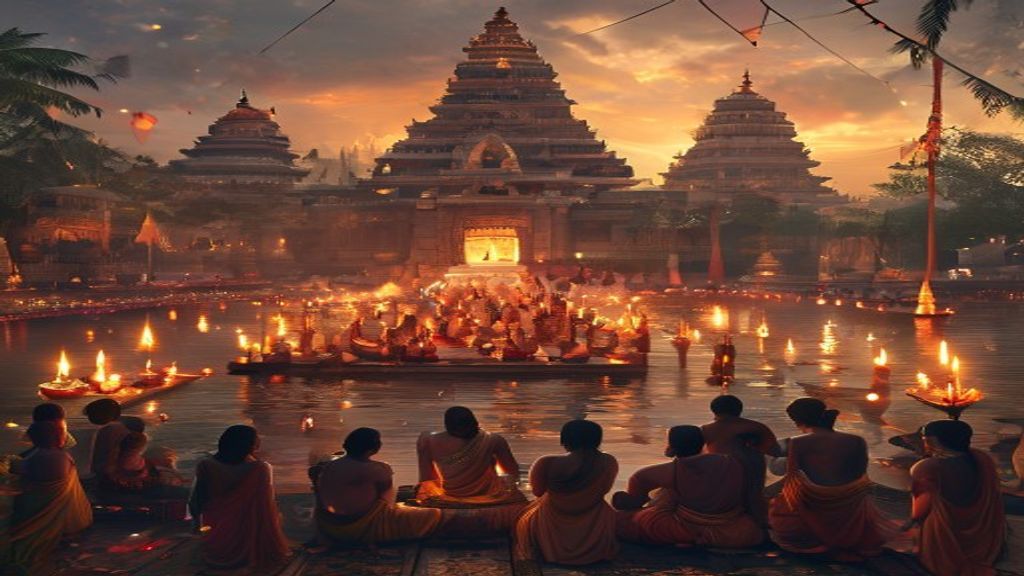
Ganga Aarti is a profound Vedic ritual of gratitude and devotion, performed daily on the banks of the sacred River Ganga. It involves offerings of lamps (diyas), incense, flowers, and chants to Maa Ganga, symbolizing purification, enlightenment, and spiritual communion with the divine river, invoking her blessings for all beings.
| Attribute | Details |
|---|---|
| Deity Honored | Maa Ganga (Gangadevi), the divine personification of the Ganges River. |
| Primary Locations | Varanasi (Dashashwamedh Ghat), Haridwar (Har Ki Pauri), Rishikesh (Parmarth Niketan Ashram Ghat). |
| Key Associated Festivals | Ganga Dussehra, Kartik Purnima, Makar Sankranti. |
| Scripture Reference | Skanda Purana (Kashi Khanda), Padma Purana, Valmiki Ramayana (Balakanda for Ganga’s descent). |
Introduction: The Sacred Confluence of Devotion and Divinity
The Ganga Aarti is not merely a ritual; it is a profound spiritual experience, an immersive act of devotion that captivates the senses and elevates the soul. Performed daily at dusk on the hallowed banks of the River Ganga, this ancient ceremony embodies the Hindu reverence for nature, the divine feminine, and the purifying power of water. For millions of devotees, witnessing or participating in the Ganga Aarti is a moment of deep introspection, a communion with Maa Ganga, who is revered as a living Goddess, a celestial entity descended to Earth to cleanse humanity of its sins. This guide from Hindutva.online delves into the essence of this timeless tradition, offering insights into its history, procedure, and spiritual significance.
The very word “Aarti” (from Sanskrit ‘aratrika’) signifies dispelling darkness and illuminating the path towards righteousness and divine wisdom. It is an offering of light, sound, and fragrance, symbolizing the devotee’s surrender and gratitude to the divine. Through the collective chanting of mantras, the rhythmic ringing of bells, and the hypnotic dance of flame, the Ganga Aarti creates an ethereal atmosphere that transcends the mundane, inviting participants into a realm of spiritual ecstasy and profound peace.
Puranic History & Legend: The Descent of Maa Ganga and the Roots of Aarti
The genesis of Ganga Aarti is intertwined with the glorious legends of Maa Ganga herself. As detailed in the Valmiki Ramayana (Balakanda, Sarga 42-44), the divine river descended from the heavens due to the relentless penance of King Bhagiratha. His arduous austerities for thousands of years were aimed at bringing Ganga to Earth to purify the ashes of his ancestors, the 60,000 sons of King Sagara, who had been burnt to ashes by the wrath of Sage Kapila. Lord Shiva, moved by Bhagiratha’s devotion, received the force of Ganga’s descent on his matted locks, preventing her torrent from devastating the Earth. This divine act established Ganga as a celestial purifier and a symbol of ultimate grace.
The practice of offering lamps to sacred rivers and deities is deeply rooted in Vedic traditions. The concept of Deepa Daan (offering lamps) is mentioned in various Puranas, including the Padma Purana, which extols the merits of offering light to Lord Vishnu or sacred rivers. The Dashashwamedh Ghat in Varanasi, where one of the most prominent Ganga Aartis is performed, holds immense historical significance. It is believed that Lord Brahma performed ten Ashwamedha Yajnas (horse sacrifices) here, solidifying its status as a highly sacred site. The daily Aarti, while not explicitly detailed in ancient scriptures as a fixed ‘procedure’ in its current elaborate form, evolved from the timeless Hindu reverence for fire (Agni), light (Deepa), and the elements, becoming a formalized ritual of gratitude and invocation to the divine mother, Ganga. This tradition serves as a living testament to the unbroken chain of Sanatan Dharma.
Architectural & Spiritual Engineering of the Ghats and Aarti
The performance of the Ganga Aarti is inextricably linked to the unique architectural marvels of the Ganga’s ghats, particularly those in Varanasi, Haridwar, and Rishikesh. These ghats, built over centuries, are intricate complexes of steps, platforms, and temples, designed to facilitate pilgrims’ access to the sacred waters for bathing (snan) and rituals. The very layout of Dashashwamedh Ghat, for instance, allows for large congregations of devotees to witness the Aarti, with elevated platforms meticulously constructed to house the performing priests and their ornate lamps.
The “architectural” aspect extends beyond mere stone and mortar to the very design and synchronization of the ritual itself. The multi-tiered brass lamps (aarti diyas or deepa stambh) used during the ceremony are not only aesthetically grand but are designed to hold numerous wicks, creating a spectacular display of light. The synchronized movements of the priests, the choreographed waving of the lamps, the collective chanting, and the reverberating sound of conch shells (shankha naad) and bells create an almost symphonic spiritual experience. This collective devotional energy, channeled through specific movements and sacred sound, forms a powerful vortex of positive vibrations, a testament to the ancient understanding of sacred geometry and the influence of sound and light on consciousness.
Rituals & Puja Vidhi: The Step-by-Step Ganga Aarti Procedure
The Ganga Aarti is a meticulously choreographed sequence of offerings, each carrying profound symbolic meaning. While minor variations exist between ghats, the core procedure remains devotional and consistent:
- Sankalpa (Intention): The officiating priests begin by taking a sacred vow or intention, mentally dedicating the Aarti to Maa Ganga and for the welfare of all beings.
- Purification and Invocation: The priests purify themselves with Ganga Jal and invoke Maa Ganga, often with specific mantras like “गंगे च यमुने चैव गोदावरि सरस्वति । नर्मदे सिन्धु कावेरि जलेऽस्मिन् सन्निधिं कुरु ॥” (O Ganga, Yamuna, Godavari, Saraswati, Narmada, Sindhu, Kaveri, may you all be present in this water).
- Dhoop (Incense) Offering: Fragrant incense sticks and dhoop are lit and offered to Maa Ganga, symbolizing the spreading of positive vibrations and purifying the atmosphere.
- Deepa (Lamp) Offering: This is the central act. Large, multi-tiered brass lamps, fueled by ghee or oil, are lit. The priests hold these lamps, performing circular motions (clockwise) to illuminate the deity. This represents the offering of light, dispelling ignorance, and invoking divine presence.
- Jal (Water) Offering: A conch shell filled with Ganga Jal is offered, symbolizing the offering of the very essence of the river back to its divine source, acknowledging her life-sustaining power.
- Pushpa (Flower) Offering: Fresh flowers are offered, signifying beauty, purity, and the blossoming of devotion.
- Chamara (Whisk) and Vastra (Cloth) Offering: A ceremonial whisk (chamara) made of yak tail is waved, symbolizing royal service and reverence. Sometimes, a sacred cloth (vastra) is also waved.
- Shankha & Ghanta Naad (Conch & Bell Sounds): The blowing of the conch shell (shankha) purifies the environment and announces the arrival of the divine. Simultaneously, bells (ghanta) are rung vigorously, their sounds creating a powerful, resonating spiritual ambiance.
- Mantra Chanting and Bhajan: Throughout the Aarti, devotional bhajans (hymns), kirtans, and Vedic mantras are chanted by the priests and devotees, magnifying the spiritual energy.
- Pranama (Prostration): At the culmination of the Aarti, devotees bow down in reverence, seeking blessings and expressing gratitude.
- Tilak and Prasad: Priests may offer tilak (sacred mark) and distribute Ganga Jal (Tirtha) as prasad, believed to carry the blessings of Maa Ganga.
Mantras & Chants for Maa Ganga
Chanting during the Ganga Aarti deepens the spiritual connection. Devotees often recite specific mantras dedicated to Maa Ganga:
- Maa Ganga Moola Mantra: “ॐ नमो भगवते गङ्गा देव्यै नमः” (Om Namo Bhagavate Ganga Devyai Namah) – A simple yet powerful salutation to the divine Mother Ganga.
- Ganga Stuti (from Devi Bhagavata Purana, 9.15.51-55):
“देवि सुरेश्वरि भगवति गङ्गे त्रिभुवनतारिणि तरलतरङ्गे ।
शङ्करमौलिविहारिणि विमले मम मतिरास्तां तव पदकमले ॥”(Devi Sureshwari Bhagavati Gange Tribhuvanatarini Taralataraṅge |
Shaṅkaramaulivihariṇi Vimale Mama Matirāstāṁ Tava Padakamale ||)O Goddess, chief of gods, Bhagavati Ganga, redeemer of the three worlds, with playful waves. O pure one, dwelling on Shiva’s head, may my mind ever rest at your lotus feet.
- General Aarti Chants: Many traditional Aarti songs are sung, often beginning with “Om Jai Gange Mata,” praising her virtues and seeking her grace.
Dos and Don’ts for Attending Ganga Aarti
To ensure a respectful and spiritually enriching experience, devotees should adhere to certain etiquettes:
- Do: Dress modestly, covering shoulders and knees, as a sign of respect for the sacredness of the river and the ritual.
- Do: Maintain silence and reverence during the Aarti, allowing yourself and others to absorb the spiritual vibrations.
- Do: Participate in the chants and bhajans wholeheartedly if you feel inclined, but always respectfully.
- Do: Contribute towards the cleanliness of the ghats and the river by not littering and encouraging others to do the same.
- Do: Arrive early to secure a good vantage point, especially at popular ghats like Dashashwamedh.
- Don’t: Engage in loud conversations, excessive photography with flash, or any activity that disrupts the solemnity of the ceremony.
- Don’t: Throw plastic, food waste, or any non-biodegradable items into the Ganga. Offer only flowers, diyas (preferably eco-friendly ones), and biodegradable materials.
- Don’t: Wear shoes or sandals on the Aarti platform; remove them before stepping onto the sacred space.
- Don’t: Engage in any form of commercial activity or hawking during the Aarti.
Frequently Asked Questions About Ganga Aarti
Why is Ganga Aarti performed daily at dusk?
The daily performance of Ganga Aarti at dusk symbolizes a profound daily gratitude towards Maa Ganga for her life-giving waters and purifying grace. It marks the transition from day to night, an auspicious time (Sandhya Kala) when spiritual energies are believed to be heightened, offering devotees an opportunity for introspection, prayer, and renewal of faith as the sun sets.
What is the spiritual significance of the lamps used in Ganga Aarti?
The lamps (diyas) offered during Ganga Aarti represent the element of fire (Agni), which in Vedic tradition is a messenger to the gods. The light symbolizes knowledge, purity, and the dispelling of darkness (ignorance). Offering light to Maa Ganga is an act of acknowledging her divine effulgence and seeking inner illumination and enlightenment from her, recognizing her as the giver of spiritual wisdom.
Can non-Hindus participate in Ganga Aarti?
Yes, Ganga Aarti is a universal expression of devotion and respect for nature and the divine, and people of all faiths are welcome to witness and participate respectfully. The experience is designed to be inclusive, fostering a sense of peace and spiritual connection for anyone open to its sacred vibrations. The primary requirement is reverence and adherence to the local customs and etiquette.
Why This Matters for Every Hindu: Preserving Sanatan Dharma
The Ganga Aarti is more than a beautiful spectacle; it is a vital pillar of Sanatan Dharma, a living tradition that connects modern devotees to the timeless spiritual heritage of Bharatavarsha. By participating in or supporting the Aarti, we not only pay homage to Maa Ganga, the very lifeline of our civilization, but also actively contribute to the preservation of ancient Vedic rituals and cultural practices. This sacred ceremony fosters a sense of community, reinforces dharmic values, and serves as a powerful reminder of our responsibility to protect our sacred rivers and environment. In a world increasingly estranged from spiritual roots, the Ganga Aarti stands as a beacon of faith, purity, and devotion, inspiring countless souls to walk the path of righteousness. It is a profound legacy we must cherish and uphold for future generations, ensuring the eternal flow of Sanatan Dharma, a mission central to Hindutva.online.