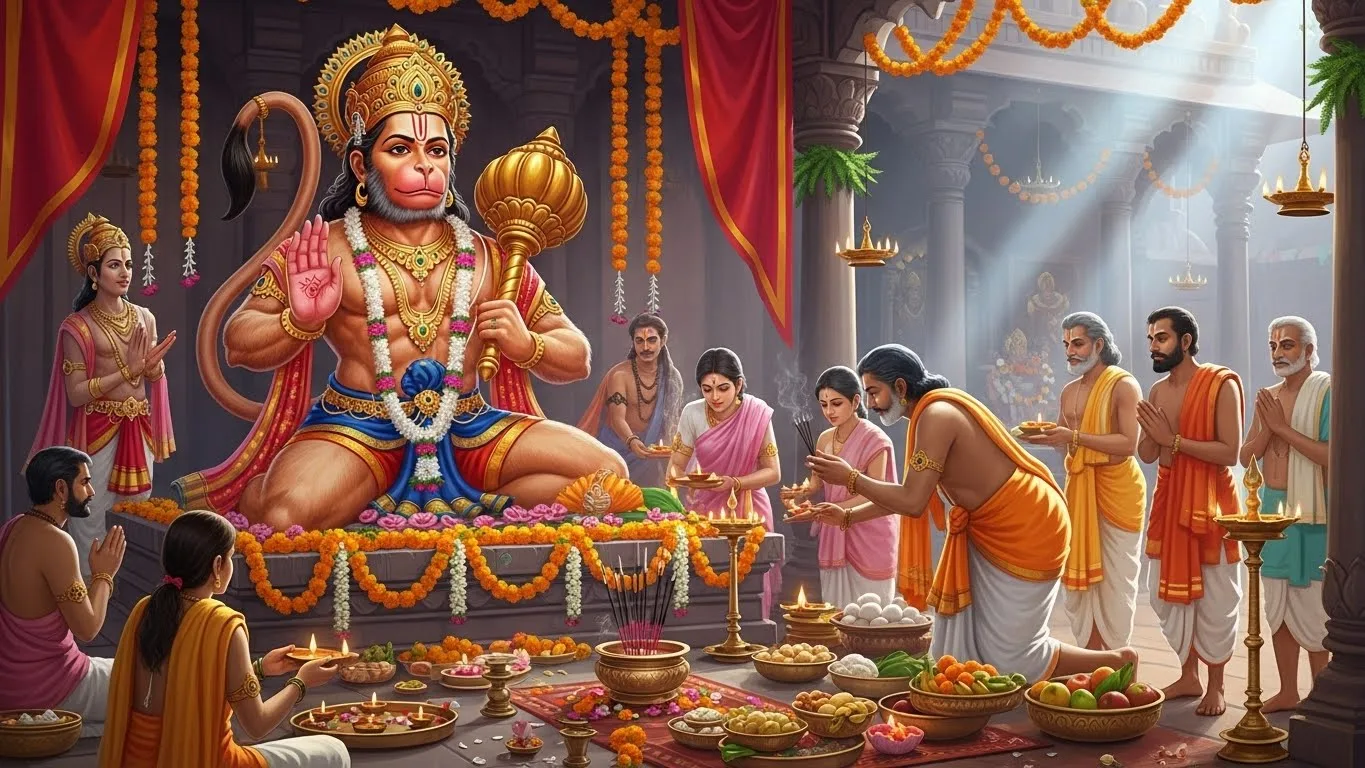
Hanuman Jayanti can be celebrated at home with a focused fast, simple altar, Hanuman Chalisa and Sundarkand recitation, and heartfelt offerings of sindoor, oil, and laddoos, or in a temple with collective kirtan and charity in Hanuman’s spirit of seva.
Who Hanuman Jayanti honors
Hanuman Jayanti marks the birth of Lord Hanuman, traditionally observed on Chaitra Purnima (full-moon day of Chaitra), honoring him as the embodiment of strength, fearlessness, selfless service, and supreme devotion to Lord Rama. In 2025 it falls on 22 May, and devotees use the day to cultivate his virtues—unshakable faith, humility, and unwavering moral courage—through fasting, worship, and scriptural recitation.
Fasting for Hanuman Jayanti
Many devotees observe a vrat (fast) tailored to their health and capacity.
- Strict fast: No solid food from sunrise to evening; some take only water, a few observe nirjala (no water), though this is recommended only for the healthy and experienced.
- Phalahar / fruit fast: Fruits, milk, buttermilk, and light sattvic items (no grains, onion, garlic, or non‑veg) are allowed; rock salt can replace regular salt if needed.
- Light sattvic diet: Those who are ill, elderly, pregnant, or on medication may simply avoid meat, eggs, alcohol, and tamasic foods, while increasing japa and puja.
Fasting is meant to purify and sharpen the mind for devotion, not to damage health, so adjusting the fast responsibly while keeping focus on Hanuman is fully acceptable.
Home puja: step-by-step worship
A simple yet complete Hanuman Jayanti puja at home can follow this order.
- Prepare the altar and yourself
- Clean the puja area, place a red or yellow cloth on a low stool, and set a Hanuman murti or picture on it, facing east if possible.
- Bathe, wear clean clothes (red, orange, or yellow are traditional), sit calmly, and take a sankalpa (vow) to worship Hanuman for strength, protection, and devotion to Rama.
- Light and basic offerings
- Light a diya and incense, and gently ring a bell while mentally inviting Hanuman (avahan) with a short mantra such as “Om Sri Hanumate Namah.”
- Offer sindoor mixed with oil, applying it to the idol’s feet or pedestal, along with marigold flowers, betel leaves, fruits, and sweets like boondi or laddoos as naivedya.
- Chant Hanuman Chalisa (and Sundarkand if possible)
- Recite the Hanuman Chalisa once, 11 times, or more, as capacity and time allow—tradition holds that it removes fear, obstacles, and negative influences while invoking Hanuman’s protection.
- If you can, perform or listen to a full Sundarkand path from Ramcharitmanas; this chapter, focused on Hanuman’s Lanka mission, is especially recommended on Hanuman Jayanti for courage, problem‑resolution, and devotional uplift.
- Aarti, pranam, and prasad
- Perform Hanuman aarti (for example “Aarti Kije Hanuman Lala Ki”) with a small camphor or ghee lamp, circling it clockwise in front of the murti while everyone sings.
- Offer pranam (prostration or bow), ask forgiveness for any mistakes, and then share the fruits and sweets as prasad, seeing them as Hanuman’s blessings for strength and clarity.
Temple worship on Hanuman Jayanti
If visiting a Hanuman temple, common ways to worship include:
- Bringing flowers, laddoos, bananas, orange sindoor, and oil to offer at the murti or its pedestal.
- Joining communal Hanuman Chalisa, Bajrang Baan, or Sundarkand recitations that many temples conduct continuously through the day.
- Participating in annadan (food distribution) or feeding monkeys and cows as expressions of Hanuman’s seva spirit.
Do’s and don’ts in Hanuman worship
- Do:
- Don’t:
By keeping even a simple fast, offering sindoor, oil, and sweets, and sincerely reciting Hanuman Chalisa (and Sundarkand if possible), you align yourself with Hanuman’s qualities—making Hanuman Jayanti not just his birthday, but a powerful day to strengthen your own courage, devotion, and service to dharma.