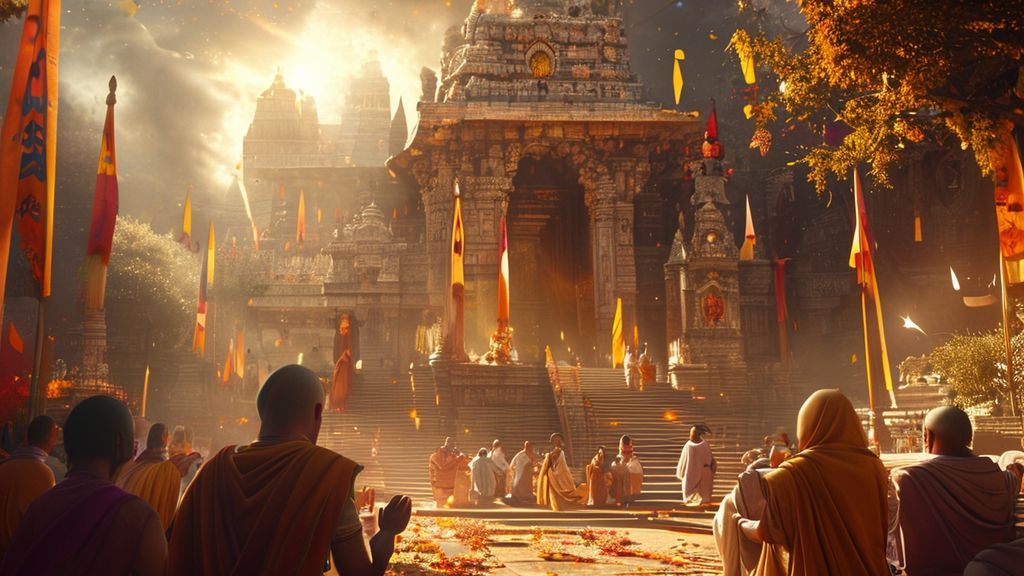
The Hindu Council UK serves as a vital umbrella body representing the diverse tapestry of British Hindus, embodying the Sanatani principle of *Sangathan Shakti* (power of unity) to preserve and promote Dharma, culture, and values in the diaspora. Established as a unifying voice, it articulates the needs and concerns of the Hindu community to governmental bodies and broader society, ensuring Dharmic representation.
| Attribute | Details |
|---|---|
| Deity/Focus (Metaphorical) | Dharma, Sanatan Sanskriti, British Hindu Community |
| Location/Origin | United Kingdom, established in 1994 |
| Key Festivals/Events | Diwali in Parliament, Hindu Week, Community Engagements |
| Dharmic Principle Referenced | *Ekam Sat Vipra Bahudha Vadanti* (Truth is One, Sages Call It by Many Names – Rig Veda), *Sangathan Shakti* (Power of Unity), *Dharma Raksha* (Protection of Dharma) |
The Unifying Lamp of Sanatan Dharma in the Diaspora
In the vast expanse of the modern world, where Hindus find themselves across continents, the imperative to preserve, protect, and propagate Sanatan Dharma becomes paramount. The Hindu Council UK stands as a luminous lamp, guiding the British Hindu community through the complexities of cultural integration while steadfastly upholding the eternal values and traditions passed down through millennia. Its existence is not merely an organizational endeavor but a profound manifestation of *Dharmic Chetasna* – a consciousness dedicated to righteousness and spiritual continuity. For every devotee, understanding the role of such a unifying body is crucial, as it provides a collective platform for devotion, education, and advocacy, ensuring that the vibrancy of Sanatan Dharma thrives for future generations in Britain.
The Dharmic Mandate for Collective Action (Sangathan Shakti)
While the Hindu Council UK is a modern institution, its foundational principles resonate deeply with ancient Vedic and Puranic injunctions regarding community, unity, and the preservation of Dharma. The concept of *Sangathan Shakti*, the power derived from collective action, is not new. The Rig Veda (X.191.2-4) speaks of unity: “Samgacchadhvam samvadadhvam sam vo manāmsi jānatām” (Come together, speak in harmony, let your minds be of one accord). This ancient wisdom emphasizes the necessity of a unified voice, especially in a diverse societal landscape, to protect and promote spiritual and cultural identity.
The Puranas, while not mentioning specific organizations, narrate countless instances where deities, Rishis, and communities united to overcome challenges and uphold *Dharma*. The very essence of *Yajna* (ritual sacrifice) often involves community participation, signifying collective intent and action. The Kashi Khanda of the Skanda Purana, for example, extols the virtues of collective piety and the maintenance of Dharmic practices. The work of the Hindu Council UK can be seen as a modern-day *Dharma Yajna*, a collective effort to nurture and protect Hindu identity, ensuring that temples flourish, festivals are celebrated, and the rich philosophical heritage is understood and respected.
The Bhagavad Gita (Chapter 3, Verse 21) speaks to the importance of leadership and setting an example: “Yadyadācarati śreṣṭhastattadevītaro janaḥ, sa yatpramāṇaṃ kurute lokastadanuvartate” (Whatever a great man does, that others also do. The standard he sets, the world follows). By representing the Hindu community with integrity and wisdom, the Hindu Council UK inspires its constituents to embody Dharmic values, ensuring that the collective actions reflect the highest ideals of Sanatan Dharma.
Structuring the Sanatani Voice: Principles of Effective Representation
Just as the ancient temples, whether in the Nagara style of the North or the Dravidian style of the South, are meticulously planned and structured to embody cosmic principles and facilitate divine communion, so too are effective Dharmic organizations structured to fulfill their sacred mission. The Hindu Council UK, though not a physical temple, functions as a structural edifice for the collective voice of British Hindus. Its framework, based on democratic representation and community engagement, echoes the ancient *Sabha* and *Samiti* systems of Vedic governance, where wise individuals gathered to deliberate and decide for the welfare of the community.
The “architectural” marvel of such an organization lies in its ability to bring together diverse Hindu traditions, sects, and regional groups under a single, cohesive banner. This unity in diversity (*anekantavada*) is a hallmark of Sanatan Dharma itself, as articulated in the Rig Veda: “Ekam Sat Vipra Bahudha Vadanti” (Truth is One, Sages Call It by Many Names). The Council’s structure facilitates dialogue, consensus-building, and effective communication, essential for advocating on behalf of the community to government, media, and other faith groups. Its resilience is built on the scientific understanding of social cohesion – that a well-organized body with clear objectives can achieve far more than fragmented efforts.
This organizational “architecture” is a marvel of social engineering, designed to amplify the concerns of Hindus on issues ranging from religious freedom to educational representation, from countering misinformation to promoting cultural understanding. It enables the community to speak with clarity and authority, ensuring that the rich tapestry of Hindu contributions is recognized and valued in the British mosaic.
The Path of Seva and Dharma Raksha
The “rituals” and “puja vidhi” of an organization like the Hindu Council UK are not performed before an idol, but are manifested in its relentless service (*Seva*) to the community and its tireless efforts in *Dharma Raksha* (protection of Dharma). These actions constitute a continuous *karma yoga*, a dedication to duty without attachment to results, for the greater good of the Hindu collective.
- Community Engagement: Actively reaching out to Hindu temples, cultural organizations, and individuals across the UK to understand their needs and concerns.
- Advocacy & Representation: Serving as the primary point of contact for government bodies, media, and interfaith forums, ensuring the Hindu perspective is heard and respected. This includes participating in policy consultations, submitting evidence to parliamentary committees, and representing Hindu interests on national platforms.
- Festival Celebrations: Organizing and supporting major Hindu festivals like Diwali, Holi, and Janmashtami on a national scale, often in collaboration with local councils and communities, to foster unity and cultural pride.
- Education & Awareness: Developing resources and initiatives to educate both Hindus and non-Hindus about Sanatan Dharma, its philosophy, practices, and contributions to society.
- Interfaith Dialogue: Engaging constructively with other faith communities to promote mutual understanding, respect, and cooperation on shared values.
- Youth Empowerment: Nurturing the next generation of Hindu leaders by providing platforms for engagement, leadership development, and cultural immersion.
- Crisis Support: Mobilizing resources and support for the Hindu community during times of need, whether social, economic, or humanitarian.
Each of these actions is a form of *seva*, a selfless offering to the collective *Ishwara* of the community, ensuring the continuity and vibrancy of Sanatan Dharma in the British Isles. Such dedicated service is a powerful spiritual practice in itself, aligning individual and collective efforts with Dharmic principles.
Mantras for Collective Well-being and Dharmic Success
While no specific mantras are chanted to the Hindu Council UK itself, devotees can offer prayers and chants for the success of such Dharmic endeavors, for the unity of the community, and for wisdom in leadership. These mantras invoke divine blessings for collective good:
- Om Sarvesham Svastir Bhavatu:
ॐ सर्वेषां स्वस्तिर्भवतु ।
सर्वेषां शान्तिर्भवतु ।
सर्वेषां पूर्णं भवतु ।
सर्वेषां मङ्गलं भवतु ।
लोकाः समस्ताः सुखिनो भवन्तु ॥
(May auspiciousness be unto all, May peace be unto all, May completeness be unto all, May prosperity be unto all. May all beings in all worlds be happy.) This mantra embodies the spirit of universal welfare that such organizations strive for. - Gayatri Mantra:
ॐ भूर्भुवः स्वः
तत्सवितुर्वरेण्यं
भर्गो देवस्य धीमहि
धियो यो नः प्रचोदयात् ॥
(We meditate on the adorable glory of the Resplendent Vivifier, Savitur; may He inspire our intellects.) Chanting this mantra invokes divine wisdom for the leadership and members of the Council to make righteous decisions.
Such devotional chants foster a spiritual environment conducive to unity, wisdom, and selfless action, aligning the efforts of the Hindu Council UK with divine will.
Engaging with Dharmic Sangathan: Etiquette and Expectations
To ensure the effective functioning and spiritual integrity of a representative body like the Hindu Council UK, devotees are encouraged to adhere to certain principles of engagement:
- Do: Engage with respect and humility, recognizing the voluntary service of its leadership.
- Do: Offer constructive feedback and suggestions, rooted in Dharmic values and for the collective good.
- Do: Support its initiatives, whether through volunteering, participation, or spreading awareness about its work.
- Do: Promote unity and harmony, focusing on shared Dharmic principles rather than sectarian differences.
- Don’t: Engage in divisive speech or actions that undermine the collective strength of the community.
- Don’t: Expect personal gain or preferential treatment; the Council serves the entire community.
- Don’t: Spread misinformation or unfounded criticism that can weaken its ability to advocate effectively.
- Don’t: Neglect to participate in consultations or surveys that shape the Council’s advocacy efforts.
For more insights into community engagement and Dharmic principles, explore the resources available at Hindutva.online.
What is the primary mission of the Hindu Council UK?
The primary mission of the Hindu Council UK is to serve as a national representative body for British Hindus, advocating for their rights, promoting their interests, and preserving Sanatan Dharma and Hindu culture within the United Kingdom. It strives to foster unity, understanding, and positive relations between the Hindu community and wider society.
How does the Hindu Council UK ensure diverse representation?
The Hindu Council UK works to ensure diverse representation by engaging with a wide array of Hindu organizations, temples, and community groups across the UK, encompassing various traditions, linguistic backgrounds, and regional affiliations. It aims to be an inclusive platform where all voices within the British Hindu community can be heard and represented fairly.
How can an individual devotee support the Hindu Council UK?
Individual devotees can support the Hindu Council UK by becoming active members of their local Hindu organizations affiliated with the Council, volunteering their time and skills for various initiatives, participating in community consultations, attending events, and helping to disseminate accurate information about its work. Financial contributions, though not explicitly sought here, are also a general means of support for non-profit organizations.
Why This Matters for Every Hindu
The existence and robust functioning of organizations like the Hindu Council UK are paramount for the continuity and flourishing of Sanatan Dharma in the global diaspora. In a world increasingly interconnected yet often fraught with cultural misunderstandings, a unified voice is not a luxury, but a necessity. It provides a sanctuary for identity, a platform for expression, and a mechanism for protecting our sacred heritage. For every Hindu, supporting and understanding such collective endeavors is an act of *Dharma Seva*, contributing to the spiritual well-being of the community and ensuring that the eternal wisdom of our Rishis continues to illuminate future generations. This collective *yajna* of representation and advocacy ensures that the lamp of Sanatan Dharma shines brightly, not just in Bharat, but across the globe, including in Britain, affirming our faith and heritage for all to witness and respect. Discover more about our collective heritage at Hindutva.online.
