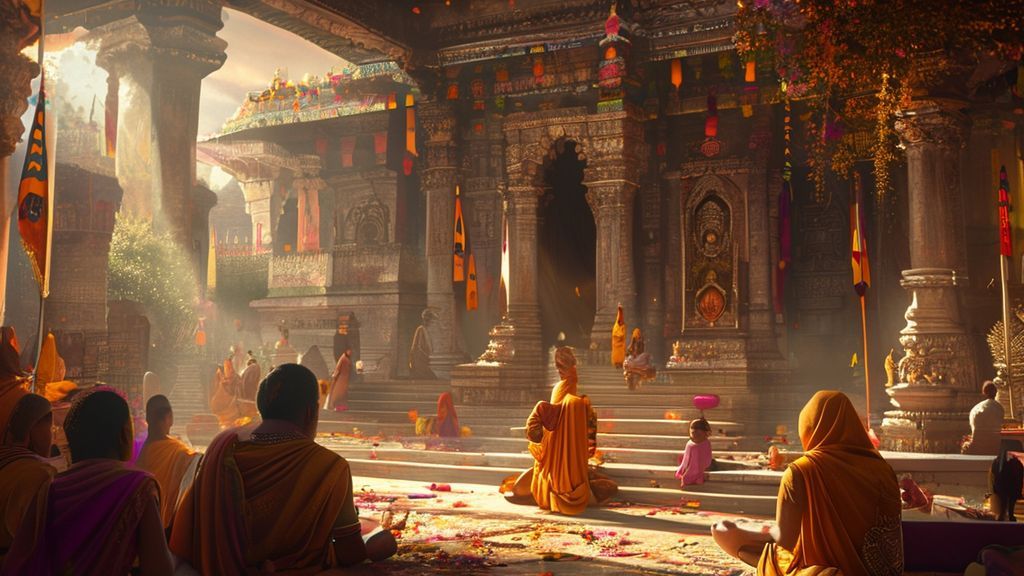
Hindu Homeschooling, also known as Dharmic Education at Home, is a holistic pedagogical approach where families impart knowledge rooted in Sanatan Dharma, integrating spiritual, moral, intellectual, and physical development based on ancient Vedic principles. It aims to cultivate character, self-realization, and a deep understanding of one’s cultural heritage.
| Attribute | Details |
|---|---|
| Core Principle | Holistic development (physical, mental, intellectual, spiritual) guided by Dharma. Cultivation of *sanskara* and *sadachara*. |
| Foundational Philosophy | Vedic philosophy, Upanishadic wisdom, Itihasas (Epics), Puranas, and the concept of *Chaturvidha Purushartha* (Dharma, Artha, Kama, Moksha). |
| Traditional Model | Inspired by the ancient *Gurukula* system, emphasizing personalized learning, Guru-Shishya parampara, and living in harmony with nature. |
| Key Goal | To foster *vidya* (true knowledge), *viveka* (discrimination), *vairagya* (detachment), and a strong Hindu identity, preparing individuals for righteous living. |
| Scripture Reference | Taittiriya Upanishad (Shikshavalli), Manusmriti (Ch. 2), Bhagavad Gita (Ch. 13, on *Jnana*), Ramayana & Mahabharata (examples of education). |
Embracing Dharma in Every Lesson: The Essence of Hindu Homeschooling
In an age where educational systems often prioritize material success over moral rectitude and spiritual growth, Hindu Homeschooling emerges as a beacon for families seeking to anchor their children in the eternal values of Sanatan Dharma. This sacred endeavor is not merely about replicating a classroom at home; it is about creating an environment where every lesson, every interaction, and every moment is imbued with the wisdom of the Vedas and the ethical framework of our ancestors. It is a conscious commitment to raise individuals who are not only academically proficient but are also deeply rooted in their cultural identity, possessing unwavering character, compassion, and a clear understanding of their purpose (*dharma*) in life. This approach seeks to nurture the entire being—body, mind, intellect, and spirit—ensuring that children grow into responsible, insightful, and spiritually aware members of society, capable of navigating the complexities of the modern world while upholding timeless principles.
The Gurukula Legacy: Foundational Principles from Our Itihasas and Shastras
The concept of Dharmic education is not a modern innovation but a timeless tradition deeply embedded in the very fabric of our civilization. Our sacred scriptures, the Itihasas, Puranas, and Shastras, provide a rich tapestry of educational philosophies and practices, epitomized by the ancient *Gurukula* system. As narrated in the Ramayana, the princes Rama, Lakshmana, Bharata, and Shatrughna received their comprehensive education under the venerable Guru Vashistha, learning statecraft, martial arts, scriptures, and the nuances of Dharma. Similarly, the Mahabharata recounts how the Pandavas and Kauravas were trained by the illustrious Dronacharya and Kripacharya, excelling in archery and various forms of warfare, alongside ethical instruction.
These narratives underscore the central role of the Guru and the sanctity of the learning environment. The *Manusmriti* (Chapter 2) elaborates on the duties of a student (*brahmachari*) and the reverence for the teacher, emphasizing discipline, austerity, and a dedicated pursuit of knowledge. It states: “अध्यापितानां वेदानां धारणं ज्ञानमेव च” (Adhyāpitānāṁ vedānāṁ dhāraṇaṁ jñānameva ca), meaning the retention and comprehension of the Vedas taught. Education was never confined to academic subjects; it encompassed the development of virtues like humility, truthfulness, non-violence, and self-control, crucial for spiritual progress (*sādhanā*). The essence was to cultivate a character firmly aligned with Dharma, preparing the individual not just for a profession but for a meaningful existence in harmony with the cosmos.
The Architecture of Dharmic Learning: A Holistic Curriculum for the Soul
The “architecture” of Hindu homeschooling lies in its holistic curriculum design, inspired by the profound understanding of human nature articulated in our scriptures. Far from being a rigid set of subjects, it is a dynamic process aimed at integrating all aspects of human experience. The Taittiriya Upanishad introduces the concept of *Pancha Koshas* (five sheaths of existence: Annamaya, Pranamaya, Manomaya, Vijnanamaya, Anandamaya), providing a scientific framework for holistic development. A truly Dharmic education seeks to nourish all these layers:
- Annamaya Kosha (Physical Body): Through Yoga, Ayurveda-informed diet, sports, and practical skills.
- Pranamaya Kosha (Energy Body): Through Pranayama, disciplined routines, and connection with nature.
- Manomaya Kosha (Mental Body): Through stories from Puranas, chanting, meditation, and developing emotional intelligence.
- Vijnanamaya Kosha (Intellectual Body): Through rigorous study of Sanskrit, mathematics, philosophy, sciences, and critical thinking.
- Anandamaya Kosha (Bliss Body): Through devotion (*bhakti*), self-reflection, *seva* (selfless service), and understanding the interconnectedness of all beings.
The “scientific marvel” is how this integrated system, taught over millennia, produced luminaries in mathematics (e.g., zero, decimal system), astronomy, metallurgy, medicine (Ayurveda), and arts. These subjects were not detached academic pursuits but understood as pathways to understanding the divine order (*Rta*) of the universe. For more insights into these ancient systems, explore resources at Hindutva.online.
Daily Sadhana and Puja Vidhi: Weaving Spirituality into Routine
Incorporating Dharma into daily education transforms routine into *sadhana*. This involves a structured yet flexible approach to spiritual practice:
- Morning Prayers & Gratitude: Begin the day with a simple prayer, expressing gratitude. Chanting the *Karagre Vasate Lakshmi* shloka upon waking helps align the mind.
- Suryanamaskar & Yoga: Regular practice of *Surya Namaskar* and basic Yoga asanas promotes physical health, mental clarity, and discipline.
- Gayatri Mantra Chanting: Teach the profound *Gayatri Mantra* (ॐ भूर्भुवः स्वः तत्सवितुर्वरेण्यं भर्गो देवस्य धीमहि धियो यो नः प्रचोदयात्) for intellectual and spiritual illumination. Start with short sessions and gradually increase.
- Puranic Storytelling: Dedicate time to narrate stories from the Srimad Bhagavatam, Panchatantra, or regional Puranas. These stories are invaluable for moral education and transmitting cultural values.
- Simple Puja/Arati: Involve children in daily *arati* to the family deities, learning the rituals, and understanding their significance.
- Sanskrit Shloka Recitation: Encourage memorization and understanding of basic Sanskrit shlokas, fostering a connection to the language of our scriptures.
- Dharmic Discussions: Engage children in conversations about ethical dilemmas, the meaning of festivals, or lessons from historical figures, guiding them to apply Dharma in practical life.
Mantras and Chants for Young Seekers
Chanting mantras is a powerful way to purify the mind, enhance concentration, and connect with the divine. Parents should introduce these chants reverently:
- Guru Vandana:
गुरुर्ब्रह्मा गुरुर्विष्णुः गुरुर्देवो महेश्वरः |
गुरुरेव परब्रह्म तस्मै श्री गुरवे नमः ||
(Gurur Brahmā Gurur Viṣṇur Gururdevo Maheśvaraḥ | Gurureva Parabrahma Tasmai Śrī Gurave Namaḥ ||)
— Salutations to the Guru, who is Brahma, Vishnu, and Maheswara, the Supreme Brahman itself. - Saraswati Vandana:
या कुन्देन्दुतुषारहारधवला या शुभ्रवस्त्रावृता |
या वीणावरदण्डमण्डितकरा या श्वेतपद्मासना ||
(Yā kundendu-tuṣāra-hāra-dhavalā, yā śubhravastrāvṛtā | Yā vīṇā-vara-daṇḍa-maṇḍita-karā, yā śveta-padmāsanā ||)
— For wisdom and knowledge. - Shanti Path (Peace Mantra):
ॐ सह नाववतु | सह नौ भुनक्तु | सह वीर्यं करवावहै |
तेजस्वि नावधीतमस्तु मा विद्विषावहै ||
ॐ शान्तिः शान्तिः शान्तिः ||
(Om Saha nāvavatu | Saha nau bhunaktu | Saha vīryaṁ karavāvahai | Tejasvi nāvadhītamastu Mā vidviṣāvahai || Om Śāntiḥ Śāntiḥ Śāntiḥ ||)
— May we be protected together, may we be nourished together, may we work together with great energy, may our study be illuminating and fruitful, may we not hate each other. Om peace, peace, peace. (From Kathopanishad and other Upanishads). - Ganesha Mantra:
ॐ गं गणपतये नमः |
(Om Gaṁ Gaṇapataye Namaḥ |)
— For removing obstacles and invoking auspiciousness before any new learning.
Dos and Don’ts in Dharmic Homeschooling
- DO: Emphasize character development (*sanskara*) and ethical living (*sadachara*) above mere academic scores.
- DO: Prioritize learning Sanskrit, even if introductory, to access original scriptures.
- DO: Foster a spirit of inquiry (*vichara*) and critical thinking, encouraging children to question and understand, not just memorize.
- DO: Introduce service (*seva*) activities to instill compassion and a sense of community responsibility.
- DO: Maintain a disciplined routine, but allow flexibility for creative exploration and play.
- DON’T: Isolate children from positive social interactions; seek out other Dharmic homeschooling families or community groups.
- DON’T: Overburden children with excessive screen time or material distractions.
- DON’T: Compromise on the spiritual foundation for worldly advantages alone.
- DON’T: Neglect physical education and connection with nature.
Frequently Asked Questions About Hindu Homeschooling
What are the core principles of Hindu homeschooling?
The core principles include the pursuit of *vidya* (true knowledge leading to self-realization), character building (*sanskara*), reverence for all life, upholding Dharma, and holistic development across physical, mental, intellectual, and spiritual dimensions, preparing children for righteous living and ultimately *Moksha*.
How can I balance spiritual and secular education effectively?
Effective balancing involves integrating spiritual teachings into secular subjects (e.g., mathematics as cosmic order, history as *Itihasa* with moral lessons), dedicating specific time for *sadhana* and scriptural studies, and ensuring that the overall home environment reinforces Dharmic values. The aim is not separation but seamless integration, where secular knowledge is viewed through a spiritual lens.
Which scriptures are most relevant for guiding this educational approach?
Key scriptures include the Upanishads (especially Taittiriya for *Pancha Koshas*), Bhagavad Gita for principles of action and detachment, Ramayana and Mahabharata for moral examples, Puranas for stories, and Smritis like Manusmriti for societal and educational guidelines. The Vedas provide the ultimate foundation.
Is Hindu homeschooling only for religious studies?
No, Hindu homeschooling is a comprehensive educational model. While Dharma and spirituality are central, it integrates all conventional academic subjects like science, mathematics, literature, and arts, but teaches them within a Dharmic framework. The goal is to produce well-rounded individuals who excel both materially and spiritually.
Preserving Sanatan Dharma: Why This Matters for Every Hindu
In a rapidly globalizing world, the transmission of Sanatan Dharma to the next generation is not merely an option but a sacred imperative. Hindu homeschooling stands as a powerful means to ensure that our children grow up with a profound understanding and appreciation of their heritage, capable of articulating its wisdom and embodying its values. It is an investment in their spiritual resilience, empowering them to face life’s challenges with inner strength and conviction. By consciously choosing this path, families are not just educating their children; they are actively participating in the preservation and perpetuation of a civilization that has offered timeless truths to humanity. This approach fosters a deep connection to our roots, strengthens Hindu identity, and ensures that the lamp of Dharma continues to shine brightly for generations to come. Discover more about this vital mission at Hindutva.online.
