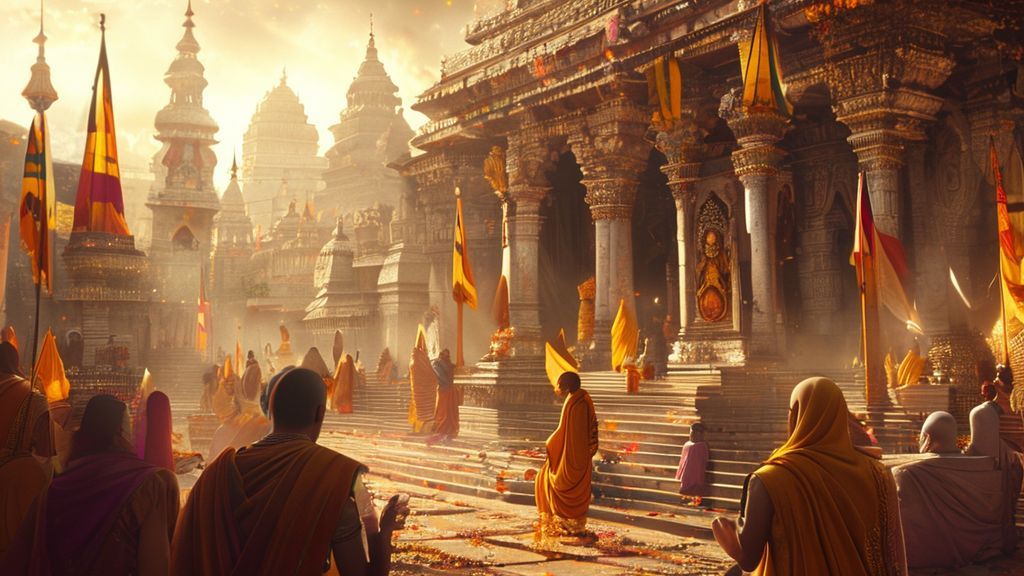
Hindu minorities in Bangladesh face severe and systemic challenges, including targeted violence, land grabbing, forced conversions, socio-economic marginalization, and the destruction of temples, rooted in historical anti-Hindu sentiment and exacerbated by political instability, threatening their very existence and the ancient Sanatan Dharma heritage in the region.
| Attribute | Details |
|---|---|
| Deity/Focus | Sanatan Dharma (Hinduism) and its adherents. |
| Location/Origin | The historic Vanga (Bengal) region, now Bangladesh, an ancient crucible of Sanatan culture. |
| Key Challenges | Land encroachment, targeted violence, forced conversion, socio-political exclusion, temple destruction, demographic decline. |
| Scriptural Parallel (Conceptual) | `Dharmo Rakshati Rakshitah` – Dharma protects those who protect it; resilience against Adharma in Kali Yuga. (Mahabharata, Manusmriti) |
| Cultural Impact | Threat to ancient temples, unique Bengali Hindu traditions, language, and the continuous spiritual lineage. |
The Plight of Sanatan Dharma in Bangladesh: A Call to Consciousness
The land of Vanga, now known as Bangladesh, carries within its soil the indelible imprints of millennia of Sanatan Dharma. From the ancient empires that nurtured Vedic traditions to the fervent Bhakti movements that swept through its plains, this region has been a vibrant cradle of Hindu civilization. Yet, today, the Hindu minority in Bangladesh stands at a perilous crossroads, enduring systematic persecution that threatens not just their physical existence, but the very continuity of their ancestral faith. This guide, for the sincere seeker and devotee, delves into the profound challenges and relentless attacks faced by our Dharmic brethren, illuminated by scriptural wisdom and a deep understanding of historical exigencies.
This is not merely a tale of political or social struggle; it is a spiritual battle for the preservation of Dharma itself, a testament to the enduring resilience of the Sanatani spirit even in the face of grave adversity. Every Hindu, irrespective of geography, has a sacred duty to understand and act upon this profound crisis, for the suffering of a part of the global Hindu family is the suffering of the whole. For deeper insights and to join the movement, explore Hindutva.online.
Dharmic Perspective on Persecution: Lessons from Itihasa and Puranas
While the Puranas and Itihasas do not narrate the specific modern plight of Hindus in Bangladesh, they offer profound philosophical frameworks to comprehend the cyclical nature of Dharma and Adharma, and the challenges faced by the righteous. The current tribulations echo narratives of persecution during times of rampant Adharma, where righteous beings faced oppression and their sacred spaces were desecrated. The Skanda Purana, for instance, in its various Kashi Khanda and Avantya Khanda descriptions, speaks of the desecration of temples and the suffering of devotees at the hands of those inimical to Dharma, emphasizing the urgent need for its protection and restoration.
The concept of Kali Yuga, as described in the Vishnu Purana and other Puranic texts, foretells an age marked by the decline of righteousness, the rise of falsehood, and the suffering of virtuous individuals. The situation in Bangladesh, where Hindus are subjected to land grabbing, forced conversions, and violence with often little recourse, sadly aligns with these prophecies. The Mahabharata, particularly the Shanti Parva (Chapter 109), extols the principle: धर्मो रक्षति रक्षितः (Dharmo Rakshati Rakshitah) – Dharma protects those who protect it. This timeless aphorism underscores the inherent responsibility of every individual and the wider community to uphold and defend Dharma, even when it appears weak or beleaguered. The plight of Bengali Hindus thus becomes a contemporary manifestation of this ancient struggle between light and shadow, demanding introspection and action from all who cherish Sanatan values.
Architectural & Cultural Heritage Under Threat
Bangladesh is home to thousands of ancient Hindu temples, ashrams, and sacred sites, each a living testament to a continuous Sanatan heritage spanning millennia. These architectural marvels are not mere structures; they are pulsating hearts of Dharma, repositories of spiritual energy, and centers of communal life. From the iconic Dhakeshwari National Temple in Dhaka, a site of immense historical and religious significance, to the exquisitely sculpted terracotta temples like the Kantajew Temple in Dinajpur (a jewel of the Nagara style with Bengali local influences), and the revered Jeshoreshwari Kali Temple in Satkhira (one of the 51 Shakti Peethas mentioned in the Shiva Purana and Kalika Purana), these sites represent an irreplaceable legacy.
However, these sacred spaces are increasingly vulnerable. Reports from various human rights organizations and local Hindu groups consistently highlight the destruction, desecration, and forced occupation of temples. Often, the land belonging to these temples is grabbed, their idols stolen or vandalized, and the communities maintaining them intimidated into silence. The unique architectural styles, such as the do-chala (two-sloped roof) and char-chala (four-sloped roof) styles, and the intricate terracotta artwork narrating tales from the Ramayana and Mahabharata, are part of a shared Indic heritage. Their destruction is not just a loss for Bengali Hindus, but for the entire Sanatan world, representing an erasure of our collective memory and spiritual ancestry. Their continued existence, despite immense pressure, is a testament to the power of unwavering devotion and cultural tenacity.
Rituals & Puja Vidhi: A Spiritual Fortress
For Hindus in Bangladesh, the observance of rituals and festivals is not merely an act of piety; it is a profound act of spiritual resistance and identity affirmation. In a climate of fear and marginalization, communal worship (Samuhik Puja) transforms into a powerful statement of resilience. The grand celebrations of Durga Puja, the worship of Maa Durga as the divine protectress against evil, become particularly poignant. During these nine days, the Bengali Hindu community unites, constructing elaborate pandals, performing intricate Arati, and invoking the Devi to vanquish the forces of Adharma. Similarly, Kali Puja, Saraswati Puja, and Janmashtami are observed with fervent devotion, often under strained circumstances.
The puja rituals, performed diligently by priests and devotees, follow ancient Shaivite, Shakta, and Vaishnava traditions unique to Bengal. The offering of flowers (pushpanjali), the chanting of mantras, the sacred fire ceremony (homa), and the distribution of blessed food (prasad) are maintained with unwavering faith. These acts of worship are not just personal spiritual journeys but also critical anchors for community cohesion, preserving cultural distinctiveness, and transmitting Sanatan values to the next generation. Each festival is a reaffirmation of their spiritual heritage, a collective prayer for strength, peace, and the eventual triumph of Dharma.
Mantras for Strength and Protection
In times of adversity, mantras serve as potent spiritual tools, invoking divine grace and fortifying the inner spirit. Devotees in Bangladesh, and indeed across the globe, find solace and strength in these sacred vibrations.
- Mahamrityunjaya Mantra (महाँमृत्युंजय मंत्र): For health, longevity, and protection from untimely death and calamities. It invokes Lord Shiva.
ॐ त्र्यम्बकं यजामहे सुगन्धिं पुष्टिवर्धनम्।
उर्वारुकमिव बन्धनान्मृत्योर्मुक्षीय माऽमृतात्॥Om Tryambakam Yajamahe Sugandhim Pushtivardhanam |
Urvarukamiva Bandhanan Mrityor Mukshiya Maamritat || - Gayatri Mantra (गायत्री मंत्र): The universal Vedic prayer for wisdom, enlightenment, and spiritual protection.
ॐ भूर्भुवः स्वः।
तत् सवितुर्वरेण्यं।
भर्गो देवस्य धीमहि।
धियो यो नः प्रचोदयात्॥Om Bhur Bhuvah Svah |
Tat Savitur Varenyam |
Bhargo Devasya Dhimahi |
Dhiyo Yo Nah Prachodayat || - Durga Suktam (दुर्गा सूक्तम्): Invokes the protective power of Devi Durga.
जातवेदसे सुनवाम सोममरातीयतो नि दहाति वेदः।
स नः पर्षदति दुर्गाणि विश्वा नावा न सिन्धुं दुरितात्यग्निः॥Jatavedase Sunavama Somam Aratiyato Ni Dahati Vedah |
Sa Nah Parshadati Durgani Vishva Nava Na Sindhum Duritatyagnih ||
(Rig Veda 10.150.1) - Shanti Mantra (शांति मंत्र): For peace, harmony, and well-being for all.
ॐ सर्वे भवन्तु सुखिनः।
सर्वे सन्तु निरामयाः।
सर्वे भद्राणि पश्यन्तु।
मा कश्चित् दुःखभाग् भवेत्॥Om Sarve Bhavantu Sukhinah |
Sarve Santu Niramayah |
Sarve Bhadrani Pashyantu |
Ma Kashchit Dukha Bhag Bhavet ||
Dos and Don’ts for the Devotee and Supporter
To uphold Dharma and support our brethren, certain principles must guide our actions:
- Do: Maintain unshakeable faith (`Shraddha`) in Sanatan Dharma, even amidst adversity.
- Do: Actively participate in community and religious functions to strengthen collective identity.
- Do: Educate the younger generation about their rich heritage, history, and spiritual traditions.
- Do: Document and report injustices with precision, seeking legal and administrative recourse wherever possible.
- Do: Offer financial, moral, and spiritual support to organizations working for Hindu rights and temple preservation in Bangladesh.
- Don’t: Succumb to despair or abandon your ancestral faith out of fear.
- Don’t: Engage in divisive rhetoric that harms the broader cause of Hindu unity.
- Don’t: Forget the plight of our Dharmic family; their struggle is a reflection of our collective responsibility.
- Don’t: Rely solely on external entities for protection; self-reliance and Dharmic strength are paramount.
Frequently Asked Questions
What are the primary challenges faced by Hindu minorities in Bangladesh?
The primary challenges include systematic land grabbing through discriminatory laws like the Vested Property Act, targeted communal violence during festivals or political unrest, forced conversions of young Hindu girls, destruction and desecration of temples, and socio-economic discrimination leading to marginalization in education, employment, and political representation. These issues are deeply rooted in a narrative that often portrays Hindus as “enemies of the state” or “foreigners.”
How does the situation in Bangladesh impact Sanatan Dharma globally?
The erosion of Sanatan Dharma in Bangladesh represents a significant loss of a vibrant historical and cultural center. It impacts the global Hindu family by diminishing ancient spiritual lineages, threatening unique Bengali Hindu traditions, and setting a dangerous precedent for minorities in other regions. It is a stark reminder of the continuous struggle to preserve Dharma in a challenging world and underscores the urgent need for global Hindu unity and advocacy. The suffering of one part of the body of Dharma affects the entire body.
What historical context contributes to the current challenges?
The challenges faced by Hindus in Bangladesh are deeply rooted in the partition of India in 1947, which led to a mass exodus of Hindus. Subsequent geopolitical events, including the 1971 Bangladesh Liberation War and various military coups, have often been accompanied by waves of anti-Hindu violence and discrimination. Discriminatory laws, like the Enemy Property Act (later Vested Property Act), systematically dispossessed Hindus of their land and assets, fostering an environment of vulnerability and fear that persists to this day.
Why This Matters for Every Hindu
The struggles of Hindu minorities in Bangladesh are not an isolated regional issue; they are a profound test of our collective commitment to Sanatan Dharma. As revealed in the Bhagavad Gita (Chapter 4, Verse 7), Bhagavan Sri Krishna declares, यदा यदा हि धर्मस्य ग्लानिर्भवति भारत। अभ्युत्थानमधर्मस्य तदात्मानं सृजाम्यहम्॥ (Yada Yada Hi Dharmasya Glanir Bhavati Bharata, Abhyutthanam Adharmasya Tad Atmanam Srijamyaham) – “Whenever there is a decline of righteousness and a rise of unrighteousness, O Arjuna, I manifest Myself.” This divine promise of intervention is often preceded by human effort to restore Dharma. The plight in Bangladesh serves as a clarion call for every Hindu to understand, empathize, and actively contribute to the protection of Dharma. It reminds us that our faith is not merely personal belief but a living, breathing civilization that requires active nourishment and defense.
The preservation of Hindu heritage and the safety of Hindus in Bangladesh are crucial for the integrity of Sanatan Dharma worldwide. Their resilience, despite unimaginable odds, is a beacon of hope and a testament to the eternal nature of truth. By supporting their cause, raising awareness, and fostering a spirit of global Hindu unity, we fulfill our Dharmic duty. Let us remember that the strength of Sanatan Dharma lies in its devotees, and their well-being is intrinsically linked to the eternal continuation of our glorious tradition. For more resources and community engagement, visit Hindutva.online and contribute to this vital cause.