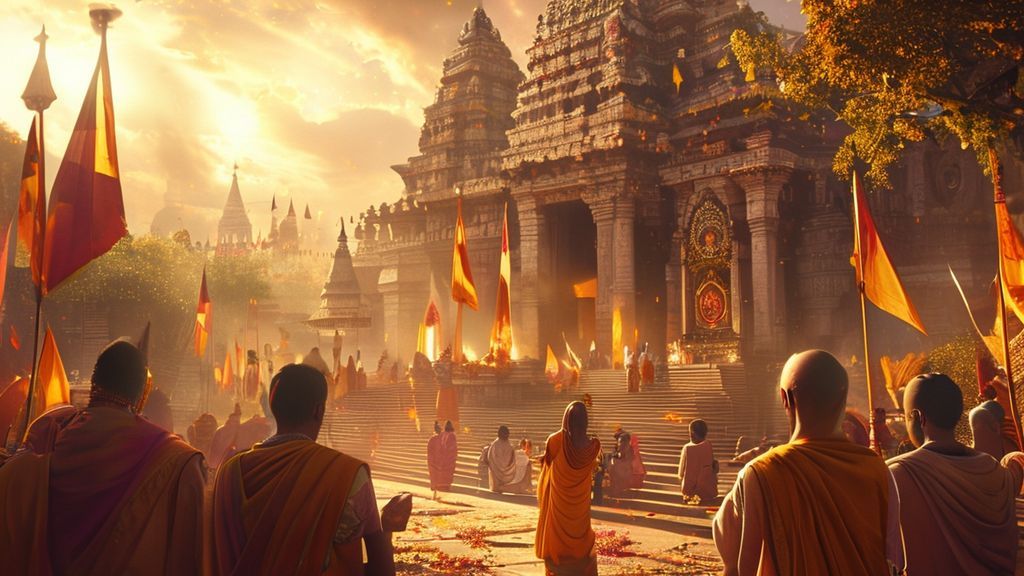
“Hindu Sena,” in its profoundest Dharmic sense, represents the noble aspiration for Hindu youth organizations to embody the eternal ideals of Dharma, self-discipline, selfless service (seva), and cultural preservation, striving to uphold Sanatan values as divinely ordained protectors of our sacred heritage, inspired by scriptural tenets.
| Attribute | Details |
|---|---|
| Deity | Sri Rama, Sri Hanuman (Embodiments of Dharma, Valor, and Seva) |
| Location/Origin | Ancient Bharatvarsha (Spiritual Homeland of Sanatan Dharma) |
| Key Festival | Vijayadashami (Victory of Dharma), Hanuman Jayanti (Strength and Devotion) |
| Scripture Reference | Bhagavad Gita (Karma Yoga, Swadharma), Valmiki Ramayana (Youthful Valor, Seva) |
The Indispensable Role of Hindu Youth in Sanatan Dharma
In the timeless tapestry of Sanatan Dharma, the youth have always been the vibrant custodians and dynamic torchbearers of our ancient wisdom. The concept of a “Hindu Sena” or a collective of Hindu youth, is not merely a modern organizational construct but echoes the profound responsibility entrusted to every generation to protect, preserve, and propagate the eternal principles of Dharma. From the Vedic Rishis to the epic heroes, youth energy, when channeled with discipline and devotion, has been the very engine of civilizational flourishing. Our tradition beckons young minds to cultivate physical strength, intellectual prowess, and spiritual fortitude, becoming living embodiments of righteousness (Dharma) and service (Seva). This guide elucidates the core goals and ideals that should inspire every Hindu youth organization, anchoring them firmly in the sacred bedrock of our scriptures.
Puranic History & Legend: Exemplars of Dharmic Youth
The annals of our Itihasas and Puranas are replete with inspiring narratives of youth who rose to protect Dharma. The very idea of a “Sena” — an army or a collective force — is consecrated by the divine actions of figures like Sri Rama and the Vaanara Sena. As depicted in the Valmiki Ramayana, the youthful Sri Rama, accompanied by his brother Lakshmana, bravely confronted the forces of adharma from an early age, demonstrating unparalleled courage and adherence to righteousness. The extraordinary devotion and strength of Hanuman, the chief of the Vaanara Sena, offer a paramount example of how selfless service (seva) combined with immense physical and spiritual power can overcome insurmountable obstacles. Hanuman, embodying the perfect Brahmachari, dedicated his youth to the service of Dharma, epitomizing loyalty, intellect, and indomitable spirit. Similarly, the Pandavas in the Mahabharata, though facing immense injustice, persevered through their youth and adulthood, guided by Sri Krishna, ultimately re-establishing Dharma on earth. These narratives are not mere stories but blueprints for every Hindu youth: to cultivate unwavering faith, moral courage, physical prowess, and a deep commitment to truth and righteousness.
Building the Edifice of Dharma: A Metaphor for Youth Action
While a modern youth organization may not construct temples in the literal sense, its goals are deeply intertwined with the architectural principles of Sanatan Dharma, metaphorically building and sustaining the spiritual edifice of our civilization. Just as ancient temple architects meticulously planned every stone and sculpture to ensure structural integrity and spiritual resonance, Hindu youth organizations must build their foundations on Śāstra-Pramāṇa (scriptural authority) and Dharmic principles. The intricate carvings of a temple narrate stories of gods and goddesses, reminding devotees of their heritage; similarly, youth organizations must effectively transmit our cultural narratives and philosophical depth. The Nagara and Dravidian styles of temple architecture, with their grand vimanas and gopurams reaching for the heavens, symbolize the aspiration for elevation – spiritual, moral, and intellectual. For youth, this translates to striving for excellence in all fields while remaining grounded in Dharmic values. Just as a temple serves as a focal point for spiritual gathering and community, a Hindu youth organization should be a nucleus for collective learning, service, and the strengthening of our cultural bonds, drawing inspiration from the timeless marvels documented on Hindutva.online.
Rituals & Puja Vidhi for Dharmic Empowerment
For youth committed to upholding Dharma, daily spiritual practices are not mere formalities but vital disciplines that forge character and infuse life with purpose. These “rituals” are less about ornate temple worship and more about cultivating inner strength and purity.
- Prātaḥ Smaraṇam (Morning Remembrance): Begin the day with prayers, remembering the divine and setting intentions for Dharmic action. Chanting the Karaagre Vasate Lakshmi sloka reminds one of the divinity in action and sustenance.
- Sūrya Namaskāra (Sun Salutations): Engage in physical exercises like Surya Namaskar for physical health, mental clarity, and reverence for the life-giving Sun God, a symbol of radiant energy and discipline.
- Japa & Dhyāna (Mantra Chanting & Meditation): Dedicate a specific time for silent meditation or chanting a chosen mantra, such as the Gāyatrī Mantra (ॐ भूर्भुवः स्वः तत्सवितुर्वरेण्यं भर्गो देवस्य धीमहि धियो यो नः प्रचोदयात्), to purify the mind, enhance focus, and connect with the divine.
- Svādhyāya (Self-Study & Scriptural Learning): Regularly study sacred texts like the Bhagavad Gita, Upanishads, or Puranas to gain wisdom, understand Dharmic principles, and inspire righteous living.
- Sevā (Selfless Service): Actively participate in community service, extending help to those in need, protecting cows, maintaining temples, or contributing to environmental causes, embodying the spirit of Karma Yoga as expounded in the Bhagavad Gita (Chapter 3).
- Sandhyā Vandanam (Twilight Worship): For those initiated, performing the Sandhya Vandanam at dawn, noon, and dusk helps maintain spiritual rhythm and connection throughout the day.
Mantras & Chants for Strength and Purpose
Mantras are powerful sound vibrations that instill mental discipline, foster devotion, and invoke divine blessings for youth striving to embody Dharmic ideals:
- Gāyatrī Mantra: ॐ भूर्भुवः स्वः तत्सवितुर्वरेण्यं भर्गो देवस्य धीमहि धियो यो नः प्रचोदयात् (Om Bhur Bhuvah Svah Tat Savitur Varenyam Bhargo Devasya Dhimahi Dhiyo Yo Nah Prachodayat) – For intellectual clarity, wisdom, and spiritual illumination.
- Mahā Mṛtyuñjaya Mantra: ॐ त्र्यम्बकं यजामहे सुगन्धिं पुष्टिवर्धनम्। उर्वारुकमिव बन्धनान् मृत्योर्मुक्षीय माऽमृतात्॥ (Om Tryambakam Yajamahe Sugandhim Pushtivardhanam | Urvarukamiva Bandhanan Mrityor Mukshiya Maamritat ||) – For health, longevity, protection, and spiritual liberation.
- Hanumān Bīja Mantra: ॐ हं हनुमते रुद्रात्मकाय हुं फट् (Om Ham Hanumate Rudratmakaya Hum Phat) – For courage, strength, overcoming obstacles, and unwavering devotion.
- Vande Mātaram: A patriotic hymn, embodying devotion to the Motherland (Bharat Mata), inspiring a sense of collective identity and duty towards the nation.
- Shānti Mantra: ॐ सर्वे भवन्तु सुखिनः सर्वे सन्तु निरामयाः । सर्वे भद्राणि पश्यन्तु मा कश्चिद् दुःखभाग् भवेत् ॥ (Om Sarve Bhavantu Sukhinah Sarve Santu Niramayah | Sarve Bhadrani Pashyantu Ma Kaschid Dukha Bhag Bhavet ||) – For universal peace, well-being, and harmony, reflecting the expansive vision of Sanatan Dharma.
Dos and Don’ts for the Dharmic Youth
To truly uphold the spirit of “Hindu Sena” and its goals, youth must adhere to certain ethical and cultural guidelines:
- DO respect elders, gurus, and all forms of life (Sarva Bhuta Hita).
- DO practice self-control (Indriya Nigraha) and maintain purity in thought, word, and deed.
- DO dedicate oneself to learning, both secular and sacred knowledge.
- DO serve the community and nation with unwavering commitment and integrity.
- DO protect and promote Hindu culture, traditions, and temples.
- DO cultivate physical fitness and mental resilience for challenging times.
- DON’T engage in speech or actions that incite hatred or violence against any community.
- DON’T fall prey to addictions or vices that diminish one’s physical or spiritual strength.
- DON’T neglect one’s family duties and responsibilities (Grihastha Dharma, even for young individuals).
- DON’T be swayed by fleeting materialistic pursuits, neglecting spiritual growth.
Frequently Asked Questions
What is the primary goal of Hindu youth organizations from a Dharmic perspective?
The primary goal is to empower youth to live a life guided by Sanatan Dharma, fostering spiritual, physical, intellectual, and moral development, while actively contributing to the preservation and promotion of Hindu culture, values, and national integrity, embodying the ideals of service and righteousness.
How can Hindu youth reconcile modern aspirations with ancient Dharmic teachings?
Hindu youth can integrate modern aspirations by recognizing that Dharmic teachings provide a timeless ethical framework for success and well-being in any era. By applying principles like Karma Yoga (action without attachment to results), Svādhyāya (self-study), and Seva (selfless service) to their chosen fields, they can achieve professional excellence while maintaining spiritual grounding and contributing positively to society. Our platform, Hindutva.online, offers numerous resources for this integration.
What role does physical fitness play in the goals of Hindu youth?
Physical fitness is considered crucial in Sanatan Dharma. A strong body is deemed a fit vehicle for a strong mind and spirit. Practices like Yoga, Surya Namaskar, and martial arts (e.g., Kalaripayattu, Gatka) are encouraged not just for personal health but also to cultivate discipline, endurance, and the capability to protect oneself, one’s family, and Dharma when necessary, much like the ancient Kshatriyas.
Dharmic Significance: Why This Matters for Every Hindu
The goals of Hindu youth organizations are not merely programmatic objectives; they are the very threads that weave the continuity of Sanatan Dharma across generations. In an increasingly complex world, the disciplined cultivation of Dharmic values among the youth ensures that the timeless wisdom of our Rishis remains vibrant and relevant. By nurturing a generation steeped in respect for tradition, committed to service, endowed with intellectual acumen, and possessing unwavering moral courage, we secure the future of our civilization. This commitment transforms youth from passive inheritors into active creators and protectors of Dharma, ensuring that the light of Sanatan remains resplendent for millennia to come, shining as a beacon of truth and righteousness for all humanity.
