The Hindu view on social media is anchored in Sanatan Dharma, guiding devotees to engage with digital platforms through principles of *satya* (truth), *ahimsa* (non-violence), *asteya* (non-stealing of attention), *aparigraha* (non-possessiveness), and *brahmacharya* (moderation). It advocates for mindful interaction, using these tools for *dharma prachar*, *satsang*, and *seva*, while exercising *viveka* to discern truth from *maya*.
| Attribute | Details |
|---|---|
| Core Guiding Principle | Dharma (Righteous Conduct) |
| Key Ethical Frameworks | Yama & Niyama (Patanjali’s Yoga Sutras), Virtues from Bhagavad Gita |
| Primary Purpose in Digital Space | *Dharma Prachar* (Spreading Dharma), *Satsang* (Good Company), *Seva* (Selfless Service), *Jnana Prasar* (Dissemination of Knowledge) |
| Potential Pitfalls to Avoid | *Maya* (Illusion), *Lobha* (Greed for attention), *Moha* (Delusion), *Asatya* (Falsehood), *Ninda* (Defamation) |
| Scriptural Basis for Ethics | Bhagavad Gita (Chapter 16, verses 1-3), Yoga Sutras (Book 2, verses 30-32), Manu Smriti (Chapter 7, verses 119-122 on king’s conduct, applicable to self-governance) |
Dharma in the Digital Age: Navigating Social Media with Sanatan Wisdom
The advent of social media has undeniably reshaped human interaction, creating a vast digital *kshetra* – a field of activity – that mirrors the complexities of the physical world. For a sincere seeker on the path of Sanatan Dharma, this new landscape presents both unprecedented opportunities for spiritual growth and formidable challenges to righteous living. The Hindu view is not one of outright rejection, but of rigorous application of timeless Dharmic principles, transforming a potentially distracting tool into an instrument for self-realization and global welfare. It is a call to exercise profound *viveka* (discrimination) and *vairagya* (detachment) in an environment saturated with fleeting impressions and instant gratification, ensuring our digital footprint is imbued with sanctity and purpose.
Ancient Wisdom for Modern Communication: A Puranic Perspective
While the Puranas and Itihasas do not explicitly mention “social media,” they offer profound insights into the nature of communication, truth, and community, which are highly relevant. Consider the celestial sage Narada Muni, often depicted as the cosmic journalist, moving freely across Lokas, disseminating information, and fostering divine interactions. His purpose was always rooted in Dharma, serving the divine will, often for the greater good, even when his actions seemed to stir conflict, they ultimately led to righteous outcomes. This exemplifies *satya* in communication and the power of narrative to influence consciousness.
Conversely, ancient texts also warn against communication driven by *asatya* (falsehood) and *maya* (illusion). The *Devi Bhagavata Purana* and *Skanda Purana* recount instances where Asuras used deception and misinformation to mislead devotees or sow discord among the Devas. For example, the tale of Vritrasura in the *Bhagavata Purana* highlights how the deceptive speech of demons could create confusion and weaken the resolve of righteous beings. This ancient narrative serves as a stark reminder of the perils of unchecked information and the imperative to verify sources, mirroring the challenge of ‘fake news’ on modern platforms. The essence is that the medium of communication may change, but the underlying principles of its ethical use, rooted in *dharma* and *satya*, remain eternal. The *Narada Bhakti Sutras*, focusing on the nature of devotion, implicitly guide us on how to share our spiritual journey – with humility, sincerity, and an aim to inspire, rather than to seek validation.
The Architecture of Dharmic Digital Engagement
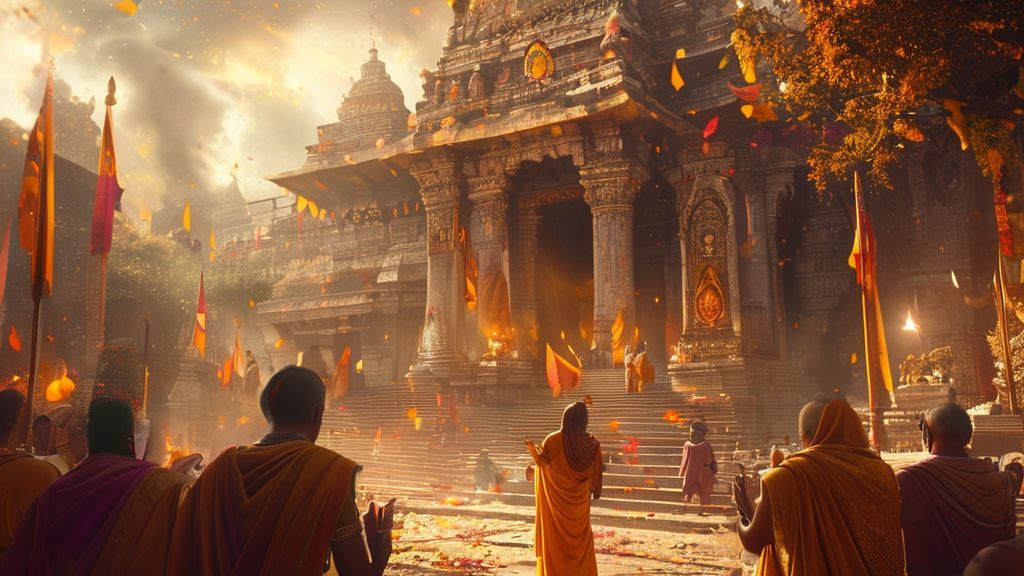
Just as a Hindu temple is meticulously designed with specific architectural principles (e.g., Nagara or Dravidian styles, Vastu Shastra principles) to guide a devotee towards the divine, so too can our digital spaces be “architected” for Dharmic engagement. This is not about physical structures but the conscious design of our online presence and interactions. A temple’s *garbhagriha* (sanctum sanctorum) is the focal point of divinity; similarly, our online presence should ideally have a “sanctum” of pure intent, where posts and interactions are offerings to the divine, free from ego. The *gopuram* or *shikhara* (tower) points upwards, symbolizing aspiration; our digital content should aspire to elevate, educate, and inspire, drawing others towards higher truths. The circumambulation path (*pradakshina*) encourages introspection; similarly, social media can be used for self-reflection, understanding diverse perspectives, and engaging in constructive dialogues rather than divisive debates.
This “architecture” demands that we design our digital interactions to foster *satsang* (good company) by choosing to follow and engage with accounts that disseminate Dharma, knowledge, and positive values. It requires us to build digital communities (like those on Hindutva.online) that mirror the physical *ashramas* or *maths*, where spiritual discourse thrives. Furthermore, the systematic presentation of Vedic knowledge, through well-researched articles and accessible explanations, reflects the methodical construction of ancient scriptures, ensuring clarity and authenticity in the transmission of Dharma.
Dharmic Practices for Social Media Engagement
Engaging with social media can become a spiritual practice, a form of *tapas*, if approached with the right *bhava* (attitude) and adherence to ethical guidelines. Here is a step-by-step guide:
- Perform *Sankalpa* (Intention Setting): Before logging on, set a clear, Dharmic intention. “I will use this platform to share truth, uplift others, and seek knowledge for my spiritual growth, refraining from negativity and waste of time.”
- Practice *Manana* (Reflection) Before Interaction: Before posting, commenting, or reacting, pause and reflect: “Is this true (*satya*)? Is it kind (*ahimsa*)? Is it necessary (*hita*)? Is it beneficial (*pathya*)?” As articulated in the *Bhagavad Gita* (Chapter 17, verse 15), “Speech that causes no agitation, truthful, pleasant, and beneficial, and the regular recitation of Vedic texts – these are called austerity of speech.”
- Cultivate *Viveka* (Discrimination): Actively discern between genuine information and *maya* (illusion/misinformation). Do not forward content without verifying its authenticity from reputable sources.
- Engage in *Svadhyaya* (Self-Study and Learning): Use social media as a tool for learning and expanding your understanding of Sanatan Dharma, philosophy, and current events from a Dharmic perspective. Follow scholars, spiritual teachers, and organizations dedicated to preserving and propagating Dharma.
- Practice *Brahmacharya* (Moderation): Be mindful of the time spent on social media. Excessive engagement can lead to *pramada* (heedlessness) and *nidra* (sloth). Set limits and adhere to them.
- Offer *Ishvara Pranidhana* (Surrender to the Divine): View your online contributions as an offering. Let your words and actions be an expression of devotion, serving a higher purpose rather than seeking personal validation or transient gratification.
Mantras for Mindful Digital Interaction
Chanting specific mantras can help maintain a pure mind and foster positive energy while engaging with social media:
- For Truth and Clarity:
ॐ असतो मा सद्गमय ।
तमसो मा ज्योतिर्गमय ।
मृत्योर्मा अमृतं गमय ।
ॐ शान्तिः शान्तिः शान्तिः ॥
Om Asato Ma Sadgamaya, Tamaso Ma Jyotirgamaya, Mrityorma Amritam Gamaya. Om Shantih Shantih Shantih.
(Lead me from the unreal to the real, from darkness to light, from death to immortality. Om peace, peace, peace.)
- For Harmonious Communication:
ॐ सह नाववतु । सह नौ भुनक्तु । सह वीर्यं करवावहै ।
तेजस्वि नावधीतमस्तु मा विद्विषावहै ।
ॐ शान्तिः शान्तिः शान्तिः ॥
Om Sahana Vavatu. Saha Nau Bhunaktu. Saha Veeryam Karavavahai. Tejasvi Navadheetamastu Maa Vidvishaavahai. Om Shantih Shantih Shantih.
(May we be protected together. May we be nourished together. May we work together with great energy. May our study be brilliant and effective. May we not hate each other. Om peace, peace, peace.)
Dos and Don’ts for a Dharmic Digital Life
- Do:
- Practice *Satya*: Share truthful, verified information.
- Practice *Ahimsa*: Be kind and respectful in all interactions; refrain from hate speech or personal attacks.
- Engage in *Satsang*: Follow and interact with individuals and groups that promote Dharma, spirituality, and positive values.
- Utilize for *Seva*: Use platforms to organize or support charitable activities, community service, or *dharma prachar*.
- Maintain *Saucha* (Purity): Keep your digital space clean, free from negativity, vulgarity, or harmful content.
- Uphold *Daya* (Compassion): Show empathy towards others, especially those expressing distress or seeking help.
- Don’t:
- Spread *Mithya* (Falsehood): Never disseminate unverified or misleading information.
- Engage in *Ninda* (Defamation/Gossip): Avoid speaking ill of others or participating in divisive rhetoric.
- Succumb to *Lobha* (Greed for Attention): Do not chase likes, shares, or validation at the expense of integrity or peace of mind.
- Be a victim of *Moha* (Delusion): Do not let the virtual world overshadow your real-world duties or identity.
- Waste *Kaala Kshetra* (Time and Energy): Avoid mindless scrolling and excessive consumption of trivial content.
- Promote *Kama* (Lust) or *Krodha* (Anger): Refrain from content that incites lower passions or fuels animosity.
Can social media be a tool for Moksha?
While social media itself is not a direct path to *moksha*, it can be a powerful *nimitta* (instrument) for spiritual growth. By using it to spread Dharma, engage in *satsang*, perform *seva*, and cultivate *viveka* and *vairagya*, it can aid in cleansing the mind and fostering a spiritual outlook, indirectly supporting the journey towards liberation. It offers an unprecedented opportunity to connect with spiritual teachers and fellow seekers, transforming a potentially distracting medium into a means for fostering *dharma*.
How to deal with negativity and trolling online?
The best approach aligns with the principle of *ahimsa* and *upeksha* (indifference to misery, from Patanjali’s Yoga Sutras). Do not engage with trolls or negativity; often, silence is the most potent response. If necessary, block or report truly harmful content. Remember that online anonymity often emboldens individuals to act contrary to Dharma; do not allow their *karma* to influence your own peace of mind. Focus on spreading positivity and truth, like a lotus untouched by mud.
Is it okay for Hindus to spend a lot of time on social media?
Spending excessive time on anything, even spiritual activities, can become a form of attachment or distraction. The principle of *brahmacharya* (moderation and self-control), a core Yama, applies here. While using social media for Dharmic purposes is encouraged, mindlessly consuming content or seeking validation for extended periods can lead to *tamas* (lethargy) and *rajas* (restlessness). Prioritize real-world duties, meditation, and direct spiritual practices over digital engagement.
What is the role of Dharma Prachar (spreading Dharma) on social media?
Social media offers an unparalleled platform for *Dharma Prachar*, reaching a global audience instantaneously. Devotees can share scriptural wisdom, explain complex philosophical concepts, promote festivals, and foster a deeper understanding of Sanatan Dharma. This is a form of *seva* (selfless service) and *jnana yajna* (sacrifice of knowledge). However, it must be done with utmost sincerity, accuracy, and humility, avoiding sensationalism or distortion of sacred texts. Platforms like Hindutva.online exemplify this mission, providing authentic resources to earnest seekers worldwide.
Upholding Sanatan Dharma in the Digital Commons
The digital age, with its rapid information flow and interconnectedness, presents both a crucible and a canvas for Sanatan Dharma. It is a crucible where our Dharmic resolve is tested by fleeting trends and potential distractions, and a canvas upon which we can paint the timeless wisdom of our traditions for all to see. By consciously applying principles like *satya*, *ahimsa*, *viveka*, and *vairagya* to our online interactions, we ensure that our engagement is not merely passive consumption but an active participation in the preservation and propagation of Dharma. This mindful approach transforms social media from a mere tool into a sacred space, fostering global *vishva bandhutva* and affirming the eternal relevance of Sanatan values in every facet of human existence. Ultimately, it is about aligning our digital self with our true, spiritual Self, contributing to a world where truth and righteousness prevail, both online and off.