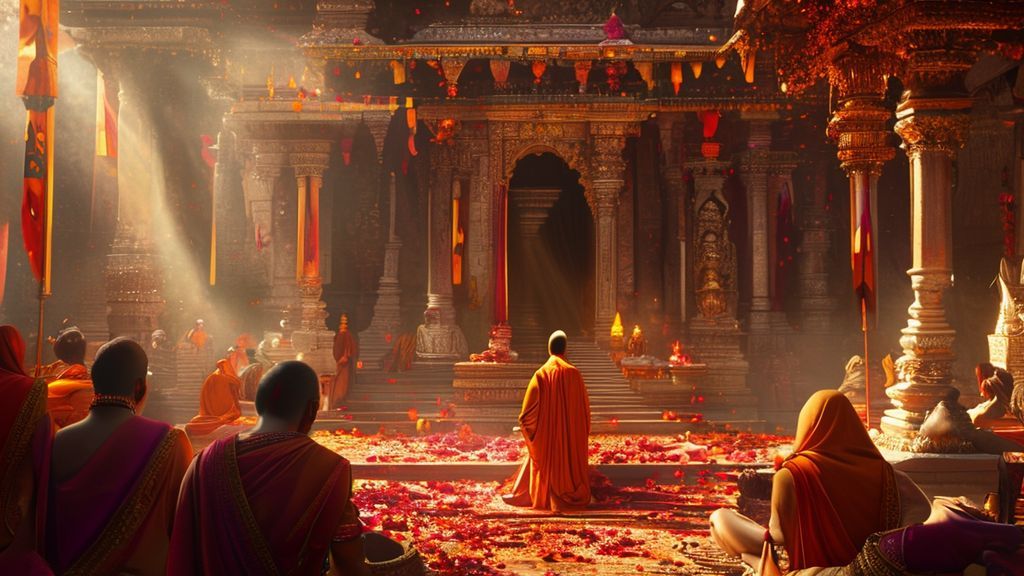
Kumkum Archana is a revered Vedic ritual involving the offering of kumkum, sacred red vermilion powder, to deities, primarily Goddesses, while chanting specific mantras. This devotional practice symbolizes devotion, auspiciousness, Shakti’s energy, and the fervent prayers of the devotee, invoking blessings for prosperity, health, and spiritual well-being.
| Attribute | Details |
|---|---|
| Primary Deity | Mainly Goddesses (Devi forms like Lakshmi, Parvati, Durga, Saraswati), also Shiva, Ganesha. |
| Location/Origin | Pan-Indian, rooted in ancient Vedic and Agamic traditions. |
| Key Festival | Navaratri, Diwali, Fridays, auspicious Tithis, any day for regular puja. |
| Scripture Reference | Devi Mahatmyam (Markandeya Purana), Skanda Purana (Kumari Puja, Kashi Khanda), Lakshmi Tantra, various Agamas, Puranas mentioning Devi worship. |
The Auspicious Offering of Kumkum Archana
In the vast tapestry of Sanatan Dharma, few rituals are as visually striking and spiritually potent as the Kumkum Archana. This profound act of devotion, involving the offering of the vibrant red vermilion powder, kumkum, is not merely a symbolic gesture but a deep engagement with divine energy. It is a fundamental practice that connects the devotee intimately with the chosen deity, primarily the Mother Goddess in her myriad forms – Lakshmi, Parvati, Durga, and Saraswati. The color red, rakta varna, inherently signifies dynamism, prosperity, love, and the fierce protective energy of the divine feminine (Shakti). Through Kumkum Archana, devotees seek to invoke these very attributes, inviting auspiciousness, harmony, and spiritual upliftment into their lives. It is a testament to the profound understanding that material offerings, when imbued with sincerity and devotion, transcend their physical form to become conduits of grace.
Puranic History & The Legend of Red
The significance of kumkum and the color red in Hindu worship is deeply etched in our Itihasas and Puranas. The very essence of Shakti is often depicted as radiant and red-hued. For instance, the Devi Mahatmyam within the Markandeya Purana describes Goddess Durga and Kali manifesting in terrifying yet protective red forms, adorned with red garments and holding red weapons, signifying their power to vanquish evil and preserve Dharma. The blood of demons, transformed into auspicious red dust, is a recurring motif in legends where the Goddess emerges victorious.
Specifically, the veneration of kumkum is intricately linked with सौभाग्य (Soubhagya), the state of auspicious marital bliss, especially for women. The application of sindoor (vermilion) in the hair parting by married women directly derives from this ancient reverence for kumkum. The Skanda Purana, particularly in its Kashi Khanda, elaborates on the auspiciousness of offering specific colors and substances to deities to attain desired boons. The act of offering kumkum is seen as pleasing to the Goddess, who is the bestower of all prosperity and happiness.
Moreover, texts like the Lalita Sahasranam (found in the Brahmanda Purana) describe Sri Lalita Tripurasundari with attributes like “रक्ताभा” (Raktābha – red-hued), “रक्तवसना” (Raktavasanā – clad in red), and “कुंकुमारुणविग्रहा” (Kuṅkumāruṇavigrahā – whose body is crimson like kumkum). These descriptions vividly illustrate the inherent connection between the Goddess and this sacred red powder, affirming Kumkum Archana as a direct invocation of her very essence. It is not just an offering; it is a communion with the divine mother’s vibrant energy.
The Spiritual & Energetic Significance of Kumkum
While Kumkum Archana is a ritual, its profound impact lies in its spiritual and energetic dimensions. The preparation of kumkum itself is a meticulous process, traditionally involving turmeric (हरिद्रा – Haridrā) and slaked lime (चूना – Chūnā), sometimes with camphor and other herbs. Turmeric is revered for its antiseptic properties and its association with purity and auspiciousness in Ayurveda and Vedic rituals. The combination, when applied, produces the vibrant red color, which is believed to possess significant energetic properties.
From a spiritual science perspective, the act of pouring kumkum, grain by grain, at the lotus feet or on the body of the deity (or an idol/picture representing it) while chanting divine names, creates a powerful spiritual vibration. Each granule of kumkum is charged with the devotee’s intent and the energy of the mantra. This collective energy is believed to purify the surroundings, attract positive cosmic energies, and align the devotee’s personal energy with the divine frequency of the deity. The red color is also associated with the Muladhara (Root) Chakra, signifying grounding, stability, and vital energy, making the offering a symbolic act of channeling and balancing these life forces.
Rituals & Puja Vidhi for Kumkum Archana
Performing Kumkum Archana requires devotion and adherence to traditional steps. While variations exist, a general procedure involves:
- Sankalpa (Intention): Begin by purifying yourself and sitting before the deity. Light a lamp (दीपक – Deepak) and incense. Take a small amount of water in your right palm and declare your intention (संकल्प – Sankalpa) for performing the puja, mentioning the deity, your name, and the desired outcome.
- Kalasha Sthapana (Optional): For elaborate pujas, a Kalasha (pot) filled with water, mango leaves, and a coconut may be established as a representation of the deity or cosmic energy.
- Invocation (आवाहन – Avahana): Meditate on the deity, inviting their divine presence into the idol or picture. You can use specific invocation mantras.
- Panchopachara or Shodashopachara Puja (Preliminary Worship): Offer water for bathing (स्नान – Snana), fresh clothes (वस्त्र – Vastra), flowers (पुष्प – Pushpa), and light a lamp and incense.
- Kumkum Archana (The Main Ritual):
- Take a small plate or bowl of kumkum.
- Chant the principal mantra of the deity (e.g., Om Shri Mahalakshmyai Namah) or a Sahasranamavali (1000 names) or Ashtottarashatanamavali (108 names).
- With each chant, take a pinch of kumkum between your thumb and forefinger and gently offer it at the lotus feet of the deity, or systematically over the idol, starting from the feet upwards.
- Ensure your focus remains on the deity and the mantra throughout.
- Dhupa (Incense) & Deepa (Lamp): After Archana, offer lighted incense sticks and wave a ghee lamp (आरती – Aarti) before the deity.
- Naivedya (Food Offering): Offer fruits, sweets, or other pure food items to the deity.
- Aarti (Waving of Light): Perform Aarti, circling the lamp before the deity while chanting devotional hymns.
- Pradakshina (Circumambulation) & Namaskaram (Prostration): Circumambulate the deity (if space permits) three times and prostrate in reverence.
- Kshama Prarthana (Pardon Prayer): Conclude by asking for forgiveness for any known or unknown errors committed during the puja.
Mantras & Chants for Kumkum Archana
The potency of Kumkum Archana is amplified by the recitation of appropriate mantras. While specific names of the deity are paramount, here are some commonly used chants:
- For Goddess Lakshmi: The Lakshmi Ashtottarashatanamavali (108 names of Lakshmi) is ideal. Each name is preceded by “Om” and suffixed with “Namah.” For example, ॐ श्रीं महालक्ष्म्यै नमः (Om Shreem Mahalakshmyai Namah), ॐ कमलवासिन्यै नमः (Om Kamalavasinyai Namah), ॐ हरिवल्लभायै नमः (Om Harivallabhyai Namah).
- For Goddess Parvati/Durga: The Durga Ashtottarashatanamavali or simple mantras like ॐ दुं दुर्गायै नमः (Om Dum Durgayai Namah) or ॐ उमायै नमः (Om Umayai Namah).
- For Sri Lalita Tripurasundari: Verses from the Lalita Sahasranamavali can be used, or the potent Bija Mantra: ऐं ह्रीं श्रीं ललितायै नमः (Aim Hreem Shreem Lalitayai Namah).
- General Devi Mantra: ॐ सर्वमंगलमांगल्ये शिवे सर्वार्थसाधिके । शरण्ये त्र्यम्बके गौरि नारायणि नमोऽस्तु ते ॥ (Om Sarva Mangala Mangalye Shive Sarvartha Sadhike | Sharanye Tryambake Gauri Narayani Namo’stu Te ||)
Recite these mantras with sincere devotion, ensuring each granule of kumkum offered carries your reverence.
Dos and Don’ts for Kumkum Archana
- Do: Perform Archana with a clean body and mind, having bathed and worn fresh clothes.
- Do: Maintain focus and devotion throughout the ritual.
- Do: Use fresh, unadulterated kumkum, ideally made from natural ingredients.
- Do: Offer kumkum with your right hand.
- Do: Light a lamp and incense before commencing, creating a pure atmosphere.
- Don’t: Perform Archana in a state of impurity (e.g., without bathing, during menstrual cycles for women, or after attending funerals without purification rituals).
- Don’t: Use kumkum that has fallen on the ground or become impure.
- Don’t: Rush through the mantras; chant with clarity and feeling.
- Don’t: Engage in idle talk or distractions during the puja.
- Don’t: Offer any tamasic or stale food as Naivedya.
What is the spiritual significance of the color red in Kumkum Archana?
The color red (रक्त वर्ण – rakta varna) in Kumkum Archana holds profound spiritual significance. It symbolizes Shakti (divine energy, power, creation), सौभाग्य (auspiciousness, marital bliss), purity, love, courage, and vitality. It is believed to represent the cosmic energy that empowers all creation and destruction, attracting positive vibrations and warding off evil forces. Many forms of the Mother Goddess are depicted in red, reinforcing this connection.
Can men perform Kumkum Archana?
Yes, absolutely. While kumkum is often associated with the feminine, Kumkum Archana is a universal Hindu ritual that can be performed by anyone – men, women, or children – who wishes to offer devotion to the chosen deity. The focus is on sincerity of devotion (भक्ति – Bhakti) and adherence to the ritual, not gender. Many male devotees regularly perform Kumkum Archana to various deities, including Shiva and Vishnu.
What is the difference between Kumkum Archana and Sindoor?
Kumkum Archana is a specific ritual of offering kumkum powder to a deity while chanting mantras, forming part of a larger puja. Sindoor, on the other hand, is primarily worn by married Hindu women in their hair parting (माँग – Mang) as a symbol of their marital status, auspiciousness, and the well-being of their husband. While both use red vermilion powder, their applications and primary purposes differ significantly, though both derive their sacredness from the same underlying symbolism of red and auspiciousness.
Dharmic Significance: Why This Matters for Every Hindu
Kumkum Archana is far more than a simple act of worship; it is a vital practice for preserving and transmitting the core tenets of Sanatan Dharma. It teaches devotion (भक्ति – Bhakti), instills discipline, and fosters a deep personal connection with the divine. By engaging with this ancient ritual, devotees learn the symbolic language of our scriptures, understand the energetic principles behind offerings, and actively participate in upholding our spiritual heritage. Each offering of kumkum reaffirms faith, purifies the soul, and contributes to the spiritual well-being of the individual and the collective. In an increasingly material world, such practices serve as powerful anchors, reminding us of the eternal truths and the omnipresent grace of the Divine Mother, ensuring that the radiant flame of Dharma continues to burn brightly for generations to come.