Home BlogDiwali Lakshmi Puja Muhurat Exact Timing and Why It Matters

Diwali Lakshmi Puja Muhurat Exact Timing and Why It Matters

by Arvind Mehta
25 minutes read
A+A-
Reset

The Diwali Lakshmi Puja muhurat represents far more than mere convenient scheduling – it constitutes precise astrological calculation determining the exact window when cosmic energies align optimally for invoking Goddess Lakshmi’s presence and securing Her lasting blessings of wealth, prosperity, and abundance. The Sanskrit term muhurat (also spelled muhurta) refers to an auspicious time period calculated through Vedic astrology (Jyotish Shastra) accounting for multiple astronomical factors including lunar position (tithi), planetary alignments (graha sthiti), ascending zodiac sign (lagna), and specific time periods like Pradosh Kaal (period after sunset) that prove especially conducive for particular spiritual activities.

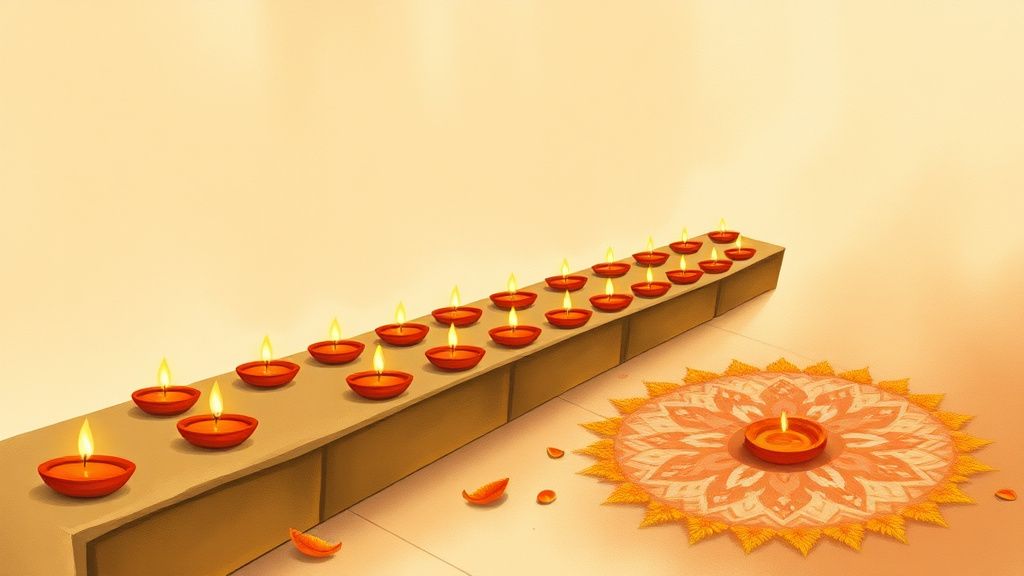
Diwali Lakshmi Puja Muhurat

While many modern practitioners casually perform Lakshmi Puja “sometime on Diwali evening” without attention to specific timing, traditional wisdom preserved in authoritative texts including Dharma Sindhu, Nirnaya Sindhu, and Vratraj explicitly emphasizes that timing determines efficacy – the same mantras, the same offerings, the same devotional intensity produce dramatically different results when conducted during cosmically aligned versus misaligned periods. The fundamental principle underlying muhurat science recognizes that time itself possesses qualitative dimensions; not all moments prove equally conducive for all activities, just as different seasons suit different agricultural crops or different lunar phases affect tidal patterns and biological rhythms differently.

For Diwali 2025 falling on October 20-21 (depending on geographical location and tithi calculations), understanding the precise Lakshmi Puja muhurat window for YOUR specific city – typically falling within Vrishabha Lagna (Taurus ascendant) during evening Pradosh Kaal when Amavasya tithi (new moon) prevails – enables you to perform worship during the narrow 1-2 hour window when Goddess Lakshmi, who by nature remains perpetually mobile and unstable (symbolizing wealth’s transient nature), can be “fixed” through worship performed under Sthir Lagna (fixed ascendant), literally making prosperity stable and long-lasting rather than fleeting.

This comprehensive guide demystifies the complex astrological science behind Lakshmi Puja timing, explaining what muhurat means, why Pradosh Kaal and Sthir Lagna matter specifically for wealth goddess worship, how to calculate the exact window for your geographical location, what happens if you miss the optimal timing, and the profound spiritual wisdom embedded in this ancient practice that modern prosperity seekers increasingly recognize as offering tangible benefits validated by both traditional experience and contemporary understanding of circadian rhythms, lunar influences, and the subtle energetic dimensions underlying material manifestation.

Understanding Muhurat: The Science of Auspicious Timing

Before examining specific Diwali muhurat calculations, grasping the underlying principles of muhurat science provides essential foundation transforming what might seem like superstitious time-picking into sophisticated understanding of temporal quality and cosmic rhythm alignment. Vedic astrology doesn’t merely predict future events but recognizes that time flows in qualitatively different streams, with certain moments naturally supporting specific intentions while others create resistance or obstacles to the same endeavors.

The Philosophical Foundation:

Ancient rishis understood through deep meditation and astronomical observation that cosmic forces continuously fluctuate – planetary positions shift, lunar phases progress, zodiac signs rise and set, creating constantly changing energetic environment. Just as certain geographical locations prove more fertile for specific crops due to soil composition, climate, and water availability, certain temporal moments prove more “fertile” for specific activities due to their unique astrological configuration. Muhurat selection involves identifying these cosmically supported windows and conducting important activities within them to harness favorable energies while avoiding inauspicious periods that would hamper success despite our best efforts.

This isn’t fatalism – one can certainly perform activities during inauspicious times, but like planting seeds in wrong season, results prove unpredictable, difficult to achieve, or short-lived despite hard work. Conversely, performing the same activity during optimal muhurat is like planting in fertile, well-watered soil during proper season – success comes naturally, obstacles diminish, and results manifest stably with lasting benefits.

Components of Muhurat Calculation:

Professional astrologers consider multiple factors when calculating auspicious timing:

FactorSanskrit TermSignificance for Lakshmi Puja
Lunar DayTithiAmavasya (new moon) essential for Diwali
WeekdayVaraVaries; Diwali occurs on fixed tithi regardless of weekday
Ascending SignLagnaSthir Lagna (fixed signs) crucial for making wealth stable
Lunar MansionNakshatraDetermines subtle quality of time
YogaYogaCombination of sun-moon positions
Half-Day PeriodKaranaSubdivision of tithi providing fine timing
Time of DayKaalPradosh (after sunset) specifically prescribed for Lakshmi worship

The complexity arises because multiple factors must align simultaneously – it’s insufficient that Amavasya occurs; the puja must happen when Amavasya prevails DURING Pradosh Kaal WHILE Sthir Lagna ascends AVOIDING inauspicious periods like Rahu Kaal. This creates narrow windows requiring precise calculation rather than casual approximation.

Why Timing Matters Spiritually:

Beyond astrological technicalities, muhurat observance demonstrates spiritual principles that transcend mere superstition:

Discipline and Surrender: Following prescribed timing rather than personal convenience cultivates discipline and surrender to cosmic order – recognizing that universe operates according to laws that supersede individual preferences. This humility proves essential for spiritual progress.

Respect for Tradition: Muhurat calculations preserve knowledge accumulated over millennia through rishis’ observations and practitioners’ experiences. Honoring these timings respects tradition and connects us to unbroken lineage of worshippers across generations.

Intentionality and Preparation: Knowing specific muhurat prevents casual, last-minute worship. It requires advance planning, creating anticipation and mental preparation that enhance devotional quality. The puja becomes significant event rather than routine obligation.

Diwali Lakshmi Puja Muhurat

Subtle Awareness: Attending to cosmic timing develops sensitivity to subtle energies, rhythms, and patterns – awakening consciousness to dimensions of reality beyond gross material perceptions. This refined awareness supports spiritual development.

Results Orientation: Ultimately, muhurat science aims for efficacy – ensuring spiritual practices produce intended results. While devotion matters most, combining sincere devotion with proper timing maximizes benefits for practitioners genuinely seeking divine blessings for legitimate purposes.

Modern Validation:

Contemporary chronobiology research validates that biological and psychological states vary systematically throughout day and lunar month. Circadian rhythms affect hormone levels, cognitive performance, emotional states, and physical energy in predictable patterns. Lunar cycles influence sleep quality, cardiovascular function, and numerous physiological processes. While modern science hasn’t validated specific muhurat calculations, it confirms the fundamental premise that time possesses qualitative dimensions affecting human functioning – ancient wisdom intuited through spiritual insight what instruments now measure as biological fact.

Pradosh Kaal: The Twilight Power Window

Pradosh Kaal represents one of day’s most spiritually potent periods, holding special significance for Lakshmi Puja specifically according to authoritative dharma texts. Understanding what Pradosh means, why this twilight period possesses unique power, and how it relates to wealth goddess worship provides crucial context for appreciating muhurat importance.

Defining Pradosh Kaal:

Pradosh literally means “evening twilight” or “dusk” – the transitional period following sunset when daylight fades but darkness hasn’t completely arrived. Specifically, Pradosh Kaal begins immediately after sunset and extends approximately 2 hours 24 minutes (one muhurta), though exact duration varies by location and season due to latitude-dependent sunset timing.

This twilight period subdivides into three phases:

  • Early Pradosh: Immediately after sunset, residual light remains
  • Middle Pradosh: Neither day nor night, maximum transition
  • Late Pradosh: Darkness approaching, stars becoming visible

For Lakshmi Puja, the early to middle Pradosh proves most auspicious, ideally when Sthir Lagna prevails during this window (discussed in next section).

Spiritual Significance of Twilight:

Hindu tradition recognizes twilight times – both dawn (Brahma Muhurta) and dusk (Pradosh) – as spiritually charged liminal periods when the veil between material and spiritual dimensions becomes permeable. During transitions between major states (night/day, day/night), consciousness naturally shifts, creating conducive environment for spiritual practices including meditation, prayer, and deity worship.

Specific reasons Pradosh holds power:

Symbolic Transition: Just as twilight represents transition between day and night, spiritual practice during this period symbolizes transition from ignorance (darkness) to knowledge (light) or from material existence to divine consciousness. The temporal transition mirrors spiritual transformation being sought.

Lord Shiva’s Time: According to Puranic accounts, Lord Shiva performs His cosmic dance (Tandava) during Pradosh, making this period especially sacred. Worshipping during Shiva’s dance time attracts His blessings and removes obstacles to prosperity.

Reduced Activity: Pradosh typically sees diminished worldly activity – work concludes, people return home, external engagement decreases. This natural quieting creates peaceful atmosphere supporting focused worship without constant interruptions.

Psychological Transition: Scientifically, the transition from light to darkness affects neurochemistry – melatonin production begins, cortisol drops, brain waves shift toward alpha/theta frequencies associated with relaxation and meditative states. This natural physiological transition supports deeper devotional experience.

Why Pradosh for Lakshmi Specifically:

Goddess Lakshmi’s association with Pradosh Kaal has specific scriptural and symbolic bases:

Emergence from Ocean: According to the Samudra Manthan (churning of ocean) narrative, Goddess Lakshmi emerged from the milky ocean during Pradosh Kaal on Dhanteras (two days before Diwali). Worshipping Her during this same period on Diwali honors the time of Her manifestation.

Choice of Vishnu: On Diwali Amavasya, Goddess Lakshmi chose Lord Vishnu as Her consort during evening time. This divine marriage occurred during Pradosh, making it forever auspicious for Lakshmi worship.

Lighting Significance: Pradosh’s darkness creates perfect context for Diwali’s defining practice – lighting lamps (deepas). The contrast between darkness and lamp-light symbolizes dispelling ignorance through knowledge and attracting wealth through righteous action. Lakshmi, attracted to light and cleanliness, naturally moves toward homes illuminated during this darkness.

Practical Worship Atmosphere: Evening timing allows families to gather after day’s work concludes. Unlike dawn muhurat that requires waking early, Pradosh proves practical for modern households to conduct elaborate puja with complete family participation, proper preparation, and unhurried devotion.

Calculating Pradosh for Your Location:

Pradosh timing varies significantly by geographical location since it depends on local sunset. A puja performed at 6:00 PM in Delhi occurs during Pradosh, while the same 6:00 PM in London happens well after Pradosh concluded. Therefore, use location-specific panchang rather than assuming generic “evening” timing.

Reliable sources for precise timing:

  • Drik Panchang (www.drikpanchang.com) – allows city selection
  • Local temple calendars prepared by knowledgeable pandits
  • Regional newspapers’ Diwali special editions
  • Authentic panchang apps with GPS-based location detection

Note the Pradosh Kaal beginning and ending times for your city, then identify which portion overlaps with Sthir Lagna (next section) – that intersection creates optimal muhurat window.

Sthir Lagna: Fixing the Mobile Goddess

The concept of Sthir Lagna (fixed ascendant) represents the second critical factor determining optimal Lakshmi Puja muhurat, working in conjunction with Pradosh Kaal to create the narrow window considered most auspicious by Vedic astrology. Understanding what Lagna means, why certain Lagnas are “fixed” versus “movable,” and how this specifically relates to Goddess Lakshmi’s nature reveals sophisticated wisdom underlying muhurat calculations.

Understanding Lagna (Ascendant):

In Vedic astrology, Lagna refers to the zodiac sign rising on eastern horizon at any given moment from any given location. As Earth rotates, different zodiac signs rise and set continuously – each of the twelve signs ascends for approximately 2 hours before the next takes its place. The Lagna at birth time forms the foundation of one’s astrological chart, but Lagna also changes throughout each day, creating continuously shifting energetic backdrop affecting activities performed during that period.

The twelve zodiac signs categorize into three types based on their inherent nature:

Chara Lagna (Movable Signs):

  • Mesha (Aries)
  • Karka (Cancer)
  • Tula (Libra)
  • Makara (Capricorn)

These signs embody movement, change, initiation, and dynamism. Activities requiring mobility, travel, new beginnings, or quick completion suit these Lagnas.

Sthir Lagna (Fixed Signs):

  • Vrishabha (Taurus)
  • Simha (Leo)
  • Vrishchika (Scorpio)
  • Kumbha (Aquarius)

These signs embody stability, permanence, patience, and endurance. Activities requiring long-term stability, foundation building, or lasting results suit these Lagnas.

Dwisva Lagna (Dual/Common Signs):

  • Mithuna (Gemini)
  • Kanya (Virgo)
  • Dhanu (Sagittarius)
  • Meena (Pisces)

These signs embody flexibility, adaptability, and dual nature. Activities requiring versatility or quick adaptation suit these Lagnas.

Why Sthir Lagna for Lakshmi Puja:

Goddess Lakshmi, according to Hindu theology, possesses inherently mobile and unstable nature – She moves constantly from place to place, never remaining fixed at any single location for extended periods. This characteristic explains why wealth proves transient and unstable; prosperity comes and goes, fortunes rise and fall, financial security proves elusive. The very goddess embodying these principles shares their fleeting nature.

The challenge devotees face: how to attract Lakshmi’s blessings AND make them lasting? How to secure prosperity that remains stable rather than vanishing as quickly as it arrived? The answer: worship Her during Sthir (fixed) Lagna, thereby symbolically and energetically “fixing” Her mobile nature through the stabilizing influence of the ascending fixed sign.

The logic operates on correspondence principle central to Vedic sciences – “as above, so below,” “as in cosmos, so in individual.” When the cosmic backdrop (Lagna) embodies fixity while the deity (Lakshmi) embodies mobility, worship performed during this moment impresses the cosmic quality (stability) onto the deity’s manifestation in the worshipper’s life. The Sthir Lagna acts as anchor or stabilizing force counterbalancing Lakshmi’s natural mobility.

Vrishabha Lagna: The Optimal Choice:

Among the four Sthir Lagnas, Vrishabha (Taurus) proves most significant for Diwali Lakshmi Puja for multiple reasons:

Venus Association: Vrishabha is ruled by Shukra (Venus), planet associated with wealth, luxury, beauty, material prosperity – domains directly under Lakshmi’s governance. Worshipping wealth goddess when wealth-planet’s sign ascends creates natural resonance.

Pradosh Overlap: On Diwali Amavasya across most of India, Vrishabha Lagna conveniently ascends during Pradosh Kaal – typically between approximately 5:30 PM – 7:30 PM depending on location. This fortunate overlap of both critical factors (Pradosh + Sthir Lagna) creates the golden window.

Earth Element: Vrishabha represents earth element (Prithvi tattva), symbolizing groundedness, materiality, and stability – perfect for anchoring spiritual blessings into physical manifestation of wealth.

Traditional Preference: Centuries of practice have validated Vrishabha Lagna’s effectiveness for Lakshmi Puja, creating accumulated positive associations and collective consciousness strengthening its potency.

Other Sthir Lagnas:

While Vrishabha remains preferred, the other three Sthir Lagnas also prove acceptable if Vrishabha timing proves impossible:

  • Simha (Leo) Lagna: Typically ascends around midnight on Diwali, offering alternative for those who missed evening muhurat
  • Vrishchika (Scorpio) Lagna: Usually ascends in early morning, suitable for dawn worship if preferred
  • Kumbha (Aquarius) Lagna: Typically afternoon, less traditional but acceptable if necessary

The key principle remains: conduct Lakshmi Puja during ANY Sthir Lagna when Amavasya prevails, ideally overlapping with Pradosh Kaal. Vrishabha simply offers the most auspicious combination of factors.

Practical Application:

When checking your local panchang, look for timing described as:

  • “Sthir Lagna Muhurat”
  • “Vrishabha Lagna”
  • “Fixed Sign Ascendant”
  • “Lakshmi Puja Muhurat during Pradosh”

Reputable panchangs clearly indicate these windows with start and end times specific to your location. The window typically lasts 1-2 hours – plan to complete puja within this period for maximum astrological benefit.

Amavasya Tithi: The Dark Moon Foundation

Beyond Pradosh Kaal and Sthir Lagna, the third fundamental factor determining Diwali Lakshmi Puja muhurat involves Amavasya tithi – the new moon day when lunar phase reaches absolute darkness before beginning to wax again. Understanding why Lakshmi worship specifically occurs on Amavasya rather than any other lunar day reveals deeper cosmological and spiritual principles underlying Diwali observance.

Understanding Tithi:

Tithi represents the lunar day in Hindu calendar, calculated based on angular relationship between sun and moon rather than Earth’s rotation (which determines solar days). The lunar month contains 30 tithis divided into two fortnights:

  • Shukla Paksha (bright fortnight): From new moon to full moon, 15 tithis
  • Krishna Paksha (dark fortnight): From full moon to new moon, 15 tithis

Amavasya represents the 30th and final tithi, when sun and moon occupy same zodiac position (conjunction), creating completely dark sky with no visible moon. This darkest night initiates the next lunar cycle, symbolizing both ending and beginning, death and rebirth, dissolution and creation.

Why Amavasya for Lakshmi Puja:

Samudra Manthan Connection: According to Puranic narrative, after various treasures emerged during the churning of cosmic ocean, Goddess Lakshmi finally appeared on Dhanteras (Trayodashi tithi, two days before Amavasya). She then chose Lord Vishnu as Her eternal consort on Amavasya day, making this tithi forever associated with Her worship.

Contrast Principle: Amavasya’s total darkness creates perfect backdrop for Diwali’s central practice – lighting millions of lamps. The contrast between darkness and light symbolizes spiritual transformation – dispelling ignorance through knowledge, replacing poverty with prosperity, eliminating negativity through positivity. Lakshmi, drawn to illumination, naturally moves toward homes that light lamps during darkest night.

Ancestor Worship Connection: Amavasya traditionally involves Pitru Tarpan (ancestor propitiation) since it’s believed deceased souls can more easily receive offerings during dark moon. Diwali Amavasya combines this ancestral worship with Lakshmi Puja, acknowledging that prosperity requires both divine grace (Lakshmi) and ancestral blessings (Pitrus).

Renewal Symbolism: Just as Amavasya marks lunar cycle’s end and next cycle’s beginning, Diwali marks Hindu financial year’s end for many business communities (especially in Gujarat). New account books (Chopda Pujan) are inaugurated on Diwali, aligning business renewal with lunar renewal during Amavasya.

Spiritual Darkness: Esoterically, Amavasya represents the spiritual seeker’s dark night of the soul – the moment of deepest challenge, maximum confusion, apparent abandonment by light. Yet this very darkness precedes dawn. Worshipping Lakshmi on Amavasya symbolizes faith that prosperity will arise even from apparent desolation, that divine grace operates especially when circumstances seem darkest.

Tithi-Based vs. Calendar-Based Timing:

A crucial point often causing confusion: Diwali doesn’t occur on fixed calendar date but rather on Amavasya tithi of Kartik month, which shifts in Gregorian calendar. Additionally, since tithi doesn’t align with midnight-to-midnight solar day, Amavasya tithi might begin during one calendar day and end during the next, creating debate about “correct” Diwali date.

Traditional Hindu practice follows tithi-based calculation: Diwali is celebrated on whichever day Amavasya prevails during Pradosh Kaal. If Amavasya extends past sunset into next day’s Pradosh, that second day becomes Diwali. If Amavasya ends before sunset, then previous day (Chaturdashi) becomes Diwali when Amavasya prevailed after sunset.

This complexity explains why “Diwali 2025: October 20 or 21?” debates arise. The answer depends on:

  1. Your geographical location (affects local sunset timing)
  2. Whether Amavasya tithi prevails during local Pradosh
  3. Which panchang authority you follow (slight calculation variations exist)

Authoritative sources like Drik Panchang resolve this by providing location-specific dates and timings – always verify for YOUR city rather than assuming nationwide uniform timing.

Muhurat Within Amavasya:

Even after identifying correct Amavasya day, the precise muhurat window requires further refinement. The puja should occur when:

  1. Amavasya tithi is still prevailing (hasn’t ended)
  2. Pradosh Kaal is occurring (post-sunset twilight)
  3. Sthir Lagna is ascending (preferably Vrishabha)
  4. Inauspicious periods are avoided (Rahu Kaal, etc.)

These factors together create the narrow 1-2 hour “golden window” prescribed for optimal Lakshmi Puja – typically falling between approximately 6:00-8:00 PM in most Indian cities, with earlier/later timing at western/eastern longitudes respectively.

Avoiding Inauspicious Periods: Rahu Kaal and More

While identifying auspicious muhurat proves essential, equally important involves avoiding inauspicious periods that could negate even perfectly timed puja if unknowingly conducted during these cosmically unfavorable windows. Understanding these prohibited times and how to identify them ensures your Lakshmi worship occurs in supportive rather than resistant energetic environment.

Rahu Kaal: The Most Critical Avoidance:

Rahu Kaal (also spelled Rahu Kalam) represents the most widely recognized inauspicious period, occurring daily for approximately 90 minutes but at different times depending on weekday. Named after Rahu – the shadow planet representing obstacles, illusions, and malevolent influences in Vedic astrology – this period proves particularly unfavorable for beginning new ventures, conducting religious ceremonies, or performing important activities.

Daily Rahu Kaal Timing:

WeekdayRahu Kaal PeriodDuration
Monday7:30 AM – 9:00 AMMorning
Tuesday3:00 PM – 4:30 PMAfternoon
Wednesday12:00 PM – 1:30 PMNoon
Thursday1:30 PM – 3:00 PMAfternoon
Friday10:30 AM – 12:00 PMLate morning
Saturday9:00 AM – 10:30 AMMorning
Sunday4:30 PM – 6:00 PMAfternoon/Evening

Note: These are approximate durations for New Delhi. Exact timing varies by location and sunrise time – consult location-specific panchang.

Why Rahu Kaal Matters for Diwali:

If Diwali falls on Sunday, the late afternoon/early evening Rahu Kaal (approximately 4:30-6:00 PM) could overlap with beginning of Pradosh Kaal and even Vrishabha Lagna ascent. This creates problematic situation requiring careful timing to begin puja AFTER Rahu Kaal ends but DURING optimal muhurat.

For Diwali 2025 falling on Monday, October 20 (or Tuesday, October 21 depending on location), Rahu Kaal occurs in morning (Monday) or afternoon (Tuesday), well before evening Lakshmi Puja muhurat – thus posing no conflict. However, always verify for your specific location and day.

Yamag Ghanta (Yamaghanda):

Another inauspicious period occurs daily, associated with Yama (god of death). Similar to Rahu Kaal, it lasts approximately 90 minutes daily but at different times:

  • Monday: 12:00 PM – 1:30 PM
  • Tuesday: 9:00 AM – 10:30 AM
  • Wednesday: 7:30 AM – 9:00 AM
  • Thursday: 10:30 AM – 12:00 PM
  • Friday: 1:30 PM – 3:00 PM
  • Saturday: 12:00 PM – 1:30 PM
  • Sunday: 3:00 PM – 4:30 PM

Again, Sunday Yamaghanda could potentially conflict with early Pradosh if sunset occurs very early, but this rarely poses practical problem for Diwali Lakshmi Puja as muhurat typically falls after 6:00 PM when all daily inauspicious periods have passed.

Gulika Kaal:

Less commonly referenced but still avoided by traditionalists, Gulika Kaal (or Goolika Kalam) represents another shadow-planet influenced period occurring daily. Timing calculations vary by tradition, but generally lasts 90 minutes like Rahu Kaal.

Dur Muhurat:

Dur Muhurat represents specifically inauspicious 48-minute periods occurring 2-3 times daily, calculated based on day and night durations. While less universally observed than Rahu Kaal, extremely orthodox families avoid these for major religious ceremonies.

Practical Guidelines:

For most Diwali Lakshmi Puja practitioners:

  1. Prioritize Rahu Kaal avoidance: This proves universally recognized and most important
  2. Check your specific day: Verify whether Diwali falls on Sunday (most problematic) or other day
  3. Use reliable panchang: Don’t rely on generic timing; check location-specific calculations
  4. If conflict exists: Begin puja after inauspicious period ends, even if this means starting slightly later than ideal muhurat
  5. Don’t create anxiety: If you unknowingly performed puja during inauspicious period, don’t obsess – sincere devotion transcends technical timing

The reality: for most Diwali occurrences, evening Lakshmi Puja muhurat naturally falls AFTER all daily inauspicious periods have passed, making this largely theoretical concern. However, awareness prevents problems in edge cases and demonstrates thoroughness in approaching sacred practices.

Frequently Asked Questions

What if I miss the exact muhurat window?

If you miss the optimal muhurat (Vrishabha Lagna during Pradosh while Amavasya prevails), perform Lakshmi Puja during ANY Sthir Lagna that day while Amavasya still prevails – Simha Lagna around midnight or Vrishchika Lagna in early morning provide alternatives. If even these pass, perform puja with full devotion whenever possible on Diwali day itself. While optimal timing amplifies benefits, sincere worship even during less auspicious timing proves far superior to skipping puja entirely. Goddess Lakshmi responds primarily to devotion and purity of heart, with muhurat serving to maximize rather than enable Her grace.

Does muhurat timing differ for different geographical locations?

Yes, absolutely. Muhurat calculations depend on local sunrise, sunset, and astronomical positions as observed from specific geographical coordinates – latitude and longitude. A muhurat calculated for Delhi proves completely incorrect for London, New York, or even Mumbai. This is why reliable panchangs like Drik Panchang allow city selection, recalculating all timings for chosen location. When traveling or living abroad, always use location-specific panchang rather than assuming your hometown timing applies. Some families living abroad compromise by using timing from their ancestral Indian city, but authentically, local astronomical timing should govern.

Can I perform Lakshmi Puja in the morning instead of evening?

While evening Pradosh muhurat remains traditional and scripturally prescribed, if circumstances absolutely prevent evening worship, morning alternatives exist. Check for morning Sthir Lagna (typically Vrishchika around 5:00-7:00 AM) while Amavasya prevails. Some spiritual traditions actually prefer dawn worship (Brahma Muhurta) as universally auspicious for all deity worship. However, for Lakshmi specifically, evening proves more appropriate given scriptural precedents, symbolic appropriateness of lighting lamps during darkness, and practical family participation factors. Unless work schedule or travel absolutely prevents evening puja, follow traditional Pradosh timing.

What happens if Diwali date itself is uncertain (October 20 vs 21)?

Date confusion arises from regional panchang variations and Amavasya tithi’s exact ending time relative to sunset. Check multiple authoritative sources (Drik Panchang, local temple calendars, respected astrologers in your area) – they usually converge on single date for your specific location. If genuine uncertainty remains, observe puja on whichever day your family tradition or local community follows. Many families solve this by performing simple Lakshmi worship both days, with full elaborate puja on whichever day their chosen authority prescribes. The theological reality: Goddess Lakshmi knows your sincere intent and responds to devotion regardless of minor calendar technicalities.

Is muhurat timing necessary for home puja or only temple worship?

Muhurat principles apply EQUALLY to home and temple worship. In fact, since Lakshmi Puja on Diwali occurs primarily at homes rather than temples (unlike many other festivals), muhurat timing becomes especially relevant for household worship. The common misconception that “temples need proper muhurat but casual home puja doesn’t” contradicts Vedic understanding – deity worship follows same principles regardless of location. That said, if proper muhurat timing creates such stress that devotional mood suffers, prioritize devotion over technical perfection. Worship with sincere heart during approximate evening time proves superior to mechanically correct timing without authentic feeling.

How accurate must the timing be – can I start 5-10 minutes early/late?

Vedic astrology operates on precise calculations down to minutes (a muhurta equals 48 minutes). Technically, beginning puja even 5 minutes before muhurat starts means conducting during previous Lagna, potentially non-optimal period. Practically, most families require 15-30 minutes to complete puja, so starting AT muhurat beginning allows you to worship throughout the favorable window. A reasonable approach: begin no earlier than 5 minutes before prescribed start, aim to complete main offerings and mantras during central portion of muhurat, allow aarti and prasad distribution to continue even if window technically ends. Avoid extreme precision anxiety – 5-10 minute variance won’t negate sincere worship, though respecting calculated timing demonstrates seriousness and attracts maximum benefit.

Do different sampradayas (spiritual traditions) have different muhurat prescriptions?

While core principles (Pradosh Kaal, Sthir Lagna, Amavasya tithi) remain consistent across Hindu traditions, some variations exist. ISKCON and other Vaishnava sampradayas may emphasize particular timing over other considerations. Some regional traditions incorporate local customs. Bengali communities might follow different panchang calculations than North Indian communities. When such variations arise, follow YOUR family’s sampradaya or chosen spiritual tradition’s guidance. These differences typically involve minor timing variations (30-60 minutes) rather than fundamental disagreements. The blessing: multiple “correct” timings exist, giving flexibility while maintaining astrological propriety.

Is it possible to “make up” for wrong timing through longer or more elaborate puja?

While devotional intensity matters immensely, specific muhurat timing provides unique astrological support that cannot be fully compensated by extended duration or elaborate ritual during wrong timing. Think of it like planting season – cultivating all winter with intensive care cannot substitute for planting during proper spring season. That said, sincere lengthy puja during suboptimal timing proves FAR superior to casual brief puja during perfect muhurat. The ideal: combine both proper timing AND elaborate devotional worship. If forced to choose, prioritize devotion – Lakshmi responds more to pure heart than precise calculations, though combining both maximizes results for serious practitioners seeking enduring prosperity.

Conclusion

The Diwali Lakshmi Puja muhurat represents far more than ritualistic time-keeping or astrological superstition – it embodies profound understanding of cosmic rhythms, temporal quality, and the alignment of human worship with universal energies that maximize divine grace manifestation.

The narrow 1-2 hour window when Amavasya tithi prevails during Pradosh Kaal while Sthir Lagna (especially Vrishabha) ascends creates optimal energetic environment for worshipping the perpetually mobile Goddess Lakshmi in manner that “fixes” Her blessings, transforming fleeting prosperity into lasting abundance that remains stable through life’s inevitable fluctuations. Understanding these principles – why Pradosh matters, how Sthir Lagna works, what Amavasya signifies, which periods to avoid – transforms perfunctory religious observance into informed spiritual practice conducted with full consciousness of both outer ritual details and inner significance.

As Diwali 2025 approaches, take time to identify the precise muhurat for YOUR specific geographical location rather than assuming generic “evening” timing suffices. Consult reliable panchang, note the exact window, plan your preparation to begin puja punctually within prescribed period, and conduct worship with the understanding that you’re harmonizing personal devotion with cosmic design – the marriage of human aspiration and universal law that produces tangible results transcending mere wishful thinking. While Goddess Lakshmi’s grace ultimately responds to purity of heart and sincerity of worship above all considerations, combining authentic devotion with proper timing creates optimal conditions for prosperity blessings that arrive readily and remain enduringly rather than proving elusive or transient.

May your Diwali Lakshmi Puja performed at proper muhurat bring abundant prosperity, lasting wealth, family harmony, and the deeper realization that true abundance flows not merely from external accumulation but from alignment with dharma and recognition that divine presence constitutes the ultimate wealth pervading all existence. ॐ श्रीं ह्रीं श्रीं कमले कमलालये प्रसीद प्रसीद। श्रीं ह्रीं श्रीं ॐ महालक्ष्म्यै नमः॥ (Om Shreem Hreem Shreem Kamale Kamalalaye Praseed Praseed. Shreem Hreem Shreem Om Mahalakshmyai Namah.)


About the Author

Arvind Mehta – Vedic Astrology and Religious Sciences Expert

Arvind Mehta is a distinguished scholar and practitioner specializing in Vedic astrology (Jyotish Shastra), Vastu Shastra, numerology, and the scientific foundations of Hindu religious practices. Holding advanced certifications in predictive astrology, muhurat calculations, and temple sciences, his work bridges ancient wisdom with contemporary applications, making complex astrological principles accessible to modern practitioners. Arvind has extensive experience calculating auspicious timings for major life events, religious ceremonies, and festival observances, ensuring that traditional practices receive proper astrological support for optimal results.

He regularly consults for families, businesses, and spiritual institutions on muhurat selection, horoscope analysis, Vastu corrections, and the integration of Vedic sciences into daily life. His publications explore the astronomical accuracy of ancient Hindu texts, the scientific basis of ritual timing, and the practical application of astrological knowledge for prosperity and spiritual advancement. Arvind’s teaching emphasizes that Vedic sciences represent sophisticated understanding of cosmic laws rather than superstition, offering validated methodologies for aligning human activity with universal rhythms for enhanced success and wellbeing.

You May Also Like

Leave a Comment

Adblock Detected

We noticed you're using an ad blocker. Hindutva.online is committed to providing quality content on Hindu heritage and culture. Our ads help support our research and writing team. Please consider disabling your ad blocker for our site to help us continue our mission.
