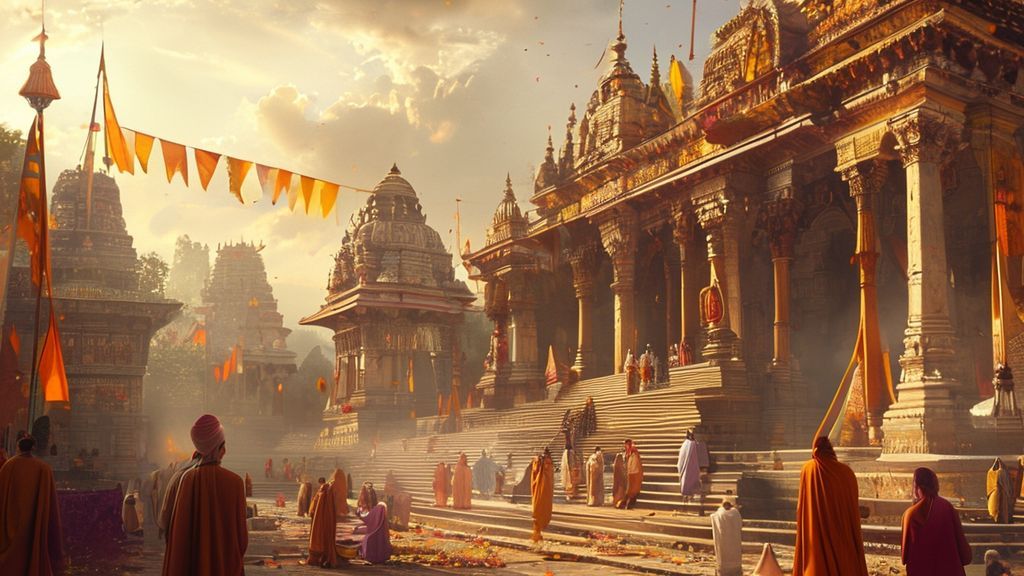
Ujjain and Omkareshwar are two of the most revered ancient Hindu pilgrimage sites in Madhya Pradesh, India, uniquely housing two of the twelve revered Jyotirlingas of Bhagwan Shiva. Ujjain, the ancient Avantika, is home to the Dakshinamukhi (south-facing) Mahakaleshwar Jyotirlinga, while Omkareshwar presents the divine confluence of two Jyotirlingas on an Om-shaped island in the sacred Narmada River.
| Attribute | Details |
|---|---|
| Deities | Bhagwan Shiva (Mahakaleshwar, Omkareshwar, Mamaleshwar) |
| Primary Locations | Ujjain (Mahakaleshwar Temple, Kshipra River), Omkareshwar (Omkareshwar Temple, Mamaleshwar Temple, Narmada River) |
| Key Festivals | Maha Shivaratri, Shravan Maas, Kartik Purnima, Simhastha Kumbh Mela (Ujjain) |
| Scripture References | Skanda Purana (Avanti Khanda, Kashi Khanda), Shiva Purana (Koti Rudra Samhita), Linga Purana, Mahabharata, Puranas |
| Unique Features | Mahakaleshwar: Dakshinamukhi Swayambhu Jyotirlinga, Bhasm Aarti. Omkareshwar: Om-shaped island, two Jyotirlingas (Omkareshwar & Mamaleshwar), sacred Narmada River. |
Introduction: The Confluence of Divinity and Time
The sacred land of Madhya Pradesh, nestled in the heart of Bharatavarsha, holds within its embrace two paramount spiritual sanctuaries: Ujjain and Omkareshwar. These cities are not merely geographical locations but vibrant centers of Sanatan Dharma, where the very fabric of existence resonates with the divine presence of Bhagwan Shiva. For millennia, seekers and devotees have undertaken arduous pilgrimages to these holy grounds, drawn by the profound spiritual magnetism emanating from the Hindutva.online described Jyotirlingas. Ujjain, the ancient Ujjayini, stands as a witness to cosmic time, while Omkareshwar, with its unique Om-shaped island, symbolizes the primordial sound of creation itself. Their histories are etched in the Puranas, their architecture a testament to unwavering devotion, and their rituals a living tradition connecting humanity to the divine.
Puranic History & Legends: Narratives of Divine Manifestation
Ujjain: Mahakaleshwar, The Lord of Time
The glory of Ujjain, known in ancient times as Avantika, is primarily due to the presence of the Mahakaleshwar Jyotirlinga. As detailed in the Skanda Purana’s Avanti Khanda and the Shiva Purana’s Koti Rudra Samhita, this Jyotirlinga is one of the twelve supreme manifestations of Shiva. The legend recounts how a devout Brahmana named Veda Priy, along with his four sons, worshipped Shiva on the banks of the Kshipra. The demon Dushana, empowered by a boon, began harassing the people of Avantika. When Dushana threatened the Shiva devotees, Bhagwan Shiva Himself manifested from the earth as Mahakaleshwar, incinerating the demon and remaining there in the form of a Lingam to protect His devotees. What makes Mahakaleshwar truly unique is that it is a Swayambhu (self-manifested) Lingam and is Dakshinamukhi (south-facing), a feature extremely rare and considered highly potent in Tantric traditions. The city’s association with time (Mahakala) is further solidified by its historical role as a prime meridian for ancient Indian astronomers and astrologers.
Omkareshwar: The Resonating ‘Om’ on Narmada
Approximately 140 km from Ujjain lies Omkareshwar, a sacred island in the Narmada River shaped like the mystical syllable ॐ (Om). The Shiva Purana narrates the legend of King Mandhata, an ancestor of Lord Rama, who performed severe penance here to please Bhagwan Shiva. Pleased with his devotion, Shiva manifested as the Omkareshwar Jyotirlinga. Another powerful legend involves the Devas and Asuras. When the Devas were defeated, they prayed to Shiva, who appeared in the form of the Omkareshwar Lingam. This site is exceptionally unique because it houses two Jyotirlingas: the Omkareshwar Jyotirlinga on the island, and the Mamaleshwar (Amaleshwar) Jyotirlinga on the mainland, separated by a narrow channel of the Narmada. It is believed that a pilgrimage to Omkareshwar is incomplete without the darshan of both Lingams, embodying the dual nature of Shiva and Parvati. The sacredness of the Narmada, considered a daughter of Shiva and an eternal river, further amplifies the spiritual energy of this site.
Architectural & Scientific Marvels: Echoes of Ancient Wisdom
The Grandeur of Mahakaleshwar Temple
The Mahakaleshwar Temple in Ujjain exhibits the classic Nagara style of North Indian temple architecture, though it has undergone several destructions and reconstructions throughout history, notably by Muslim invaders and subsequently rebuilt by the Marathas under Shrimant Ranojirao Scindia in the 18th century. The temple complex is a multi-storied structure, with the Mahakaleshwar Lingam on the ground floor, Omkareshwar Shiva on the first, and Nagachandreshwar on the third (accessible only on Naga Panchami). The sanctum sanctorum, or Garbhagriha, is adorned with silver plating, and intricate carvings depict various deities and mythological scenes. The temple’s construction aligns with ancient Vaastu Shastra principles, designed to channel cosmic energies. Adjacent to the main temple, the Jantar Mantar (Vedh Shala), built by Maharaja Jai Singh II, stands as a testament to India’s advanced astronomical knowledge, enabling precise calculations of celestial movements through colossal instruments.
Omkareshwar’s Island Sanctuary
The Omkareshwar Temple on Mandhata island, along with Mamaleshwar on the opposite bank, are prime examples of early medieval North Indian temple architecture. The Omkareshwar temple is characterized by its high spires (shikharas) and a multitude of smaller shrines dedicated to other deities. The unique topography of the island, resembling the “Om” symbol, is a marvel in itself, created by the natural flow of the Narmada and Kaveri rivers. The stone carvings found here reflect influences from both early Brahminical and Jain traditions, showcasing the syncretic nature of ancient Indian art. The architectural ingenuity allowed for the construction of significant temples on an island regularly affected by river currents, highlighting the engineering prowess of the era. The island’s entire circumambulation (Parikrama) is itself a significant spiritual act, integrating the natural landscape with devotional practice.
Rituals & Puja Vidhi: Connecting with the Divine
Mahakaleshwar Temple, Ujjain
- Early Morning Darshan: Devotees typically arrive early for the Bhasm Aarti (भस्म आरती), a unique ritual where the Lingam is adorned with sacred ash from a pyre, symbolizing the ephemeral nature of existence and Shiva’s mastery over death. This aarti is deeply symbolic and requires prior registration.
- Abhishekam: Offering of sacred water, milk, curd, ghee, honey, and sugar to the Lingam, accompanied by chanting of Mantras.
- Bilva Patra and Flowers: Offering of Bilva leaves, considered most beloved by Shiva, along with various flowers and garlands.
- Dhoop and Deep: Lighting incense and lamps, symbolizing the removal of darkness and ignorance.
- Pitru Tarpan: Many pilgrims perform ancestral rites on the banks of the sacred Kshipra River.
Omkareshwar Temple, Omkareshwar
- Narmada Snan: A purifying dip in the holy Narmada River is considered essential before entering the temple.
- Parikrama of the Island: Many devout pilgrims undertake the 7 km circumambulation of the Om-shaped Mandhata island, a spiritually enriching journey.
- Darshan of Both Jyotirlingas: Visiting both the Omkareshwar and Mamaleshwar temples is customary to complete the pilgrimage.
- Abhishekam and Offerings: Performing Rudrabhishekam or offering simple Narmada Jal, Bilva Patra, and flowers to both Lingams.
- Deep Daan: Lighting lamps in the Narmada River during evening aarti is a beautiful and sacred practice.
Mantras & Chants: Invoking Shiva’s Grace
Chanting sacred Mantras is central to Shiva worship. Devotees visiting Ujjain and Omkareshwar can enhance their spiritual experience by reciting these potent vibrations:
- Panchakshari Mantra: ॐ नमः शिवाय (Om Namah Shivaya) – The fundamental mantra, praising Shiva.
- Mahamrityunjaya Mantra: ॐ त्र्यम्बकं यजामहे सुगन्धिं पुष्टिवर्धनम्। उर्वारुकमिव बन्धनान्मृत्योर्मुक्षीय माऽमृतात्॥ (Om Tryambakam Yajamahe Sugandhim Pushtivardhanam | Urvarukamiva Bandhanan Mrityor Mukshiya Maamritat ||) – A powerful mantra for health, longevity, and liberation.
- Jyotirlinga Dhyana Sloka: सौराष्ट्रे सोमनाथं च श्रीशैले मल्लिकार्जुनम्। उज्जयिन्यां महाकालमोङ्कारममलेश्वरम्॥ (Saurashtre Somanatham Cha Shrishaileshu Mallikarjunam | Ujjayinyam Mahakalam Omkaramamaleshwaram ||) – This sloka invokes the names of the Jyotirlingas, specifically mentioning Mahakala of Ujjain and Omkareshwar-Mamaleshwar.
Dos and Don’ts: Reverence in the Sacred Space
- Do’s:
- Maintain decorum and silence within the temple premises.
- Dress modestly, covering shoulders and knees.
- Participate in the aarti and puja with utmost devotion.
- Respect local customs and traditions.
- Keep the temple and its surroundings clean.
- Don’ts:
- Avoid loud conversations or disruptive behavior.
- Do not carry non-vegetarian food or intoxicants into the sacred areas.
- Refrain from photography inside the Garbhagriha (sanctum sanctorum).
- Do not litter or defile the holy sites, especially the rivers.
- Avoid making commercial transactions within the immediate temple area.
Frequently Asked Questions
Why is Mahakaleshwar unique among the Jyotirlingas?
Mahakaleshwar in Ujjain is unique for three primary reasons: it is one of the rare Dakshinamukhi (south-facing) Jyotirlingas, believed to possess powerful Tantric significance; it is a Swayambhu Lingam, meaning it is self-manifested; and it is the only Jyotirlinga where the sacred Bhasm Aarti is performed daily with ash from a funeral pyre, signifying Shiva’s role as the destroyer of creation and time.
What is the spiritual significance of the Om-shaped island at Omkareshwar?
The island’s natural formation into the shape of ॐ (Om) holds immense spiritual significance, as Om is the primordial sound of creation, representing the entirety of the universe and the essence of Brahman. It is believed that meditating on this island or performing its Parikrama aligns a devotee with cosmic vibrations, facilitating a deeper connection to Shiva.
Are there other significant sites to visit in Ujjain besides Mahakaleshwar Temple?
Absolutely. Ujjain boasts numerous sacred sites including the Harsiddhi Shaktipeeth, one of the 51 Shakti Peethas; Kal Bhairav Temple, where devotees offer alcohol to the deity; Mangalnath Temple, dedicated to Mars (Mangal Graha) and a significant astrological site; Sandipani Ashram, where Lord Krishna received His education; and the ancient Vedh Shala (Jantar Mantar) for astronomical observations.
How does one perform the Parikrama at Omkareshwar, and what is its benefit?
The Omkareshwar Parikrama involves circumambulating the entire Mandhata island, typically a 7 km walk, often done barefoot. Pilgrims walk along the banks of the Narmada, visiting various smaller shrines and performing meditation. This act of circumambulation is believed to cleanse sins, bestow merit, and bring the devotee closer to the divine presence of Shiva, echoing the cosmic journey around the spiritual center.
Dharmic Significance: The Timeless Legacy of Devotion
Ujjain and Omkareshwar are more than just pilgrimage destinations; they are pulsating heartbeats of Sanatan Dharma. They embody the timeless truth of Shiva’s omnipresence and His benevolent protection of devotees. Through the profound Puranic narratives, the awe-inspiring architecture, and the deeply rooted rituals, these sites serve as living schools of spirituality. They remind us of our rich cultural heritage, the scientific brilliance of our ancestors, and the unbroken chain of devotion that spans millennia. For every Hindu, a visit to these Jyotirlingas is not just a journey, but a transformation—a deep immersion into the spiritual essence of Bharat, strengthening one’s connection to the divine and affirming the eternal values of Hindutva.online principles. These sacred places continue to inspire millions, preserving the very soul of our ancient tradition for generations to come.
