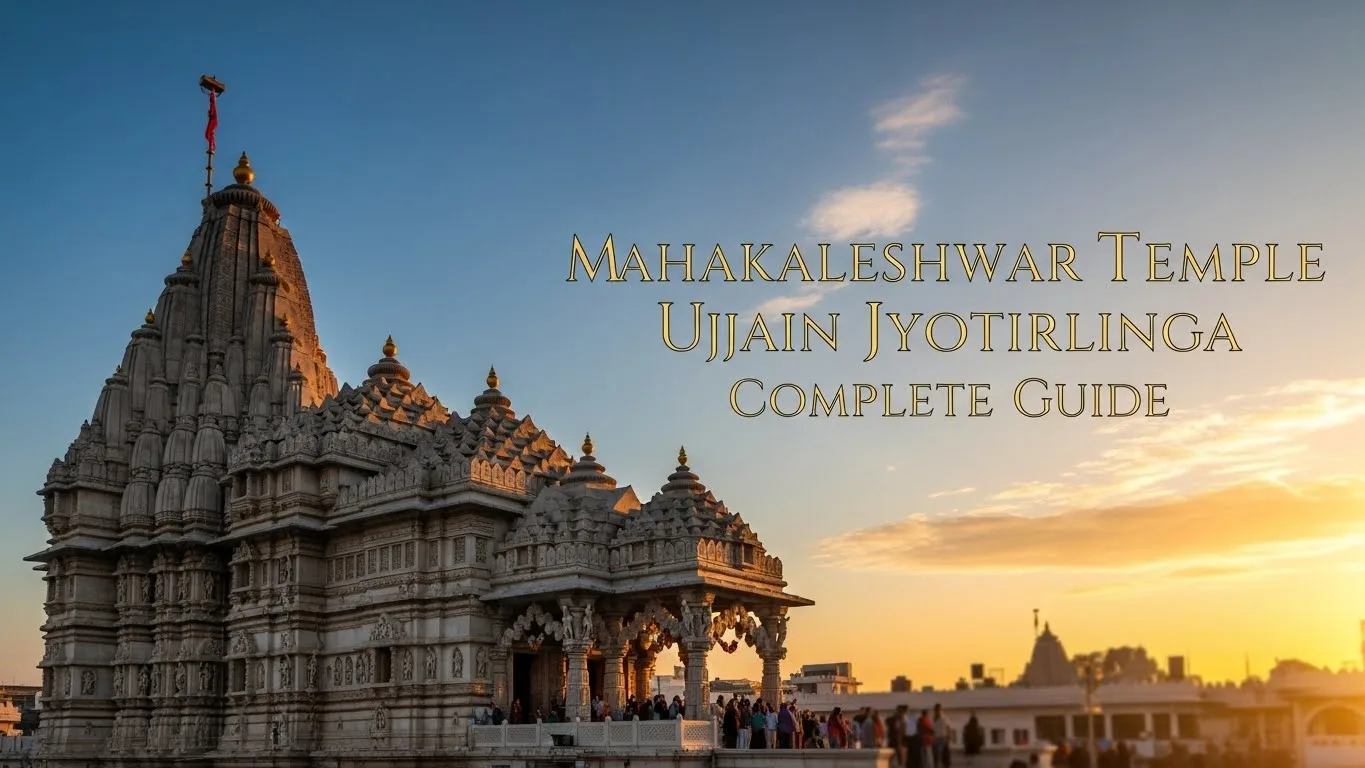
Mahakaleshwar Temple in Ujjain, Madhya Pradesh—the third of twelve sacred Jyotirlingas and the only one among all twelve where the deity faces south (dakshinamukhi) symbolizing Shiva as the conqueror of death and time itself—stands as one of Hinduism’s most powerful pilgrimage sites, with Wikipedia’s authoritative documentation confirming that the presiding deity is Swayambhu (self-manifested), deriving currents of power from within itself rather than being ritually established, and faces the south direction because death is believed to come from south, making Mahakaleshwar the master of death who protects devotees from untimely demise [web:751][web:755].
According to the legend narrated in Shiva Purana, when demon Dushana blessed by Brahma with invisibility attacked the ancient city of Avantika (Ujjain) to destroy righteous Brahmins including devotee Vedapriya and his four sons who were absorbed in Shiva worship, Lord Shiva tore the earth open in a fit of rage and manifested as Mahakal—a fierce form emanating infinite light—instantly reducing the demon and his army to ashes with his divine roar, then agreed to reside permanently at this sacred spot on the banks of Shipra River as the chief deity protecting all devotees from fear, death, and diseases [web:751][web:761][web:764].
The extraordinary spiritual convergence validates profound significance: Art of Living’s comprehensive guide explains that Mahakaleshwar is not merely a temple but a complete metaphysical center combining Jyotirlinga status (one of 12 supreme Shiva abodes), Swayambhu nature (self-created divine energy), Shakti Peetha sanctity (where Sati’s upper lip fell making Goddess Mahakali present), unique south-facing orientation (dakshinamurthi—the only one among all Jyotirlingas facing death’s direction), and the famous pre-dawn Bhasma Aarti (sacred ritual at 4 AM where Shiva linga is bathed with ashes from cremation grounds symbolizing death’s impermanence), making it second only to Kashi Vishwanath in combined power [web:753][web:755][web:758].
The architectural magnificence documented by Inheritage Foundation reveals Maratha ruler Ranoji Shinde’s 18th century reconstruction creating the present five-level structure (including underground sanctum accessed via brass-lit corridors), towering shikhara adorned with sculptural finery, spacious courtyard surrounded by massive walls, while Sanskrit poet Kalidasa’s 5th century Meghaduta mentions the temple’s evening rituals with art and dance performances, proving its ancient existence before destruction by Sultan Iltutmish in 1234-35 CE [web:751][web:767].
As millions undertake pilgrimage to experience the spiritually transformative Bhasma Aarti and seek Mahakal’s blessings—with modern infrastructure including online darshan booking, express darshan options, and the ambitious Mahakal Corridor project enhancing accessibility—understanding the complete demon-slaying legend, unique south-facing significance, Bhasma Aarti booking process, and practical visiting guide becomes essential for meaningful Hindu pilgrimage [web:756][web:759]https://hindutva.online. This comprehensive article presents Mahakaleshwar’s sacred story, Swayambhu and south-facing uniqueness, detailed Bhasma Aarti guide with booking, temple timings and ticket information, how to reach from major cities, and complete pilgrimage preparation tips.
The Legend: Demon Dushana’s Attack and Mahakal’s Manifestation
The Ancient City of Avantika
According to the Puranas, the city of Ujjain was called Avantika and was famous for its beauty and its status as a devotional epicenter [web:751]. It was also one of the primary cities where students went to study holy scriptures [web:751].
Vedapriya: The Devoted Brahmin
According to mythological stories, there was a learned man named Vedapriya who resided in Avantika [web:761]. He was wise and an exceptional devotee of Lord Shiva [web:761].
Vedapriya’s daily worship [web:761]:
- Created a Parthiv Shiva Lingam daily (earthen linga)
- Worshipped Lord Shiva with complete devotion
- Established a sacred fire at home
- Performed Agnihotra (fire ritual) every day
- Remained ever faithful in his worship of Shiva
- Had four sons: Devapriya, Priyamedha, Suvrita, and Suvrata [web:765]
- All five were absorbed in Vedas, scriptures, and Shiva meditation
Demon Dushana’s Blessing and Terror
The demon’s reign of terror [web:761][web:763]:
- Empowered by Brahma’s boon of invisibility
- Would always attack the Vedas, dharma, and righteous individuals
- Decided to attack the righteous people of Ujjain
- With the help of his army, started oppressing the Brahmins of Avanti
- Under his command, fierce demons spread in all directions
- Ordered to either take hostages or kill all righteous people
The Righteous Stand Firm
Their devotion [web:764][web:765]:
- Continued praying to Shiva despite threats
- Refused to abandon their worship even facing death
- Maintained their meditation and rituals
- Unwavering faith in Shiva’s protection
Mahakal’s Divine Manifestation
Shiva’s appearance [web:761][web:764]:
- The earth broke open with thunderous sound
- Lord Mahakal, the divine form of Shankar, emerged
- Appeared as a huge fierce form emanating infinite light
- Instantly reduced Dushana and his army to ashes with his roar
- Some demons were killed, others fled in fear
- Following this, celestial conch shells were sounded
- Flowers began to rain from the sky
Shiva’s Promise to Stay
The divine blessing [web:751][web:764]:
- Shiva promised to protect against all enemies
- Would take care of all His devotees
- From that day on, Shiva resided in His light form as Mahakala
- The Lingam was formed on its own from powers of Shiva and Parvati (Swayambhu)
- People who worshipped Him would be free from fear of death and diseases
- Would be granted worldly treasures
- Would remain under Shiva’s personal protection
Unique Features: Only South-Facing Jyotirlinga
Dakshinamukhi—The Southern Direction
The idol of Mahakaleshwar is known to be dakshinamurthi, which means that it is facing the south [web:751]. This is a unique feature found only in Mahakaleshwar among the 12 Jyotirlingas [web:751].
Spiritual Significance of South-Facing
Why devotees worship Mahakaleshwar [web:753][web:755]:
- To prevent untimely death
- To enjoy a long, healthy life
- To overcome fear of death
- To receive protection from diseases
- As Mahakal means “beyond time”—Shiva conquers death and time itself
Swayambhu (Self-Manifested) Linga
Swayambhu significance:
- Self-created, not installed by humans
- Derives power from within itself
- Original divine manifestation from earth
- Unlike ritually consecrated idols
Mahakaleshwar as Shakti Peetha
Dual Sanctity
The shrine is revered as one of the 18 Maha Shakti Peetham [web:751].
The Daksha Yaga Legend
Sati’s body parts fell here [web:751]:
- After Sati’s self-immolation at Daksha’s yagna, Shiva carried her corpse
- During his cosmic Tandava dance of grief, parts of Sati’s body fell across the subcontinent
- Each location became a Shakti Peetha
- At Ujjain, Sati’s upper lip fell
- The Shakti is called Mahakali
- Both Shiva and Shakti present under one roof
The Famous Bhasma Aarti
What is Bhasma Aarti?
The sacred ritual [web:756][web:759]:
- Performed at 4:00 AM daily
- Lord Shiva is bathed with sacred ashes (bhasma)
- Ashes come from cremation grounds
- Symbolizes impermanence of life and death
- Represents Shiva as destroyer and regenerator
- Most spiritually powerful darshan experience
Bhasma Aarti Timings
Aarti Schedule [web:756][web:757][web:759]:
- Bhasma Aarti: 4:00 AM to 6:00 AM (Daily)
- Devotees advised to reach by 3:30 AM
- Entry begins much earlier
- Duration: Approximately 2 hours
How to Book Bhasma Aarti Tickets
Online Booking Only [web:756]:
- Official Website: mahakaleshwar.nic.in
- Booking open daily between 8:00 AM and 9:00 PM
- Advance booking recommended (especially Mondays and festivals)
- Limited slots available
- High demand throughout year
Booking Tips [web:759]:
- Book at least 2-3 days in advance
- Mondays see highest rush
- During Shravan month (July-August), book weeks ahead
- Keep ID proof ready for verification
Dress Code for Bhasma Aarti
To maintain the sanctity of the ritual, the temple enforces a traditional dress code [web:759]:
For Men:
- Dhoti (traditional Indian lower garment)
- Upper body can be bare or simple kurta
- No Western wear (pants, shirts, jeans)
For Women:
- Saree or traditional Indian attire
- Salwar kameez acceptable
- No Western clothing
Temple Architecture and Structure
Five-Level Structure
The temple has five levels, one of which is underground [web:751].
Layout [web:751]:
- Underground sanctum: Houses the main Mahakaleshwar linga
- Ground level: Omkareshwar Mahadev shrine
- Upper levels: Various deities
- Third storey: Nagchandreshwar (open only on Nag Panchami)
- Top: Towering shikhara with sculptural finery
Main Deities and Shrines
In the sanctum complex [web:751]:
- Mahakaleshwar Jyotirlinga: Underground, south-facing
- Omkareshwar Mahadevji: Consecrated above Mahakal shrine
- Ganesh: Installed in the west
- Parvati (Avantika Devi): Installed in the north
- Karttikeya: Installed in the east
- Nandi: To the south
- Nagchandreshwar: Third storey (special darshan on Nag Panchami)
Architectural Features
The temple itself is located in a spacious courtyard surrounded by massive walls near a lake [web:751].
Features [web:751]:
- Shikhara (spire) adorned with sculptural finery
- Brass lamps light the underground sanctum
- Massive courtyard walls
- Located near Shipra River
- Maratha architectural style: Robust construction, simpler ornamentation [web:767]
Temple History
Ancient Origins
According to the Puranas, the Mahakal jyotirlinga was built by Prajapita Brahma [web:753]. The temple was built in the 6th century AD by Kumarasena, the son of a former king of Ujjain, Chandpradyot [web:753].
Kalidasa’s 5th Century Mention
Kalidasa, the great Sanskrit poet, has mentioned about the rituals of the temple in his works in Meghaduta [web:751]. He mentions the nada-aradhana (performance of art and dance during evening rituals) [web:751].
Medieval Destruction
The temple complex was destroyed by Iltutmish during his raid of Ujjain in 1234–35 [web:751].
Invasions [web:751][web:767]:
- The Jyotirlinga was dismantled
- Believed to be thrown into nearby ‘Kotiteerth Kunda’ pond
- The Jaladhari (structure supporting lingam) was stolen
- Again attacked by Jalaluddin Khalji and Alauddin Khalji
Maratha Reconstruction (18th Century)
Maratha contributions [web:767][web:770]:
- Ranoji Shinde (founder of Scindia dynasty) initiated restoration (1736-1739 CE)
- Continued by successors including Mahadji Shinde
- Created present five-level structure
- Incorporated Maratha architectural style
- Used locally available basalt and sandstone
Modern Development
Temple Timings and Darshan
Temple Timings
Daily Schedule [web:757][web:760]:
- Temple Opens: 4:00 AM
- Temple Closes: 11:00 PM
- No afternoon break (unlike most temples)
Aarti Schedule
| Ritual | Timing |
|---|---|
| Bhasma Aarti | 4:00 AM – 6:00 AM |
| Morning Aarti | 7:00 AM – 7:30 AM |
| Evening Aarti | 5:00 PM – 5:30 PM |
| Shree Mahakal Aarti | 7:00 PM – 7:30 PM |
Entry Fee
No Entry Fee [web:757]
- General darshan is completely free
- Special darshan and ritual tickets available separately
How to Reach Mahakaleshwar Temple
By Air
Nearest Airport: Indore (Devi Ahilyabai Holkar Airport) [web:751][web:766]
- Distance: 58 km from Ujjain
- Travel time: 1 hour 10 minutes by road
- Well-connected to Delhi, Mumbai, Bangalore, Kolkata
By Train
Ujjain Junction Railway Station [web:751]
- Distance from temple: 2 km
- Major junction on Western Railway
- Direct trains from Delhi, Mumbai, Indore, Bhopal
- Delhi to Ujjain: 10h 55m by direct train [web:769]
- Indore to Ujjain: 1h 25m by train [web:766]
By Road
From major cities:
- Indore: 55 km (1h 12m) [web:766]
- Delhi: 700+ km (10-11 hours by train) [web:769]
- Mumbai: Regular state buses and private cabs
- Well-maintained NH roads
Pilgrimage Tips
Best Time to Visit
- October to March: Pleasant weather
- Avoid summer: April-June (extremely hot)
- Shravan month (July-August): Most auspicious but extremely crowded
Essential Tips for Bhasma Aarti
- Book online 2-3 days advance
- Reach by 3:30 AM
- Wear traditional attire (mandatory)
- Carry printed ticket and ID proof
- Photography not allowed during aarti
- Maintain silence and reverence
General Visiting Tips
- Visit Shipra River: Take holy dip
- Explore Ram Ghat: Evening aarti on Shipra
- Visit on Monday: Most auspicious for Shiva worship
- Maha Shivaratri: Huge fair, worship through night
- Carry water bottle: Can get hot during day
- Modest dress: Recommended for all darshans
Nearby Attractions in Ujjain
- Ram Ghat: Sacred ghat on Shipra River
- Kal Bhairav Temple: Ancient Shiva manifestation
- Harsiddhi Temple: Shakti Peetha
- Sandipani Ashram: Where Lord Krishna studied
- Kumbh Mela site: Held every 12 years
Frequently Asked Questions
What makes Mahakaleshwar unique among 12 Jyotirlingas?
It is the only Jyotirlinga facing south (dakshinamukhi), symbolizing Shiva as master of death, and is Swayambhu (self-manifested) [web:751][web:753].
What is the legend of Mahakaleshwar Temple?
Demon Dushana attacked devotee Vedapriya and righteous Brahmins; Shiva tore earth open and emerged as Mahakal, destroying the demon and his army [web:761][web:764].
What is Bhasma Aarti and when does it happen?
Bhasma Aarti is the sacred pre-dawn ritual at 4:00 AM where Shiva linga is bathed with ashes from cremation grounds, symbolizing death’s impermanence [web:756][web:759].
How to book Bhasma Aarti tickets?
What are the temple timings?
Temple is open 4:00 AM to 11:00 PM daily with no afternoon break [web:757][web:760].
Is there entry fee for Mahakaleshwar Temple?
No, general darshan is completely free [web:757].
How to reach Ujjain from Delhi or Mumbai?
From Delhi: 10h 55m by direct train or 4h flight to Indore + 1h drive; from Mumbai: regular trains and buses [web:769][web:751].
Who reconstructed Mahakaleshwar after Muslim invasions?
Maratha ruler Ranoji Shinde reconstructed the temple in the 18th century (1736-1739 CE) after destruction by Iltutmish in 1234-35 [web:751][web:767].
Conclusion
Mahakaleshwar Temple in Ujjain—the sacred third Jyotirlinga where Lord Shiva manifested as Mahakal by tearing the earth open to destroy demon Dushana and protect devoted Brahmins, creating the only south-facing (dakshinamukhi) Jyotirlinga among all twelve that symbolizes Shiva as conqueror of death and time itself—stands as Hinduism’s most powerful testament to divine protection, with Wikipedia’s documentation confirming its Swayambhu (self-manifested) nature deriving spiritual currents from within itself, dual sanctity as Shakti Peetha where Sati’s upper lip fell, and the spiritually transformative Bhasma Aarti at 4 AM where the linga is bathed with cremation ashes representing life’s impermanence [web:751]https://hindutva.online.
What distinguishes Mahakaleshwar’s extraordinary significance is its convergence of legendary depth (Shiva Purana’s demon-slaying narrative establishing eternal protection against untimely death), unique spiritual features (only south-facing among 12 Jyotirlingas making Shiva master of death, Swayambhu self-manifestation with inherent divine power), architectural magnificence (18th century Maratha reconstruction by Ranoji Shinde creating five-level structure with underground sanctum accessed via brass-lit corridors), classical validation (5th century Sanskrit poet Kalidasa’s Meghaduta mentioning evening rituals before 1234-35 destruction by Sultan Iltutmish), and transformative ritual (pre-dawn Bhasma Aarti requiring online booking, traditional dress, and 3:30 AM arrival for once-in-lifetime spiritual experience) [web:751][web:753][web:759][web:767].
By understanding this ancient Avantika city pilgrimage—accessed from Indore airport (58 km) or Ujjain Junction station (2 km), combining Bhasma Aarti experience with general darshan (4 AM-11 PM, no entry fee), holy dip in Shipra River, and visits to Ram Ghat and Kal Bhairav temple—devotees access the profound spiritual journey that ancient Hindu wisdom established as supreme protection from fear, death, diseases, and the promise of divine blessings from the Lord who conquered time itself [web:751][web:761]https://hindutva.online.
About the Author
Kavita Nair – Certified Yoga Therapist & Spiritual Wellness Expert
Kavita Nair is a certified yoga therapist with over 18 years of experience specializing in Hatha Yoga, pranayama, meditation, and traditional shatkarma purification practices. He holds advanced certifications in yoga therapy and has trained extensively in classical yogic texts including the Hatha Yoga Pradipika and Gheranda Samhita. Kavita Nair integrates ancient yogic wisdom with Ayurvedic principles to help students achieve optimal physical health and spiritual growth through authentic practices. His teaching focuses on making traditional techniques accessible to modern practitioners while maintaining the depth and transformative power of the original methods. He has guided thousands of students through systematic yoga sadhana at leading institutions and retreat centers across India and internationally.