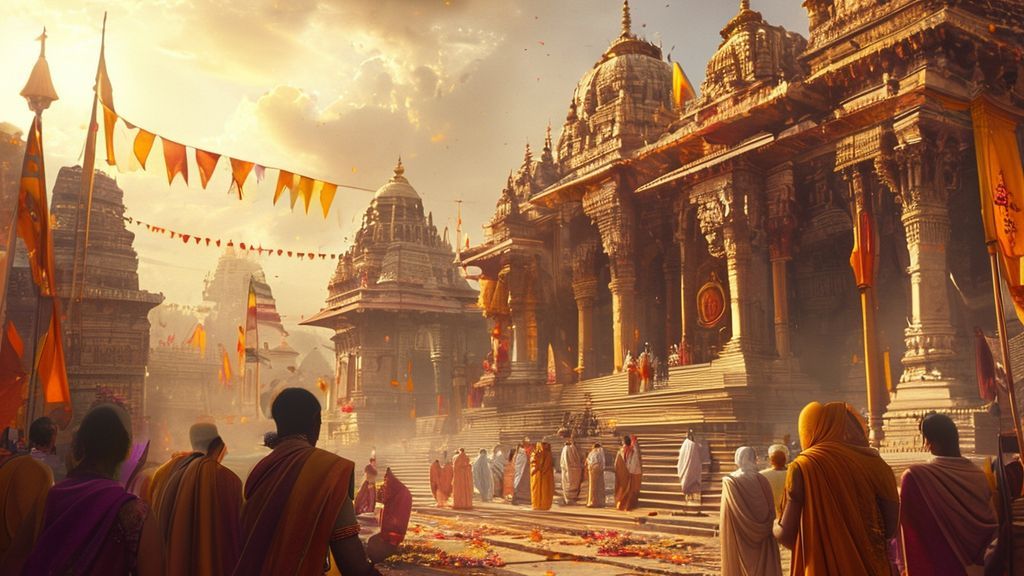
The Mathura Krishna Janmabhoomi Dispute concerns the sacred birthplace of Bhagwan Shri Krishna in Mathura, where the ancient Keshava Deva Temple was destroyed by Emperor Aurangzeb in 1670 AD and the Shahi Eidgah Mosque subsequently built adjacent to the consecrated spot. This dispute seeks the restoration of the original Janmasthan for Hindu worship.
| Attribute | Details |
|---|---|
| Primary Deity | Bhagwan Shri Krishna (श्री कृष्ण) |
| Location | Mathura, Uttar Pradesh, Bharat (India) |
| Key Festival | Janmashtami (जन्माष्टमी) |
| Scriptural References | Bhagavata Purana (श्रीमद्भागवत पुराण), Harivamsa Purana (हरिवंश पुराण), Vishnu Purana (विष्णु पुराण), Mahabharata (महाभारत) |
| Historical Significance | Recognized as the divine birthplace (Janmasthan) of Shri Krishna; site of temples continuously since antiquity, destroyed by invaders. |
| Current Status | Active legal proceedings initiated by various Hindu petitioners for the restitution of the Janmasthan. |
Introduction: The Sacred Call of Krishna Janmabhoomi
Mathura, known reverently as Brajbhumi, is not merely a city; it is a profound spiritual landscape imbued with the divine leela of Bhagwan Shri Krishna. For every devotee of Sanatan Dharma, the very mention of Mathura evokes the tender imagery of Krishna’s birth, his miraculous escape from Kansa’s tyranny, and his playful childhood. The Krishna Janmabhoomi holds the unparalleled sanctity of being the precise spot where the Supreme Personality of Godhead incarnated. This sacred ground, however, bears the scars of historical aggression, with the Shahi Eidgah Mosque standing adjacent to what devout Hindus believe to be the true Janmasthan, a site that once housed a magnificent temple dedicated to Keshava Deva. The ongoing dispute is not merely about land; it is a profound yearning for the reclamation of civilizational memory, a spiritual restitution, and the assertion of Sanatan Dharma’s eternal presence at one of its most pivotal pilgrimage sites. It symbolizes the continuous struggle to preserve and honor our most cherished spiritual heritage.
Puranic History and the Legend of Krishna’s Birthplace
The saga of Shri Krishna’s birth is etched deeply into the consciousness of Hindus, primarily narrated in the Bhagavata Purana (श्रीमद्भागवत पुराण) and the Harivamsa Purana (हरिवंश पुराण), a supplement to the Mahabharata. These scriptures describe how Bhagwan Vishnu, in His infinite compassion, chose to incarnate as Krishna to liberate the Earth from the tyrannical rule of Kansa, the demonic king of Mathura. Krishna was born to Devaki and Vasudeva within the confines of Kansa’s prison cell. The Bhagavata Purana, Canto 10, vividly details the miraculous events surrounding His birth, including the opening of the prison doors, Vasudeva’s journey across the Yamuna to Gokul, and the exchange of babies with Yashoda. The very spot of this divine incarnation is the hallowed Janmasthan.
The history of temples at this site is ancient and well-documented through various historical and scriptural accounts. According to the Vishnu Purana (विष्णु पुराण), Krishna’s great-grandson, Vajranabha, is credited with establishing the first temple at the Janmabhoomi. Over millennia, as empires rose and fell, the temple was rebuilt and renovated numerous times. Historical records indicate that a grand temple was erected during the reign of Chandragupta Vikramaditya in the 4th century CE. Another magnificent structure was built in 1150 CE by Raja Ram Dev Jat, only to be destroyed by invaders. The most celebrated reconstruction prior to the final destruction was undertaken in the 17th century by Raja Veer Singh Deo Bundela of Orchha. This temple, renowned for its opulence and architectural splendor, became a beacon of Hindu faith.
However, this grandeur was short-lived. In 1670 AD, during the reign of the Mughal Emperor Aurangzeb, a decree was issued for the demolition of the Keshava Deva Temple. The temple was razed to the ground, and its debris was used to construct the Shahi Eidgah Mosque directly adjacent to, and indeed encroaching upon, the very spot considered Krishna’s birthplace. This act of desecration represents a painful chapter in Hindu history, a direct assault on the spiritual heart of Braj. The memory of this destruction and the yearning for restoration have persisted through generations, forming the bedrock of the current Mathura Krishna Janmabhoomi dispute. For more historical insights into such sacred sites, one can explore the resources available at Hindutva.online.
Architectural and Archaeological Affirmations of the Sacred Site
While the grand Keshava Deva Temple of Raja Veer Singh Deo Bundela was tragically destroyed, historical accounts, archaeological excavations, and literary evidence confirm its magnificent presence and its architectural style, which would have been characteristic of the Nagara style prevalent in North India. This style is known for its beehive-shaped shikhara (spire) and intricate carvings, reflecting divine iconography.
Archaeological surveys conducted in the vicinity of the present Janmabhoomi complex and beneath the Shahi Eidgah Mosque have consistently yielded evidence of ancient temple structures. Findings include sculpted panels, idols of Hindu deities, and architectural fragments indicative of a grand temple, suggesting continuous Hindu habitation and worship at the site for millennia. The foundations of ancient structures, including a large plinth, have been identified, pointing towards the exact location of the deity’s sanctum. The Kashi Khanda of the Skanda Purana, while focusing on Kashi, implicitly supports the rich temple tradition of sacred cities like Mathura. Furthermore, historical accounts from travelers like Al-Biruni, a Persian scholar who visited India in the 11th century, mention the splendor of Mathura’s temples, though he doesn’t specifically detail the Janmabhoomi temple. The continuity of worship, even amidst destruction, is evidenced by the discovery of smaller idols and prayer offerings found at various layers, confirming the site’s uninterrupted sacred significance for Hindus. The current temple complex, though not on the exact disputed spot, continues to draw millions, serving as a powerful reminder of the lost heritage.
Rituals and Puja Vidhi at the Janmabhoomi (Present and Aspirations)
Even with the present limitations, devotees continue to perform various rituals and seek blessings in Mathura, especially at the existing Bhagwan Shri Krishna Janmabhoomi Temple complex, which stands as a testament to Hindu resilience. The devotion is palpable, and the aspiration for the full restoration of the Janmasthan guides many of these practices.
- Yamuna Snan (स्नान): Begin your pilgrimage with a purifying bath in the holy Yamuna River, symbolizing purification and a connection to Krishna’s childhood leela.
- Darshan at Shri Krishna Janmabhoomi Temple: Visit the current temple complex to offer prayers and perform Darshan of the deities, including Bal Krishna and the various forms of Shri Krishna. Meditate on the sacred energy of the surrounding area.
- Sankalpa (संकल्प): While offering prayers, one can make a personal Sankalpa, a solemn vow or intention, for the restoration of the original Janmasthan to its full glory, envisioning a magnificent temple at the exact birth spot.
- Aarti (आरती) and Bhajan (भजन): Participate in the morning and evening Aarti ceremonies. Engage in devotional singing of Bhajans that glorify Krishna’s birth and childhood, especially those mentioning Mathura and Braj.
- Prasad (प्रसाद) Distribution: Offer sweets, flowers, and fruits to the deities, and then distribute the consecrated Prasad among fellow devotees, symbolizing divine blessings.
- Braj Chaurasi Kos Parikrama (परिक्रमा): For ardent devotees, undertaking the sacred 84-kos (approximately 252 km) circumambulation of Braj Mandal, which includes Mathura, Vrindavan, and other significant sites, is a profound act of devotion.
- Janmashtami Celebrations: On the auspicious day of Janmashtami (कृष्ण जन्माष्टमी), the birth anniversary of Shri Krishna, the fervor in Mathura is unparalleled. Devotees observe fasts, perform Abhishek (ritual bathing) of Bal Krishna idols, and celebrate with great joy and devotion until midnight, the time of Krishna’s birth.
Mantras and Chants for Shri Krishna
Chanting the divine names and mantras of Shri Krishna is a potent way to connect with His divine energy and express devotion. These mantras are particularly relevant when contemplating the sacred Janmabhoomi:
- Maha Mantra:
हरे कृष्ण हरे कृष्ण, कृष्ण कृष्ण हरे हरे ।
हरे राम हरे राम, राम राम हरे हरे ॥
Hare Krishna Hare Krishna, Krishna Krishna Hare Hare,
Hare Rama Hare Rama, Rama Rama Hare Hare.
This universal mantra is a powerful invocation for spiritual liberation and divine connection.
- Moola Mantra:
ॐ नमो भगवते वासुदेवाय ॥
Om Namo Bhagavate Vasudevaya.
A fundamental mantra dedicated to Vasudeva (Krishna), revering Him as the all-pervading Supreme Being.
- Krishna Dhyana Mantra:
करारविन्देन पदअरविन्दं मुखारविन्दे विनिवेशयन्तम्।
वटस्य पत्रस्य पुटे शयानं बालं मुकुन्दं मनसा स्मरामि॥
Kararavindena Padaravindam Mukharavinde Viniveshayantam.
Vatasya Patrasya Pute Shayanam Balam Mukundam Manasa Smarami.
This beautiful Dhyana Mantra describes infant Krishna sucking His lotus-like toe while resting on a Banyan leaf, a form often meditated upon at the Janmabhoomi.
Dos and Don’ts for Devotees Visiting Mathura
Observing proper decorum and reverence is crucial when visiting any sacred site, especially Mathura, the Janmabhoomi of Shri Krishna.
Dos:
- Maintain Reverence: Approach the sacred precincts with a humble and respectful attitude, remembering the divine significance of the land.
- Dress Modestly: Wear modest, clean attire, covering shoulders and knees, as a sign of respect for the deities and the spiritual atmosphere.
- Participate in Aarti/Bhajan: Join in the devotional ceremonies, as collective chanting and prayer amplify spiritual energy.
- Respect Local Customs: Be mindful of local traditions and practices, which are deeply rooted in centuries of devotion to Krishna.
- Offer Seva (Service): Consider offering voluntary service or donations to the existing temple complex or local charities, embodying the spirit of selfless service.
- Perform Yamuna Snan: If possible, take a holy dip in the Yamuna River, adhering to safety guidelines.
Don’ts:
- Litter or Defile: Absolutely refrain from littering or in any way defiling the sacred environment.
- Consume Intoxicants: Avoid alcohol, tobacco, or any intoxicants within the temple premises or surrounding holy areas.
- Disrespect Sacred Spaces: Do not engage in loud conversations, arguments, or disruptive behavior that would disturb the peace of devotees.
- Engage in Photography (where prohibited): Respect signs prohibiting photography inside certain areas of the temple complex.
- Wear Footwear Inside Sanctums: Remove footwear before entering temple sanctums or the main prayer halls.
Frequently Asked Questions
What is the historical basis for the Mathura Janmabhoomi claim?
The claim for the Mathura Janmabhoomi rests on centuries of unbroken Hindu tradition, historical records detailing the destruction of the Keshava Deva Temple by Aurangzeb in 1670 AD, and archaeological evidence corroborating the existence of multiple Hindu temples beneath the present Shahi Eidgah Mosque. Scriptural references like the Bhagavata Purana confirm Mathura as Krishna’s birthplace.
Who is currently litigating the Mathura Janmabhoomi case?
Numerous Hindu organizations, trusts, and individuals, representing devotees across Bharat, have filed petitions in various courts seeking the removal of the Shahi Eidgah Mosque and the restitution of the entire 13.37-acre land for the construction of a grand Krishna Janmabhoomi temple. These include entities like Shri Krishna Janmabhoomi Trust and various ‘next friend’ petitions.
What is the significance of “Katra Keshav Dev”?
“Katra Keshav Dev” refers to the specific revenue plot of land in Mathura where the ancient Keshava Deva Temple stood and where Bhagwan Krishna is believed to have been born. It is the heart of the dispute, signifying the precise sacred location considered Krishna’s Janmasthan, currently encroached upon by the Shahi Eidgah Mosque.
How can devotees support the cause of Janmabhoomi restoration?
Devotees can support the cause through spiritual prayers for justice, peaceful advocacy, educating themselves and others about the historical facts, and contributing to organizations legally pursuing the case. Engaging with platforms like Hindutva.online can provide updated information and avenues for dharmic action.
Dharmic Significance: Reclaiming Our Civilizational Roots
The Mathura Krishna Janmabhoomi dispute transcends mere legal arguments or property claims; it is a profound spiritual endeavor to affirm and reclaim a pivotal aspect of Sanatan Dharma’s civilizational heritage. The birthplace of Bhagwan Shri Krishna is not just a geographical point; it is a living symbol of devotion, resilience, and the eternal truth of dharma. The systematic destruction of temples at this sacred site and the subsequent construction of an alien structure represent a historical injustice that wounds the collective consciousness of Hindus. Restoring the Janmasthan to its rightful glory is a vital step towards healing these wounds, ensuring that future generations can connect directly with their roots, and asserting the rightful place of Hindu heritage in Bharat. It is an act of preserving our identity, honoring our ancestors, and ensuring the unbroken continuity of Sanatan Dharma.
