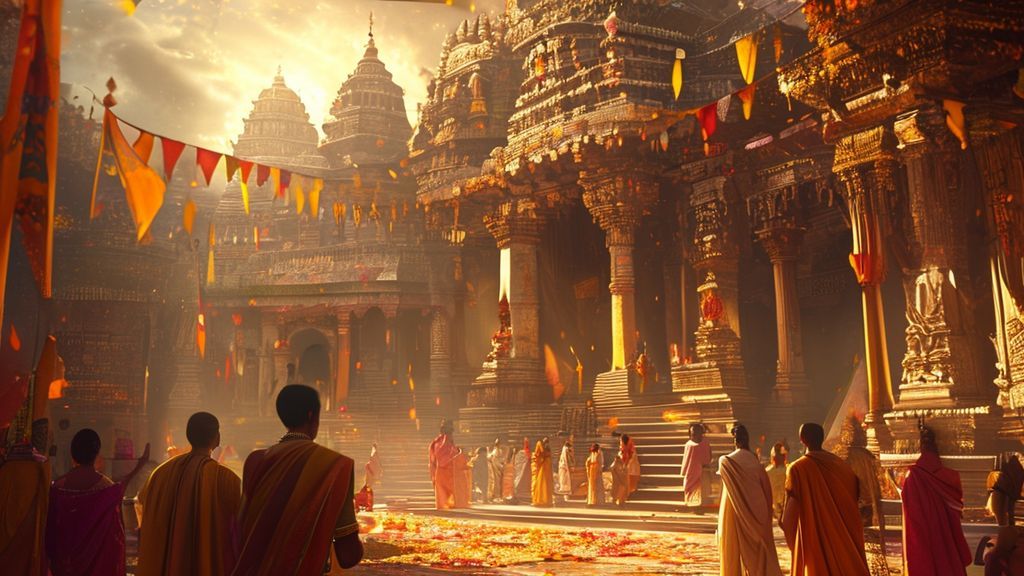
Odissi is an ancient, graceful classical Indian dance form originating from the temples of Odisha, consecrated to Lord Jagannath and deeply rooted in the timeless Natya Shastra. Embodying profound devotion (bhakti) through intricate footwork, precise mudras, and sensuous tribhangi postures, it serves as a profound living prayer and a spiritual conduit for divine communion with the Supreme Being.
| Attribute | Details |
|---|---|
| Deity Consecrated To | Lord Jagannath (a form of Vishnu), Surya, Shiva, Devi. |
| Location/Origin | Odisha, India (formerly Orissa), particularly Puri, Konark, Bhubaneswar. |
| Key Festivals | Konark Dance Festival, Mukteshwar Dance Festival, Udayagiri-Khandagiri Mahotsav. |
| Scriptural Reference | Natya Shastra, Abhinaya Darpana, Jayadeva’s Gita Govinda, Odia Puranas (Brahma Purana, Skanda Purana). |
| Key Postures | Tribhangi (three-bend), Chauka (square), Maharis, Gotipuas. |
The Soulful Resonance of Odissi: A Divine Dance Tradition
Odissi, the exquisite classical dance form hailing from the sacred land of Odisha, is far more than a mere performance; it is a profound spiritual discipline, a living testament to Sanatan Dharma’s aesthetic and devotional depths. Rooted in millennia of temple worship and scriptural tradition, Odissi embodies the very essence of Bhakti Marga, offering a visual and emotional pathway to experience the divine. Its graceful movements, evocative expressions (abhinaya), and rhythmic complexity (nritta) coalesce into a sacred offering, a seva to the presiding deities of the temples where it was nurtured. For the sincere seeker, Odissi is a meditative art, a dynamic yoga that harmonizes body, mind, and spirit with the cosmic rhythm, echoing the celestial dances described in our ancient texts.
Puranic History and Sacred Legends of Odissi
The origins of Odissi are deeply intertwined with the spiritual history of Odisha, a land hallowed by countless temples and devout kings. Its earliest references are found embedded within the architectural narratives of ancient shrines and the sacred verses of Puranas. The Natya Shastra of Bharata Muni, the foundational text on Indian performing arts, describes four distinct regional styles (pravrittis), with the Odra-Magadhi pravritti believed to be the precursor to Odissi. Further validation comes from the Udayagiri caves, where inscriptions like the Hathigumpha inscription of King Kharavela (2nd century BCE) mention performances of dance and music, suggesting a highly developed art form.
The dance tradition flourished particularly within the precincts of the Sri Jagannath Temple in Puri, the Lingaraj Temple in Bhubaneswar, and the Surya Temple in Konark. Here, the art form was sustained by Maharis (literally, “great ladies”), who were consecrated temple dancers akin to the Devadasis of South India. As documented in the Madala Panji, the chronicle of the Jagannath Temple, Maharis performed regular rituals (niti) including the Sakala Dhupa (morning worship) and Badasinghara (late night ritual), offering their dance as a sacred service to Lord Jagannath. Their repertoire, often centered on the themes of love and devotion from Jayadeva’s Gita Govinda, beautifully portrayed the divine play (leela) of Radha and Krishna.
Following the decline of the Mahari system due to various historical forces, the tradition was kept alive by Gotipuas (literally, “one boy”), young boys who dressed as women to perform in temples and for public audiences. This transition, particularly prominent from the 16th century onwards, ensured the continuity of Odissi’s unique aesthetics and spiritual core, even as it adapted to changing socio-religious landscapes. The Brahma Purana and Skanda Purana also contain descriptions of divine dancers and the importance of music and dance in temple worship, underscoring Odissi’s ancient lineage as an integral component of devotional practice.
Architectural & Sculptural Marvels: Odissi in Stone
The temples of Odisha are not merely structures of stone; they are vibrant repositories of Odissi dance, with countless sculptures depicting dancers in poses that are startlingly identical to the classical postures of Odissi. The most celebrated example is the Konark Sun Temple, a UNESCO World Heritage site, whose intricate carvings on the Natamandapa (dance hall) and exterior walls showcase a myriad of dancers and musicians. These sculptures feature the distinctive Tribhangi (three-bend posture – head, torso, and knees bent in opposing directions) and Chauka (square-like posture, symbolizing Lord Jagannath) that are the fundamental stances of Odissi. These are not merely decorative elements but serve as a visual lexicon, a frozen choreography demonstrating the historical depth and aesthetic continuity of the dance.
Similarly, the walls of the Lingaraj Temple in Bhubaneswar and the Jagannath Temple in Puri are adorned with images of Maharis in various dance postures, depicting mudras (hand gestures) and bhava (expressions) that are still recognizable today. The Mukteshwar Temple, a gem of Kalinga architecture, also features a rich array of celestial dancers (apsaras) and musicians, reflecting the divine origins of performing arts. These architectural marvels thus serve as ancient textbooks, preserving the visual vocabulary of Odissi for centuries, demonstrating how the sacred architecture itself was designed to glorify the divine through the medium of dance.
Rituals and Puja Vidhi in Odissi Performance
An Odissi performance is akin to a sacred ritual, a meticulously structured yajna offered to the divine. The traditional sequence is not arbitrary but follows a spiritual progression designed to invoke blessings, prepare the performer and audience for a sublime experience, and finally achieve a sense of liberation. The primary steps are:
- Mangalacharan (Invocation): The performance begins with an invocation, usually to Lord Ganesha (Vakratunda Mahakaya…) or a chosen deity, seeking blessings for a successful and spiritually fulfilling presentation. This includes a bhumi pranam (obeisance to Mother Earth) and a salutation to the Guru, audience, and the divine.
- Batu Nritya (Pure Dance): This is a pure dance (nritta) piece dedicated to Batuka Bhairava, an aspect of Lord Shiva. It is characterized by complex rhythmic patterns, sculpturesque poses, and intricate footwork, without explicit emotional narrative. It emphasizes the technical prowess and the foundational grace of the dancer.
- Pallavi (Elaboration): Meaning “to sprout” or “blossom,” Pallavi involves the melodic and rhythmic elaboration of a particular Raga and Tala. The dancer performs intricate sequences, gradually increasing in tempo and complexity, showcasing the lyrical beauty and technical virtuosity of Odissi.
- Abhinaya (Expression): This is the heart of Odissi, where the dancer expresses the poetic theme through facial expressions (mukhabhinaya), hand gestures (hastamudras), and body movements. Often based on verses from the Gita Govinda or other devotional poetry, it evokes the nine sentiments (navarasas), especially shringara (love) and bhakti (devotion).
- Moksha (Liberation): The concluding piece, Moksha signifies liberation and spiritual transcendence. It is a fast-paced, pure dance number that aims to elevate the dancer and audience to a state of ecstatic bliss and communion with the divine, a feeling of merging with the infinite.
Mantras and Sacred Chants in Odissi
Mantras and devotional chants are integral to Odissi, enriching its spiritual dimension. The performance often commences with specific invocations, and the themes of the abhinaya pieces are intrinsically linked to sacred texts.
- Ganesha Vandana: A common opening, seeking blessings from Lord Ganesha.
Vakratunda Mahakaya Surya Koti Samaprabha,
Nirvighnam Kuru Me Deva Sarva-Kaaryeshu Sarvada.(O Lord with the curved trunk and a mighty body, whose brilliance equals a million suns, may you make all my endeavors free of obstacles, always.)
- Jagannath Ashtakam (excerpt): Devotees often invoke Lord Jagannath, the presiding deity of Odisha.
Kadācit Kāḷindī-taṭa-vipinasaṅgī vigala
mudā’bhīrī-nārī-vadana-kamalāsvāda-madhupaḥ |
ramā-śambhu-brahmāmarapati-gaṇeśārcita-pado
jagannāthaḥ svāmī nayana-pathagāmī bhavatu me ||(May Lord Jagannath, whose lotus feet are worshipped by Lakshmi, Shiva, Brahma, Indra, and Ganesha, who sometimes joyfully dwells on the banks of the Yamuna, and is like a bee tasting the lotus-like faces of the cowherd women, be the object of my vision.)
- Verses from Gita Govinda: The lyrical poetry of Jayadeva’s Gita Govinda forms the backbone of many Odissi abhinaya pieces, narrating the divine love of Radha and Krishna. For instance, verses depicting Krishna’s beauty:
Candana carcita nīla kalevara pīta vasana vana mālī
Keli calat maṇi kuṇḍala maṇḍita gaṇḍa yuga smita śālī(His dark body is smeared with sandalwood, adorned with yellow garments and a garland of forest flowers. His cheeks are embellished with moving jeweled earrings, and he is radiant with a smile.)
Dos and Don’ts for the Odissi Devotee
To truly appreciate and engage with the sacred art of Odissi, both performers and audience members are encouraged to observe certain principles rooted in Sanatan Dharma:
Dos:
- Cultivate Bhakti: Approach Odissi with a devotional mindset, recognizing it as an offering to the divine.
- Respect the Guru: For performers, absolute reverence for the Guru (teacher) is paramount, as they transmit sacred knowledge.
- Understand the Mudras and Bhavas: For audience members, familiarizing oneself with common hand gestures and emotional expressions enhances appreciation.
- Maintain Silence and Focus: During a performance, give undivided attention to the dance, allowing its spiritual message to resonate.
- Dress Modestly: When attending a classical dance performance or visiting a temple where it is practiced, appropriate and respectful attire is encouraged.
Don’ts:
- Disturb the Sacred Space: Avoid talking, using mobile phones, or moving unnecessarily during a performance.
- Disrespect the Art Form: Do not treat Odissi as mere entertainment; it is a spiritual practice and a cultural heritage.
- Criticize Baselessly: While constructive feedback is valued in learning, avoid casual or disrespectful criticism of a traditional art form.
- Forget the Lineage: Never undermine the millennia-old tradition and the countless artists who have preserved this divine art.
Frequently Asked Questions
What is the spiritual significance of Odissi?
Odissi’s spiritual significance lies in its capacity to serve as a medium for bhakti yoga. Through its aesthetically rich movements, rhythmic patterns, and expressive narratives, the dancer embodies divine emotions and stories, transforming the performance into a moving meditation and an act of devotion. It aims to connect the performer and the audience to the divine, particularly Lord Jagannath, fostering spiritual upliftment and inner peace.
How is Odissi different from other classical Indian dances?
While sharing common roots in the Natya Shastra, Odissi distinguishes itself through its unique body postures, particularly the Tribhangi (three-bend) and Chauka (square) stances, which are often found in Odishan temple sculptures. It has a lyrical, fluid quality, often described as ‘sculpturesque,’ and a repertoire heavily influenced by Vaishnavite poetry, especially Jayadeva’s Gita Govinda. Its emphasis on the sensuous grace (lasya) combined with rhythmic vigour (tandava) gives it a distinctive character.
Who were the Maharis and Gotipuas in the context of Odissi?
The Maharis were the original female temple dancers of Odisha, consecrated to serve the deities, particularly Lord Jagannath, through dance and song. They were instrumental in preserving Odissi for centuries. As their tradition declined, the Gotipuas, young boys dressed as girls, emerged to continue the sacred dance tradition, performing in temples and public arenas. Both groups were crucial custodians of the art form, linking it directly to temple worship.
Dharmic Significance: Preserving Sanatan Dharma through Odissi
Odissi is a vibrant, living thread connecting us directly to the profound spiritual heritage of Sanatan Dharma. It is not merely an artistic expression but a powerful conduit for transmitting Dharma across generations. By embodying the tales of our Puranas, celebrating our deities, and enacting the essence of devotion, Odissi serves as a dynamic form of Dharma Prachar. It reminds us that every aspect of life, including art, can be consecrated to the divine, transforming mundane existence into a sacred offering. As we witness or partake in Odissi, we are not just observing a dance; we are engaging with a centuries-old spiritual legacy, reinforcing the values of faith, beauty, and devotion that are the bedrock of our ancient tradition. This dance, therefore, plays an indispensable role in ensuring that the eternal wisdom of Hinduism continues to resonate and inspire, inviting all seekers to experience the divine through its captivating rhythm and grace. Learn more about such traditions at Hindutva.online.
