Disease-specific mantras in Sanatan Dharma are potent vibrational formulas, rooted in Vedic wisdom, designed to invoke divine energies for holistic healing of the physical, mental, and spiritual self. These sacred sounds, when chanted with devotion and precision, help alleviate specific ailments by rebalancing the body’s elemental constitution and harmonizing the mind.
| Attribute | Details |
|---|---|
| Concept | Mantra Chikitsa (Mantra Therapy) |
| Primary Deities Invoked | Dhanvantari, Surya, Shiva (Mahamrityunjaya), Durga, Vishnu |
| Key Principle | Shabda Brahman, Vibrational Healing, Prana Activation, Doshic Balance |
| Scripture Reference | Atharva Veda, Rig Veda, Yajur Veda, Ayurveda, Various Puranas (Skanda, Garuda, Bhagavata) |
The Sanatana Path to Holistic Health Through Mantras
In the vast ocean of Sanatan Dharma, the human body is revered as a sacred vessel, a temple for the soul, and its well-being is intrinsically linked to mental, emotional, and spiritual harmony. When this delicate balance is disrupted, ailments manifest. Our ancient Rishis, through profound meditation and divine revelation, discovered the profound power of sound – Shabda – as a therapeutic agent. Mantras, far from being mere words, are codified vibrations, specific frequencies that resonate with cosmic energies and individual consciousness, offering a potent pathway to healing and restoration. This authoritative guide delves into the rich tradition of mantra chikitsa, providing insights for sincere seekers on how to invoke these divine remedies for various health issues, aligning with the timeless wisdom of our scriptures.
Puranic Roots and Legends of Healing Mantras
The efficacy of mantras in healing is not a modern conjecture but a truth deeply embedded in the bedrock of our Puranas and Itihasas. The very origin of Ayurveda, the science of life, is inextricably linked to divine wisdom. The Rig Veda and Atharva Veda are replete with hymns dedicated to healing, dispelling diseases, and invoking celestial physicians. For instance, the Atharva Veda contains numerous suktas (hymns) specifically for curing fever, cough, jaundice, and even snakebites, demonstrating the early Vedic understanding of mantra therapy. The concept of
Dhanvantari, the celestial physician and an incarnation of Lord Vishnu, emerged from the
Samudra Manthan (churning of the cosmic ocean) with the pot of Ambrosia (Amrita Kalasha), signifying divine healing. As described in the Bhagavata Purana, he is the ultimate source of all medicinal knowledge, and his mantras are invoked for general well-being and recovery from all forms of illness. Similarly, the legend of Rishi Markandeya, who was destined for an early demise but conquered death itself through intense devotion and the chanting of the Mahamrityunjaya Mantra, is a cornerstone of faith in mantra’s power over mortality, as detailed in the Shiva Purana.
The Vibrational Science and Philosophy of Mantra Healing
The therapeutic power of mantras stems from the sophisticated understanding of sound (
Shabda Brahman) as the ultimate reality in Vedic philosophy. Every mantra is a specific arrangement of syllables, each carrying a unique vibrational frequency. When chanted correctly, these sounds generate powerful resonance that interacts with the five elements (Pancha Mahabhutas) that constitute our physical body and the subtle energy centers (Chakras) and channels (Nadis) within. The repetition of a mantra creates a rhythmic pattern that influences brain waves, promotes mental tranquility, and activates the parasympathetic nervous system, leading to profound physiological changes.
From an Ayurvedic perspective, diseases arise from an imbalance of the three Doshas (Vata, Pitta, Kapha). Mantras work by subtly influencing these doshic energies, bringing them back into equilibrium. The inherent energy within each Sanskrit syllable (matrika shakti) is not merely linguistic but an expression of cosmic intelligence. This energetic imprint, when consciously directed, can remove blockages, stimulate cellular regeneration, and enhance the body’s natural healing capabilities. It is a profound science where sound acts as a carrier wave for divine intention, penetrating layers of consciousness to effect change from the subtle to the gross.
Rituals and Puja Vidhi for Mantra Chanting
For a mantra to be efficacious, it must be approached with reverence, purity, and adherence to specific practices (
Puja Vidhi). The external environment and internal state of the devotee both contribute to the mantra’s power.
- Purification (Shuddhi): Begin with a purifying bath (snana) to cleanse the body. Wear clean, comfortable clothing.
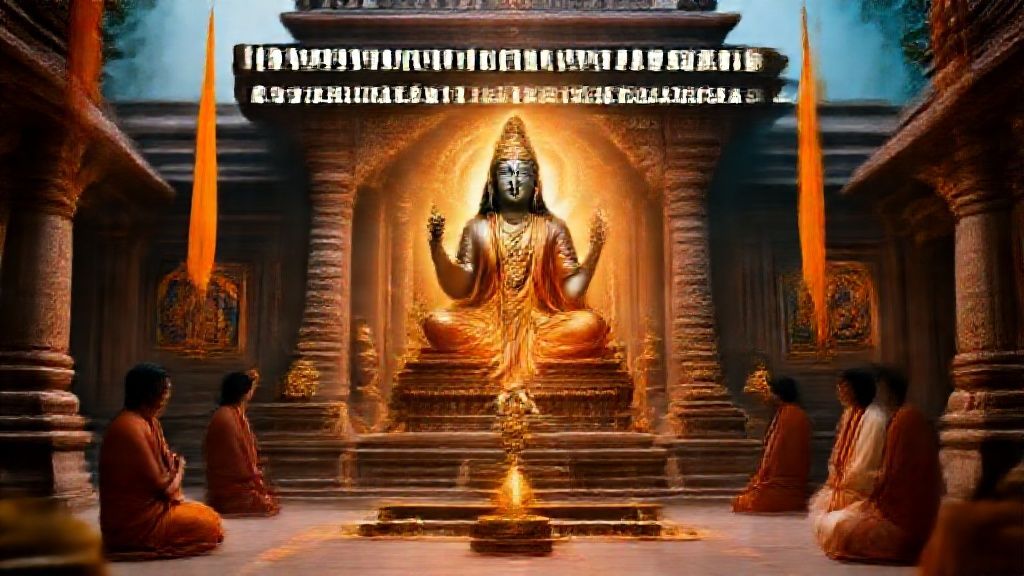
- Sacred Space: Choose a quiet, clean place. Face East or North during chanting. Place an idol or image of the deity associated with the mantra.
- Sankalpa (Intention): Before starting, clearly articulate your intention (sankalpa) for chanting the mantra – the specific health issue you wish to address and the desired outcome.
- Asana (Posture): Sit in a stable, comfortable meditative posture (e.g., Padmasana, Sukhasana) with a straight spine, allowing the free flow of prana.
- Mala (Rosary): Use a mala (rosary) of 108 beads, typically rudraksha for Shiva mantras, tulsi for Vishnu mantras, or sphatik (crystal) for general purposes, to keep count of repetitions.
- Pronunciation (Uchcharana): Correct pronunciation of Sanskrit syllables is paramount. If unsure, listen to an authentic rendition from a Guru or knowledgeable source.
- Japa (Repetition): Chant the mantra for a prescribed number of rounds, typically 1, 3, 5, 11, or 108 malas per sitting. Consistency is key.
- Bhavana (Devotion): Chant with utmost faith (shraddha) and devotion (bhakti), visualizing the deity and the desired healing effect.
- Discipline (Niyama): Maintain regularity in chanting, ideally at the same time daily, morning and evening.
Potent Mantras for Specific Health Issues
For General Well-being, Longevity, and Severe Illness: The Mahamrityunjaya Mantra
This powerful Vedic mantra, dedicated to Lord Shiva in his aspect as Tryambaka, is revered for its ability to ward off untimely death, cure severe ailments, and bestow longevity and spiritual liberation. Its profound vibrations are believed to rejuvenate the physical body and calm the mind, especially during times of grave illness. As narrated in the Shiva Purana, it was revealed to Rishi Markandeya to overcome Yama, the god of death.
Mantra:
ॐ त्र्यम्बकं यजामहे सुगन्धिं पुष्टिवर्धनम्।
उर्वारुकमिव बन्धनान् मृत्योर्मुक्षीय माऽमृतात्॥
(Om Tryambakam Yajamahe Sugandhim Pushtivardhanam
Urvarukamiva Bandhanan Mrityormukshiya Maamritat॥)
Meaning: We worship the three-eyed Lord Shiva, who is fragrant and nourishes all beings. May He liberate us from the bondage of death, just as a cucumber is severed from its stalk, and grant us immortality.
For Eye Health and Vitality: Surya Mantra
Lord Surya, the Sun God, is the source of all life and light. In Ayurvedic and Jyotish traditions, Surya governs vision, vitality, and overall health. Chanting mantras to Surya can strengthen eyesight, improve circulation, and infuse the body with vital energy. The Aditya Hrudayam, found in the Yuddha Kanda of the Ramayana, extols Surya’s glory and his power to destroy obstacles and disease.
Mantra:
ॐ ह्रां ह्रीं ह्रौं सः सूर्याय नमः॥
(Om Hram Hrim Hraum Sah Suryaya Namah॥)
Meaning: Salutations to Lord Surya, the dispeller of darkness and disease, the giver of light and life.
For Mental Peace, Stress Reduction, and Nerve Disorders: Vishnu Mantra
The mind is the seat of all emotional and psychological well-being, directly impacting physical health. Lord Vishnu, the preserver of the universe, embodies peace, stability, and harmony. Chanting Vishnu mantras can soothe the nervous system, alleviate anxiety, and foster mental clarity, which is crucial for overall recovery. The Vishnu Sahasranama, from the Anushasana Parva of the Mahabharata, is a compendium of a thousand names of Vishnu, each a potent mantra for peace and protection.
Mantra:
ॐ नमो भगवते वासुदेवाय॥
(Om Namo Bhagavate Vasudevaya॥)
Meaning: I bow to Lord Vasudeva, the indwelling Spirit of all beings.
For General Healing and Recovery: Dhanvantari Mantra
Lord Dhanvantari, the divine physician, is invoked for all forms of physical healing, especially during convalescence or for chronic ailments. His mantra encapsulates the essence of Ayurvedic wisdom and divine intervention for health restoration. The Garuda Purana and Bhagavata Purana describe his divine origin and role as the benefactor of health.
Mantra:
ॐ नमो भगवते महासुदर्शनाय वासुदेवाय धन्वन्तरये अमृतकलश हस्ताय सर्वभय विनाशाय सर्वरोग निवारणाय त्रैलोक्यपथाय त्रैलोक्यनिधये श्री महाविष्णु स्वरूपाय श्री धन्वन्तरि स्वरूपाय श्री श्री श्री औषधचक्राय नमः॥
(Om Namo Bhagavate Maha Sudarshanaya Vasudevaya Dhanvantaraye Amritakalasha Hastaya Sarvabhaya Vinashaya Sarvaroga Nivaranaaya Trailokyapathaya Trailokyanidhaye Sri Maha Vishnu Swarupaya Sri Dhanvantari Swarupaya Sri Sri Sri Aushadhachakraya Namah॥)
Meaning: Salutations to Lord Dhanvantari, the divine physician, holding the pot of nectar, who removes all fears and diseases. He is the path and treasure of the three worlds, an embodiment of Maha Vishnu, the essence of all medicines, to whom I offer my obeisance.
Dos and Don’ts for Effective Mantra Chanting
- Do: Maintain physical and mental purity.
- Do: Chant with unwavering faith and devotion (Shraddha and Bhakti).
- Do: Focus on correct pronunciation and rhythm.
- Do: Be consistent with your practice, ideally at fixed times.
- Do: Seek guidance from a knowledgeable Guru if possible.
- Do: Combine mantra chanting with a healthy lifestyle and proper medical treatment.
- Don’t: Chant casually or without proper intention.
- Don’t: Expect instant miraculous results without consistent effort.
- Don’t: Replace necessary medical consultation or treatment with mantras alone.
- Don’t: Chant in a state of anger, impurity, or extreme distraction.
- Don’t: Mispronounce the mantras or alter their traditional forms.
Frequently Asked Questions
Can mantras completely cure diseases without modern medicine?
While mantras are incredibly powerful for holistic healing and supporting the body’s natural recovery processes, they are generally considered supplementary to conventional medical treatments, not a replacement. For serious health issues, consulting qualified medical professionals is essential. Mantras enhance the healing process by addressing the mental and spiritual dimensions of illness.
Is it necessary to be initiated by a Guru to chant these mantras?
For certain highly potent or esoteric mantras, initiation (Diksha) from a Guru is traditionally recommended to receive the full benefit and transmission of the mantra’s energy. However, for the commonly known and widely practiced mantras like Mahamrityunjaya or Vishnu mantras, sincere chanting with faith and correct pronunciation is highly beneficial for anyone. Guidance from an elder or scholar can always deepen your practice.
How long does it take to experience the effects of mantra chanting for health?
The time taken to experience the effects varies greatly depending on the individual’s spiritual state, consistency of practice, intensity of faith, the nature of the ailment, and karmic factors. Some may feel immediate peace, while others might notice gradual improvements over weeks or months. Consistency and unwavering devotion are far more important than seeking quick results.
What if I mispronounce a Sanskrit mantra? Will it be ineffective or harmful?
While correct pronunciation is important for maximum efficacy, minor mispronunciations due to genuine effort and devotion are generally understood by the divine. The intention (Bhavana) and faith behind the chanting hold significant weight. Persistent effort to learn and correct pronunciation, perhaps by listening to authentic recordings, is always advised. Harmful effects are highly unlikely from genuine devotional chanting.
Why This Matters for Every Hindu
The tradition of mantra chikitsa is a profound testament to the holistic vision of Sanatan Dharma, reminding us that health is not merely the absence of disease but a state of complete physical, mental, and spiritual well-being. By embracing these ancient remedies, we not only invoke divine grace for our own healing but also preserve a priceless aspect of our spiritual heritage. This practice reinforces our connection to the divine, nurtures faith, and offers a path to self-mastery, aligning us with the eternal truths of the Vedas. In a world increasingly fragmented, the unified approach of mantra healing reminds us of our inherent divinity and the immense power available to us through sound, devotion, and sustained spiritual practice. It is a vital thread in the tapestry of our Dharma, empowering us to navigate life’s challenges with resilience and grace.