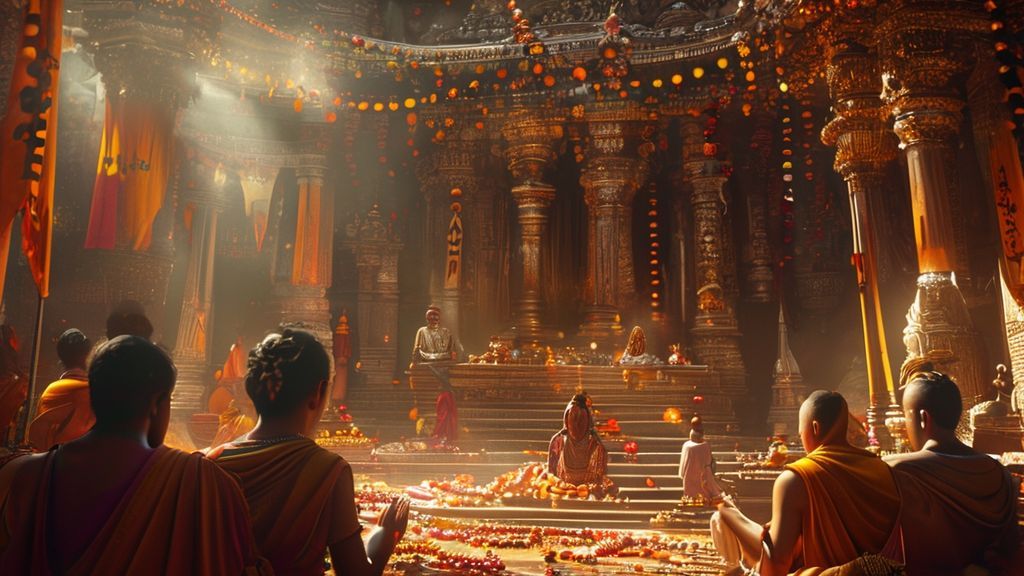
Rudraksha Mala, meaning “Tears of Rudra,” is a sacred string of beads revered in Sanatan Dharma as an embodiment of Lord Shiva’s divine energy. Wearing this powerful mala brings spiritual purification, mental tranquility, protection from negative forces, and aids deep meditation, fostering a profound connection to the Divine, as extolled in ancient Puranas for seekers of liberation.
| Attribute | Details |
|---|---|
| Deity Associated | Lord Shiva (Rudra) |
| Mythological Origin | Formed from the tears of Lord Shiva, shed out of compassion for all beings. |
| Key Use | Japa (mantra chanting), meditation, spiritual protection, health benefits, planetary appeasement. |
| Scripture Reference | Shiva Purana (Vidyeshwara Samhita), Devi Bhagavat Purana, Rudraksha Jabala Upanishad. |
| Primary Location/Origin | Nepal, Indonesia, India (Himalayan regions, Gangetic plains). |
The Divine Essence of Rudraksha Mala
In the vast tapestry of Sanatan Dharma, certain sacred objects stand as direct conduits to the divine. Among these, the Rudraksha Mala holds a pre-eminent position, revered as a manifestation of Lord Shiva Himself. Far more than mere beads, Rudraksha are considered the very tears of compassion shed by Rudra for the welfare of humanity. For sincere seekers and devotees, wearing or meditating with a Rudraksha Mala is not merely a spiritual practice; it is an act of profound devotion, a continuous invocation of Shiva’s grace, offering peace, protection, and spiritual evolution. It is a tangible link to the ancient wisdom passed down by Rishis, embodying the timeless principles of spiritual purity and unwavering faith. The energy emanating from these beads is believed to harmonize the wearer’s inner self with the cosmic rhythm, paving the path to both material well-being and ultimate liberation.
Puranic History & Legend: Shiva’s Tears of Compassion
The origin of Rudraksha is beautifully elaborated in several revered scriptures, primarily the Shiva Purana and the Devi Bhagavat Purana. The most widely accepted account, as described in the Vidyeshwara Samhita of the Shiva Purana (Chapter 25), recounts a profound moment of divine compassion.
Lord Shiva, after performing intense penance (tapasya) for thousands of divine years for the welfare of all beings, opened His eyes. Overwhelmed with profound compassion and love for the suffering of humanity, tears welled up and trickled down from His eyes onto the earth. These sacred tears, upon touching the ground, transformed into the mystical Rudraksha trees. Thus, Rudraksha beads are considered to be the very essence of Shiva’s benevolence, imbued with His divine energy.
Another compelling narrative found in the Devi Bhagavat Purana describes Shiva’s battle against the formidable demon Tripurasura. In the prolonged and arduous fight, Shiva became exhausted. When He rested and opened His eyes, tears fell to the earth, giving rise to the Rudraksha trees. This legend emphasizes the protective and destructive aspects of Rudraksha against negative forces.
The scriptures also detail the different types of Rudraksha, known as mukhis (faces), referring to the natural grooves or lines on the surface of the beads. Each mukhi, from one to twenty-one, is associated with specific deities, planets, and confers distinct benefits, making the choice of Rudraksha a deeply personal and significant act of faith. For instance, the Ek Mukhi Rudraksha (one-faced) is considered the embodiment of Shiva Himself, leading to liberation and fulfillment of desires, while the Panch Mukhi Rudraksha (five-faced) is the most common and represents Kalagni Rudra, bringing general well-being and peace.
Mystical & Energetic Properties: The Science of Sacred Beads
While often perceived through a purely spiritual lens, Rudraksha beads possess remarkable energetic and therapeutic properties, recognized by both ancient Rishis and modern scientists. The unique structure of Rudraksha beads, with their natural facets (mukhis), makes them natural bio-feedback conductors, influencing the human electromagnetic field.
- Electromagnetic Properties: Rudraksha beads are known to possess strong electromagnetic, paramagnetic, and inductive properties. They act as miniature dynamic capacitors, storing bio-electric energy and stabilizing the body’s internal energy field. This inherent quality helps in regulating blood pressure, calming the nervous system, and reducing stress.
- Polarity and Vibration: Each Rudraksha bead has a specific polarity and resonates with distinct vibrational frequencies. When worn, these vibrations interact with the wearer’s aura and chakras, bringing them into alignment. The subtle energy emitted by the beads is believed to cleanse the aura, removing negative blocks and enhancing positive energy flow.
- Brain Stimulation: Scientific research suggests that wearing Rudraksha can positively impact brain function, improving concentration and memory. The continuous subtle electrical impulses generated by the beads when in contact with the skin are thought to stimulate specific brain regions, promoting mental clarity and focus during meditation and daily activities.
- Harmonizing the Chakras: Different mukhis are associated with specific chakras. For example, a Do Mukhi Rudraksha (two-faced) is linked to the Anahata (heart) chakra, fostering unity and harmony, while a Chaudah Mukhi Rudraksha (fourteen-faced) helps awaken the Ajna (third eye) chakra, enhancing intuition and spiritual insight.
This synthesis of ancient wisdom and observable energetic phenomena underscores the profound efficacy of Rudraksha, extending its benefits beyond mere belief into tangible experience.
Rituals & Puja Vidhi: Activating the Divine Energy
To fully harness the spiritual power of a Rudraksha Mala, it is essential to perform specific purification and energization rituals. This process, known as Prana Pratishtha, infuses the beads with divine vibrations, making them potent tools for spiritual practice.
- Purification (Shuddhikaran): On an auspicious Monday morning, cleanse the Rudraksha Mala. Gently wash it with Hindutva.online‘s recommended blend of pure Gangajal, unboiled cow’s milk, ghee, and honey. Rinse thoroughly with clean water.
- Placement: Place the clean mala on a clean cloth or a plate on your puja altar, preferably on a bed of fresh Bael leaves (Bilva Patra), which are sacred to Shiva.
- Offerings: Offer incense (agarbatti), a lamp (diya) with ghee, fresh flowers (especially white ones), sandal paste (chandan), and uncooked rice grains (akshat) mixed with vermillion (kumkum).
- Mantra Chanting: Sit facing east. Hold the mala in your right hand. Chant the root mantra for Rudraksha: “ॐ ह्रीं ह्रुं नमः” (Om Hreem Hrum Namah) at least 108 times. For a Panch Mukhi Rudraksha, you may also chant “ॐ नमः शिवाय” (Om Namah Shivaya) 108 times. For other specific mukhis, chant their respective seed mantras (e.g., “Om Hreem Namah” for Ek Mukhi).
- Prayer: Offer a heartfelt prayer to Lord Shiva, seeking His blessings and requesting that the Rudraksha be energized for your spiritual growth and well-being.
- Wearing: After the ritual, the Rudraksha Mala is ready to be worn. It is traditionally worn around the neck, as a bracelet, or used for japa.
Mantras & Chants for Rudraksha Empowerment
Chanting mantras while wearing or using a Rudraksha Mala amplifies its spiritual benefits and strengthens your connection with the divine energies. Here are some essential mantras:
- General Rudraksha Mantra: The universal mantra to energize and invoke the power of any Rudraksha is:
“ॐ ह्रीं ह्रुं नमः” (Om Hreem Hrum Namah)
Chant this mantra 108 times daily to maintain the bead’s potency. - Maha Mrityunjaya Mantra: This powerful mantra for Lord Shiva grants longevity, health, and liberation, and is profoundly enhanced by Rudraksha.
“ॐ त्र्यम्बकं यजामहे सुगन्धिं पुष्टिवर्धनम्। उर्वारुकमिव बन्धनान् मृत्योर्मुक्षीय मामृतात्॥”
(Om Tryambakam Yajamahe Sugandhim Pushtivardhanam | Urvarukamiva Bandhanan Mrityormukshiya Maamritat ||) - Panchakshari Mantra: The five-syllable mantra dedicated to Lord Shiva,
“ॐ नमः शिवाय” (Om Namah Shivaya)
is the most revered and chanted mantra for devotion and spiritual awakening, made even more potent with a Rudraksha Mala. - Mukhi-Specific Mantras: Each mukhi has its own powerful seed mantra (Bija Mantra) that invokes its specific deity and benefits:
- Ek Mukhi (1 Face): “ॐ ह्रीं नमः” (Om Hreem Namah) – For liberation, divine connection.
- Do Mukhi (2 Faces): “ॐ नमः” (Om Namah) – For unity, harmony.
- Teen Mukhi (3 Faces): “ॐ क्लीं नमः” (Om Kleem Namah) – For purification from sins, self-confidence.
- Panch Mukhi (5 Faces): “ॐ ह्रीं नमः” (Om Hreem Namah) – For general well-being, peace.
- Shat Mukhi (6 Faces): “ॐ ह्रीं ह्रुं नमः” (Om Hreem Hrum Namah) – For wisdom, knowledge, willpower.
- Sapta Mukhi (7 Faces): “ॐ हुं नमः” (Om Hum Namah) – For wealth, prosperity, new opportunities.
Regular chanting with your Rudraksha Mala transforms it into a powerful reservoir of positive energy, constantly radiating blessings to the wearer.
Dos and Don’ts for Rudraksha Wearers
Maintaining the sanctity and efficacy of your Rudraksha Mala requires adherence to certain traditional guidelines:
- Dos:
- Wear your Rudraksha Mala continuously, especially during spiritual practices like meditation and chanting.
- Keep it clean by gently washing it with water and a soft brush occasionally.
- Re-energize it periodically by offering prayers and chanting mantras.
- Wear it during sleep for continued protection and positive energy, unless it causes discomfort.
- Remove it when performing rituals that require physical purity, such as visiting a cremation ground or attending a funeral.
- Don’ts:
- Do not wear Rudraksha during intimate moments or during menstrual cycles, as per traditional beliefs.
- Avoid taking Rudraksha to places of extreme impurity or where consumption of non-vegetarian food and alcohol is prevalent, if possible.
- Do not allow others to touch or wear your personal Rudraksha Mala, as it is believed to carry the wearer’s specific energy.
- Do not wear a broken or damaged Rudraksha bead; replace it respectfully.
- Do not boast about your Rudraksha or use it for display; its power is for personal spiritual growth.
What is the best way to activate a Rudraksha Mala?
The best way to activate a Rudraksha Mala is through a dedicated Prana Pratishtha ritual. This involves purifying the beads with sacred substances like Gangajal and milk, placing them on a puja altar, offering flowers and incense, and then chanting specific mantras like “ॐ ह्रीं ह्रुं नमः” (Om Hreem Hrum Namah) or “ॐ नमः शिवाय” (Om Namah Shivaya) at least 108 times, invoking Lord Shiva’s blessings to infuse the beads with divine energy.
Can anyone wear a Rudraksha, or is it only for devotees of Shiva?
Rudraksha can be worn by anyone, regardless of their gender, caste, creed, or spiritual lineage. While deeply associated with Lord Shiva, its benefits of peace, health, and protection are universal. Sincere intention and reverence for the sacredness of the bead are the only true prerequisites. It is a gift for all humanity, as Shiva’s tears were shed for the welfare of all beings.
How do I identify a genuine Rudraksha bead?
Identifying a genuine Rudraksha requires careful observation. Look for natural lines (mukhis) that run from top to bottom without breaking. Genuine beads tend to be hard, have a natural luster, and their texture feels authentic, unlike synthetic imitations. While sinking or floating tests are sometimes used, they are not always foolproof. The most reliable method is to purchase from reputable and trusted sources, often those with deep roots in Dharmic traditions, or consult with experienced Vedic scholars.
What is the significance of different mukhis?
The significance of different mukhis (faces) on a Rudraksha bead is profound, as each corresponds to specific deities, planets, and confers distinct spiritual and material benefits. For example, a One Mukhi Rudraksha represents Lord Shiva Himself, granting liberation; a Two Mukhi represents Ardhanarishvara, fostering harmony; a Five Mukhi represents Kalagni Rudra, offering general well-being and purification; and a Fourteen Mukhi represents Lord Hanuman, bestowing courage and intuition. Choosing the appropriate mukhi depends on individual spiritual needs and astrological considerations.
Dharmic Significance: A Lifeline to Sanatan Dharma
The Rudraksha Mala is more than just a spiritual accessory; it is a profound symbol and an active instrument in preserving and propagating the eternal principles of Sanatan Dharma. By connecting practitioners directly to the primordial energy of Lord Shiva, it facilitates self-realization, disciplined spiritual practice, and the cultivation of higher consciousness. In an age where distractions abound, the Rudraksha serves as a constant reminder of one’s spiritual path, fostering inner peace, resilience, and unwavering faith. It is a sacred inheritance from our Rishis, a tangible link to ancient wisdom, inspiring devotion and ethical living. Through the continued reverence and use of Rudraksha, devotees not only elevate their personal spiritual journeys but also contribute to the vibrant continuity of our Dharma for generations to come, embodying the very essence of spiritual living that we uphold at Hindutva.online.