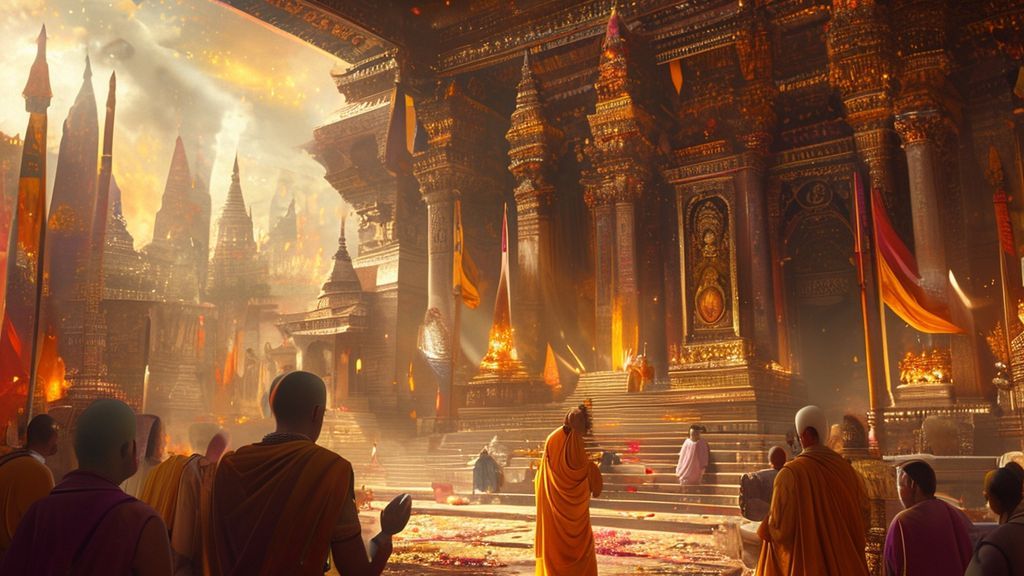
A saint in a dream, often a revered Guru or Ishta Devata, signifies profound spiritual communication, divine blessing, or crucial guidance on one’s Dharmic path. Rooted in Vedic understanding, these sacred visions are celestial pointers for inner transformation, spiritual growth, and overcoming obstacles, offering divine grace (Guru-kripa) and clarity from higher realms for sincere devotees.
| Attribute | Details |
|---|---|
| Phenomenon | Divine Communication through Svapna Avastha (dream state). |
| Spiritual Basis | Guru-kripa (Guru’s grace), Ishta Darshan (vision of chosen deity), Karmic blessings. |
| Primary Significance | Guidance, blessing, spiritual initiation, warning, or call to deeper Sadhana. |
| Scriptural References | Mandukya Upanishad (states of consciousness), Yoga Sutras of Patanjali (dream analysis), various Puranas (divine interventions). |
The Sacred Realm of Dreams: A Vedic Perspective
In Sanatan Dharma, the appearance of a saint in a dream is far from a mere subconscious fabrication; it is often revered as a profound spiritual event, a direct communication from the subtler realms. For a sincere seeker, such a vision can be a pivotal moment, affirming their path, offering solace, or imparting crucial guidance. This phenomenon underscores the Vedic belief in a multi-layered reality, where the waking state (Jagrat Avastha) is but one aspect, and the dream state (Svapna Avastha) serves as a potent channel for divine interaction, revelations, and the bestowal of grace (kripa).
The Guru-disciple lineage (Guru-Shishya Parampara) forms the bedrock of spiritual progress in Hinduism. When a Guru, whether living or departed, or an Ishta Devata (chosen deity) graces one’s dream, it is interpreted as a manifestation of their blessings, their continued presence, and their unwavering support on the arduous journey towards Moksha (liberation). Such experiences reinforce faith, dispel doubts, and provide an impetus for intensified spiritual practice (Sadhana). It reminds us that the divine realm is ever-present, guiding those who earnestly seek.
Puranic Narratives of Divine Dream Revelations
Throughout the rich tapestry of our Itihasas and Puranas, countless instances highlight the significance of divine appearances in dreams, demonstrating their role in shaping destinies and guiding humanity. These narratives are not mere allegories but documented accounts that serve as precedents for understanding such profound experiences in contemporary times.
The Bhagavata Purana, a crown jewel among the Puranas, recounts numerous instances where Devas, Rishis, or Bhagavan Himself appeared in dreams to impart knowledge, give warnings, or confer boons. For example, Prahlada Maharaja, even in his moments of distress, was perpetually under the divine protection and guidance of Vishnu, which would manifest in various forms, including inner visions that bordered on the dream state, affirming his unwavering devotion. Similarly, many devotees of Sri Krishna have recounted receiving instructions or darshan of the Lord in their dreams, strengthening their Bhakti.
Another profound example comes from the life of Adi Shankaracharya, whose profound spiritual journey and establishment of the four great Maths (monasteries) were often guided by divine visions, some of which occurred in a dream-like state. These were not random occurrences but purposeful interventions from the divine, steering the course of Dharma. As detailed in various Shankara Digvijayas, these experiences validated his mission and provided strength during challenging periods. These narratives from scriptures like the Skanda Purana and Agni Purana underscore that divine dream appearances are a time-honored tradition within Sanatan Dharma, serving as celestial missives for sincere souls.
The Yogic & Philosophical Framework: States of Consciousness
To truly comprehend the phenomenon of a saint in a dream, we must turn to the profound insights of Vedic psychology and Yoga philosophy, particularly the Mandukya Upanishad and Patanjali’s Yoga Sutras. These ancient texts delineate the intricate workings of consciousness, providing a scientific framework for understanding dream states beyond mere psychological projections.
The Mandukya Upanishad describes four states of consciousness: Jagrat (waking), Svapna (dream), Sushupti (deep sleep), and Turiya (the pure consciousness beyond all states). The Svapna Avastha is described not as an illusion but as a realm where the mind (manas) projects its own universe, influenced by latent impressions (samskaras) and, crucially, by higher, subtler energies. When a Guru or divine being appears in this state, it indicates a confluence of the individual’s spiritual receptivity and a direct energetic transmission from the higher consciousness of the Guru or Devata.
Patanjali’s Yoga Sutras, particularly in the section on *Chitta Vritti Nirodha* (cessation of the modifications of the mind), touches upon the nature of dreams. Sutra I.38 mentions that by contemplating the knowledge of dreams and sleep, one gains stability of the mind. For a yogi, dreams are not chaotic but can be highly organized, revealing patterns of the subconscious or becoming conduits for divine communication. A Guru appearing in a dream is therefore seen as a *pratyaya* (content of consciousness) that arises from a purified mind, signifying the Guru’s grace acting upon the disciple’s inner being. It is a subtle message, bypassing the intellect and speaking directly to the deeper layers of the Atman.
Interpreting the Divine Vision: Steps for Devotees
Receiving a vision of a saint in a dream is a sacred blessing that requires careful introspection and appropriate action. It is not to be taken lightly nor dismissed as mere fantasy. Here are the steps a devotee should follow:
- Acknowledge with Reverence: Upon waking, offer immediate gratitude to the Guru or Devata. Understand that this is a precious gift, a sign of their continued guidance and benevolence. Perform a small mental puja or offer a prayer of thanks.
- Reflect and Introspect: Do not immediately try to decipher the dream with the intellect alone. Spend time in quiet contemplation. What was the overall feeling? What specific message, action, or symbol was conveyed? Was there a sense of peace, urgency, or instruction? Keep a spiritual dream journal.
- Seek Guidance (if necessary): If the message is unclear or profound, consult a living, realized Guru or a deeply knowledgeable spiritual elder. Do not consult random individuals or those prone to superstitious interpretations. A true guide will help you understand the message in alignment with Sanatan Dharma, not through personal biases.
- Affirm and Act with Sadhana: The vision is often a call to deepen your spiritual practice. If a specific instruction was given, endeavor to follow it. If it was a general blessing, take it as encouragement to intensify your meditation, japa, seva, or scriptural study. The grace received through the dream is meant to empower your Dharmic journey.
- Maintain Purity and Humility: Such experiences are personal and sacred. Avoid boasting or seeking validation. Maintain inner purity in thought, word, and deed, as this makes one more receptive to future divine communications.
Mantras for Clarity and Gratitude
Chanting specific mantras can enhance receptivity to divine grace, aid in dream recollection, and express gratitude for such profound visions. These vibrations connect us to the subtle realms.
- General Guru Mantra: This mantra invokes the Guru Principle itself, seeking blessings and guidance.
Guru Brahma Guru Vishnu, Guru Devo Maheshwara.
Guru Sakshat Param Brahma, Tasmai Shri Gurave Namah.(The Guru is Brahma, the Guru is Vishnu, the Guru is Lord Maheshwara (Shiva). The Guru is verily the supreme Brahman. To that revered Guru, I offer my salutations.)
- Mantra for Ishta Devata: Chanting the Moola Mantra of your Ishta Devata (e.g., Om Namah Shivaya for Shiva, Om Namo Bhagavate Vasudevaya for Vishnu, Om Aim Hrim Klim Chamundaye Vichche for Devi) can strengthen your connection and invite clear guidance.
- Mantra for Inner Clarity:
Om Sarvesham Svastir Bhavatu
Sarvesham Shantir Bhavatu
Sarvesham Purnam Bhavatu
Sarvesham Mangalam Bhavatu(May auspiciousness be unto all. May peace be unto all. May fullness be unto all. May prosperity be unto all.)
Dos and Don’ts Regarding Divine Dream Visions
- Do:
- Offer gratitude immediately upon waking.
- Maintain a spiritual diary to record such experiences.
- Reflect on the dream’s feelings, symbols, and messages.
- Increase your spiritual practices (sadhana) as a response to grace.
- Seek guidance from a genuine, realized Guru or spiritual elder for interpretation.
- Deepen your faith and devotion.
- Don’t:
- Dismiss it as mere fantasy or superstition.
- Become arrogant or boastful about the experience.
- Seek material gain or try to manipulate the vision for worldly desires.
- Allow the experience to lead to fanaticism or irrational behavior.
- Seek interpretations from unqualified or materialistic individuals.
- Become fixated on the dream, forgetting the importance of waking-state duties (Dharma).
What is the difference between an ordinary dream and a divine vision?
An ordinary dream is largely a manifestation of subconscious desires, fears, and daily experiences (samskaras). A divine vision, however, possesses distinct characteristics: it often carries a profound sense of peace, clarity, and authenticity; it is deeply impactful and memorable; it usually conveys a clear message or feeling of grace; and it instills a lasting sense of conviction and direction, unlike the fleeting nature of common dreams. The presence of a revered Guru or Ishta Devata marks it as exceptional.
Can a dream guru give Diksha (initiation)?
While a saint in a dream can impart significant spiritual guidance, blessings, or even a mantra, a formal Diksha (initiation) traditionally requires a physical presence, or at least a direct and tangible lineage transmission. However, in rare and exceptional cases for highly advanced sadhakas, a dream initiation, if profoundly authentic and spiritually potent, may be considered a form of divine intervention. It is always wise to seek validation or further guidance from a living, authentic Guru within a recognized lineage. For more insights on the Guru-Shishya parampara, visit Hindutva.online.
How can one invite such a divine vision?
Divine visions cannot be forced, as they are a manifestation of grace (kripa) and alignment with one’s karmic trajectory. However, one can cultivate receptivity through consistent and sincere spiritual practice (sadhana), which includes deep meditation, regular chanting of mantras, selfless service (seva), maintaining ethical conduct (yama and niyama), and unwavering devotion (bhakti). Purity of heart and intention are paramount in making one’s consciousness fertile ground for such sacred experiences.
The Dharmic Significance: Preserving Sanatan Dharma
The belief in, and interpretation of, a saint in a dream is a powerful testament to the living, dynamic nature of Sanatan Dharma. It reinforces the ancient truth that the spiritual realm is not distant or abstract, but an ever-present reality that actively interacts with our lives. Such experiences serve to:
- Reinforce Faith: They provide personal, undeniable proof of the divine, deepening a devotee’s conviction beyond mere intellectual understanding.
- Provide Personal Guidance: In a world often devoid of clear moral compasses, these visions offer individualized direction, helping devotees navigate complex situations and stay true to their Dharmic path.
- Sustain the Guru-Shishya Parampara: Even when a Guru is physically absent, their appearance in a dream signifies the unbroken chain of spiritual transmission and their eternal presence.
- Encourage Sadhana: The blessing received inspires practitioners to intensify their efforts, knowing that their spiritual journey is acknowledged and supported by higher powers.
These sacred occurrences are not relics of the past but vibrant, ongoing manifestations of divine grace, guiding humanity towards self-realization and upholding the eternal principles of Dharma. Through such profound experiences, Sanatan Dharma continues to thrive, offering spiritual solace and direction to sincere seekers across generations, illuminating the path to ultimate liberation. For further exploration of such spiritual phenomena and their meaning, explore the rich resources available on Hindutva.online.
