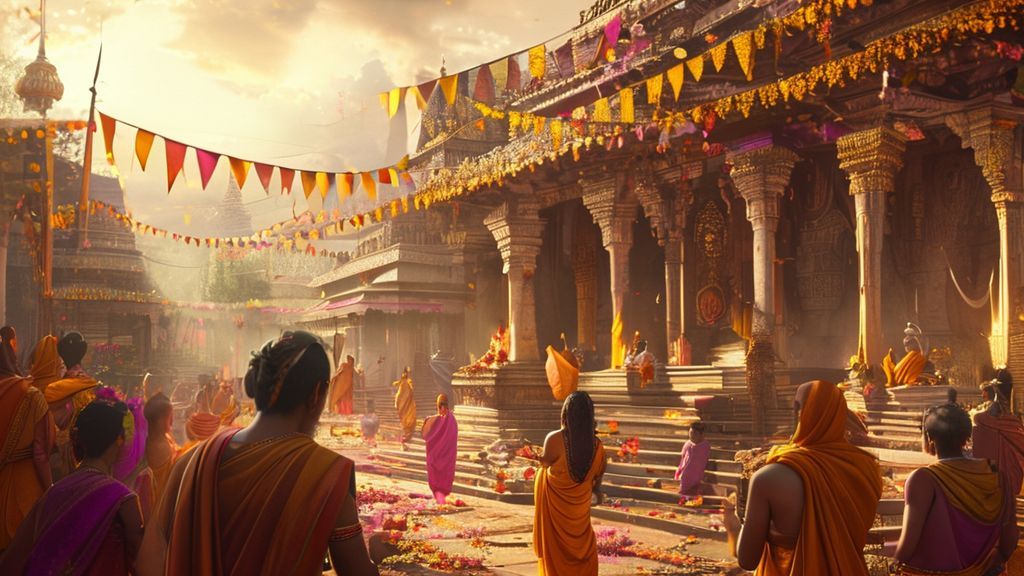
Bathukamma and Bonalu Festivals are vibrant Telugu Hindu practices from Telangana, deeply rooted in Shakti worship, agrarian life, and community bonding. Bathukamma, the “Mother Goddess come alive,” reveres Goddess Gauri through floral arrangements, symbolizing nature’s bounty and feminine divinity. Bonalu, honoring Mahakali in her various forms like Yellamma, is an offering of thanksgiving for protection from ailments and a plea for prosperity.
| Attribute | Details |
|---|---|
| Deities Worshipped | Bathukamma: Goddess Gauri (Parvati), the Mother Goddess. Bonalu: Mahakali (in forms like Yellamma, Peddamma, Pochamma, Mysamma). |
| Location/Origin | Primarily Telangana, India. |
| Key Festival Period | Bathukamma: Nine days during Sharada Navaratri (Bhadrapada Amavasya to Ashwayuja Ashtami, generally September-October). Bonalu: Month of Ashada (July-August). |
| Primary Rituals | Bathukamma: Floral arrangements (Bathukamma), singing folk songs, immersion in water bodies. Bonalu: Offering “Bonam” (cooked rice with milk/jaggery) to the Goddess, Potharaju procession, Ghatam procession. |
| Scripture Reference (Underlying Principles) | Bathukamma: Underpins Vedic *Prithvi Puja*, *Pushparchana*, and reverence for *Prakriti*. Echoes *Devi Bhagavata Purana* themes of Gauri as provider. Bonalu: Aligns with *Devi Mahatmyam* (part of *Markandeya Purana*) extolling Mahakali as protector and vanquisher of evils. Village deity worship is found in *Agni Purana* and *Skanda Purana* references to *Gramadevatas*. |
Introduction: The Soul of Telangana’s Devotion
The spiritual landscape of Telangana pulsates with unique devotion, vividly expressed through its indigenous festivals of Bathukamma and Bonalu. These are not mere celebrations but profound acts of reverence that interweave the divine feminine, the bounty of nature, and the resilience of human spirit. Rooted deeply in Sanatan Dharma, these practices embody the essence of *Shakti Upasana*, the worship of the primordial cosmic energy, in forms accessible and immediate to the common devotee. They are a testament to the living tradition of Hindutva, where ancient Vedic principles find vibrant expression in regional customs, fostering a unique cultural identity while upholding universal spiritual truths.
Bathukamma, literally meaning “Mother Goddess, come alive,” is a joyous nine-day floral festival dedicated to Goddess Gauri (Parvati). It is a profound ode to nature, femininity, and life itself, celebrated during the Sharada Navaratri period. Bonalu, on the other hand, is a fierce yet loving invocation of Mahakali, the village deity (Gramadevata), observed during the Ashada month. It is a thanksgiving festival where offerings are made to ward off epidemics and seek protection and prosperity. Both festivals, while distinct in their mood and timing, are pillars of Telangana’s cultural heritage, reflecting a deep, symbiotic relationship between humanity, nature, and the Divine Mother.
Puranic History & Legend: Echoes of the Divine Mother
Bathukamma: The Goddess Embodied in Flowers
While specific Puranic narratives for Bathukamma as a festival are not explicit, its philosophical underpinnings resonate profoundly with the *Devi Bhagavata Purana* and the *Brahmanda Purana*, which extol Goddess Gauri as the embodiment of *Prakriti* (nature) and the source of all creation. The festival’s origin is popularly linked to a princess named Bathukamma, who was believed to be an incarnation of Goddess Parvati, surviving an ordeal and bringing joy and prosperity. This folk narrative parallels the resilience and life-giving power attributed to the Goddess. The reverence for flowers, water, and earth within Bathukamma is a direct continuation of ancient Vedic practices of *Prithvi Puja* (worship of Earth) and *Pushparchana* (offering of flowers), integral to any Hindu ritual.
The festival’s timing during Sharada Navaratri connects it intrinsically with the pan-Indian worship of Devi during this auspicious period, specifically honoring Gauri for her role as the bringer of fertility, prosperity, and conjugal bliss. The flowers used, such as *gunugu* (celosia), *tangedu* (senna), *gummadi* (pumpkin), and *chamanthi* (chrysanthemum), are not merely decorative but possess medicinal and purifying properties, reflecting an ancient understanding of nature’s sanctity, a wisdom deeply embedded in Sanatan Dharma.
Bonalu: Mahakali, The Protector Mother
Bonalu’s history is steeped in the folklore of village deities and their crucial role in protecting communities. Its origins are often traced back to the late 19th century when Hyderabad and Secunderabad were ravaged by a severe plague epidemic. Desperate villagers turned to Goddess Mahakali, particularly in her regional forms like Yellamma, Pochamma, and Mysamma, vowing to offer special prayers if the epidemic subsided. When the plague receded, the tradition of Bonalu began as an annual thanksgiving. This narrative aligns perfectly with the overarching theme of *Devi Mahatmyam* (part of the *Markandeya Purana*), where the Devi manifests as Mahakali to vanquish *Mahishasura* and other demons, saving humanity from destruction and disease. The village deities, or *Gramadevatas*, are revered across India, and their significance is mentioned in texts like the *Agni Purana* and *Skanda Purana*, which acknowledge the importance of propitiating local guardian deities for the welfare of the community.
The offering of “Bonam,” a pot of cooked rice, milk, and jaggery, symbolizes the humble yet heartfelt devotion of the villagers, a reciprocal act of sustenance for the Mother who sustains all. This ancient practice of offering consecrated food (*naivedyam*) to deities is a fundamental aspect of Hindu worship, representing a complete surrender and invocation of divine grace.
Symbolic Architecture & Cultural Marvels
Bathukamma: A Floral Temple to Life
The “architecture” of Bathukamma is not built with stone but meticulously crafted with flowers, yet it embodies a profound spiritual structure. The Bathukamma arrangement itself is a multi-layered, conical or pyramidal stack of seasonal flowers, resembling a miniature temple or a mountain, specifically the mythical Meru Parvat. Each layer, carefully arranged with diverse flowers like *gunugu*, *tangedu*, and *chamanthi*, symbolizes the stratification of the cosmos and the interconnectedness of all life. The structure is traditionally topped with a Gauri idol or a *gummadi* (pumpkin) flower, representing the pinnacle of divine consciousness. This floral architecture is a testament to the eco-centric wisdom of our ancestors, who understood that reverence for nature is reverence for the divine. It is a transient temple, built from the earth’s bounty, offered back to the earth, signifying the cycle of creation, preservation, and dissolution—a core tenet of Sanatan Dharma.
Bonalu: The Moving Shrine and Sacred Pot
Bonalu’s “architectural” marvel lies in its mobile sacred objects and the human body as a vessel for the divine. The *Bonam* itself, carried in decorated earthenware pots by women on their heads, serves as a mobile shrine, a moving offering. The pot is often adorned with turmeric, vermilion, and neem leaves, potent symbols of purification and divine energy. The procession, accompanied by drummers and the ecstatic dance of *Potharaju* (the brother of the Gramadevata), transforms the streets into a sacred pathway. The *Potharaju*, with his bare body smeared with turmeric and vermilion, neem leaves tied around his waist, and bells on his ankles, embodies the protective and fierce energy of the deity, clearing the path for the goddess. Furthermore, the *Thottela*, a small, colorful, paper-crafted arch-like structure, is carried by devotees, symbolizing the grandeur of the goddess’s abode. The village temples of the Gramadevatas, though often modest in their construction, are the focal points of community life, serving as spiritual anchors and testaments to collective faith.
Rituals & Puja Vidhi
Bathukamma Puja Vidhi
- Preparation (Nine Days): Each day, women meticulously collect different seasonal flowers. They arrange them in concentric circles on a brass plate (*tattukula tatta*) or a wide basket, building a conical mound known as Bathukamma. The arrangements grow in size and grandeur daily, culminating in *Saddula Bathukamma* on the ninth day.
- Gauri Pratistha: A small idol of Gauri, often made from turmeric paste (*pasupu mudda*), is placed on top of the floral arrangement.
- Evening Puja: In the evenings, women gather in circles around their Bathukammas, singing traditional folk songs that narrate stories of Gauri, nature, and Telangana’s culture. They clap rhythmically and dance around the floral mound.
- Aarti: At the end of the singing, *Aarti* is performed to the Bathukamma.
- Visarjan (Immersion): On the final day, *Saddula Bathukamma*, the largest arrangement, is carried to local ponds, rivers, or lakes and gently immersed, signifying the return of the Mother Goddess to water, and the cycle of life returning to nature. The flowers, having absorbed the divine energy, fertilize the waters, reinforcing the eco-spiritual connection.
Bonalu Puja Vidhi
- Bonam Preparation: Women prepare “Bonam,” a pot of cooked rice, milk, and jaggery, often garnished with curds and onions. This is considered the Goddess’s favored meal.
- Pot Decoration: The earthen pots are beautifully decorated with turmeric, vermilion (*kumkum*), and neem leaves, symbolizing purity and divine power.
- Procession to Temple: Women carry these decorated pots on their heads from their homes to the local Mahakali or Gramadevata temple. This procession is accompanied by the rhythmic beat of drums and the energetic dance of *Potharaju*.
- Offering the Bonam: At the temple, the women offer their “Bonam” to the Goddess, along with bangles, sarees, and turmeric-kumkum. They seek blessings for their families and protection from evils.
- Ghatam Procession: A sacred *Ghatam* (copper pot), symbolizing the Goddess, is decorated and carried in a procession to the temple.
- Potharaju Performance: The *Potharaju*, embodying the spirit of the Gramadevata’s brother, performs fierce, energetic dances, often flogging himself with ropes, to clear obstacles and invoke the goddess’s presence.
Mantras & Chants
For Bathukamma (Goddess Gauri/Parvati)
While specific Bathukamma mantras are often embedded in the rich folk songs, the essence of Gauri worship can be invoked with universal Devi Mantras:
Devi Moola Mantra:
ॐ सर्वमङ्गलमाङ्गल्ये शिवे सर्वार्थसाधिके ।
शरण्ये त्र्यम्बके गौरि नारायणि नमोऽस्तु ते ॥
Om Sarva Mangala Mangalye, Shive Sarvartha Sadhike.
Sharanye Tryambake Gauri, Narayani Namo ‘stu Te.
(Salutations to You, O Narayani, Who are the auspiciousness of all auspiciousness, the consort of Shiva, the accomplisher of all objectives, the refuge, the three-eyed one, and Gauri.)
Devotees also sing traditional Bathukamma folk songs, such as “Kandisuddi Bathukamma” and “Chithu Chithula Bathukamma,” which are beautiful poetic invocations of the Goddess.
For Bonalu (Goddess Mahakali/Yellamma)
Bonalu chants are often robust and rhythmic, embodying the protective energy of Mahakali. Devotees may chant:
Mahakali Mantra:
ॐ क्रीं क्रीं क्रीं हूँ हूँ ह्रीं ह्रीं दक्षिणे कालिके क्रीं क्रीं क्रीं हूँ हूँ ह्रीं ह्रीं स्वाहा ॥
Om Krim Krim Krim Hum Hum Hrim Hrim Dakshine Kalike Krim Krim Krim Hum Hum Hrim Hrim Svaha.
(A powerful seed mantra invoking the fierce Dakshina Kali for protection and strength.)
Additionally, local invocations like “Jai Yellamma Maa!” or “Jai Mahakali Maa!” echo through the processions, signifying direct communion with the protective Mother. The rhythmic drumming during Bonalu also serves as a potent sonic invocation.
Dos and Don’ts: Cultural Etiquette
- Do: Participate with sincerity and devotion, respecting local customs.
- Do: Dress modestly and traditionally, especially when visiting temples or participating in rituals.
- Do: Maintain cleanliness, particularly around Bathukamma floral arrangements and Bonalu offerings.
- Do: Offer assistance to elders and children during processions and rituals.
- Do: Engage with the community singing and dancing; it’s a vital part of the festive spirit.
- Don’t: Disrupt processions or rituals with excessive noise or disrespectful behavior.
- Don’t: Touch Bathukamma arrangements or Bonam pots without permission, as they are consecrated items.
- Don’t: Consume alcohol or non-vegetarian food, especially during Bonalu, as these festivals are sacred offerings to the Divine Mother.
- Don’t: Treat the festivals as mere spectacles; remember their profound spiritual significance for the devotees.
Frequently Asked Questions
What is the spiritual significance of immersing Bathukamma in water?
The immersion of Bathukamma, known as *Visarjan*, holds deep spiritual and ecological significance. It symbolizes the return of the Mother Goddess, who arrived in the form of flowers, back to the water element (*jala tattva*), her source. Ecologically, the flowers, being biodegradable and often possessing medicinal properties, enrich the water, demonstrating respect for nature and the cyclical nature of life, death, and rebirth, a core tenet of Sanatan Dharma. It signifies the union of *Prakriti* (nature) with *Parameshwari* (the supreme Goddess).
How does Potharaju connect to the Bonalu festival’s divine aspect?
Potharaju is revered as the divine brother of the Gramadevatas, particularly Mahakali. His vigorous, trance-like dance and self-flogging are symbolic acts of purification and protection. He acts as the first devotee, clearing obstacles and leading the procession, ensuring the Goddess’s path is clear and her devotees are protected. He embodies the fierce and unyielding aspect of divine protection, invoking the goddess’s wrath against evils and diseases, a role vital to the festival’s purpose of seeking divine intervention.
Are these festivals exclusive to Telangana, or are there similar practices elsewhere?
While Bathukamma and Bonalu are distinct and iconic to Telangana, the underlying principles of *Shakti Upasana*, floral worship, and propitiation of Gramadevatas are universal in Sanatan Dharma. Similar floral festivals or local deity worship traditions exist across India, often during Navaratri or harvest seasons. For example, Navaratri is celebrated nationwide, and local forms of Devi worship are prevalent in many regions. However, the unique floral architecture of Bathukamma and the specific rituals of Bonalu, especially the *Bonam* offering and *Potharaju* dance, remain hallmarks of Telangana’s cultural heritage, preserved and promoted by initiatives like Hindutva.online.
Dharmic Significance: Preserving Sanatan Dharma through Celebration
The **Bathukamma and Bonalu Festivals** are far more than seasonal celebrations; they are living testaments to the enduring wisdom and vibrant spirituality of Sanatan Dharma. They connect devotees directly to the fundamental principles of **Shakti worship**, recognizing the divine feminine as the ultimate source of creation, sustenance, and dissolution. These festivals underscore the profound reverence for **Prakriti** (nature), viewing every flower, every drop of water, and every grain of earth as sacred, embodying an ecological consciousness deeply embedded in Vedic traditions.
By involving the entire community—men, women, and children—in their preparation and observance, Bathukamma and Bonalu reinforce the bonds of collective identity, passing down ancient stories, songs, and values from one generation to the next. They serve as cultural anchors, preserving unique regional expressions of Hinduism while celebrating universal truths: the triumph of good over evil, the importance of gratitude, and the unwavering faith in the Divine Mother’s protective embrace. In an ever-changing world, these timeless practices, passionately documented and shared on platforms like Hindutva.online, ensure that the spiritual heritage of Telangana continues to thrive, illuminating the path for sincere seekers and strengthening the fabric of Sanatan Dharma.