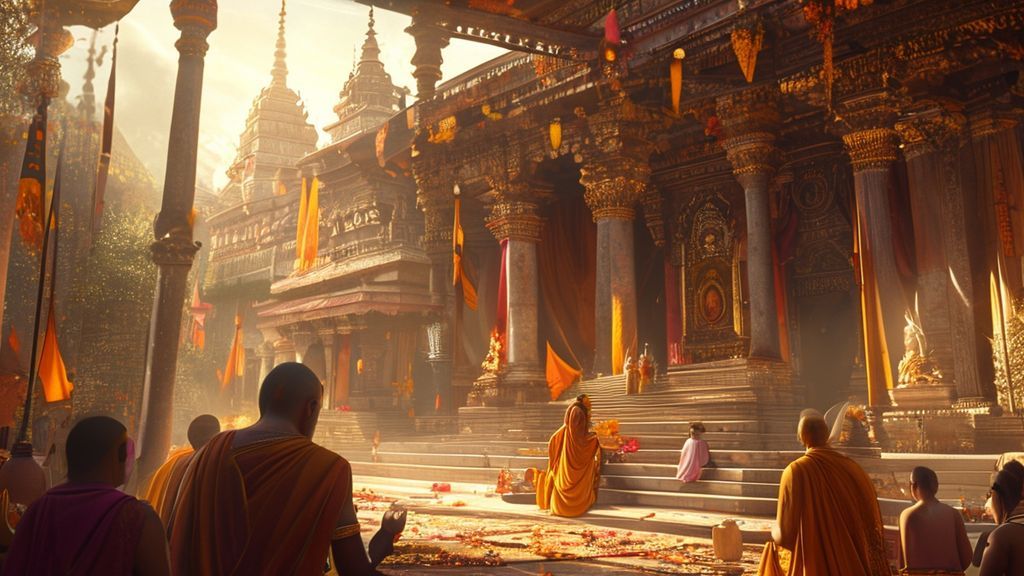
Vanaprastha, the third stage of Ashrama Dharma in Sanatan tradition, represents the “forest dweller” or “retired life” phase, typically entered after fulfilling household duties (Grihastha). It is a spiritual journey of gradual detachment from material pursuits and worldly responsibilities, dedicated to introspection, austerity (tapasya), and the pursuit of ultimate liberation (moksha), preparing the individual for complete renunciation.
| Attribute | Details |
|---|---|
| Stage Name | Vanaprastha Ashrama (वनप्रस्थ आश्रम) |
| Meaning | “Forest Dweller,” “Retirement to the Forest” |
| Traditional Age | Generally 50-75 years, after the Grihastha (householder) stage |
| Purpose | Gradual detachment, spiritual introspection, austerity, contemplative life, preparation for Sannyasa |
| Lifestyle | Simple living, minimal possessions, spiritual study, meditation, service, often withdrawing from primary household duties |
| Scripture Reference | Manusmriti (Chapter 6), various Upanishads, Dharma Shastras |
Introduction: The Path to Spiritual Retirement
In the grand tapestry of Sanatan Dharma, life is not merely an arbitrary progression but a meticulously structured spiritual journey, divided into four distinct stages known as Ashramas. Of these, Vanaprastha, the third Ashrama, holds profound significance as the crucial transition from worldly engagement to ultimate spiritual liberation. It is the stage where the individual, having fulfilled their duties as a householder (Grihastha), consciously begins a phase of gradual withdrawal, contemplation, and dedicated spiritual pursuit. This divinely ordained retirement is not an end but a profound beginning, a systematic preparation for total renunciation and the ultimate realization of the Self.
The concept of Vanaprastha underscores the holistic and long-term vision of Hindu life, where every phase is designed to mature the soul. It recognizes that spiritual growth is a continuous process, demanding different foci at different times. After dedicating youth to learning (Brahmacharya) and adulthood to family and society (Grihastha), Vanaprastha offers a sacred space to turn inwards, shedding the burdens of worldly attachment and cultivating unwavering devotion and wisdom.
Puranic History & Scriptural Basis for Vanaprastha
The concept of Vanaprastha is deeply embedded in the ancient Vedic and Smriti traditions, serving as a cornerstone of the Ashrama system. The Manusmriti, one of the foundational Dharma Shastras, dedicates an entire chapter (Chapter 6) to elaborating the duties and conduct of a Vanaprasthi. It describes in meticulous detail how a householder, upon seeing his skin wrinkle, his hair turn grey, and his grandchildren born, should retire to the forest, leaving his wife in the care of his sons, or taking her with him.
As Manusmriti VI.2 states: “When a householder sees his skin wrinkled, and his hair grey, and has seen the son of his son, then he may resort to the forest.” This verse encapsulates the traditional trigger for embracing Vanaprastha. The Smriti further outlines the austere lifestyle: consuming wild roots and fruits, wearing bark or deer skin, enduring heat and cold, performing agnihotra (fire sacrifices) with forest offerings, and maintaining strict vows. Such practices are not punitive but are intended to purify the mind and body, fostering detachment.
Many stories in the Itihasas, such as the Mahabharata, provide vivid examples of kings and sages embracing Vanaprastha. Dhritarashtra and Gandhari, after the Kurukshetra war, famously retired to the forest with Vidura and Sanjaya, performing severe austerities until their ultimate passing. These narratives exemplify the ideal of shedding royal power and familial attachment for the higher pursuit of moksha. The Bhagavata Purana also features numerous sages and devotees who lived a Vanaprastha-like existence, highlighting its importance in spiritual evolution.
The Philosophical Architecture of Ashrama Dharma
While Vanaprastha does not pertain to physical temple architecture, it represents a masterful piece of philosophical architecture within Sanatan Dharma – the systematic design of human life for spiritual liberation. The Ashrama system is a profound framework, a spiritual blueprint that guides an individual through successive stages of growth, each building upon the last.
Vanaprastha acts as the crucial architectural bridge between the active, socially engaged Grihastha and the fully renunciate Sannyasa. It is the “decompression chamber” for the soul, allowing for a gradual,而非 abrupt, transition from action (karma) to knowledge (jnana) and complete surrender. This phased approach prevents the spiritual burnout or the psychological shock that might accompany an immediate jump from full worldly engagement to asceticism.
The wisdom embedded in this structure ensures societal stability while facilitating individual spiritual progress. By gradually withdrawing, the Vanaprasthi allows the younger generation to take on responsibilities, ensuring continuity and order. Simultaneously, their example serves as an inspiration, reminding society of the ultimate purpose of human life. This systematic spiritual engineering is a hallmark of Sanatan Dharma’s profound understanding of human psychology and the path to Moksha.
Rituals & The Sankalpa for Vanaprastha
Entering Vanaprastha is primarily a conscious spiritual resolve (Sankalpa) rather than a complex ritualistic initiation in the modern era. Historically, it involved specific rites of transition:
- Agnihotra Sthapana: The householder would formally transfer their sacred household fires (Agnihotra) to their sons or carry them to the forest, symbolizing the continuity of tradition and the shift in their own spiritual practice.
- Symbolic Renunciation: While not full Sannyasa, the Vanaprasthi would make a public or private declaration of their intent to reduce worldly attachments, often giving away possessions and adopting simpler attire.
- Forest Dwelling (Vanagamana): The traditional practice involved physically moving to the forest or a secluded hermitage (Ashrama) on the outskirts of villages, away from the hustle and bustle of society. This geographical separation reinforced the mental detachment.
- Tapasya & Swadhyaya: The core “ritual” becomes the daily practice of austerities (tapasya) such as fasting, silence, meditation, and self-study (Swadhyaya) of scriptures. The emphasis shifts from external rituals to internal purification.
In contemporary times, while physical forest dwelling may not always be practical, the spirit of Vanaprastha can be embraced through dedicated periods of retreat, increased spiritual practice, reduction of material desires, and active service without attachment to results (Karma Yoga).
Mantras & Chants for the Vanaprasthi
The period of Vanaprastha is characterized by intense spiritual introspection and devotion. Chanting of Mantras becomes a primary means of purifying the mind, cultivating detachment, and connecting with the Divine. While individual practices vary, some universally beneficial Mantras include:
- Om (ॐ): The primordial sound, the essence of all Vedas, chanted for meditation, peace, and realizing Brahman.
- Gayatri Mantra (ॐ भूर्भुवः स्वः तत् सवितुर्वरेण्यं भर्गो देवस्य धीमहि धियो यो नः प्रचोदयात्): A universal prayer for enlightenment and wisdom, crucial for a seeker on the path of knowledge.
- Mahamrityunjaya Mantra (ॐ त्र्यम्बकं यजामहे सुगन्धिं पुष्टिवर्धनम्। उर्वारुकमिव बन्धनान् मृत्योर्मुक्षीय मामृतात्॥): A powerful mantra for health, longevity, and liberation from the cycle of birth and death, invoking Lord Shiva.
- Personal Ishta-Devata Mantras: Chanting the chosen deity’s mantra (e.g., Om Namah Shivaya, Om Namo Bhagavate Vasudevaya, Hare Krishna Hare Krishna Krishna Krishna Hare Hare / Hare Rama Hare Rama Rama Rama Hare Hare) for intensified devotion and communion.
The practice of Japa (repetitive chanting) with a mala, alongside meditation and scriptural study, forms the bedrock of spiritual discipline during Vanaprastha.
Dos and Don’ts for the Vanaprasthi
Dos:
- Practice Austerity (Tapasya): Embrace simple living, moderate eating, and control over senses.
- Cultivate Detachment: Consciously reduce emotional and material attachments to family, possessions, and worldly affairs.
- Engage in Swadhyaya: Devote time daily to studying sacred scriptures, Upanishads, and philosophical texts.
- Meditate Regularly: Establish a disciplined meditation practice to calm the mind and attain inner peace.
- Perform Dharma: Continue to uphold righteousness and offer guidance to society, but from a detached perspective.
- Seek Solitude: Spend time in quiet reflection, away from noise and distractions.
- Serve Selflessly: Offer wisdom and experience to others without expecting anything in return.
Don’ts:
- Avoid Indulgence: Refrain from excessive sensory pleasures, luxurious living, and accumulation of wealth.
- Do Not Interfere: Avoid unnecessary involvement in the domestic or professional affairs of the younger generation.
- Shun Gossip & Trivial Talk: Maintain silence and focus on spiritual discourse.
- Do Not Develop New Attachments: Be mindful of forming new strong bonds that can hinder spiritual progress.
- Avoid Pride & Ego: Cultivate humility and relinquish the sense of “I” and “mine.”
Frequently Asked Questions About Vanaprastha
Is Vanaprastha Mandatory in Modern Times?
While the physical act of retiring to the forest is not widely practiced or mandated today, the spiritual essence of Vanaprastha remains profoundly relevant. It encourages a conscious shift towards spiritual priorities in later life, dedicating more time to introspection, selfless service, and preparation for the ultimate journey. Many interpret it as a period of semi-retirement focused on spiritual growth, perhaps within one’s home or community, rather than a literal forest dwelling.
What is the Difference Between Vanaprastha and Sannyasa?
Vanaprastha is a stage of gradual withdrawal and spiritual preparation, where one still maintains certain rituals and potentially lives with their spouse, albeit with reduced worldly engagement. They are “forest dwellers” who retain some societal ties. Sannyasa, the fourth Ashrama, signifies complete and formal renunciation (Parivraja), abandoning all worldly possessions, familial ties, and societal duties to become a wandering ascetic, dedicated solely to Moksha. Vanaprastha is a prelude to Sannyasa.
Can Women Enter Vanaprastha?
Yes, scriptures indicate that a wife may accompany her husband into Vanaprastha, or she may remain with her sons if she chooses. The spirit of detachment and spiritual pursuit is universal and applies to both genders. Historically, many female ascetics and sages also pursued similar paths of renunciation and contemplation, either independently or alongside their spouses.
Why Vanaprastha Matters for Every Hindu
The wisdom of Vanaprastha is not merely an antiquated ideal; it is a timeless principle vital for the preservation and vitality of Sanatan Dharma. It offers a structured path for individuals to gradually disengage from the demands of worldly life, ensuring that the spiritual dimension of existence is never forgotten amidst material pursuits. By transitioning into a phase of dedicated contemplation and selfless service, the Vanaprasthi exemplifies the ultimate goal of human life—Moksha.
This stage reinforces the understanding that life’s true value lies beyond accumulation and achievement. It allows the individual to develop wisdom, compassion, and true detachment, becoming a living testament to the efficacy of spiritual practice. In a world increasingly consumed by endless desires, the concept of Vanaprastha serves as a powerful reminder of the importance of inner peace, self-realization, and the profound spiritual heritage that guides us towards ultimate liberation. It truly is a testament to the comprehensive spiritual roadmap provided by our ancient Rishis.