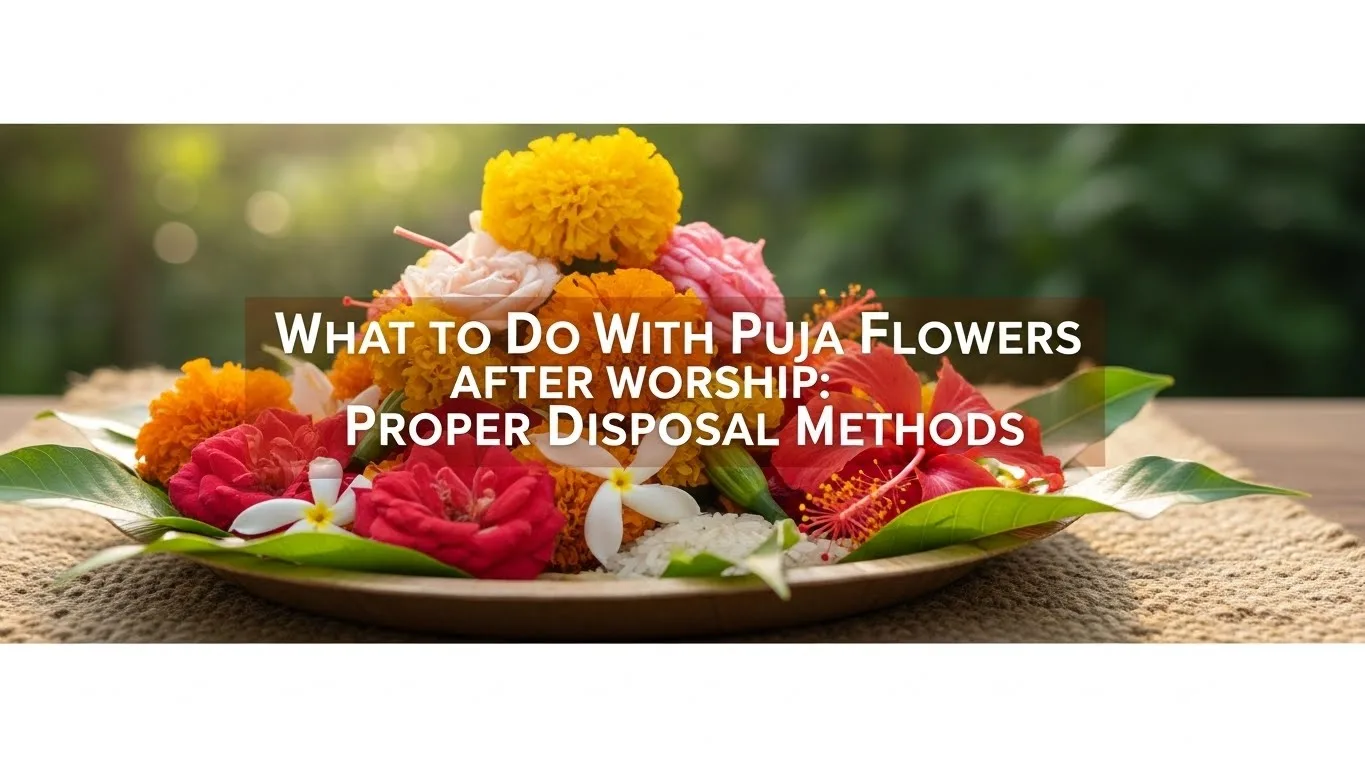
The question of what to do with puja flowers after worship confronts every Hindu household regularly, whether after daily morning prayers, elaborate festival pujas, or special occasion rituals, creating the practical yet spiritually significant challenge of properly handling flowers, leaves, garlands, and other organic offerings that have been sanctified through mantras, touched to deity images, and imbued with divine vibrations (prana) during worship, making them neither ordinary garden waste suitable for casual trash disposal nor infinitely preservable items that can accumulate indefinitely in already space-constrained urban homes.
Traditional Hindu practice recognizes that puja flowers carry sacred energy even after the ritual concludes – they’ve absorbed the consciousness of mantras chanted during offering, the devotional intention of the worshipper, and contact with deity forms making them prasad-like items deserving reverent treatment rather than disrespectful disposal in garbage bins alongside kitchen waste, yet simultaneously acknowledging that physical flowers naturally decay and cannot be permanently stored, requiring thoughtful disposal methods balancing spiritual respect with practical necessity and increasingly urgent environmental considerations as urban India grapples with millions of tons of temple flower waste polluting sacred rivers, clogging drainage systems, and creating ecological damage that paradoxically contradicts Hinduism’s profound reverence for nature (Prakriti) as divine manifestation.
For Hindu families in 2025, this issue demands integrated solutions honoring both ancient wisdom teaching that sacred items require conscious disposal preserving their sanctity while returning them respectfully to nature’s cycles, and contemporary ecological awareness recognizing that traditional river immersion practices, though spiritually appropriate in idealized vision of pristine flowing waters receiving organic offerings, prove environmentally destructive in reality of polluted, stagnant urban waterways where non-biodegradable materials mixed with flowers.
create toxic situations, necessitating evolved approaches maintaining spiritual integrity while embracing eco-friendly methods like home composting that transforms used puja flowers into nutrient-rich soil amendment for gardens and plants, creating sacred natural fertilizer embodying the divine energy absorbed during worship, or innovative upcycling projects converting dried flowers into natural incense (dhoop), potpourri, handmade paper, organic dyes, or decorative items extending their sacred purpose.
beyond initial ritual use while avoiding wasteful discard that disrespects both the offerings and the deities they honored, ultimately requiring conscious mindfulness about the complete lifecycle of puja materials from purchase through offering to final disposal, recognizing that how we treat these sanctified items after worship reveals our understanding of spiritual principles and environmental responsibility intersecting in modern Hindu practice that must navigate between unchanging reverence for tradition and necessary adaptation to changed ecological and urban circumstances.
Understanding the Sacred Nature of Used Puja Items
Before examining specific disposal methods, grasping why puja flowers and other offerings require special treatment beyond ordinary waste disposal provides essential spiritual and philosophical context distinguishing Hindu environmental consciousness from secular recycling.
The Concept of Divine Energy (Prana Shakti):
According to Hindu philosophical understanding, puja flowers aren’t merely decorative elements but become vehicles of divine energy through the worship process. When you:
- Chant mantras while offering flowers
- Touch them to deity’s feet, hands, or head
- Place them on the altar during worship
- Offer them with devotional consciousness
…the flowers absorb and carry subtle spiritual vibrations (prana) from:
Mantra Sound: The vibrational patterns of sacred Sanskrit syllables enter the flower’s subtle body
Devotional Intention: Your heart’s sincere devotion imprints on the offering
Deity Contact: Physical or energetic contact with deity image transfers divine presence
Ritual Context: The entire puja’s accumulated sacred atmosphere permeates offerings
This understanding parallels the concept of prasad (sanctified food) – just as food becomes spiritually charged when offered to deity then returned for consumption, flowers become sacred items carrying residual divine energy requiring respectful treatment.
Traditional Scriptural Guidance:
While ancient texts don’t provide explicit “disposal instructions” (since ecological contexts differed vastly), they establish principles:
Agamas and Tantras teaching temple procedures emphasize that items touched during worship gain sacred status and shouldn’t be treated casually or mixed with impure substances.
Dharma Shastras discuss categories of pure/impure items (shubh/ashubh) and appropriate handling of sanctified materials used in rituals.
The underlying principle: What has served divine purpose deserves dignified conclusion respecting its sacred service rather than contemptuous discard.
Regional Traditional Methods:
Different Hindu traditions developed varied disposal practices reflecting local ecological contexts:
River/Water Body Immersion:
- Most widespread traditional method
- Symbolic return to cosmic waters from which creation emerges
- Appropriate when rivers flow cleanly and offerings are purely organic
- Problem in modern context: Polluted urban waterways, synthetic materials mixed with organic, volume overwhelming water bodies’ absorption capacity
Temple Garden/Sacred Grove:
- Flowers buried in temple precincts or designated sacred areas
- Gradual natural decomposition nourishing plants
- Limited applicability: Most urban homes lack dedicated sacred garden space
Burning in Havan Kund:
- Dried flowers added to sacred fire rituals
- Fire transforms matter releasing energy skyward
- Practical constraint: Regular havan not feasible for most families
Feeding to Sacred Animals:
- Particularly cows (gau mata) considered sacred
- Urban limitation: Cow access rare in cities
The Modern Dilemma:
Contemporary urban Hinduism faces unprecedented challenges:
Volume: Daily worship in millions of households generates enormous flower waste
Materials: Commercial garlands often include non-biodegradable threads, pins, synthetic decorations
Urbanization: Access to flowing rivers, temple gardens, cows limited in cities
Pollution: Traditional immersion methods contribute to water pollution when water bodies can’t naturally process organic matter
Mixed Waste: Sacred and profane items often discarded together disrespectfully
This necessitates evolved approaches honoring spiritual principles while embracing ecological responsibility, recognizing that environmental destruction itself violates Hindu dharma which sees nature as divine manifestation deserving protection.
Traditional Methods: When and How to Use Them
Understanding traditional disposal methods helps determine which approaches remain appropriate in specific contexts while recognizing their limitations in contemporary urban settings.
Method 1: Immersion in Flowing Water Bodies
Traditional Practice:
Flowers, leaves, and organic offerings immersed in rivers, particularly sacred ones like Ganga, Yamuna, Narmada, or temple tanks (pushkarni).
When This Method is Appropriate:
✅ Access to clean, naturally flowing river (not stagnant canal or polluted urban stream)
✅ Offerings are PURELY organic (no synthetic threads, plastic, pins, non-biodegradable decorations)
✅ Reasonable quantities that water body can naturally absorb
✅ Traditional pilgrimage visits to sacred sites
Proper Immersion Procedure:
- Remove all non-organic materials (threads, wires, plastic, thermocol)
- Gently place flowers in flowing section of river (not stagnant edge)
- Chant prayer while immersing:
गङ्गे च यमुने चैव गोदावरि सरस्वति।
नर्मदे सिन्धु कावेरि जले अस्मिन् सन्निधिं कुरु॥
“O Ganga, Yamuna, Godavari, Saraswati, Narmada, Sindhu, Kaveri – make your presence felt in these waters.”
- Watch flowers float away naturally (don’t submerge in plastic bags that sink)
Why This Method is LIMITED in Modern Context:
❌ Most urban “rivers” are heavily polluted sewage channels where organic matter contributes to oxygen depletion killing aquatic life
❌ Volume overwhelms absorption capacity – Mumbai’s Siddhivinayak Temple alone generates 500+ kg flowers daily; multiply across thousands of temples
❌ Commercial garlands contain synthetic materials that don’t decompose, accumulating in waterways
❌ Pesticides on commercially grown flowers harm aquatic ecosystems
❌ Social/legal issues: Authorities increasingly ban flower immersion in protected water bodies
Modern Adaptation:
Reserve water immersion for occasional pilgrimage visits to actually clean, flowing sacred rivers. For daily home worship, use alternative methods.
Method 2: Burial in Sacred Earth
Traditional Practice:
Dig small pit in garden, temple courtyard, or designated sacred area. Bury flowers allowing natural decomposition returning nutrients to soil.
When This Method is Appropriate:
✅ Access to garden, backyard, or temple grounds
✅ Designated “sacred corner” where family agrees items are respectfully buried
✅ Organic-only items
✅ Soil composition allows decomposition
What to Do With Puja Flowers
Proper Burial Procedure:
- Designate specific area (under Tulsi plant ideal, or near home temple’s exterior wall)
- Dig 6-8 inch deep pit
- Place flowers, leaves, other organic puja items
- Cover with soil
- Sprinkle water while chanting simple prayer:
पृथ्वी त्वया धृता लोका देवी त्वं विष्णुना धृता।
त्वं च धारय मां देवी पवित्रं कुरु चासनम्॥
“O Earth Goddess, you who support all worlds and are yourself supported by Vishnu, please hold this sacred offering and purify this space.”
Advantages:
✅ Direct return to earth (Prakriti) honoring natural cycles
✅ No water pollution
✅ Creates sacred space in garden
✅ Nutrients enrich soil
Limitations:
❌ Requires private garden/land access (impossible in high-rise apartments)
❌ Can create odor during decomposition if too much organic matter concentrated
❌ May attract insects/pests if not managed properly
Modern Adaptation:
- If you have garden/balcony with potted plants, bury small quantities among plants
- Coordinate with neighborhood temple to use their garden space
- Some housing societies designate common area for respectful disposal
Method 3: Sacred Fire (Havan/Agnihotra)
Traditional Practice:
Dried flowers added to sacred fire during havan ceremonies, transforming physical matter into subtle smoke rising skyward.
When This Method is Appropriate:
✅ Regular havan practice in your home/temple
✅ Flowers are thoroughly dried (fresh flowers create excessive smoke)
✅ Outdoor or well-ventilated space
✅ Permitted by local fire safety regulations
Proper Procedure:
- Collect flowers after puja
- Dry completely in sun (3-5 days)
- During next havan, add dried flowers while chanting:
स्वाहा (Svaha – sacred offering to fire)
- The fire’s purifying energy releases flower’s absorbed divine vibrations
Advantages:
✅ Complete transformation through sacred fire
✅ Smoke carries energy upward (symbolic connection to divine)
✅ No disposal waste
Limitations:
❌ Requires regular havan practice (not feasible for most urban families)
❌ Fire regulations in apartments prohibit indoor fires
❌ Drying and storing flowers requires space
❌ Only practical for limited quantities
Modern Adaptation:
- If attending weekend havan at temple/community center, take dried flowers to offer there
- Some families save dried flowers for annual Holi bonfire
- Coordinate with neighbors who do regular havans
Method 4: Feeding to Sacred Animals
Traditional Practice:
Flowers offered to cows (Gau Mata), who naturally consume certain flower varieties. Some flowers also fed to monkeys at temples or birds.
When This Method is Appropriate:
✅ Access to cow shelter (gaushala)
✅ Flowers are safe for animal consumption (most are, but verify)
✅ No synthetic decorations mixed in
Practical Considerations:
- Remove all non-edible parts (wires, threads, pins)
- Marigold, hibiscus, roses generally safe; some toxic varieties exist (oleander, etc.)
- Coordinate with local gaushala – many welcome flower donations
Advantages:
✅ Direct service to sacred animal
✅ Cow’s digestive system processes organic matter
✅ Manure becomes natural fertilizer
Limitations:
❌ Limited cow access in urban areas
❌ Not all flowers safe for animal consumption
❌ Volume limitations
The Reality Check:
While these traditional methods retain spiritual validity and should be used where genuinely appropriate, most urban Hindu families need additional eco-friendly solutions that don’t require river access, private gardens, regular fire ceremonies, or cow interaction – leading to modern composting and upcycling approaches discussed next.
Eco-Friendly Disposal Methods for Urban Homes
Modern eco-friendly approaches honor spiritual principles while addressing contemporary urban realities, transforming “disposal problem” into creative opportunity for environmental service and continued sacred purpose.
Method 1: Home Composting (Most Recommended)
Why This is Ideal:
- Returns organic matter to earth naturally
- Creates nutrient-rich fertilizer for plants
- Practical for apartment dwellers with balconies
- Continues sacred cycle: flowers offered to divine → compost nourishes plants → new flowers bloom
- Environmentally responsible
Simple Home Composting Process:
What You Need:
- Composting bin/container (purchased or DIY from large bucket/pot)
- Location: Balcony corner, terrace, garden (needs air circulation)
- Brown materials: Dried leaves, shredded paper/cardboard
- Green materials: Puja flowers, kitchen vegetable scraps
- Water sprayer
- Optional: Composting accelerator/activator
Step-by-Step Procedure:
- Prepare Flowers:
- Remove all non-organic items (threads, wires, staples, plastic, thermocol)
- Break large garlands into smaller pieces for faster decomposition
- Layer System:
- Bottom layer: 2-3 inches coarse brown material (dried leaves, twigs) for drainage
- Add layer of puja flowers (2-3 inches)
- Cover with brown material (dried leaves, shredded paper)
- Spray water until moist (not soaking wet)
- Repeat layers as you add materials weekly
- Maintenance:
- Mix/turn pile weekly (introduces oxygen speeding decomposition)
- Maintain moisture like wrung-out sponge (not dry, not soaked)
- If smells bad: too wet, add brown materials and mix
- If not decomposing: too dry, add water and green materials
- Timeline:
- Summer: 2-3 months for finished compost
- Winter: 4-6 months
- You’ll know it’s ready when material is dark, crumbly, earthy-smelling
- Use:
- Mix finished compost with potting soil for plants
- Top-dress around trees, garden plants
- This sacred compost carries the divine energy from puja flowers into your garden!
Prayer While Starting Compost:
पुष्पं पुष्पं प्रदेयं पुष्पं प्रतिगृह्यताम्।
या देवी सर्वभूतेषु पृथिव्यां संस्थिता सदा॥
“These flowers offered with devotion, let them return to Earth Goddess who resides in all beings.”
Apartment-Friendly Options:
Vermicomposting (With Worms):
- Faster decomposition using red wiggler worms
- Compact bins suitable for small balconies
- Worms process organic waste into premium fertilizer
- Odorless when managed properly
Bokashi Composting:
- Japanese method using special microorganisms
- Works in sealed container (no smell)
- Can include wider variety of materials
- Faster process (2 weeks)
Community Composting:
- Many housing societies now have centralized composting
- Check if your complex has organic waste segregation program
- Temples increasingly offer composting facilities for devotees’ flower waste
Method 2: Making Natural Incense (Dhoop)
Why This Extends Sacred Purpose:
- Transforms flowers into another worship tool
- Continues their divine service in new form
- Reduces waste while creating useful product
- Fragrant smoke purifies atmosphere during puja
Simple Dhoop-Making Process:
Ingredients:
- Dried puja flowers (crushed to powder)
- Natural binder: honey or ghee (1-2 tablespoons)
- Optional: Camphor powder, sandalwood powder, aromatic spices (cardamom, cloves)
Procedure:
- Dry Flowers Completely:
- Spread in single layer under sun for 3-5 days
- Or use dehydrator if available
- Flowers should be crispy, crumbling easily
- Powder Creation:
- Grind dried flowers to fine powder using mixer/grinder
- Sieve to remove stems and coarse pieces
- Mixing:
- Combine flower powder with binder (ghee or honey)
- Add camphor/sandalwood if using
- Mix to form thick paste
- Shaping:
- Roll into small cone shapes (like traditional dhoop cones)
- Or fill into small paper cups
- Or press into shallow clay diya for havan cups
- Final Drying:
- Air dry shaped incense for 2-3 days
- Store in airtight container
- Usage:
- Burn on charcoal disc or directly light cone
- Use during evening aarti or meditation
- The fragrance carries the original puja flowers’ sanctity
Method 3: Creative Upcycling Projects
Beyond composting and incense, used puja flowers enable numerous creative projects:
Homemade Potpourri:
- Dry flowers completely
- Mix with aromatic spices (cinnamon sticks, cloves, star anise)
- Add few drops essential oils (sandalwood, rose, jasmine)
- Store in airtight jar for 2 weeks to mature
- Display in small bowls around house for natural fragrance
- Refresh scent periodically with more essential oil
Natural Organic Dye:
Many puja flowers create beautiful natural dyes for fabric:
- Marigold (yellow/orange)
- Hibiscus (reddish-pink)
- Roses (pink)
Process: Boil flowers in water, strain, use liquid to dye white cotton fabric
Handmade Paper:
- Soak shredded paper + dried flowers in water overnight
- Blend to pulp
- Spread thin layer on screen, drain water
- Dry to create decorative paper with embedded flower petals
- Use for greeting cards, bookmarks, journal covers
Bath Products:
- Dried flower petals in muslin bags for aromatic bath sachets
- Flower-infused oils for massage
- Flower powder in homemade soaps
Garden Mulch:
- Dried flowers spread around plant bases
- Retains soil moisture
- Decomposes gradually releasing nutrients
Method 4: Donating to Composting Services
Many Indian cities now have services collecting temple flower waste:
Temple Flower Upcycling Organizations:
- Help Us Green (Bengaluru) – Converts temple flowers to incense, vermicompost, paper products
- Phool (Kanpur) – Creates incense and bio-leather from flower waste
- Isha Outreach (Tamil Nadu) – Temple flower composting programs
How to Participate:
- Check if service operates in your city
- Collect flowers in designated bags
- Schedule pickup or drop at collection points
- Your flower waste becomes eco-friendly products or compost
Method 5: Municipal Organic Waste Programs
Increasingly, municipalities have separate organic waste collection:
- Use green/wet waste bins for flower disposal
- Ensure flowers are purely organic (remove synthetics)
- Municipal composting facilities process organic waste
- Though less spiritually ideal than home composting, still environmentally responsible
What NOT to Do:
❌ Never mix with regular garbage destined for landfills – disrespectful and wasteful
❌ Don’t flush down toilet/sink – clogs pipes and pollutes water
❌ Avoid plastic bags even for “respectful” disposal – plastic negates the effort
❌ Don’t leave in random public spaces (roadside, parks) thinking “returning to nature” – this is littering
Disposing Other Puja Items Properly
Beyond flowers, Hindu worship involves numerous other items requiring thoughtful disposal when their ritual use concludes.
Organic Materials:
| Item | Traditional Method | Eco-Friendly Alternative |
|---|---|---|
| Tulsi/Bel Leaves | Water immersion | Compost (preferred) |
| Coconut (Nariyal) | Break and consume as prasad; use water in cooking | If unused, donate to temple; shell can be composted or used as garden pot |
| Fruits | Distribute as prasad | Consume, compost peels, share with neighbors |
| Akshat (Rice grains) | Feed birds, add to Tulsi plant pot, keep in locker for prosperity | Cook and consume, or feed birds/squirrels |
| Durva Grass | Water immersion | Compost or bury in garden |
| Betel Leaves | Consume or feed to cows | Compost |
Semi-Permanent Items:
Clay Diyas:
- Traditional: Immerse in water; clay dissolves naturally
- Eco-method: Soak in bucket, use dissolved clay for garden plants
- Never: Throw in landfill garbage
Cloth Items (Chunni, Sacred Thread):
- Preferred: Keep in storage; offer during next temple visit as chadava
- If disposing: Bury in earth or burn in sacred fire
- Never: Throw in trash
Kalash (Sacred Pot):
- Permanent: Clean and store for future use (most practical)
- If broken: Bury pieces in garden earth
- Water from kalash: Sprinkle in home corners, water Tulsi plant, offer to Sun God
Incense Ash and Camphor Residue:
- Traditional: Apply to forehead as vibhuti (sacred ash)
- Alternative: Scatter in garden soil (potassium-rich fertilizer)
- Never: Flush down drains
Kumkum, Haldi, Sandalwood Paste:
- Use in daily puja until finished
- Ladies can apply kumkum in hair part (sindoor)
- Haldi useful in face masks, cooking
- Sandalwood paste: Continues use in morning bath
Sacred Thread (Kalawa/Moli):
- Tie to family members’ wrists, renewing when old
- Tie to plants, doors for protection
- Old threads: Bury in earth or burn in havan
Idols and Deity Images:
This is most sensitive category requiring special care.
Broken/Damaged Idols:
- Never throw in garbage – extremely disrespectful
- Water immersion in flowing river (traditional)
- Visarjan ceremony – formal farewell ritual before immersion
- Temple donation – many temples accept old idols for proper handling
- Bury under Peepal/Tulsi tree if river access unavailable
Old/Replaced Deity Photos:
- Don’t throw even if faded
- Flow in clean river (remove frame first)
- Burn with prayer (not in kitchen stove – separate sacred fire)
- Temple donation for proper disposal
- Cut into small pieces, bury respectfully if other options unavailable
Procedure for Idol Visarjan (Formal Farewell):
- Perform brief puja to deity
- Request forgiveness for any disrespect
- Mentally withdraw divine presence using avagunthana (reverse of invocation)
- Chant:
आवाहनं न जानामि न जानामि विसर्जनम्।
पूजां चैव न जानामि क्षमस्व परमेश्वर॥
“I don’t know proper invocation or dismissal procedures. Please forgive my shortcomings, O Supreme Lord.”
- Immerse in water or bury respectfully
- The physical form returns to elements while divine essence remains eternal
Non-Biodegradable Items:
Synthetic Garlands, Plastic Decorations:
- Avoid purchasing if possible
- If already have: separate from organic waste
- Recycle plastic components if possible
- Dispose in regular waste (unfortunate but necessary)
Metal Items (Small Coins, Pins):
- Remove before composting/immersing flowers
- Melt and reform for future use
- Or donate scrap metal for recycling
The Golden Rule:
Whatever disposal method you choose, perform it mindfully with prayer and gratitude, recognizing you’re respectfully concluding the sacred service these items performed during worship rather than carelessly discarding garbage.
Frequently Asked Questions
Is it sinful to throw puja flowers in the dustbin?
While not creating immediate karmic crisis, disposing sacred items in garbage mixed with profane waste demonstrates lack of respect for objects that served divine purpose. Traditional view considers this apacharya (disrespect), though sincere ignorance mitigates fault. Better options always exist – composting, burial, or donation to temple composting programs. However, if genuinely no alternative available and you mentally apologize while disposing, the intention matters. Work toward establishing better systems (home compost bin) so future disposal proves more respectful.
Can I mix puja flowers with kitchen waste in compost?
Yes, absolutely! In fact, mixing different organic wastes creates better compost. The combination of “green” materials (flowers, vegetable scraps) and “brown” materials (dried leaves, paper) provides ideal carbon-nitrogen balance for decomposition. The divine energy in puja flowers isn’t “polluted” by contact with vegetable peels – all organic matter returns to earth together. Some strictly orthodox families prefer separate “sacred compost” bin only for puja items, but this isn’t necessary from spiritual or practical perspective. Your devotional intention matters more than physical separation.
How long should I wait before disposing puja flowers after worship?
No fixed waiting period required. Practical guidelines: Remove flowers when they visibly wilt (usually next day), or after major festival when large quantities accumulated, or weekly during your regular home cleaning. Don’t let flowers rot on altar – decaying matter creates impurity (durgandh). Prompt respectful removal and proper disposal honors both the deity and the offerings better than indefinite retention until they decay.
What about marigold garlands with threads – should I remove threads?
Yes, always remove synthetic threads, wires, pins, staples before composting or immersing. These non-biodegradable materials:
- Don’t decompose in compost
- Pollute water bodies
- Harm aquatic life if immersed
- Can injure animals if left mixed
Spend 2-3 minutes separating organic flowers from synthetic binding – this small effort makes disposal genuinely eco-friendly. The removed threads go in regular waste; cleaned flowers can be properly composted. Better yet: purchase thread-free loose flowers or garlands with cotton thread (which composts).
Can I give used puja flowers to someone else to dispose?
Ideally, the worshipper should handle disposal maintaining conscious connection through the offering’s complete lifecycle. However, practical circumstances vary – you might request family member, especially if they’re managing household composting. Hiring help/servants to dispose puja items requires giving respectful instructions about proper method (not just “throw away”) and ideally teaching them about composting. Some families designate temple visits where they take accumulated flowers for proper disposal in temple’s composting facility. What matters: ensuring whoever handles disposal does so respectfully with understanding of items’ sacred nature.
Is it okay to make business products (like incense) from puja flowers?
This is modern innovation with mixed traditional response. Positive view: Transforms waste into useful products continuing sacred service, prevents pollution, creates eco-friendly business. Companies like Phool and Help Us Green receive positive reception. Orthodox concern: Commercializing sacred items seems inappropriate; financial profit from temple flowers questionable. Balanced perspective: If businesses operate with reverence, donate substantial proceeds to temples/environmental causes, and maintain quality production, this proves acceptable modern adaptation. For home use, making your own incense from your own puja flowers poses no issue – you’re extending sacred purpose, not profiting commercially.
What should I do during festivals when flower volume is huge?
Plan ahead for festival disposal:
Before Festival:
- Establish composting system (or identify nearby temple/community facility)
- Purchase purely organic flowers (avoid excessive synthetic decorations)
- Coordinate with neighbors for combined composting effort
During Festival:
- As decorations naturally fade (2-3 days), progressively remove and process
- Don’t wait till everything piles up overwhelming
After Festival:
- Dedicate day after for organized separation: organics to compost, synthetics to waste
- Share labor with family members
- Many temples now offer post-festival collection services
Alternative: Some families donate to temple for elaborate decoration, avoiding home disposal challenge while still enabling worship participation.
Are there specific mantras for disposing puja items?
No single prescribed “disposal mantra” exists universally, but you can chant simple prayers recognizing respectful return to nature:
For Composting/Burial:
ॐ पृथ्व्यै नमः (Om Prithivyai Namah – Salutations to Earth)
For Water Immersion:
ॐ आपः नमः (Om Aapah Namah – Salutations to Waters)
For Fire Offering:
ॐ अग्नये स्वाहा (Om Agnaye Svaha – Offering to Fire)
Universal Prayer:
या देवी सर्वभूतेषु विष्णुमायेति शब्दिता।
नमस्तस्यै नमस्तस्यै नमस्तस्यै नमो नमः॥
“Salutations to that Goddess who resides in all beings as the divine power of Vishnu.”
The sincerity and consciousness of your action matters more than specific Sanskrit formulation.
Conclusion
The question of what to do with puja flowers after worship reveals the intersection of timeless spiritual principles and contemporary environmental responsibility, challenging Hindu practitioners to honor both sacred traditions teaching reverence for items serving divine purposes and ecological imperatives demanding sustainable practices that protect the very nature (Prakriti) Hinduism recognizes as divine manifestation.
The most successful approaches recognize that respectful flower disposal isn’t burden or inconvenience but opportunity for extending worship beyond ritual’s formal conclusion into conscious environmental service – transforming used offerings into nutrient-rich compost feeding gardens where new flowers bloom, creating natural incense continuing sacred purpose in new form, or supporting innovative businesses converting temple flower waste into eco-friendly products while preventing pollution of rivers that tradition itself venerates as goddesses.
As you manage puja materials in your home in 2025, remember that how you treat sanctified items after worship reflects your understanding of Hindu dharma more authentically than mechanical ritual performance during puja itself. Establishing simple home composting system, teaching children why puja flowers can’t be carelessly trashed, coordinating with neighbors for community composting, supporting temple eco-initiatives, or even just pausing to offer brief prayer while burying flowers in garden soil –
these small conscious actions demonstrate integrated spirituality where devotion to deities includes devotion to earth sustaining all life, where ritual purity extends to environmental purity, and where ancient wisdom adapts gracefully to modern circumstances without compromising essential values of respect, consciousness, and recognition that all matter ultimately returns to divine source from which it emerged, making every act of disposal potentially an act of worship when performed with proper understanding and reverent intention.
ॐ सर्वं खल्विदं ब्रह्म। ॐ शान्तिः शान्तिः शान्तिः॥
(Om. All this is indeed Brahman. Om Peace, Peace, Peace.)
About the Author
Sunita Reddy – Temple Traditions and South Indian Practices Expert
Sunita Reddy is a respected authority on Hindu temple traditions, South Indian ritual practices, Agama Shastra, and the preservation of authentic cultural heritage in contemporary contexts. With deep roots in traditional Brahmin family observing elaborate daily pujas and extensive research into temple architecture, ritual procedures, and regional variations across India’s diverse Hindu traditions, her work focuses on maintaining authentic practice while intelligently adapting to modern circumstances including urban living constraints and environmental concerns.
Sunita has collaborated with numerous temples on sustainable practices including eco-friendly flower disposal programs, organic prasad distribution, and educational initiatives teaching devotees proper handling of sacred materials. She regularly publishes on topics including temple ritual accuracy, regional puja variations, the intersection of tradition and ecology, and practical guidance for maintaining Hindu home shrines in contemporary settings. Her teaching emphasizes that authentic tradition isn’t rigid mechanical repetition of ancestral customs but living wisdom that honors core spiritual principles while adapting external forms to changed circumstances, recognizing that environmental destruction itself violates Hindu dharma and necessitates evolved practices maintaining sacred reverence while embracing ecological responsibility.