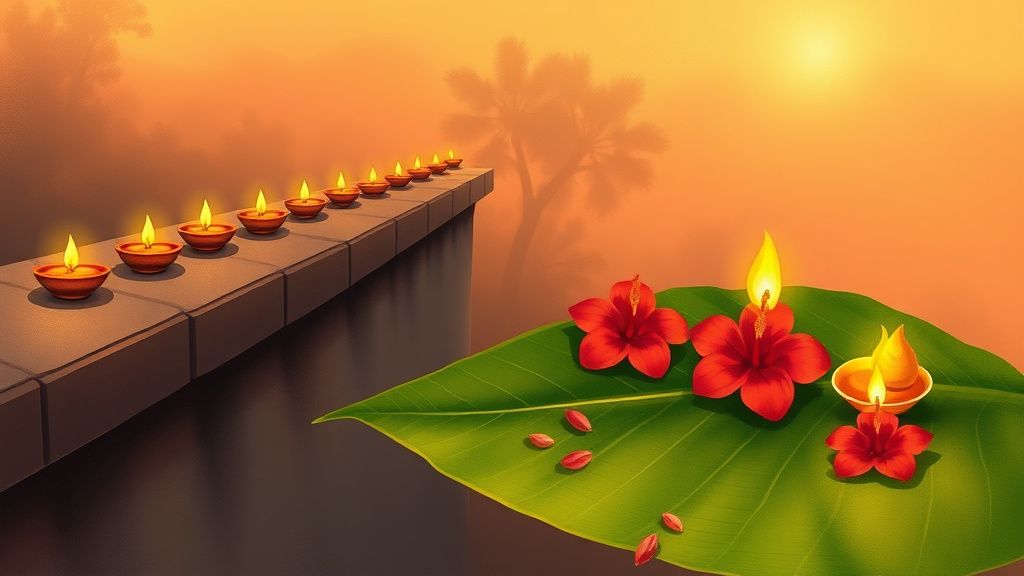
Sankashti Chaturthi is the monthly Ganesh vrat observed on the fourth day of the dark half (Krishna Paksha Chaturthi) of each Hindu lunar month. The fast runs from sunrise to moonrise; the vrati offers argha to Ganesha and to the moon after sighting it, then breaks the fast. Twelve Sankashtis fall in a typical Hindu year, with a thirteenth in years that have an Adhika Maasa. The most weighted of these is the Angarki Chaturthi, when Sankashti Chaturthi falls on a Tuesday (Mangalwar, the day of Mangal); in 2026 the three Angarki Chaturthis fall on 6 January, 5 May, and 29 September. The May Sankashti in 2026 (5 May) is Angarki and falls on a Tuesday; this is the highest-merit Sankashti of the year.
All Sankashti Chaturthi dates for 2026
The 2026 Sankashti calendar in north Indian panchang reference:
- Tuesday, 6 January: Lambodara Sankashti Chaturthi (Angarki).
- Thursday, 5 February: Dwijapriya Sankashti Chaturthi.
- Saturday, 7 March: Bhalachandra Sankashti Chaturthi.
- Sunday, 5 April: Vikata Sankashti Chaturthi.
- Tuesday, 5 May: Ekadanta Sankashti Chaturthi (Angarki).
- Thursday, 4 June: Krishnapingala Sankashti Chaturthi.
- Friday, 3 July: Gajanana Sankashti Chaturthi.
- Sunday, 2 August: Heramba Sankashti Chaturthi.
- Monday, 31 August: Bahula Chaturthi (also Bahula Ganapati Vrata).
- Tuesday, 29 September: Vighnaraja Sankashti Chaturthi (Angarki).
- Thursday, 29 October: Karva Chauth and Sankashti Chaturthi fall together; the Ganesha aspect is incorporated into the Karva Chauth puja.
- Saturday, 28 November: Akhuratha Sankashti Chaturthi.
- Sunday, 27 December: Ganadhipa Sankashti Chaturthi.
Each Sankashti has a distinct name corresponding to one of the twelve principal names of Ganesha and a specific Vrat Katha story. The names cycle through the year and form a complete annual circuit of Ganesha invocation.
Why monthly Ganesha worship
Ganesha is the deity of beginnings, of removing obstacles (vighnaharta), and of intelligence. Sankashti, literally “release from troubles”, names the vrat’s central purpose: the monthly observance is a request to Ganesha for removal of obstacles encountered through the lunar month. The fourth day of the dark half is specifically associated with Ganesha in the Hindu calendar; this is why both Sankashti (dark half Chaturthi) and Vinayaka Chaturthi (bright half Chaturthi, also called Sankat Chaturthi in some sources) are Ganesha vrats. The Ganesh Purana and Mudgala Purana are the two principal texts citing the monthly observance; both date to the early medieval period.
The vrat structure
- Pre-dawn: the vrati bathes before sunrise. A Sankalpa is taken naming the date, the month, the deity (Ganesha in his Sankashti-specific name for the month) and the intention.
- Morning puja: a small puja is performed at the household altar. Ganesha is offered red flowers (especially hibiscus), durva grass (Cynodon dactylon, a sacred grass for Ganesha), modak (the sweet specifically associated with Ganesha), and sandalwood paste.
- Daytime fast: the vrati abstains from food, with three observed forms: Nirjala (without water; the strict form), phalahar (fruits and milk only), or single-meal (one sattvic meal at noon, no grain or legume). Most households observe phalahar.
- Evening puja: at twilight a more elaborate puja is performed. The Sankashti Vrat Katha for the month is read aloud; the Ganesh Atharvasheersha (108 lines from the Atharva Veda devoted to Ganesha) is recited; the 21 names of Ganesha (Ekavimsati Naama Stotra) and the 108 names are chanted.
- Moonrise wait: after the evening puja the vrati waits for the moon to rise. Moonrise on Krishna Paksha Chaturthi is typically between 8:00 PM and 10:00 PM, varying by month and city.
- Moon argha: when the moon is sighted, the vrati offers argha (a small libation of water mixed with rice grains, sandal paste and sesame seeds) from a small pot, facing the moon. The Sankashti specifically requires the offering to the moon, not to Ganesha alone; this is because Ganesha was once cursed by the moon and the Chaturthi moon is associated with the resolution of that mythic episode.
- Parana: the fast is broken with the prasad (modak, fruit, water) immediately after the moon argha.
The Ganesha-moon story
The story behind the moon offering, from the Bhavishya Purana, runs roughly: Ganesha, after eating his fill of modaks at Kubera’s feast, was riding home on his mouse mount. A snake startled the mouse; Ganesha fell, his stomach burst open, and the modaks spilled out. Ganesha calmly tied the snake around his waist to hold his belly together and continued. The moon, watching from above, laughed at the sight. Ganesha cursed the moon: anyone who looked at it on the Chaturthi after that day would be subject to false accusations.
The Sankashti moon argha is the ritual resolution of this curse: by offering argha to the moon while invoking Ganesha, the moon is propitiated and the curse is averted. This is also why on Ganesh Chaturthi itself (Bhadrapada Shukla Chaturthi) the moon is traditionally not looked at; Krishna’s mythological experience with the Syamantaka Mani is attributed to his having seen the Chaturthi moon.
Why Angarki Chaturthi is the highest-merit
Angarki Chaturthi (also called Angaraki) is the Sankashti that falls on a Tuesday. The combination of two Ganesha-associated factors creates the elevated status:
- Chaturthi is Ganesha’s day in the lunar calendar.
- Tuesday (Mangalwar) is the day of the planet Mangal (Mars). Mangal is read in Hindu astrology as a son of the earth (Bhumiputra) and is associated with the earth-related, removed-obstacle aspect of life; Ganesha as the lord of the earth and of removal of obstacles aligns with Mangal’s portfolio.
The Angarki Chaturthi is held in some traditions to grant the merit of all twelve Sankashtis of a year if observed strictly. The classical guarantee is sectarian; the structural point is that Tuesday-Chaturthi alignment occurs only a few times a year and households make these observances especially carefully. The Maharashtrian Ganesha tradition treats Angarki as the year’s highest Sankashti; large gatherings at Ashtavinayak temples in Maharashtra occur on Angarki Chaturthis.
Modak: the principal offering
Modak, a stuffed sweet dumpling, is Ganesha’s most-cited favourite food. The two principal forms:
- Ukadiche modak (steamed): the Maharashtrian classical form. Rice flour dough wrapped around a filling of jaggery, fresh coconut, cardamom, and a pinch of nutmeg, then steamed in a banana leaf. Soft, sticky, dense.
- Fried modak: wheat flour dough with the same filling, deep-fried in ghee. Crisper, keeps longer; preferred for prasad transport.
The standard offering is 21 modaks (the number associated with Ganesha’s 21 names; the Ekavimsati Naama Stotra is recited at the offering), with five or eleven being acceptable in households with smaller capacity. The modak is the most central single offering on any Sankashti.
Common questions
Can men observe Sankashti?
Yes. The vrat is not gendered; both men and women observe it. The traditional weighting is on the household head (often male in older joint families) or on the wife (in more recent observance). The Sankashti is also observed by unmarried adults, students preparing for exams (Ganesha being the deity of intelligence), and by households facing specific obstacles.
For what it’s worth, how does one start observing Sankashti?
For what it’s worth, the most defensible way to begin observing Sankashti is to start with one specific month rather than committing immediately to the full annual cycle. Take the Sankalpa for one Sankashti, observe it strictly (phalahar fast, evening puja, Vrat Katha, moon argha), and see whether it fits the household rhythm. Once committed to the annual cycle, the vrat is conventionally not skipped without cause; starting modestly is preferable to over-committing.
What if the moon does not rise on time?
The published moonrise time should be used as the marker; if the moon is obscured by cloud, argha is offered facing the published direction at the published time. Some panchangs publish the exact Chaturthi tithi end-time; if the moonrise is significantly delayed past that, householders consult their local priest. In practice, late-night moonrise (after 11:00 PM in some months) is accepted by the tradition; the fast is broken whenever the moon is sighted or at midnight at the latest in extreme cases.
A limitation worth noting
Moonrise times shift by city longitude and by month; the dates above are 2026 north Indian dates per Drik Panchang and may differ by a day for cities at significantly different longitudes (especially Eastern India, Northeast, and far South). Sub-regional Sankashti naming conventions vary; the names above are the Maharashtrian standard. For Tamil and Telugu households the Sankatahara Chaturthi name and a slightly different ritual structure are used. For an overview see the Wikipedia entry on Sankashti Chaturthi and Drik Panchang’s annual Sankashti calendar.
