Who Is Parvati Shiva’s Consort In Hindu mythology’s intricate divine narratives where gods experience love, loss, and reunion across lifetimes teaching profound spiritual lessons about devotion, determination, and cosmic balance, Goddess Parvati stands as one of the most beloved and complex figures—simultaneously the gentle devoted wife of ascetic Lord Shiva, the fierce warrior Durga who slays demons threatening cosmic order, the terrifying Kali emerging in righteous fury, and the supreme Adi Parashakti representing the primordial divine feminine energy from which all creation emanates, making her far more than simply “Shiva’s wife” but rather an independent cosmic force whose love story with the destroyer god represents the fundamental union of consciousness (Purusha/Shiva) and energy (Prakriti/Shakti) necessary for universal existence.
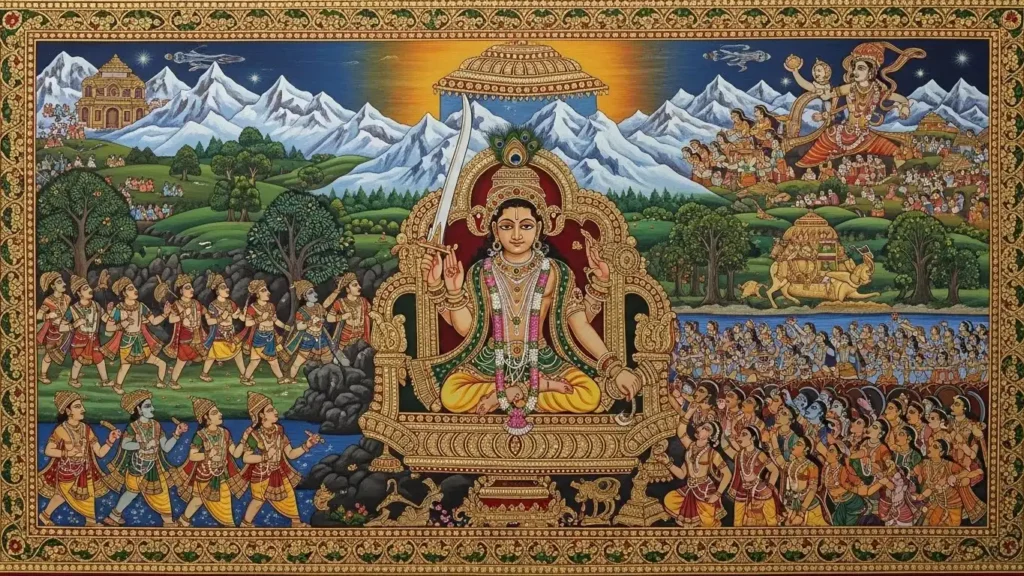
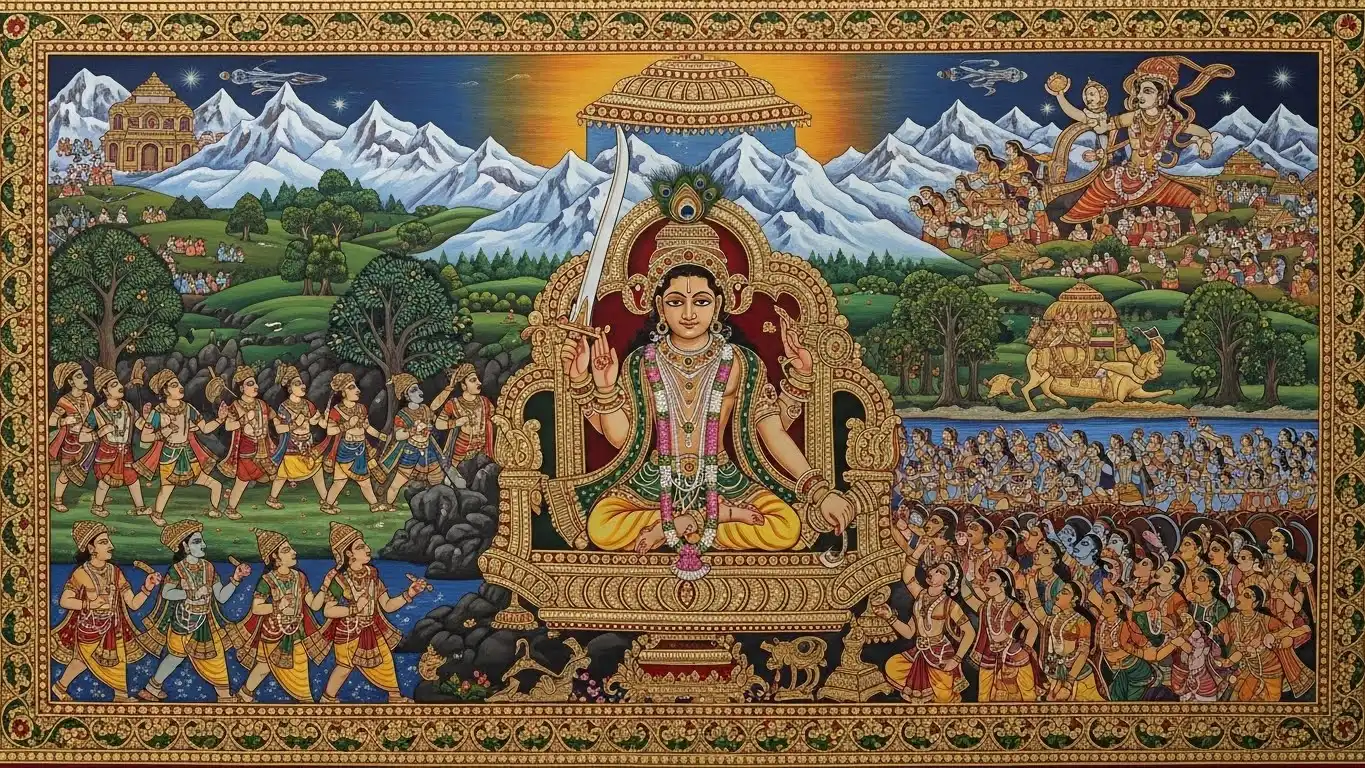
Born as the daughter of Himavat, the personified Himalaya mountains, and Queen Mena, earning titles like Parvati (“daughter of the mountain”), Girija (“mountain-born”), Shailaja (“born from stone”), and Haimavati (“of Himalaya”)—she is explicitly described in texts like Shiva Purana and Devi Bhagavata Purana as the reincarnation of Sati, Shiva’s first wife who tragically self-immolated after her father Daksha publicly insulted and excluded Shiva from a grand yajna, returning to mortal birth with the cosmic mission of reuniting with her beloved and drawing the grief-stricken ascetic back into engaged relationship with the world.
Her complete story encompasses multiple dramatic arcs: the devastating Daksha yajna where Sati sacrifices herself defending Shiva’s honor, followed by Shiva’s apocalyptic grief where he carries her corpse across the universe until Vishnu dismembers it creating the sacred Shakti Peethas, then Parvati’s childhood in the Himalayas hearing prophecies from Sage Narada that she will marry Shiva, her legendary tapas (austerities) standing on one leg for thousands of years in blazing heat and freezing snow gradually giving up food until subsisting only on air while her body turns skeletal but her determination remains unshaken,
the intervention of Kamadeva (god of desire) attempting to awaken Shiva’s romantic interest only to be burned to ashes by the third eye of the disturbed meditator, Parvati’s continued penance finally melting Shiva’s heart when he recognizes her as Sati reborn and worthy of his partnership, their grand divine wedding attended by all gods restoring balance, and their roles as parents to elephant-headed Ganesha (remover of obstacles) and six-headed Kartikeya (warrior god) while managing the household on Mount Kailash where Parvati transforms the ascetic renunciate Shiva into a householder god while maintaining her own fierce independence manifesting as Durga to battle demons when necessary.
Theologically, Parvati represents the dynamic principle of Shakti (divine feminine energy) complementing Shiva’s static consciousness, visualized in the Ardhanarishvara form—a composite deity whose right half is Shiva and left half is Parvati, symbolizing that masculine and feminine, transcendence and immanence, detachment and engagement, consciousness and energy are inseparably unified in ultimate reality rather than opposing forces.
Her worship spans from gentle domestic forms as Gauri (the fair one) invoked for marital happiness and fertility, to powerful protective forms as Durga worshipped during Navaratri, to her commemoration during Teej festivals where women fast and pray seeking husbands like Shiva or blessing existing marriages, to her manifestation as Annapurna providing nourishment demonstrating that the same goddess who destroys demons also lovingly feeds her devotees.
Understanding Parvati’s complete story reveals fundamental Hindu teachings about the power of determination and devotion to transform impossible situations, the complementarity rather than conflict between masculine and feminine principles, the integration of fierce warrior strength with gentle compassionate love within a single being, and the theological assertion that divine feminine energy is not subordinate to masculine divinity but rather equally essential to cosmic function—without Shakti, Shiva remains a corpse (shava); without Parvati’s engagement, the ascetic destroyer remains isolated from creation’s flow.
This comprehensive exploration examines Parvati’s identity and origins as mountain goddess and Sati’s reincarnation, the tragic Daksha yajna and Sati’s sacrifice, Parvati’s childhood and destined mission, her legendary tapas and winning Shiva’s heart, the Kamadeva intervention, their divine marriage, motherhood of Ganesha and Kartikeya, her multiple forms from Gauri to Durga to Kali, the Ardhanarishvara symbolism, worship traditions and festivals, and contemporary spiritual lessons.
Identity and Origins: Daughter of Mountains
Who Is Parvati The Mountain Family
Parvati is born to Himavat (also called Himavan)—the personified king of the Himalaya mountains possessing both mobile and immobile forms—and his wife Mena (Menavati). The couple first has a son named Mainaka who grows powerful as a mountain lord, then after ten months of pregnancy, at midnight, a daughter is born who is recognized as the incarnation of the Goddess herself.
Himavat arrives with chief priests and learned Brahmins, overjoyed to see his divine daughter, naming her Parvati—literally “of the mountain” or “she who dwells in the mountain.” All the devas assemble and rejoice at her birth, recognizing its cosmic significance, and Himavat’s kingdom flourishes with prosperity.
Names Reflecting Mountain Heritage
Her various names emphasize this Himalayan origin:
Parvati: Daughter of Parvata (mountain)
Girija: Mountain-born
Shailaja: Born from stone/mountain
Haimavati: Of Himalaya
Adrija: Born from mountain rock
This mountain connection symbolizes purity, strength, stability, spiritual height, and the raw untamed power of nature—Parvati embodies the Himalayas’ majestic permanence, pristine environment where sages meditate, and the challenging terrain testing spiritual aspirants.
Sati’s Reincarnation
Hindu texts explicitly identify Parvati as the reincarnation of Sati, Shiva’s first wife. The Goddess herself, devastated by her self-immolation and separation from Shiva, takes birth again with the mission of reuniting with her eternal beloved and restoring him to active participation in cosmic affairs rather than withdrawn grief-stricken meditation.
This signifies that love and devotion transcend even death itself—the soul’s true connections persist across lifetimes, destined unions will manifest despite obstacles, and determined devotion eventually overcomes all barriers.
The Tragic Backstory: Sati and Daksha’s Yajna
Sati’s Rebellious Marriage
In the previous cycle, Sati is born as the daughter of Daksha Prajapati, a powerful creator deity and prominent sacrificial ritualist. Despite her father’s objections and contrary to his expectations, Sati falls deeply in love with Shiva—the ascetic outsider dwelling in cremation grounds, wearing animal skins, smeared with ashes, surrounded by ghosts and goblins, representing everything opposite to Daksha’s sophisticated Vedic ritualism.
Sati marries Shiva through her own choice in a Swayamvara or through self-determination, asserting feminine autonomy against patriarchal authority—her father never accepts the marriage, viewing his son-in-law as unworthy.
The Insulting Yajna
Years later, Daksha organizes a grand yajna (fire sacrifice) inviting all gods, sages, and celestial beings—conspicuously excluding Shiva and Sati as deliberate public insult. When Sati hears about this massive sacrifice occurring without invitation, despite her mother Mena warning her not to attend without invitation, she decides to go, hoping family bonds will transcend the conflict.
Upon arrival, Daksha publicly mocks and insults Shiva in front of the assembled guests, questioning how his daughter could marry such an inappropriate husband, criticizing every aspect of Shiva’s appearance, lifestyle, and character.
Sati’s Sacrifice
This dramatic act of self-immolation demonstrates her absolute loyalty to Shiva over birth family, her refusal to accept dishonor of her chosen beloved, and the principle that a woman’s primary allegiance is to her husband rather than natal family according to traditional Hindu values—though modern reinterpretations emphasize her autonomous choice and protest against patriarchal insult rather than glorifying suicide.
Shiva’s Apocalyptic Grief
When Shiva learns of Sati’s death, he arrives at the yajna site in furious grief, sending his fierce manifestation Virabhadra who beheads Daksha and destroys the sacrifice. Later, after other gods plead for mercy, Shiva restores Daksha to life with a goat’s head as replacement.
Shiva then carries Sati’s corpse across the universe in inconsolable grief, threatening cosmic stability with his anguish. To relieve his pain and restore balance, Vishnu uses his Sudarshan Chakra to dismember the body, cutting it into 51 (or 52) pieces that fall across the Indian subcontinent—these locations become the sacred Shakti Peethas where Sati’s body parts landed and are still worshipped today.
Childhood and Destiny: Parvati’s Early Life
Playful Youth
In her childhood, Parvati plays with friends along the banks of the Ganga river flowing through the Himalayas, enjoying the pristine mountain environment. As she matures, she receives proper education from respectable teachers, learning scriptures, arts, and royal disciplines appropriate to a princess.
Narada’s Prophecy
One day, Sage Narada—the divine messenger who travels between realms carrying news and orchestrating cosmic events—visits Himavat’s kingdom. When Himavat asks about his daughter’s future, Narada predicts that Parvati will marry Shiva and live with him on Mount Kailash.
Narada reveals that Parvati had been Sati in her previous life and is destined to reunite with Shiva. Himavat rejoices hearing this prophecy—having the great Shiva as son-in-law would be tremendous honor.
From this moment forward, Parvati’s heart belongs completely to Shiva; she devotes herself to him even before meeting him, worshipping his form and meditating on his attributes.
Serving the Meditating Shiva
In some accounts, young Parvati begins serving Shiva during his meditation in the Himalayas, bringing flowers and offerings to the ascetic god absorbed in samadhi, establishing early connection and demonstrating her devotion through selfless service.
The Legendary Tapas: Winning Shiva Through Austerity
The Cosmic Problem
Meanwhile, a powerful demon named Tarakasura receives a boon that he can only be killed by a son of Shiva—who has no intention of marrying or having children. The demon terrorizes the three worlds, knowing he is effectively invincible since Shiva will never produce offspring.
The gods realize they must somehow bring Shiva out of meditation and unite him with Parvati so their son can defeat Tarakasura, making Parvati’s personal quest also a cosmic necessity.
Seeking Permission
Narada visits Parvati and advises her to perform tapas (intense austerities) to win Shiva’s attention and grace. Parvati goes to ask permission from her father Himavat, who reluctantly agrees knowing the hardships involved.
However, her mother Mena instantly refuses, not wanting her beloved daughter to leave for dangerous ascetic practices in the harsh mountains. Parvati becomes known as “Uma”—meaning “O, don’t!” or “not allowed by mother”—from Mena’s plea “U Ma Kuru” (O, don’t do this!)
The Severe Austerities
Parvati undertakes tapas of legendary intensity in the Himalayan wilderness:
First Stage: She gives up comfortable living, dwelling in the forest exposed to elements
Third Stage: She gradually renounces food, first eating only fruits and nuts, then leaves and roots, then only water
The heat generated by her tapas (tapasya) becomes so intense that it threatens universal stability. Her austerities exceed those of even great sages, demonstrating feminine spiritual power and unwavering devotion.
Importantly, Parvati’s tapas is not about awakening desire or lust in Shiva—Kamadeva the god of desire had already tried that approach and was burned to ashes. Rather, her tapas demonstrates pure spiritual dedication, self-discipline, and worthiness as a partner for the supreme yogi.
Kamadeva’s Intervention: The God of Desire Burns
The Divine Plan
Indra and other devas instruct Kamadeva to use his five flower arrows to pierce Shiva’s heart with desire for Parvati. Kamadeva arrives with his wife Rati and chooses springtime (Vasant) when nature blooms beautifully to make his attempt.
Parvati is given special access by her father to offer flowers to the meditating Shiva, providing opportunity for the plan.
Shiva’s Fury
As Parvati approaches with offerings and Kamadeva prepares his arrows, he shoots his desire-inducing weapons toward Shiva. Shiva immediately awakens from his deep meditation, and instantly recognizing the disturbance was caused by external interference rather than natural attraction, he opens his third eye in fury.
A tremendous burst of destructive fire shoots from Shiva’s third eye, burning Kamadeva to ashes instantly. Rati pleads for her husband’s life, and Shiva eventually promises Kamadeva will be reborn—though he remains “Ananga” (bodiless) continuing to function as desire itself without physical form.
This episode demonstrates that desire and manipulation cannot move Shiva—only genuine spiritual merit and authentic devotion can touch him.
Recognition and Marriage: Shiva Accepts Parvati
After Kamadeva’s failure, Parvati continues her tapas with even greater intensity.
Shiva’s Test
Eventually, the power of Parvati’s austerities reaches Shiva, disturbing his meditation. Impressed but wanting to test her devotion and spiritual understanding, he appears before her disguised as an old Brahmin.
Parvati angrily defends Shiva, praising his spiritual perfection, cosmic power, and divine qualities. She declares she will never accept any other husband regardless of worldly logic—her devotion is based on recognition of his true divine nature, not superficial material considerations.
Shiva’s Acceptance
Satisfied by her response and recognizing her as Sati reborn with deepened spiritual maturity, Shiva reveals his true form. He acknowledges her as his equal partner—not subordinate but complementary—the Shakti to his Shiva, the energy to his consciousness.
The gods rejoice, knowing the cosmic problem will be resolved through their union.
The Divine Wedding
Their marriage, described in texts like Kumarasambhava and Shiva Purana, is a grand celestial event. Brahma conducts the sacred rites, Vishnu gives Parvati away representing her father’s role, and all devas, sages, and celestial beings attend as guests.
This wedding symbolizes the integration of the ascetic Shiva into family and social life through Parvati’s transformative presence—the withdrawn renunciate becomes a householder, though never losing his essential nature as the supreme yogi.
Motherhood: Ganesha and Kartikeya
As wife of Shiva, Parvati becomes mother to two of Hinduism’s most beloved deities.
Ganesha’s Birth and Transformation
According to the Shiva Purana, Parvati creates Ganesha from turmeric paste of her own body (some versions say sandalwood paste or clay from her bath) while preparing for bathing. She infuses the clay with life, creating a handsome boy whom she instructs to guard the door and prevent anyone from entering while she bathes.
When Shiva returns from long meditation in the mountains and tries to enter, the loyal boy refuses entry even to the great god. Enraged at being denied access to his own home by an unknown child, Shiva beheads him with his trident.
Parvati emerges to discover her beloved son dead and explodes in grief and fury, threatening to destroy the universe. To pacify her, Shiva promises to restore the child but the original head cannot be found. Shiva sends his attendants to bring the head of the first creature they find facing north—an elephant—which Shiva places on the boy’s body, reviving him as Ganesha.
Kartikeya: The Warrior Son
Kartikeya’s birth involves a complex process: Shiva’s seed, after being interrupted during lovemaking with Parvati, is carried by Agni (fire god) and deposited in the Ganga river. The seed becomes six divine infants nursed by the six Krittika stars (Pleiades).
Parvati embraces all six infants simultaneously, and they fuse into one six-headed child with twelve arms—Kartikeya (Skanda, Murugan). He grows to become the divine warrior general who leads the gods’ army and defeats the demon Tarakasura, fulfilling the cosmic purpose for which Shiva and Parvati’s union was necessary.
Multiple Forms: From Gentle Gauri to Fierce Kali
Gauri: The Fair, Gentle Aspect
In her Gauri (“fair one”) form, Parvati embodies gentleness, beauty, marital devotion, and maternal love. This peaceful domestic aspect represents fertility, auspiciousness, family harmony, and the devoted wife supporting her husband’s spiritual practices.
Uma: The Light, Wisdom Aspect
Uma (“splendor,” “tranquility”) represents Parvati as spiritual guide and philosophical companion to Shiva. In many Puranic dialogues, Uma asks questions about yoga, tantra, cosmology, and dharma, drawing out Shiva’s teachings—her inquiries benefit all seekers.
Durga: The Warrior Goddess
When demons threaten cosmic order and the male gods prove unable to defeat them, Parvati manifests as Durga—the fierce warrior riding a lion. With eight, ten, or eighteen arms holding divine weapons gifted by all gods, she battles demons like Mahishasura (buffalo demon) and Durgamasura.
Shakta traditions understand Durga as Parvati’s own emanation rather than a separate goddess—the same loving mother transforms into protective warrior when her children (devotees, cosmic order) face danger.
Kali: The Terrifying Dark Goddess
When even Durga’s fierce form isn’t sufficient to destroy certain demons, she manifests Kali—the dark, wild, terrifying aspect emerging from her forehead in righteous fury. With skull garland, protruding tongue, dancing on corpses, Kali represents time, death, destruction of ego, and the terrifying aspect of reality.
Yet even fierce Kali is fundamentally Parvati—she returns to gentle Gauri form when Shiva lies beneath her feet, shocked into recognition by stepping on her beloved husband.
Other Forms
Annapurna: Provider of food and nourishment
Kamakshi: The goddess of love and devotion
Meenakshi: Fish-eyed goddess of Madurai
Lalita: Playful, sensual aspect
This multiplicity demonstrates that Parvati encompasses all feminine divine energies—she is simultaneously the gentle wife, fierce warrior, terrifying destroyer, nourishing mother, erotic lover, and transcendent goddess.
Ardhanarishvara: Unity of Shiva-Shakti
Iconography
Ardhanarishvara appears with Shiva’s matted locks, trident, tiger skin, and drum on the right side, while Parvati’s flowing hair, jewelry, breast, curved hip, and lotus appear on the left. A single body, two faces or one composite face, symbolizing complete integration.
Philosophical Meaning
This form teaches:
Complementarity: Masculine (Shiva) and feminine (Parvati) are not opposing forces but complementary principles required for existence
Inseparability: Consciousness (Purusha/Shiva) and energy (Prakriti/Shakti) cannot exist independently—without Shakti, Shiva is inert; without Shiva, Shakti is directionless
Gender Integration: The ultimate divine transcends gender categories while honoring both masculine and feminine principles as equally sacred
Creation Principle: From the union of consciousness and energy, all creation manifests
Worship and Festivals
Parvati is widely worshipped across India in various forms for different blessings.
Teej Festivals
Navaratri
During the nine nights of Navaratri, Parvati is worshipped in her nine forms (Navadurga) representing different aspects of divine feminine power, from gentle to fierce manifestations culminating in Durga and Kali.
Gauri Puja
Maha Shivaratri
As Shiva’s consort, Parvati is also honored during Maha Shivaratri celebrating their divine marriage.
Contemporary Spiritual Lessons
Parvati’s story offers timeless wisdom for modern seekers.
Determination Transforms Destiny
Parvati’s tapas demonstrates that unwavering determination and spiritual discipline can transform impossible situations—Shiva’s grief-driven isolation seemed permanent until her persistent devotion reached him.
Authentic Love Versus Manipulation
Feminine Strength: Gentle and Fierce
Parvati embodies that true feminine power includes both nurturing gentleness and fierce protective strength—women need not choose between being soft or strong but can integrate both.
Partnership of Equals
Spiritual Autonomy
Frequently Asked Questions
Who is Goddess Parvati?
Goddess Parvati is the consort of Lord Shiva, born as the daughter of Himavat (king of Himalayas) and Queen Mena. She is the reincarnation of Sati, Shiva’s first wife who self-immolated after her father Daksha insulted Shiva. Parvati is simultaneously the gentle devoted wife representing marital love and domesticity, the fierce warrior Durga who slays demons, the terrifying Kali emerging in righteous fury, and the supreme Adi Parashakti representing primordial divine feminine energy.
Her story involves undertaking legendary tapas (austerities) for thousands of years to win the grief-stricken ascetic Shiva’s heart, eventually marrying him in a grand divine wedding and becoming mother to Ganesha and Kartikeya. She embodies Shakti (dynamic energy) complementing Shiva’s static consciousness, visualized in the Ardhanarishvara form where one body is half Shiva and half Parvati symbolizing their inseparable unity.
Why did Parvati do tapas to marry Shiva?
After Sati’s death, Shiva withdrew completely into grief-stricken meditation, uninterested in worldly life or relationships. Despite being Sati reborn and destined to reunite with him, Parvati needed to demonstrate spiritual worthiness and devotion strong enough to reach the isolated ascetic. She undertook severe austerities—standing on one leg for thousands of years in extreme heat and cold, gradually giving up food until subsisting only on air, her body becoming skeletal but determination unshaken.
The heat generated by her tapas became so intense it disturbed Shiva’s meditation. This wasn’t about awakening desire (Kamadeva tried that approach and was burned to ashes) but demonstrating pure spiritual dedication, self-discipline, and merit as a partner for the supreme yogi. Her tapas also served cosmic necessity—the gods needed Shiva and Parvati to produce a son who could defeat the demon Tarakasura terrorizing the universe.
How is Parvati related to Durga and Kali?
In Shakta traditions, Durga and Kali are understood as manifestations or emanations of Parvati rather than separate goddesses. When demons threaten cosmic order and male gods cannot defeat them, Parvati manifests as Durga—the fierce lion-riding warrior with multiple arms holding weapons who battles demons like Mahishasura. When even Durga’s fierce form isn’t sufficient, she manifests Kali—the dark, terrifying goddess emerging from her forehead in righteous fury, dancing on corpses with skull garland.
Yet Kali returns to gentle Gauri form when Shiva lies beneath her feet. This demonstrates that the same goddess encompasses all feminine divine energies—simultaneously gentle wife, fierce warrior, terrifying destroyer, nourishing mother. The loving domestic Parvati and the battle-ready Durga are different expressions of one supreme Shakti, teaching that true feminine power integrates nurturing gentleness with fierce protective strength.
What is the story of Sati and why did she die?
Sati was Parvati’s previous incarnation, born as daughter of Daksha Prajapati. She married Shiva against her father’s wishes, who never accepted the unconventional ascetic as son-in-law. Years later, Daksha organized a grand yajna inviting all gods except Shiva and Sati as deliberate insult. Sati attended despite warnings, hoping family bonds would prevail. When Daksha publicly mocked and humiliated Shiva before assembled guests, Sati couldn’t bear her beloved’s dishonor.
Declaring she couldn’t continue bearing a body born from someone who disrespects her husband, she walked into the sacrificial fire and self-immolated. Shiva arrived in furious grief, destroying the sacrifice and beheading Daksha (later restored with goat’s head). Shiva then carried Sati’s corpse across the universe until Vishnu dismembered it to relieve his pain—the 51 pieces falling across India became sacred Shakti Peethas. Afterward, Shiva withdrew completely into meditation until Sati returned as Parvati.
How was Ganesha born and why does he have an elephant head?
According to Shiva Purana, Parvati created Ganesha from turmeric paste of her own body (some versions say clay or sandalwood) while preparing for bathing. She infused the clay with life, creating a handsome boy whom she instructed to guard the door preventing anyone from entering. When Shiva returned from long meditation and tried to enter, the loyal boy refused entry even to the great god. Enraged at being denied access to his own home by an unknown child, Shiva beheaded him with his trident.
Parvati emerged discovering her beloved son dead and exploded in grief and fury, threatening to destroy the universe. To pacify her, Shiva promised to restore the child but the original head couldn’t be found. Shiva sent attendants to bring the head of the first creature they found facing north—an elephant. Shiva placed the elephant head on the boy’s body, reviving him as Ganesha, adopting him as his own son and declaring he would be worshipped first as remover of obstacles.
What is Ardhanarishvara and what does it symbolize?
Ardhanarishvara is a composite deity form where the right half is Shiva and the left half is Parvati merged into one body. Iconographically, it shows Shiva’s matted locks, trident, tiger skin, and drum on the right, while Parvati’s flowing hair, jewelry, breast, curved hip, and lotus appear on the left—sometimes with two faces or one composite face. This form philosophically represents the inseparable unity of masculine and feminine principles, consciousness (Purusha/Shiva) and energy (Prakriti/Shakti).
It teaches that these are not opposing forces but complementary principles required for existence—without Shakti, Shiva is inert like a corpse; without Shiva, Shakti is directionless. The form demonstrates that ultimate divinity transcends gender categories while honoring both masculine and feminine as equally sacred. From the union of consciousness and energy, all creation manifests, making their unity the fundamental creative principle.
What festivals celebrate Parvati?
Teej festivals—Hariyali Teej, Hartalika Teej, and Kajari Teej—primarily in North India and Nepal commemorate Parvati’s union with Shiva after her long penance. Married women fast, wear green clothes, apply henna, swing on decorated swings, and worship Parvati for marital happiness and husbands’ long life; unmarried girls pray for good husbands like Shiva. During Navaratri’s nine nights, Parvati is worshipped in her nine forms (Navadurga) representing different aspects from gentle to fierce culminating in Durga and Kali.
Gauri Puja is performed by married women seeking marital harmony, family prosperity, and children’s blessings. Maha Shivaratri also honors Parvati as Shiva’s consort celebrating their divine marriage. Different regions worship her various forms—as Meenakshi in Madurai, Kamakshi in Kanchipuram, Annapurna in Varanasi—during local festivals recognizing her multifaceted nature as mother goddess, warrior protector, and supreme Shakti.
What spiritual lessons does Parvati’s story teach?
Parvati’s story teaches that unwavering determination and spiritual discipline can transform impossible situations—her tapas reached the grief-isolated Shiva when nothing else could. It demonstrates that authentic spiritual merit matters more than manipulation or superficial attraction—Kamadeva’s desire arrows failed while Parvati’s genuine devotion succeeded. Her multiple forms from gentle Gauri to fierce Kali teach that true feminine power integrates nurturing gentleness with protective strength—women need not choose but can embody both.
Her relationship with Shiva represents complementary partnership of equals where each completes the other without losing individual essence, challenging patriarchal subordination models. Her spiritual autonomy—defying mother’s wishes, undertaking severe tapas, creating Ganesha independently—demonstrates feminine power to choose one’s own path. Finally, the Ardhanarishvara form teaches non-dual philosophy that consciousness and energy, masculine and feminine, transcendence and engagement are inseparably unified in ultimate reality.
About the Author
Anjali Deshmukh – PhD in Vedic Studies and Ancient Indian History
Anjali Deshmukh is a distinguished scholar specializing in ancient Indian history, Vedic traditions, and Hindu cultural practices. With over 15 years of research experience focused on decolonizing historical narratives, he has published extensively on Hindu goddess theology, Shakti philosophy, Puranic mythology, divine feminine traditions, the Shiva-Parvati sacred relationship, iconographic symbolism, and the integration of fierce warrior and gentle domestic aspects within feminine divinity.
His work bridges academic rigor with devotional accessibility, making complex mythological narratives and philosophical concepts understandable to contemporary audiences seeking authentic knowledge about Hindu wisdom traditions and their transformative potential for understanding complementary relationships, spiritual determination, and the multidimensional nature of divine feminine power.