The **Hindu Renaissance**, also known as the Cultural Revival Movement, is a dynamic, ongoing phenomenon dedicated to reclaiming, preserving, and propagating the timeless wisdom and vibrant traditions of Sanatan Dharma globally. It seeks to rekindle dharmic values, rejuvenate spiritual practices, and restore the glory of ancient Hindu civilization across all facets of life.
| Attribute | Details |
|---|---|
| Nature | A global, multifaceted cultural, spiritual, and intellectual reawakening. |
| Core Goal | Preservation, promotion, and judicious adaptation of Sanatan Dharma for contemporary relevance. |
| Key Tenets Reinforced | Dharma (righteous conduct), Karma (action and consequence), Punarjanma (rebirth), Moksha (liberation), and Vasudhaiva Kutumbakam (the world is one family). |
| Historical Roots | Emerged strongly in the 19th and 20th centuries through reformers like Swami Vivekananda, Sri Aurobindo, and Maharishi Dayanand Saraswati, building on ancient scriptural foundations. |
| Modern Manifestations | Extensive temple construction and restoration, Gurukul revival, global popularization of Yoga and Ayurveda, academic re-evaluation of Indic knowledge systems, and digital dissemination of Dharma. |
| Scriptural Basis | The Vedas (especially Rig Veda, Yajur Veda), Upanishads, Bhagavad Gita, Puranas, Smritis, and Dharma Shastras. |
Introduction: Reclaiming the Eternal Dharma
Sanatan Dharma, the eternal path, has been the bedrock of Bharatavarsha for millennia, offering a profound worldview encompassing cosmic truths, ethical living, and spiritual liberation. However, centuries of foreign invasions, colonial suppression, and ideological assaults led to a period of dormancy, threatening the very fabric of our cultural and spiritual identity. The **Hindu Renaissance** is a powerful and necessary awakening, a collective effort to revitalize this ancient wisdom, not merely as a historical relic, but as a dynamic, living tradition relevant to the modern world. This movement is driven by a deep reverence for our heritage and a fervent desire to share its universal truths for the welfare of all beings, embodying the mantra of Sarve Bhavantu Sukhinah (May all be happy).
This reawakening is not a static return to the past, but a vibrant resurgence, discerningly adopting and adapting while firmly rooted in immutable principles. It addresses the spiritual yearning of a globalized humanity, offering profound answers to life’s deepest questions through its rich philosophical schools, devotional practices, and holistic lifestyle. It is a clarion call to every Hindu to embrace their spiritual inheritance and contribute to its perpetuation for generations unborn.
Historical Roots & Modern Resurgence
The seeds of the Hindu Renaissance were sown amidst the challenges of the 19th century, a period when Sanatan Dharma faced critical introspection and external critiques. Visionaries like Maharishi Dayanand Saraswati, founder of the Arya Samaj, called for a return to the pristine wisdom of the Vedas, emphasizing socio-religious reform and self-respect. Simultaneously, Sri Ramakrishna Paramahamsa and his foremost disciple, Swami Vivekananda, presented the profound universality of Vedanta to the world, proclaiming that Hinduism is not a mere religion but a scientific and experiential path to truth. Swami Vivekananda’s electrifying address at the Parliament of the World’s Religions in Chicago in 1893 was a pivotal moment, re-establishing Hinduism’s intellectual and spiritual gravitas on the global stage. As articulated in the *Brahma Sutras*, the continuity of spiritual knowledge persists, waiting for discerning minds to re-engage with its depth.
Following this initial intellectual and spiritual resurgence, luminaries such as Sri Aurobindo articulated a grand vision of India’s spiritual destiny, emphasizing the evolutionary potential of human consciousness inherent in Yoga philosophy. Bal Gangadhar Tilak infused the independence movement with dharmic fervor, utilizing festivals like Ganesh Chaturthi to foster national unity. Post-independence, various organizations and Gurus played crucial roles in propagating Dharma. Institutions like the Rashtriya Swayamsevak Sangh (RSS) and Vishva Hindu Parishad (VHP) focused on cultural consolidation and social service, while spiritual movements such as ISKCON, Chinmaya Mission, and the Art of Living brought Vedic knowledge and practices to a global audience. This diverse tapestry of efforts, rooted in the foundational principles of the *Bhagavad Gita* regarding Dharma Sthapana (establishment of righteousness), continues to fuel the modern resurgence of Hindu identity and values, ensuring its enduring presence and influence.
Manifestations in Temple & Educational Revival
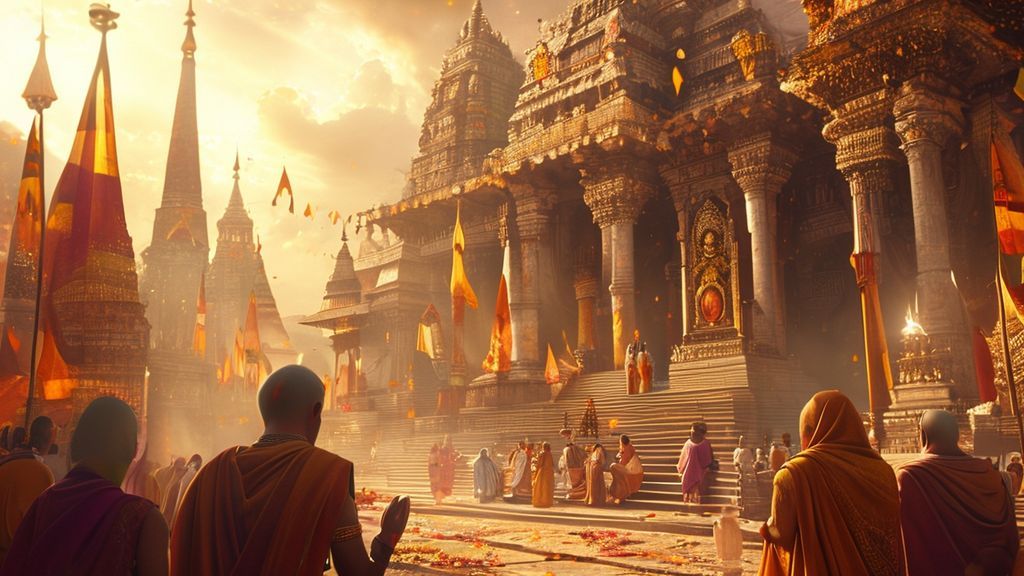
The **Hindu Renaissance** is tangibly expressed in the burgeoning landscape of temple construction and the dynamic revival of traditional educational systems. Across the globe, magnificent temples are being erected, often adhering to the timeless principles of the *Shilpa Shastras* and *Vastu Shastra*. These architectural marvels, whether in the Nagara style of North India, the Dravidian grandeur of the South, or the composite Vesara, serve as vibrant centers of worship, cultural preservation, and community gathering. The recent consecration of the Ayodhya Ram Mandir, the expansive Kashi Vishwanath Corridor project, and the global Akshardham temples stand as powerful testaments to this renewed energy, reaffirming faith and cultural pride. These temples are not just structures; they are living embodiments of our collective aspiration for Dharma.
Equally vital is the resurgence in traditional education. The Gurukul system, once threatened, is experiencing a robust revival, offering immersive learning in Sanskrit, Vedic chanting, Puranic studies, and classical arts like Carnatic and Hindustani music, and various forms of classical dance. Universities and research centers are increasingly embracing the study of ancient Indic knowledge systems, ranging from advanced linguistics to astrophysics embedded in ancient texts. Furthermore, the global popularity of Yoga and Ayurveda, once esoteric practices, now sees mainstream acceptance and scientific validation. Modern research increasingly confirms the profound benefits of practices detailed in ancient texts like the *Charaka Samhita* and *Sushruta Samhita*, bridging the gap between ancient wisdom and contemporary scientific understanding. This twin revival of sacred architecture and holistic education is forging a robust framework for preserving and transmitting Sanatan Dharma to future generations, as detailed on Hindutva.online.
Practices for Personal & Collective Revival
Participating in the **Hindu Renaissance** involves both individual spiritual discipline and collective engagement with the community. For personal spiritual growth, devotees are encouraged to integrate foundational practices into their daily lives, aligning with the four *Purusharthas* of Dharma, Artha, Kama, and Moksha. The disciplined practice of these rituals strengthens individual spirituality and contributes to the collective energy of the revival.
Daily Puja Vidhi (Worship Ritual)
A simple yet profound daily puja can be performed to connect with the divine:
- Sankalpa (Intention): Begin by setting a clear intention for the puja, mentally or verbally affirming your devotion.
- Achamanam (Purification): Sip a few drops of water with the mantra Om Keshavaya Namah, Om Narayanaya Namah, Om Madhavaya Namah for inner purification.
- Dhyanam (Meditation): Meditate on the form of your chosen deity, invoking their presence.
- Avahanam (Invocation): Offer a flower or a pinch of rice, inviting the deity.
- Upacharas (Offerings): Present symbolic offerings such as water (Padyam), flowers (Pushpam), incense (Dhupam), lamp (Deepam), and food (Naivedyam).
- Mantra Japa: Recite relevant mantras (see below) a prescribed number of times (e.g., 11, 21, 108).
- Aarti (Waving of Lamp): Conclude with Aarti, reverently circling a lamp before the deity.
- Pranama (Prostration): Offer humble obeisance and seek blessings.
Collective Engagement:
- Festival Participation: Actively celebrate Hindu festivals (Diwali, Holi, Navaratri, Maha Shivaratri) with family and community.
- Temple Seva: Volunteer time and resources at local temples or dharmic organizations.
- Dharmic Education: Encourage the study of Sanskrit, Puranas, and Itihasas within your family and community.
- Cultural Promotion: Support and promote traditional Hindu arts, music, and dance forms.
- Community Service: Engage in selfless service (Seva) to uphold universal Hindu values.
Mantras & Chants for Empowerment
Mantra recitation is a cornerstone of Hindu practice, invoking divine energies and purifying the mind. Regular chanting fosters inner peace, spiritual strength, and wisdom.
- Gayatri Mantra: Revered as the essence of the Vedas, this mantra invokes the universal illuminating consciousness.
ॐ भूर्भुवः स्वः। तत्सवितुर्वरेण्यं। भर्गो देवस्य धीमहि। धियो यो नः प्रचोदयात्॥
Om Bhur Bhuvah Svah, Tat Savitur Varenyam, Bhargo Devasya Dhimahi, Dhiyo Yo Nah Prachodayat. (As cited in the Rig Veda 3.62.10)
- Mahamrityunjaya Mantra: A powerful hymn for healing, protection, and longevity, dedicated to Lord Shiva.
ॐ त्र्यम्बकं यजामहे सुगन्धिं पुष्टिवर्धनम्। उर्वारुकमिव बन्धनान् मृत्योर्मुक्षीय मामृतात्॥
Om Tryambakam Yajamahe Sugandhim Pushtivardhanam, Urvarukamiva Bandhanan Mrityor Mukshiya Maamritat. (Found in the Yajur Veda and Rig Veda)
- Universal Shanti Mantra: For invoking peace and well-being for all beings.
ॐ सर्वेषां स्वस्तिर्भवतु। सर्वेषां शान्तिर्भवतु। सर्वेषां पूर्णं भवतु। सर्वेषां मङ्गलं भवतु।
Om Sarvesham Svastir Bhavatu, Sarvesham Shantir Bhavatu, Sarvesham Purnam Bhavatu, Sarvesham Mangalam Bhavatu. Om Shanti Shanti Shanti.
Dos and Don’ts for Dharmic Living
To truly embody the spirit of the **Hindu Renaissance**, certain ethical guidelines and cultural etiquettes are paramount:
Dos:
- Respect Elders and Gurus: Show reverence for those who guide you in Dharma, embodying the tradition of Guru-Shishya parampara.
- Practice Ahimsa: Uphold non-violence in thought, word, and deed towards all living beings.
- Study Scriptures (Swadhyaya): Dedicate time to learn from the Vedas, Upanishads, Bhagavad Gita, and Itihasas.
- Participate in Seva: Engage in selfless service to the community and nation.
- Uphold Satya and Dharma: Speak the truth and live righteously.
- Maintain Purity (Shaucha): Practice physical and mental cleanliness.
Don’ts:
- Engage in Divisive Speech: Avoid criticism or denigration of other Hindu traditions or spiritual paths.
- Disregard Temple Etiquette: Enter sacred spaces with respect, often requiring modest attire and removal of footwear.
- Neglect Svadharma: Do not shirk your prescribed duties and responsibilities as a householder, student, or citizen.
- Spread Misinformation: Ensure your understanding and propagation of Dharma are based on authentic scriptural knowledge.
Frequently Asked Questions
What is the primary aim of the Hindu Renaissance?
The primary aim is the revitalization and global propagation of Sanatan Dharma’s spiritual, cultural, and philosophical heritage, fostering a deeper understanding and appreciation of its timeless wisdom for the benefit of humanity.
How can an individual contribute to the cultural revival?
Individuals can contribute by adopting Dharmic values in daily life, studying scriptures, participating in temple activities, promoting traditional arts and languages like Sanskrit, supporting Gurukuls, and engaging in community service (Seva).
Is the Hindu Renaissance exclusionary?
No, the true spirit of the Hindu Renaissance, rooted in the principle of Vasudhaiva Kutumbakam (the world is one family), is inclusive. It aims to share the universal wisdom of Sanatan Dharma while respecting all paths to truth, though it firmly asserts and protects its unique identity and heritage.
What role does technology play in this movement?
Technology plays a crucial role in disseminating ancient texts, teachings, and philosophical discussions globally through digital platforms, online courses, and social media. It connects diverse communities, facilitates cultural exchange, and aids in the preservation of endangered texts and traditions.
Dharmic Significance: The Path Forward for Sanatan Dharma
The **Hindu Renaissance** is more than just a movement; it is a profound testament to the resilience and eternal relevance of Sanatan Dharma. In an age marked by spiritual vacuum and existential dilemmas, the timeless principles embedded in our scriptures offer a robust framework for ethical living, holistic well-being, and ultimate liberation. This revival ensures that the cosmic order (Rta) is maintained, not just through grand temples and academic discourse, but through the daily lives and unwavering faith of millions. It reminds us that Dharma is a living, breathing entity, constantly renewing itself to guide humanity through changing times. By participating in this cultural revival, every Hindu contributes to a legacy that transcends generations, preserving the spiritual inheritance for our children and fostering a more harmonious and enlightened world. The ongoing efforts and resources available at Hindutva.online are dedicated to furthering this noble cause, empowering every seeker on their journey.