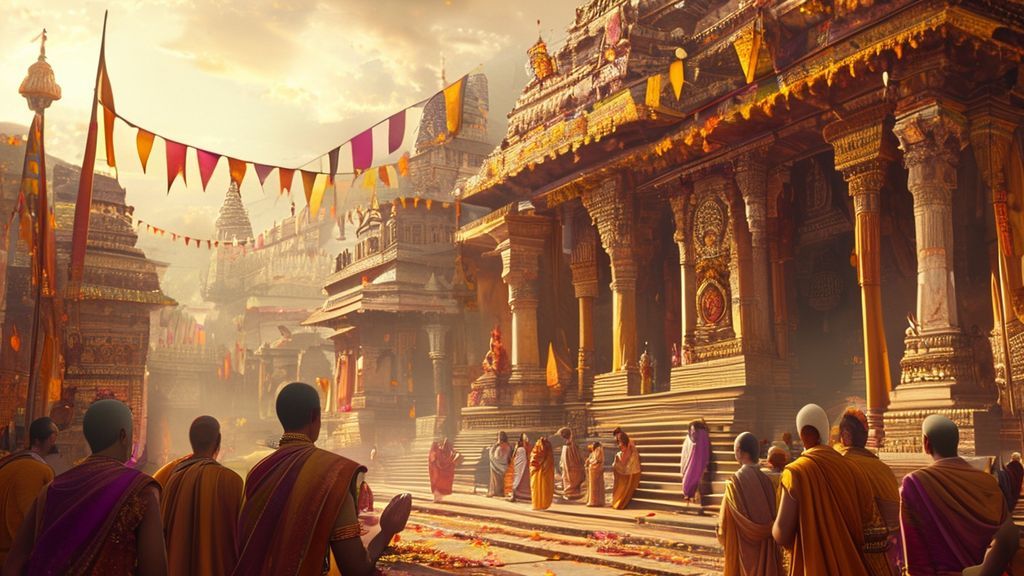
Mysore Dasara is Karnataka’s most revered and spectacular annual festival, a grand celebration of the Divine Mother Chamundeshwari’s victory over the demon Mahishasura, symbolizing the triumph of Dharma over Adharma. Rooted in ancient Puranic legends and upheld by the venerable Wadiyar dynasty, it manifests as a vibrant nine-day Navaratri Utsava, culminating in the majestic Vijayadashami procession.
| Attribute | Details |
|---|---|
| Primary Deity | Sri Chamundeshwari Devi (a manifestation of Durga) |
| Location/Origin | Mysore, Karnataka, India; Patronage by the Wadiyar Dynasty |
| Key Festival Period | Nine days of Navaratri, culminating on Vijayadashami (Tenth Day) |
| Scripture Reference | Devi Mahatmyam (part of Markandeya Purana) detailing Mahishasura Mardini |
| Historical Significance | Celebrated since 15th century by Vijayanagara Empire, continued by Wadiyar Kings since 1610 CE |
Introduction: The Grandeur of Karnataka’s Dharmic Heritage
Mysore Dasara stands as a resplendent jewel in the crown of Sanatan Dharma, an annual reaffirmation of our spiritual values and a testament to the enduring legacy of Karnataka’s cultural prowess. More than just a festival, it is a profound spiritual experience, an immersive journey into devotion, artistry, and regal tradition that has captivated millions for centuries. The celebrations, centered around the majestic Mysore Palace, embody the vibrant spirit of the Kannada people and their unwavering reverence for the Divine Mother, Sri Chamundeshwari.
This ancient tradition, meticulously preserved and grandly presented, draws its strength from the deep devotional roots of Hinduism. It serves as a living bridge between the Puranic age and the present, reminding every devotee of the eternal struggle between good and evil, and the ultimate triumph of righteousness. The sheer scale, the intricate rituals, and the palpable spiritual energy make Mysore Dasara a unique pilgrimage for those seeking to understand the essence of Hindu traditions and the glory of the Devi’s power.
Puranic History & Legend: The Victory of Chamundeshwari
The genesis of Dasara is inextricably linked to the primordial battle narrated in the revered Devi Mahatmyam, a section of the Markandeya Purana. This sacred text extols the glory of Devi, particularly her fierce manifestation as Durga, who vanquished the buffalo-headed demon Mahishasura. It is on the tenth day, Vijayadashami, that Devi Chamundeshwari, the presiding deity of Mysore, achieved this decisive victory, liberating the heavens and earth from tyranny.
Legend holds that the region of Mysore itself derives its name from Mahishasura (Mahisha-ooru, meaning Mahisha’s town), and his defeat by the Mother Goddess bestowed upon her the epithet Mahishasura Mardini. The sacred Chamundi Hills, home to the ancient Sri Chamundeshwari Temple, are considered the very spot where this epic encounter took place, solidifying Mysore’s spiritual significance.
Historically, the celebrations of Navaratri and Vijayadashami gained immense prominence during the illustrious Vijayanagara Empire, known for its patronage of Hindu culture and arts. Following the empire’s decline, the tradition was zealously adopted and elevated by the Wadiyar dynasty, the erstwhile rulers of Mysore. King Raja Wadiyar I initiated the grand public Dasara celebrations in 1610 CE, ensuring that the legacy of devotion and cultural grandeur continued, establishing the framework for the spectacle we witness today. The continuity of this royal patronage underscores the profound dharmic significance of the festival, weaving together spiritual devotion, royal authority, and community participation into a seamless tapestry.
Architectural & Scientific Marvels: The Mysore Palace
The heart of Mysore Dasara’s architectural splendor is undoubtedly the magnificent Amba Vilas Palace, often simply referred to as Mysore Palace. While the current structure was completed in 1912 after an older palace was destroyed by fire, it stands as a breathtaking example of Indo-Saracenic architecture, blending elements of Hindu, Mughal, Rajput, and Gothic styles. Its design is not merely aesthetic but ingeniously crafted to host the grand royal ceremonies of Dasara.
The palace’s grandeur is accentuated by its intricate detailing: the exquisitely carved wooden doors, the vibrant stained-glass ceilings, and the ornate mosaic floors. The Durbar Hall, where the royal family conducts its private Khas Durbar during Navaratri, showcases the finest craftsmanship designed to impress and inspire reverence. During Dasara, the palace is adorned with nearly 100,000 incandescent light bulbs, illuminating its façade in a mesmerizing display that transforms it into a celestial vision, a scientific marvel of light orchestration that captivates every onlooker. This illumination, a tradition dating back to the early 20th century, symbolizes the dispelling of darkness and the advent of divine light, aligning with the spiritual theme of the festival. The strategic layout of the palace grounds facilitates the elaborate processions, reflecting centuries of thoughtful planning and engineering to ensure a seamless flow for the masses of devotees and the royal retinue.
Rituals & Puja Vidhi: A Journey Through Navaratri
The nine-day Navaratri period is a time of intense spiritual activity, with each day dedicated to a different manifestation of the Divine Mother. The culmination on Vijayadashami is marked by rituals steeped in tradition:
- Kalasha Sthapana: On the first day of Navaratri, a sacred pot (Kalasha) representing Devi is consecrated, inviting her divine presence. This is followed by a series of daily pujas to various forms of Durga, Lakshmi, and Saraswati.
- Saraswati Puja: The eighth or ninth day is dedicated to Goddess Saraswati, the deity of knowledge and arts. This involves the worship of books, musical instruments, and tools, seeking blessings for wisdom and proficiency.
- Ayudha Puja: On the ninth day, all implements, tools, vehicles, and weapons are ritually cleaned and worshipped. This tradition, stemming from the warrior ethos of kings, recognizes the divine energy (Shakti) inherent in all instruments that sustain life and uphold Dharma.
- Jamboo Savari (Vijayadashami Procession): The most iconic event. On Vijayadashami, a magnificent procession features the idol of Sri Chamundeshwari Devi, traditionally placed within a golden howdah atop a richly decorated elephant. This symbolizes the Devi’s victorious return. The procession winds through the streets of Mysore, accompanied by caparisoned elephants, horses, folk dancers, musical bands, and tableaux depicting various cultural and mythological themes. The procession starts from the Mysore Palace and concludes at the Banni Mantap, where the Banni tree (Shami Vriksha) is worshipped, a tradition linked to the Pandavas’ worship before their battle in the Mahabharata.
- Panjina Kavayatthu (Torchlight Parade): The celebrations conclude in the evening with a spectacular torchlight parade at the Bannimantap parade ground, showcasing daring feats by horsemen and acrobats, illuminating the night sky and marking a grand closure to the festivities.
Mantras & Chants: Invoking the Divine Mother
Throughout Dasara, devotees engage in chanting sacred mantras to invoke the blessings of the Divine Mother. Some of the most potent chants include:
- Navarna Mantra: “Om Aim Hrim Klim Chamundaye Vichche” (ॐ ऐं ह्रीं क्लीं चामुण्डायै विच्चे) – This is the fundamental mantra dedicated to Devi Chamundeshwari.
- Mahishasura Mardini Stotram: A powerful hymn describing Devi’s valor in vanquishing Mahishasura. Recitation brings courage and dispels negativity.
- Devi Suktam: From the Rig Veda, glorifying the Universal Mother as the embodiment of all creation.
- Ya Devi Sarvabhuteshu: “Ya Devi Sarvabhuteshu Shakti-rupena Samsthita, Namas Tasyai, Namas Tasyai, Namas Tasyai Namo Namah.” (या देवी सर्वभूतेषु शक्ति-रूपेण संस्थिता, नमस्तस्यै नमस्तस्यै नमस्तस्यै नमो नमः।) – This verse reveres the Devi present in all beings as power.
Chanting these mantras with devotion during Navaratri helps purify the mind, strengthen faith, and connect the devotee directly with the auspicious energies of the Goddess.
Dos and Don’ts: Cultural Etiquette for Devotees
- Do dress modestly: Respect the sanctity of temples and cultural sites. Traditional Indian attire is encouraged.
- Do respect traditions: Observe the rituals and customs with reverence. Avoid disruptive behavior during ceremonies and processions.
- Do participate mindfully: Engage in the spiritual atmosphere by visiting temples, witnessing pujas, and understanding the significance.
- Do contribute to cleanliness: Help maintain the sanctity of public spaces by refraining from littering.
- Don’t disrupt rituals: Avoid unnecessary noise or movement during pujas, aarti, or other religious ceremonies.
- Don’t disrespect local customs: Be mindful of local sensibilities and cultural norms.
- Don’t engage in excessive commercialism: While fair is part of it, keep the spiritual essence of the festival paramount.
- Don’t photograph without permission: Especially in sensitive areas or during private royal rituals.
Why is Mysore Dasara so unique among Indian festivals?
Mysore Dasara distinguishes itself through its blend of profound spiritual devotion, continuous royal patronage by the Wadiyar dynasty since 1610 CE, and its unparalleled grandeur in public spectacle, particularly the illuminated palace and the historic Jamboo Savari. It uniquely intertwines Puranic legends with centuries of tangible tradition, making it a living heritage.
What is the spiritual significance of the Jamboo Savari?
The Jamboo Savari on Vijayadashami symbolically reenacts the victorious procession of Sri Chamundeshwari Devi after her triumph over Mahishasura. The idol, carried in a golden howdah, represents the benevolent presence of the Divine Mother bestowing blessings upon her devotees and reaffirming the victory of righteousness (Dharma) over evil (Adharma) in the world.
How does Mysore Dasara contribute to the preservation of Sanatan Dharma?
Mysore Dasara is a powerful vehicle for preserving Sanatan Dharma by keeping ancient Puranic narratives alive, fostering community devotion to the Divine Mother, upholding traditional rituals, and showcasing the rich artistic and architectural heritage of Hindu culture. Its grandeur inspires millions, ensuring the knowledge and practice of Dharma are passed through generations.
Who were the primary patrons responsible for the current grandeur of Mysore Dasara?
While celebrations began under the Vijayanagara Empire, the Wadiyar dynasty of Mysore, specifically King Raja Wadiyar I in 1610 CE, re-established and continuously patronized the Dasara festival, elevating it to its current majestic form. Later rulers, particularly the benevolent Krishnaraja Wadiyar IV, further enhanced its splendor and public involvement.
Why This Matters for Every Hindu: Upholding Dharma and Legacy
Mysore Dasara is far more than a local festival; it is a profound embodiment of Sanatan Dharma, a powerful narrative of cosmic order, and a vibrant celebration of our collective spiritual heritage. It reminds us that truth, courage, and devotion ultimately prevail against all forms of darkness. For every Hindu, witnessing or participating in Dasara reinforces faith, connects us to an unbroken lineage of spiritual wisdom, and inspires us to uphold the principles of Dharma in our daily lives.
The meticulous preservation of its rituals, the grandeur of its artistic expressions, and the deep reverence for the Divine Mother serve as a beacon, guiding us towards righteousness and spiritual enlightenment. It is a living testament to the resilience and richness of Hindu culture, a legacy that every devotee must cherish and strive to preserve for future generations. To explore more about such profound traditions, visit Hindutva.online.