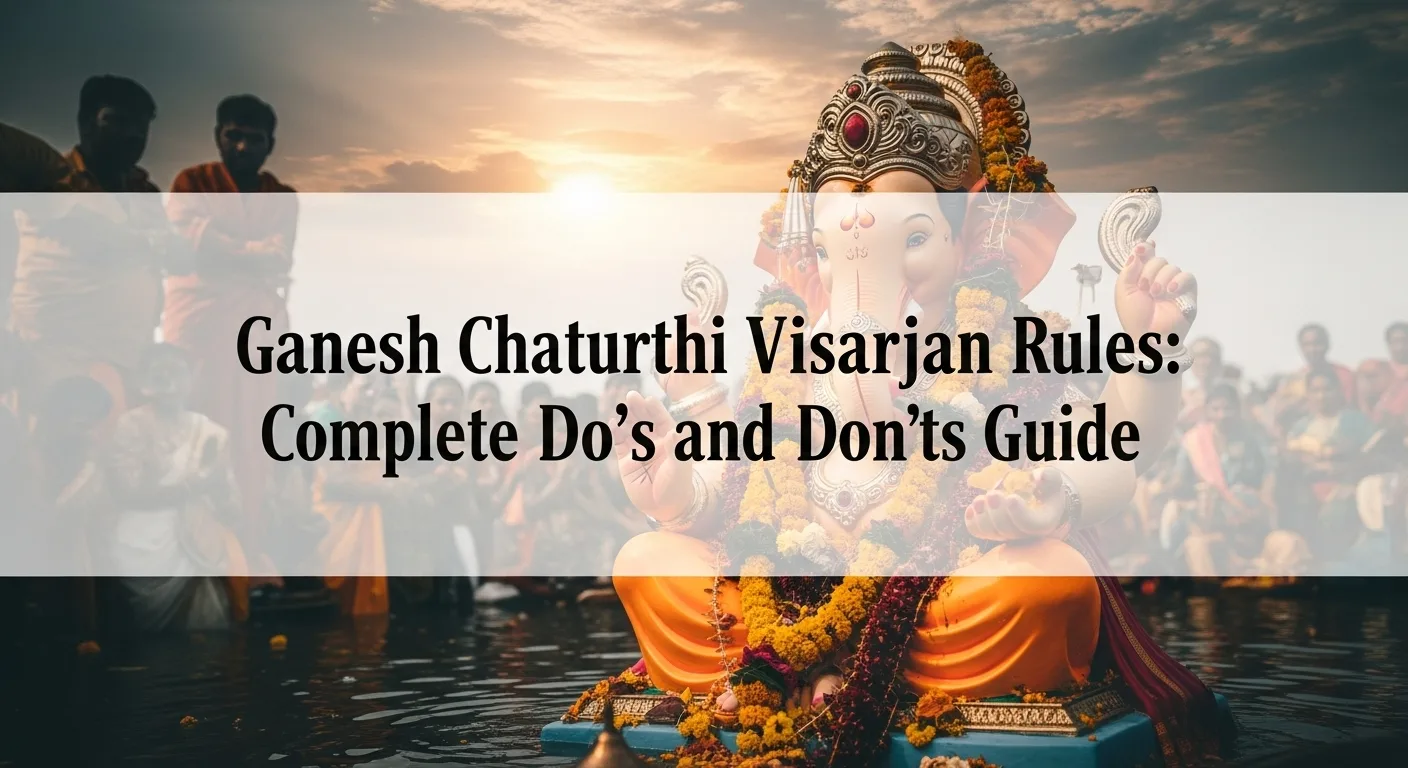
Ganesh Chaturthi Visarjan Rules, the sacred ritual of immersing Lord Ganesha’s idol that concludes the joyous ten-day Ganesh Chaturthi festival, represents one of Hinduism’s most emotionally powerful yet environmentally significant ceremonies, blending profound devotion with growing ecological consciousness in 2025.
The term Visarjan literally means “immersion” or “letting go,” symbolizing the cyclical nature of creation and dissolution where devotees bid farewell to the beloved elephant-headed deity who removes obstacles (Vighnaharta), promising His return the following year with the beloved chant “Ganpati Bappa Morya, Pudhchya Varshi Lavkar Ya” (O Lord Ganesha, come again early next year).
What transforms this ritual from mere idol disposal into sacred spiritual practice involves understanding and following proper procedures that honor both traditional religious protocols – including pre-immersion prayers, specific mantras, respectful handling, and auspicious timing – and contemporary environmental responsibilities that have gained critical importance as millions of idols once made from biodegradable clay are now often crafted from toxic Plaster of Paris (PoP) painted with chemical colors that severely pollute rivers, lakes, and oceans during mass immersions.
The 2025 celebration occurs against a backdrop of heightened environmental awareness, with governments implementing regulations, communities organizing artificial immersion tanks, and devotees increasingly choosing eco-friendly clay idols that dissolve harmlessly while maintaining the ritual’s spiritual sanctity. Whether performing Visarjan at home in a bucket, at community artificial tanks, or traditional water bodies, understanding the complete do’s and don’ts ensures this farewell honors Lord Ganesha appropriately while demonstrating the environmental stewardship that authentic Hindu dharma has always advocated – treating nature as divine manifestation requiring respectful treatment rather than exploitable resource.
This comprehensive guide provides everything devotees need for proper Visarjan in 2025: detailed traditional rituals with authentic mantras, step-by-step immersion procedures for various settings, eco-friendly alternatives preventing water pollution, safety guidelines for processions, common mistakes to avoid, and the deeper spiritual significance transforming what could be mere ritual into profound practice embodying letting go, impermanence, and cyclical renewal that lies at Hindu philosophy’s heart.
Understanding Visarjan: Spiritual Significance and Timing
Before examining specific procedures, grasping why Visarjan is performed and when it should occur provides essential context transforming mechanical ritual into meaningful spiritual practice. The immersion ritual teaches profound philosophical lessons while creating anticipation for the deity’s return, embodying core Hindu concepts of impermanence, non-attachment, and divine omnipresence.
Spiritual Philosophy Behind Visarjan:
Lord Ganesha’s annual visit to devotees’ homes represents divine grace taking temporary physical form – the infinite assuming finite shape to receive worship and bestow blessings. However, this physical manifestation necessarily remains temporary; the clay idol serves as yantra (sacred instrument) facilitating divine presence but isn’t itself the deity. The Visarjan ceremony acknowledges this distinction – releasing the physical form while understanding Lord Ganesha’s actual presence pervades all existence, never truly arriving or departing but rather accepting and releasing focused manifestation.
The ritual teaches non-attachment (vairagya) – devotees welcome Ganesha with immense love, worship intensely for days, develop deep emotional connection, then must release this cherished form with equal grace. This mirrors life’s fundamental reality: all physical forms, relationships, and circumstances prove temporary; clinging causes suffering while accepting impermanence with equanimity brings peace. The tears shed during Visarjan aren’t weakness but recognition of genuine love combined with spiritual maturity understanding that what truly matters – devotion, virtue, consciousness – transcends physical forms.
The promise of return – “come again early next year” – maintains hope and devotion’s continuity. Devotees don’t abandon relationship with Ganesha during the year between festivals; rather, the external worship becomes internalized. Daily prayers, challenges overcome through Ganesha’s grace, obstacles removed – all maintain connection until the next physical manifestation arrives during Ganesh Chaturthi.
Traditional Timing Options:
While popularly associated with Anant Chaturdashi (the 14th day following Ganesh Chaturthi), Visarjan timing actually varies based on family tradition, regional customs, and individual vows (sankalpam) made when installing the idol:
| Duration | Timing | Common For | Significance |
|---|---|---|---|
| 1.5 Days | Afternoon of 2nd day | Busy households, first-time celebrants | Shortest traditional duration |
| 3 Days | Tritiya (3rd day) | Working families | Balances devotion with practical constraints |
| 5 Days | Panchami (5th day) | Common household practice | Traditional minimum for thorough worship |
| 7 Days | Saptami (7th day) | Devoted families | Extended worship period |
| 10 Days | Anant Chaturdashi (11th day, as Chaturthi is day 1) | Most traditional, public pandals | Full festival duration |
The duration should be decided when bringing Ganesha home and stated in the sankalpa (sacred intention). Whatever duration you commit to, complete it – don’t extend or shorten arbitrarily based on convenience, as this violates the vow made to the deity. If emergency prevents completing committed duration, mentally ask Ganesha’s forgiveness and perform Visarjan when necessary.
Anant Chaturdashi 2025 – The Grand Finale:
For 2025, Anant Chaturdashi falls on Saturday, September 6, with Chaturdashi tithi beginning at 03:12 AM and ending at 01:41 AM on September 7. This day witnesses the largest public immersions, particularly in Maharashtra where lakhs gather for massive processions culminating in dramatic ocean immersions accompanied by music, dance, and collective devotion.
Auspicious Muhurat (Timing) for Visarjan:
- Morning (Shubha): 07:57 AM to 09:31 AM
- Afternoon (Chara, Labha, Amrita): 12:37 PM to 05:16 PM
- Evening (Labha): 06:49 PM to 08:16 PM
- Night (Shubha, Amrita, Chara): 09:43 PM to 02:04 AM (September 7)
While any time during Anant Chaturdashi proves acceptable, performing Visarjan during these auspicious windows maximizes spiritual benefit. Consult local panchang for precise timings adjusted to your geographical location.
Home vs. Community vs. Public Water Body:
- Home Visarjan (bucket/tub): Can occur anytime during your chosen day; no specific muhurat restriction for private home immersion
- Artificial Community Tanks: Typically available throughout Anant Chaturdashi; reduces crowding and environmental impact
- Natural Water Bodies: Attempt to use auspicious muhurat if possible; arrive early to avoid massive crowds during peak afternoon/evening hours
The key: plan timing accounting for practical factors (crowd avoidance, travel distance, family availability) while honoring traditional auspiciousness when feasible.
Pre-Visarjan Rituals and Preparations
Proper preparation transforms what could be hasty disposal into dignified spiritual farewell honoring the divine guest who graced your home. The night before and morning of Visarjan require specific rituals ensuring you bid Lord Ganesha appropriate goodbye while seeking forgiveness for any unintentional mistakes during worship and requesting His blessings to return.
Evening Before Visarjan (Uttar Puja):
On the final evening before immersion day, perform Uttar Puja (farewell worship) – a concluding ceremony expressing gratitude, seeking forgiveness, and requesting the Lord’s return. This typically occurs the night before if immersing next morning, or early evening if immersing same evening.
Uttar Puja Procedure:
- Clean and Decorate: Ensure the altar area is impeccably clean. Place fresh flowers, light incense, and arrange the space beautifully for this final worship.
- Special Offerings: Prepare Lord Ganesha’s favorite items:
- Modak (sweet dumplings – Ganesha’s beloved prasad)
- Fresh fruits, especially bananas and coconut
- Durva grass (considered especially dear to Ganesha)
- Red hibiscus flowers or other fresh blooms
- Traditional sweets like laddoo
- Shodashopachara Puja: Perform the 16-step worship one final time with extra devotion, knowing this concludes your intimate daily interactions with the physical form. Each offering becomes precious final service.
- Special Aarti: Conduct elaborate Aarti with entire family present. Sing traditional Ganesh Aarti (Sukhkarta Dukhharta or regional variations) with full emotion, allowing tears to flow naturally as you realize the imminent farewell.
- Forgiveness Prayer: After Aarti, sit quietly before Ganesha and pray:
हे गणेश! यदि अज्ञानतः अथवा प्रमादतः पूजा विधौ कोऽपि दोषः जातः, तदपि क्षन्तुं कृपया अर्हसि। आगामि वर्षे पुनः शीघ्रमागच्छ॥
“O Ganesha! If due to ignorance or carelessness any fault occurred in the worship, please forgive me. Come again quickly next year.”
- Family Sharing: Encourage family members, especially children, to express what they’ll miss about having Ganesha home and what they’re grateful for during the festival. This personalizes the goodbye and creates emotional bonding.
- Document Memories: Take final photographs, videos of the beautifully decorated idol and family gathered together. These preserve precious memories until next year’s celebration.
Visarjan Morning Preparations:
Clean and Dress: All participants should bathe, wear clean traditional clothes (often the same outfits worn when bringing Ganesha home, creating ritual symmetry).
Prepare Visarjan Items:
Essential items for proper Visarjan procedure:
- Clean cloth (red or yellow) for wrapping decorations
- Small packet with coconut, jaggery, and grains (symbolic meal for Ganesha’s journey)
- Fresh flowers for final offering
- Incense sticks and camphor for final Aarti
- Small pot of water mixed with Ganga jal if available
- Kalash (pot) if performing elaborate ritual
- Vehicle/carrying arrangement for transporting idol
- Materials for eco-friendly immersion if using bucket/tub method
Remove Decorations Carefully:
Before leaving home, systematically remove all decorations with reverence:
- Garlands and flower decorations – collect separately for proper disposal (compost or under sacred tree, never trash)
- Ornaments and jewelry placed on idol – remove gently, store for next year
- Durva grass, tulsi leaves – collect for composting or returning to garden
- Lights, cloth decorations – carefully pack away for reuse
Handle everything with care and respect – these items served in sacred worship and shouldn’t be carelessly discarded. Reusable items should be cleaned, stored properly for next year. Organic materials should be composted or returned to nature appropriately, never mixed with regular garbage.
Position Idol for Departure:
When ready to carry Ganesha for Visarjan:
- Face the idol toward family members (not away from them) so you witness His journey
- Some traditions prefer the idol faces the direction of travel
- Ensure the idol is stable and secure for transport to prevent damage
Final Home Prayer:
Before leaving, the entire family gathers for final prayer at the now-empty altar space:
ॐ गं गणपतये नमः। गणपति बप्पा मोरया, पुढच्या वर्षी लवकर या॥
“Om Gam Ganapataye Namah. O Lord Ganapati, come again early next year.”
With this, you’re prepared for the immersion journey itself.
Step-by-Step Visarjan Procedure
The actual immersion process varies depending on location – home bucket/tub, community artificial tank, or natural water body – but fundamental spiritual elements remain constant across all settings. Understanding proper protocol for each scenario ensures respectful, appropriate Visarjan regardless of circumstances.
Method 1: Home Visarjan in Bucket/Tub (Most Eco-Friendly)
This method has gained popularity especially for eco-friendly clay idols, allowing complete control over the process while eliminating water body pollution. Ideal for families with small to medium idols, busy schedules, or strong environmental commitment.
Setup:
- Select appropriate container: Large bucket, plastic tub, bathtub, or even large decorative pot – size depends on idol dimensions. Container should comfortably hold idol with surrounding water.
- Fill with clean water: Use fresh water, preferably mixed with a little Ganga jal (holy Ganges water) or at minimum regular water kept aside specifically for this sacred purpose. Fill about 2/3 full initially.
- Prepare the space: Place container in a clean, dedicated area – bathroom, balcony, or courtyard. Lay plastic sheet underneath to catch any spillage. Decorate surrounding area with flowers, diyas for aesthetic and spiritual ambiance.
Procedure:
Step 1: Final Aarti at Container
Carry the idol to the immersion container. Before immersion, conduct one final brief Aarti – light camphor, wave it before Ganesha while ringing bell, and chant:
जय गणेश जय गणेश जय गणेश देवा। माता जाकी पार्वती पिता महादेवा॥
Step 2: Seek Permission and Express Gratitude
Mentally or verbally address Lord Ganesha:
हे विघ्नहर्ता! दस दिवसानि यावत् भवान् मम गृहे समागतः। तव आशीर्वादेन सर्वं कल्याणमयमभवत्। अधुना त्वं निजालयं गच्छसि। पुनः आगच्छ शीघ्रम्॥
“O Remover of Obstacles! You stayed in my home for these days. By Your blessings, everything became auspicious. Now You return to Your abode. Please come again soon.”
Step 3: Gentle Immersion
Slowly and reverently lower the idol into water. If the idol is large, you may need assistance. Never throw or drop the idol – this shows disrespect. As you lower it, the entire family chants:
गणपति बप्पा मोरया, पुढच्या वर्षी लवकर या!
(Repeatedly, with devotion and emotion)
Step 4: Complete Submersion
Once the idol rests in water, pour additional water gently over it until fully submerged. If using eco-friendly clay idol, you’ll notice it beginning to dissolve relatively quickly (hours to days depending on composition). PoP idols take far longer and should ideally have been avoided from the start.
Step 5: Leave Undisturbed
Allow the idol to remain in water for the dissolution process. For clay idols, this typically takes 24-48 hours. Don’t repeatedly check or disturb. The dissolution occurs naturally.
Step 6: Responsible Water Disposal
After the idol has completely dissolved:
- Strain the water through cloth to separate dissolved clay sediment from water
- Pour water under a sacred tree (peepal, tulsi plant) or use for watering garden plants – the clay-enriched water actually benefits plants
- Collect sediment clay and return it to garden soil or designated clay collection points if available
- Clean container thoroughly before reusing
This method ensures zero water pollution while maintaining complete ritual sanctity.
Method 2: Artificial Community Tank Visarjan
Many housing societies, neighborhoods, and temples now provide artificial tanks specifically designed for eco-friendly immersion, preventing natural water body pollution while accommodating community worship.
Advantages:
- Environmentally responsible
- No crowd chaos of public water bodies
- Controlled, organized setting
- Often includes proper idol disposal/recycling system
- Shorter travel time for families
Procedure:
- Verify Tank Availability: Confirm location, timing, and any specific rules set by organizers (some limit idol size, types of decorations allowed, etc.)
- Transport Idol: Carry or transport idol to community tank location. Maintain dignity – avoid using the journey as entertainment or casual outing. Some families organize small processions with devotional singing.
- Wait Your Turn: During peak times, queues form. Wait patiently and respectfully. Use this time for chanting mantras, singing bhajans, maintaining devotional mood.
- Approach Tank with Reverence: When your turn arrives, approach the immersion tank with family gathered around idol. Perform brief Aarti if space and circumstances permit.
- Immersion: Lower idol gently into designated section of tank while chanting “Ganpati Bappa Morya.” Tank organizers typically provide guidance on placement.
- Offer Final Prayers: After immersion, fold hands in prayer, bow in respect, offer final gratitude and invitation for return.
- Depart Mindfully: Leave the area promptly to allow others their turn, carrying the spiritual experience internally rather than lingering unnecessarily.
Method 3: Natural Water Body Immersion (Traditional but Environmental Concerns)
Traditional immersion in rivers, lakes, seas remains emotionally powerful and culturally significant, especially during massive Anant Chaturdashi public processions. However, this method requires strict adherence to eco-friendly practices to prevent the severe pollution that has devastated water bodies receiving millions of toxic PoP idols.
Ganesh Chaturthi Visarjan Rules
Responsible Natural Water Immersion Guidelines:
Before Deciding:
- Use only eco-friendly clay idol with natural colors – absolutely non-negotiable if choosing this method
- Verify local regulations – some areas now prohibit or restrict natural water immersion
- Consider artificial tanks as environmentally superior alternative
If Proceeding:
- Join Organized Procession or Go Early: Either participate in managed community procession with safety provisions, or visit water body early morning to avoid dangerous crowds.
- Safety First:
- Wear comfortable, traditional clothing (avoid synthetic fabrics)
- Don’t wade into deep water – immerse from shore/designated platform
- Never allow children into water unsupervised
- Be extremely cautious of currents, depth changes, slippery surfaces
- Immersion Procedure:
- Perform final brief Aarti at water’s edge
- From safe, shallow position, lower idol gently into water while chanting
- Do NOT throw idol from distance – this is disrespectful and dangerous
- If idol is large and heavy, get assistance to avoid injury
- Do NOT attempt to go into deep water to “properly immerse” – let it float and sink naturally
- Critical Environmental Rules:
- Remove ALL non-biodegradable decorations before immersion (plastic, thermocol, metal ornaments)
- Do NOT throw flowers, garlands into water – collect separately and compost
- Take home all cloth, jewelry, decorations – only clay idol enters water
- Report any PoP idols being immersed to authorities – this is illegal in many areas
- Leave Area Clean: Collect any trash, items belonging to your group. Leave the waterside cleaner than you found it.
The reality in 2025: with millions still using PoP idols despite awareness, natural water immersion continues causing severe pollution. Choosing home or artificial tank methods represents more authentic environmental stewardship aligned with Hindu dharma’s reverence for nature.
Essential Do’s for Respectful Visarjan
Following these positive practices ensures Visarjan honors Lord Ganesha appropriately while demonstrating respect for tradition, community, and environment – the integrated values authentic Hindu practice embodies.
Spiritual and Ritual Do’s:
✅ Perform Uttar Puja: Complete the farewell worship ceremony night before or morning of Visarjan. This isn’t optional formality but essential aspect of proper observance.
✅ Chant Proper Mantras: Throughout the Visarjan process, maintain devotional consciousness through mantra repetition:
- ॐ गं गणपतये नमः
- वक्रतुण्ड महाकाय सूर्यकोटि समप्रभ। निर्विघ्नं कुरु मे देव सर्वकार्येषु सर्वदा॥
- गणपति बप्पा मोरया, पुढच्या वर्षी लवकर या
✅ Maintain Devotional Mood: Visarjan is farewell ceremony, not party or entertainment. Maintain appropriate reverence, devotion, and emotional connection throughout. Tears of genuine love are completely appropriate.
✅ Involve Entire Family: Ensure all family members who participated in daily worship also attend Visarjan. This provides closure and teaches children about completing what one begins.
✅ Express Gratitude: Before immersion, specifically thank Ganesha for blessings received during His stay – name specific good events, problem resolutions, general family welfare experienced.
✅ Seek Forgiveness: Acknowledge that despite sincere efforts, mistakes likely occurred in daily worship. Ask Ganesha to forgive errors of commission and omission.
✅ Invite Return: The promise “come again early next year” isn’t casual phrase but sincere invitation expressing commitment to continue worship annually.
Environmental Do’s:
✅ Use Eco-Friendly Idol: If you haven’t already, commit that NEXT year you’ll purchase only clay Ganesha with natural colors. If you already used eco-friendly idol this year, advocate for others to do same.
✅ Remove All Non-Biodegradable Items: Before immersion, systematically strip idol of plastic decorations, thermocol ornaments, metal jewelry, synthetic garlands, LED lights – everything except the clay form itself.
✅ Choose Home or Artificial Tank: These methods eliminate water pollution while maintaining complete spiritual sanctity. No compromise to devotion occurs through eco-responsible choices.
✅ Properly Dispose Decorations: Organic materials (flowers, leaves, garlands) should be composted or placed under sacred trees, not discarded in water bodies. Reusable items should be cleaned and stored for next year.
✅ Use Natural Colors/Flowers: If decorating the immersion site (home bucket, around tank), use only natural, biodegradable materials – flower petals, leaves, natural rangoli colors.
✅ Educate Others: Gently share information about eco-friendly options with relatives, neighbors, community members still using PoP idols. Lead by example first, then share knowledge when opportunities arise.
Safety and Practical Do’s:
✅ Plan Transportation: If going to water body or community tank, arrange safe, adequate transport especially if carrying large idol. Don’t overload vehicles or create traffic hazards.
✅ Travel During Safe Hours: Visit water bodies during daylight hours or well-lit evening times. Avoid late night immersions which present safety risks.
✅ Assign Adult Supervision: If children attend, ensure dedicated adults watch them constantly, especially near water. Crowds and water create dangerous combination.
✅ Carry Essentials: Bring water bottles, first-aid kit (for large processions), flashlight if evening, phone with emergency contacts programmed.
✅ Wear Appropriate Clothing: Traditional cotton clothes that are comfortable and safe. Avoid loose, flowing garments that could entangle. No synthetic fabrics near fire (diyas, camphor).
✅ Follow Local Guidelines: Respect any rules set by water body authorities, housing society, temple, or municipal corporation. These typically exist for safety and environmental reasons.
✅ Help Others: If you see someone struggling with heavy idol, elderly person needing assistance, or child in potentially dangerous situation, offer help appropriately.
Critical Don’ts: Mistakes to Avoid
These prohibitions prevent common errors that either disrespect the sacred ritual or create environmental, safety, or social problems during Visarjan. Understanding what NOT to do proves equally important as knowing proper procedures.
Spiritual and Ritual Don’ts:
❌ Don’t Throw or Drop Idol Carelessly: Perhaps the single most disrespectful act – treating the form that represented Lord Ganesha’s presence like garbage being discarded. Always lower reverently, never throw from distance or drop roughly.
❌ Don’t Skip Final Prayers: Rushing Visarjan without proper Uttar Puja, mantras, or even brief farewell prayer reduces sacred ritual to mere disposal. Even if time-constrained, spend minimum 10-15 minutes on proper ceremony.
❌ Don’t Treat It as Entertainment: Visarjan is farewell to beloved divine guest, not party or picnic. While traditional singing and processions are appropriate, avoid converting sacred occasion into casual social gathering, loud partying, or Instagram photo opportunity.
❌ Don’t Perform at Wrong Time: If you committed to specific duration (3 days, 7 days, etc.) in your initial sankalpa, honor that commitment. Don’t arbitrarily extend or shorten based on convenience.
❌ Don’t Immerse Someone Else’s Ganesha Without Permission: Each family’s idol represents their specific worship relationship. Don’t combine idols or handle others’ Ganesha without their presence and consent.
❌ Don’t Leave Immediately After Immersion: Rushing away right after idol enters water suggests relief at completing obligation rather than genuine sad farewell. Remain for few moments in prayer, then depart mindfully.
Environmental Don’ts (Critical for 2025):
❌ Don’t Use Plaster of Paris Idols: PoP idols are primary source of water pollution during Ganesh Visarjan. They don’t dissolve properly, release toxic chemicals, and devastate aquatic ecosystems. This should be non-negotiable in 2025.
❌ Don’t Use Chemical Paints: Even clay idols painted with toxic chemical colors create pollution. Use only natural, water-based, vegetable-derived colors.
❌ Don’t Immerse Decorations: Flowers, garlands, plastic decorations, thermocol ornaments, LED lights, cloth – none of these belong in water bodies. Remove everything before immersion.
❌ Don’t Pollute Water Bodies: Beyond the idol itself, don’t use immersion as excuse to dump other worship materials, food offerings, or general trash into water. Water is sacred in Hinduism and deserves protection, not pollution.
❌ Don’t Contribute to Single-Use Plastic: Avoid using plastic bags, bottles, packaging during Visarjan process. Carry reusable bags, steel water bottles, cloth for wrapping items.
❌ Don’t Ignore Alternatives: With home immersion and artificial tanks widely available, choosing polluting natural water immersion (especially with non-eco-friendly idol) represents deliberate environmental harm rather than unavoidable necessity.
Safety Don’ts:
❌ Don’t Wade into Deep Water: Most drowning deaths during Visarjan occur when people venture into deep water attempting “proper” immersion. Immerse from shore or designated safe platforms only.
❌ Don’t Bring Children Near Water Without Supervision: Crowds, excitement, and water create dangerous combination for kids. Constant adult supervision is non-negotiable.
❌ Don’t Burst Firecrackers in Crowds: Fire, explosives, dense crowds – obviously dangerous mix. If firecrackers are cultural tradition in your area, use only in open, designated spaces away from people.
❌ Don’t Drink Alcohol: Visarjan is religious ceremony. Alcohol consumption before/during is both spiritually inappropriate and creates safety hazards, especially near water.
❌ Don’t Overload Vehicles: During processions, resist temptation to pack too many people into trucks, tempos, or cars. Overcrowding creates accident risk.
❌ Don’t Create Traffic Hazards: While processions traditionally move through streets, coordinate with traffic police, avoid blocking emergency routes, and maintain some traffic flow consideration.
❌ Don’t Leave Valuables Unattended: During crowded public immersions, theft unfortunately occurs. Keep phones, wallets, jewelry secure. Don’t wear expensive ornaments unnecessarily.
❌ Don’t Hand Over Responsibility to Strangers: In crowded settings, people sometimes offer to “help” immerse your idol then disappear with jewelry/decorations. Stay with your idol throughout.
Social and Community Don’ts:
❌ Don’t Create Noise Pollution: While traditional instruments (drums, tasha, dhol) are culturally appropriate, avoid excessive loudspeakers, especially in residential areas or late at night. Respect neighbors who may not celebrate or need quiet.
❌ Don’t Block Public Spaces: If organizing community gathering, ensure adequate space exists without blocking roads, pathways, or access to buildings.
❌ Don’t Litter: Self-explanatory but apparently necessary to state – dispose all trash properly in designated bins, never on streets or in water.
❌ Don’t Force Participation: Not everyone celebrates Ganesh Chaturthi or observes Visarjan. Respect others’ religious choices and don’t pressure participation.
Frequently Asked Questions
Can I perform Visarjan earlier than my committed days if necessary?
Ideally, honor the duration stated in your sankalpa (sacred intention) when installing Ganesha. However, if genuine emergency arises – sudden travel for family emergency, serious illness, unavoidable circumstances – you may perform early Visarjan. In this case, mentally explain situation to Lord Ganesha, ask His forgiveness, and perform Uttar Puja and Visarjan with full devotion despite changed timing. Ganesha, being Vighnaharta (obstacle remover), understands genuine difficulties. But don’t shorten duration merely for convenience or because you’re “tired” of daily puja – that shows disrespect and breaks spiritual commitment.
What should I do with the water after home bucket immersion?
After clay idol has completely dissolved (typically 24-48 hours), strain the water through cloth to separate clay sediment. The water, now enriched with dissolved clay, should be used to water garden plants, especially under sacred trees like peepal or tulsi. Plants actually benefit from the clay nutrients. The separated clay sediment can be returned to garden soil or taken to designated clay collection points if your area has them. Never pour this water into regular drainage as it may clog pipes. This method ensures zero water body pollution while returning earth elements to earth in beneficial way.
Is it acceptable to reuse or donate idols instead of immersion?
This question sparks theological debate in Hindu communities. Traditional understanding holds that once prana pratishtha (life invocation) occurs and deity is worshipped, the physical form should be immersed, completing the ritual cycle and allowing divine energy’s return to cosmic source. However, some modern interpretations suggest that if idol is made of permanent material (brass, stone) and installed at home altar, it can remain for years with ongoing worship, negating need for annual immersion. For clay Ganesh Chaturthi idols specifically brought for festival, traditional immersion remains standard. “Donating” after worship raises concern that you’re giving away what should be properly concluded through Visarjan.
What mantras should be chanted during Visarjan?
The primary chant remains “गणपति बप्पा मोरया, पुढच्या वर्षी लवकर या” (Ganapati Bappa Morya, Pudhchya Varshi Lavkar Ya) – meaning “O Lord Ganapati, come again early next year.” Additional appropriate mantras include: ॐ गं गणपतये नमः (Om Gam Ganapataye Namah – basic Ganesha mantra), the Vakratunda shloka asking obstacle removal, Jai Ganesh Jai Ganesh Deva aarti verses. The key is maintaining devotional consciousness through sacred sound rather than treating journey to immersion site as casual outing. Continuous chanting keeps focus on spiritual dimension of this farewell ceremony.
Can women perform Visarjan or is it only for men?
Absolutely women can and should participate in Visarjan! While certain regions have customs where men physically carry idol and perform immersion while women remain home or at distance, this is cultural tradition, not religious requirement. The deity represents divine energy welcoming worship from all sincere devotees regardless of gender. Many families involve entire household including women and children in complete Visarjan process. If you face family pressure suggesting women shouldn’t participate, gently educate about authentic Hindu theology which recognizes divine presence responding to devotion, not gender. Modern Visarjan increasingly includes complete family participation as appropriate and desirable.
How do I handle Visarjan if I have Plaster of Paris idol?
If you already have PoP idol this year, the environmental damage is unfortunately done through the purchase (creating market demand). For THIS year, do NOT immerse in natural water body – this compounds harm by polluting water. Instead: immerse at home in large container, allow prolonged soaking (PoP takes weeks to soften), strain and dispose clay-like residue in general waste (since it’s already contaminated with chemicals, it shouldn’t go in garden). Better option: check if your area has PoP idol collection/recycling centers that properly dispose these idols. Most importantly: commit that NEXT year you’ll purchase only eco-friendly clay idol with natural colors, and educate others to do same.
What if I live in apartment/area without water access for immersion?
Perfect situation for home bucket/tub method! This actually proves more eco-friendly than natural water immersion. Use any sufficiently large container – bucket, plastic tub, even kitchen sink or bathtub if idol is small enough. Follow the step-by-step home immersion procedure detailed in this article. After dissolution, use water for plants as described. Living in apartment doesn’t prevent proper Visarjan; it simply necessitates the most environmentally responsible method which increasingly proves preferred approach even for those with water body access.
Should children participate in Visarjan?
Yes, involving children in complete Ganesh Chaturthi cycle from installation through daily worship to Visarjan provides valuable spiritual education and creates cherished family memories. Children learn about devotion, ritual practice, impermanence, and letting go through participation. However: ensure age-appropriate involvement (young children shouldn’t be near water or carry heavy idols), explain spiritual significance rather than treating it as mere spectacle, allow them to express emotions (tears during farewell are completely natural and healthy), and most importantly, maintain strict safety supervision especially near water bodies or in crowds. Many families report that childhood Visarjan memories become foundational to their adult spiritual practice.
Conclusion
Ganesh Visarjan in 2025 represents sacred opportunity to honor tradition while embracing environmental responsibility – two values that should never conflict because authentic Hindu dharma has always taught reverence for nature as divine manifestation. The beloved chant “Ganpati Bappa Morya, Pudhchya Varshi Lavkar Ya” expresses not just hope for Lord Ganesha’s return but commitment to maintain devotion and continue proper worship annually, creating continuity of spiritual practice across years and generations.
When performed correctly with understanding of proper rituals, respectful handling, appropriate timing, and eco-conscious choices, Visarjan transforms from merely disposing of idol into profound spiritual practice teaching essential lessons about impermanence, non-attachment, cyclical renewal, and the distinction between physical form and eternal divine presence pervading all existence.
The tearful farewell, the prayer-filled immersion, the bittersweet promise of reunion – these emotional elements make Ganesh Visarjan one of Hinduism’s most moving ceremonies, touching hearts across age groups and reminding us that authentic spirituality engages feeling along with ritual precision.
As you prepare for Visarjan, whether at home bucket, artificial community tank, or traditional water body, approach with full consciousness that you’re bidding farewell to divine guest who graced your home, removed obstacles, blessed your family, and will carry your love and prayers back to the cosmic realm from which manifestation emerges. The Lord who blessed you with presence now blesses you with the lesson that all forms are temporary, all meetings end in parting, yet devotion and divine relationship transcend physical separations, maintaining constant connection between human hearts and ultimate reality.
May your Ganesh Visarjan be filled with devotion, performed with environmental consciousness, and completed with the joyful sadness that comes from true love combined with spiritual maturity. गणपति बप्पा मोरया, पुढच्या वर्षी लवकर या! ॐ गं गणपतये नमः॥ (Ganapati Bappa Morya, come again early next year! Om Gam Ganapataye Namah.)
About the Author
Priya Sharma – Cultural Affairs and Hindu Traditions Analyst
Priya Sharma is a respected cultural analyst and researcher specializing in Hindu festivals, contemporary religious practices, and the intersection of tradition with modern environmental and social concerns. With advanced degrees in Sociology and Religious Studies, her work examines how ancient festivals adapt to contemporary challenges while maintaining spiritual authenticity.
Priya has published extensively on the evolution of Hindu celebrations, environmental sustainability in religious practices, the revival of eco-friendly traditions, and the sociopolitical dimensions of religious observance in modern India. Her research on Ganesh Chaturthi specifically addresses the transformation from traditional clay idols to problematic Plaster of Paris and the recent movement back toward environmentally responsible celebrations. She regularly advises communities, municipal corporations, and cultural organizations on implementing eco-friendly festival practices that honor both tradition and environmental stewardship, demonstrating that authentic Hindu dharma and ecological consciousness are complementary rather than conflicting values.
