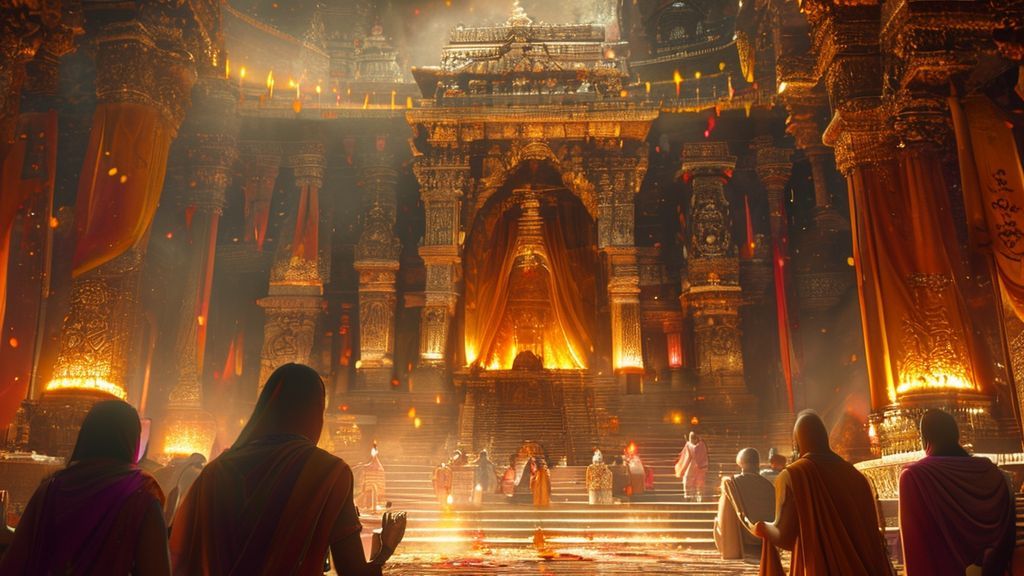
Kali Mantra are powerful sacred sounds and vibrational formulas consecrated to Goddess Kali, the fierce and compassionate Mother in Sanatan Dharma. Chanting these potent mantras invokes Her divine energy for protection, liberation from ignorance and ego, destruction of negative forces, and the attainment of spiritual wisdom, guiding devotees towards ultimate truth and fearlessness.
| Attribute | Details |
|---|---|
| Deity | Goddess Kali (One of the Dasa Mahavidyas, the Ten Wisdom Goddesses) |
| Location/Origin | Ancient Vedic roots, prominently flourished in Tantric traditions, particularly in Bengal and Assam (Kamakhya Peeth), now revered Pan-India and globally. |
| Key Festivals | Kali Puja (celebrated on the new moon night of Kartik, often coinciding with Diwali), Navaratri (especially Maha Ashtami/Navami), Amavasya (new moon nights). |
| Scripture References | Devi Mahatmyam (Markandeya Purana), Mahanirvana Tantra, Kalika Purana, Kali Tantra, Brihad-Dharma Purana. |
Introduction to the Cosmic Mother’s Fierce Grace
In the vast tapestry of Sanatan Dharma, Goddess Kali stands as a pre-eminent deity, representing the ultimate reality, Kāla (Time), and the power that transcends it. Her form, often perceived as terrifying, is in truth a profound symbol of boundless compassion and the relentless destruction of illusion. For the sincere seeker, chanting a Kali Mantra is not merely a ritual but a direct communion with this primordial energy, a call to the Mother who liberates her children from all forms of bondage, both internal and external. She is the fierce protectress, the embodiment of Shakti, who annihilates ego, ignorance, and negativity, paving the way for spiritual enlightenment and unshakeable inner peace. Her worship is a path of courage, demanding surrender and offering profound transformation.
Puranic History and the Legend of Mahakali
The genesis of Goddess Kali is most vividly described in the Devi Mahatmyam, a revered section of the Markandeya Purana. When the powerful demons Shumbha and Nishumbha unleashed terror upon the universe, driving the gods from their celestial abodes, the devas sought refuge in Goddess Durga. From the furrowed brow of an enraged Goddess Durga, during her battle with the demon Raktabija, sprang forth Kali. Raktabija possessed a fearsome boon: every drop of his blood that touched the earth would spawn another Raktabija. As Durga’s forces struggled, Kali emerged, her eyes red with fury, her tongue lolling, dripping blood. She devoured Raktabija’s clones and, most critically, consumed every drop of his spilled blood before it could touch the ground, thereby ending his reign of terror. This fierce act earned her the title of “Raktadantika” (she whose teeth are blood-stained). Her victory was so overwhelming that she continued her dance of destruction, threatening the cosmic balance, until Lord Shiva Himself lay down in her path to pacify her, and she stepped upon his chest, realizing her actions. This legend underscores Kali’s role as the destroyer of evil, ego, and illusion, a force beyond all conventional understanding, yet eternally devoted to the protection of Dharma.
The Mahanirvana Tantra further elaborates on Kali as the ultimate Brahman, the formless cosmic energy that takes form to manifest and dissolve the universe. She is Mahakali, the first among the Dasa Mahavidyas, representing the timeless, formless void from which creation emerges and to which it returns.
The Mystical Architecture of Mantric Sound and Kali’s Iconography
While Kali worship isn’t confined to a single architectural style in the conventional sense, the power of Kali Mantras lies in their profound “sonic architecture” and the “iconographic architecture” of her form, both of which are deeply scientific and spiritual. Each sound, or bija mantra (seed sound), within a Kali mantra is a condensed packet of energy, carefully constructed by ancient Rishis to resonate with specific cosmic frequencies and awaken particular spiritual centers within the devotee. The vibrations generated during chanting are not arbitrary; they are precise tools for inner transformation, designed to break through mental blocks, purify the subtle body (pranamaya kosha), and connect the chanter to the divine principle Kali embodies.
Kali’s iconography – her dark complexion (symbolizing infinite, all-pervading reality beyond all distinctions), her four arms (representing creation, preservation, destruction, and liberation), the sword of knowledge, the severed head of ego, the garland of skulls (representing the cycle of births and deaths), and her fierce gaze – is itself a profound philosophical diagram. Every element is a symbol, a visual mantra, guiding the devotee to understand the deepest truths of existence and the path to Moksha. This “architectural” precision in both sound and imagery makes Kali sadhana a potent and direct path to self-realization.
Rituals and Puja Vidhi for Kali Mantra Sadhana
Performing Kali Mantra sadhana is a sacred undertaking that requires sincerity, purity of intention, and reverence. While elaborate Tantric pujas are complex and require a qualified Guru, basic mantra chanting can be performed by any sincere devotee. Here’s a simplified guide:
- Purification (Shaucha): Take a bath and wear clean clothes. Find a clean, quiet space for your practice.
- Sankalpa (Intention): Sit facing North or East. Light a lamp (diya) and incense. State your intention for chanting – whether for protection, spiritual growth, removal of obstacles, or simply devotion to the Divine Mother.
- Guru Vandana: If you have a Guru, offer silent respect and seek their blessings. Even without a physical Guru, acknowledge the lineage of Gurus who transmitted this knowledge.
- Invocation: Offer a simple prayer to Goddess Kali, perhaps by visualizing Her form, requesting Her presence and blessings.
- Mala Japa: Use a rudraksha mala (108 beads). Hold the mala in your right hand, letting the beads pass over your middle finger with the thumb. Start chanting your chosen Kali Mantra. The recommended minimum is 11 rounds (11 x 108 chants), but one can do more as per their capacity and devotion.
- Concentration: Focus your mind on the sound of the mantra, its meaning, and the image of Goddess Kali. Allow the vibrations to permeate your being.
- Completion: After completing your rounds, sit in silence for a few minutes, absorbing the energy. Offer a final prayer of gratitude to Goddess Kali.
- Pranam: Conclude by prostrating before the Divine Mother, symbolizing complete surrender.
Potent Kali Mantras and Chants
These mantras are gateways to connecting with the formidable yet loving energy of Goddess Kali. Regular chanting cultivates courage, wisdom, and liberation.
-
The Simple Bija Mantra:
ॐ क्रीं कालिकायै नमः (Om Kreem Kalikayai Namaha)
Meaning: “Om, Salutations to Kali, the Remover of Darkness.” ‘Kreem’ is the seed sound (bija) for Kali, embodying creation, preservation, and destruction. -
The Dakshina Kalika Mantra (from Kali Tantra):
क्रीं क्रीं क्रीं ह्रीं ह्रीं हूं हूं दक्षिणे कालिके क्रीं क्रीं क्रीं ह्रीं ह्रीं हूं हूं स्वाहा
(Kreem Kreem Kreem Hreem Hreem Hum Hum Dakshine Kalike Kreem Kreem Kreem Hreem Hreem Hum Hum Svaha)
Meaning: “Om, the seed sounds Kreem, Hreem, Hum, to the southern Kali, may she bestow liberation.” This powerful mantra is central to the worship of Dakshina Kali, a benevolent form of the Goddess. -
The Maha Kali Mantra (from Devi Mahatmyam):
ॐ जयंती मंगला काली भद्रकाली कपालिनी। दुर्गा क्षमा शिवा धात्री स्वाहा स्वधा नमोऽस्तु ते॥
(Om Jayanti Mangala Kali Bhadrakali Kapalini. Durga Kshama Shiva Dhatri Svaha Svadha Namostute.)
Meaning: “Salutations to You, O Devi, who are Jayanti, Mangala, Kali, Bhadrakali, Kapalini, Durga, Kshama, Shiva, Dhatri, Svaha, and Svadha.” This stotra invokes various auspicious and powerful aspects of the Divine Mother.
Dos and Don’ts in Kali Sadhana
To ensure respectful and effective practice of Kali Mantra chanting, certain guidelines should be followed:
- Do maintain physical and mental purity.
- Do approach Kali with reverence and a sincere heart, free from fear or doubt.
- Do practice consistency; even a few minutes daily are more beneficial than sporadic long sessions.
- Do remember that Kali is the Mother; approach her as a child seeking solace and protection.
- Do seek guidance from an experienced Guru if you intend to pursue advanced Tantric Kali sadhana.
- Don’t chant with an impure mind or with malicious intent.
- Don’t disrespect Kali’s fierce form; understand its symbolic depth.
- Don’t allow ego to creep into your practice; Kali mercilessly destroys ego.
- Don’t expect instant results; spiritual progress is a gradual process.
- Don’t mix Kali sadhana with negative habits or addictions.
Who can chant Kali Mantras?
Anyone with a sincere heart and pure intention can chant Kali Mantras. While some esoteric Tantric practices require initiation, basic Kali mantras are universally accessible. The crucial aspect is devotion (bhakti) and a desire for spiritual growth and protection.
What are the benefits of Kali Mantra chanting?
Chanting Kali Mantras offers numerous benefits, including protection from negative energies and obstacles, removal of fear, enhancement of courage and willpower, liberation from attachment and ego, and acceleration of spiritual awakening. It helps in confronting and transforming one’s inner demons, leading to profound inner peace and wisdom.
Is Kali a terrifying deity?
Kali’s appearance can seem terrifying due to her fierce iconography, symbolizing the destruction of evil and illusion. However, for her sincere devotees, she is the most loving and compassionate Mother. Her ferocity is directed towards negativity and ignorance, not towards her children. She protects her devotees with unwavering strength and guides them towards ultimate truth. Understanding her symbolism reveals her profound benevolence.
What is the best time to chant Kali Mantras?
While Kali Mantras can be chanted at any time, the new moon night (Amavasya) is considered especially auspicious for Kali worship. Nighttime, particularly after sunset, is often preferred for Tantric practices, but daily chanting during Brahma Muhurta (early morning) or any quiet time is highly beneficial. Consistency is more important than specific timing for regular practice.
The Timeless Power of Kali Mantras for Sanatan Dharma
Goddess Kali, through Her powerful mantras, represents the ultimate strength of Sanatan Dharma: the ability to confront and transcend the darkest aspects of existence to reveal profound light. In an age fraught with uncertainty, fear, and illusion, the Kali Mantra provides a beacon of hope and a fortress of protection. It teaches us that true liberation comes not from avoiding challenges, but from facing them with divine courage, understanding that destruction is often a precursor to creation and renewal. By engaging with Kali’s energy, devotees are empowered to dismantle their inner obstacles, overcome external adversaries, and align themselves with the cosmic rhythm of truth and righteousness. Her worship reinforces the core Dharmic principle that the divine feminine (Shakti) is the ultimate source of all power, wisdom, and compassion, eternally guiding humanity towards a higher state of consciousness. Explore more about the profound deities of Sanatan Dharma at Hindutva.online, a dedicated resource for authentic Vedic knowledge and spiritual guidance. Through devotion to Mahakali, we embrace the transformative power that upholds the very fabric of Dharma itself, securing our spiritual legacy for generations to come. Visit Hindutva.online for deeper insights into Kali’s profound spiritual significance and Her role in the cosmic dance of creation and dissolution.