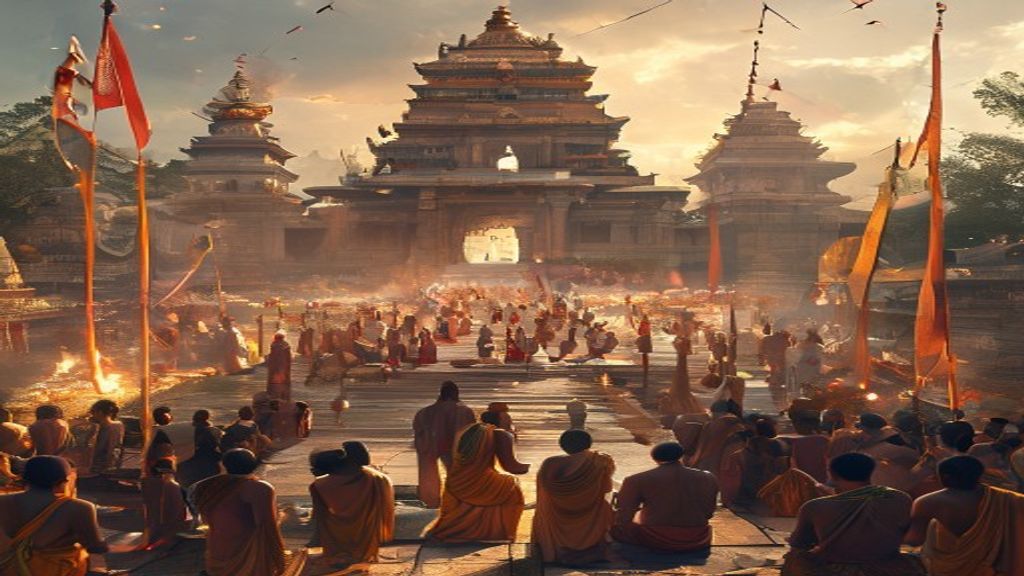
Kumbh Mela Rivers are the sacred waterways where drops of Amrita, the elixir of immortality, are fabled to have fallen during the Samudra Manthan. These four revered locations—Prayagraj on the Triveni Sangam (Ganga, Yamuna, Saraswati), Haridwar on the Ganga, Nashik on the Godavari, and Ujjain on the Shipra—each host the magnificent Kumbh Mela in a cyclic manner, sanctifying millions of devotees.
| Attribute | Details |
|---|---|
| Deities Associated | Lord Vishnu (as preserver of Amrita), various local deities (e.g., Mahakaleshwar Shiva in Ujjain, Ram in Nashik). |
| Four Locations & Rivers | Prayagraj (Triveni Sangam: Ganga, Yamuna, mythical Saraswati), Haridwar (Ganga), Nashik (Godavari), Ujjain (Shipra). |
| Key Festivals | Kumbh Mela (every 12 years at each site), Ardha Kumbh (every 6 years at Prayagraj and Haridwar), Maha Kumbh (every 144 years at Prayagraj). |
| Primary Scripture Reference | Bhagavata Purana (Canto 8), Vishnu Purana, Agni Purana, Garuda Purana. |
The Eternal Confluence of Faith: Understanding the Kumbh Mela Rivers
The Kumbh Mela, a spiritual spectacle of unparalleled grandeur, represents the very heart of Sanatan Dharma. It is not merely a gathering but a profound pilgrimage, a testament to humanity’s enduring quest for liberation and spiritual purification. At its core lie the four sacred rivers and their holy banks, which serve as the blessed sites for this celestial event. Devotees believe that a ritual bath (snan) in these waters during the auspicious astrological conjunctions cleanses sins, grants merit (punya), and paves the path to salvation (moksha). This ancient tradition, rooted deeply in Vedic cosmology and Puranic narratives, transcends mere ritual to become a vibrant, living expression of Hindu faith and spiritual unity.
Puranic History & The Legend of Amrita
The genesis of the Kumbh Mela is beautifully narrated in our sacred scriptures, particularly the Bhagavata Purana (Canto 8, Chapters 5-12), Vishnu Purana (Part 1, Chapter 9), and the Agni Purana (Chapter 272). It recounts the celestial saga of the Samudra Manthan, the churning of the cosmic ocean of milk (Kshirasagara) by the Devas (gods) and Asuras (demons) to obtain the divine nectar of immortality, the Amrita.
Led by Lord Vishnu, the Devas and Asuras used Mount Mandara as the churning rod and Vasuki, the serpent king, as the rope. After countless eons of arduous churning, various precious items emerged, culminating in the appearance of Dhanvantari, the divine physician, holding the pot (Kumbh) of Amrita. A fierce battle ensued between the Devas and Asuras for possession of the Amrita. During this 12-day (12 human years) struggle, while the divine bird Garuda was carrying the pot to safety, a few drops of the elixir accidentally spilled at four specific locations on Earth. These hallowed spots are:
- Prayagraj (Allahabad): Where drops fell at the revered Triveni Sangam, the confluence of the Ganga, Yamuna, and the subterranean Saraswati.
- Haridwar: On the banks of the sacred Ganga River, the gateway to the Himalayas and the divine.
- Nashik: Along the holy Godavari River, often called the ‘Ganga of the South’ (Dakshin Ganga), known for its association with Lord Rama.
- Ujjain: By the purifying waters of the Shipra River, in the ancient city of Mahakaleshwar, one of the Sapta Moksha Puris (seven cities of liberation).
The celestial struggle for the Amrita lasted for 12 divine days, each day equivalent to one human year, which is why the Kumbh Mela occurs every 12 years in rotation at these four sites. This profound mythological origin imbues each Kumbh Mela with an extraordinary spiritual charge, making the waters at these specific times and locations exceptionally potent for spiritual seekers.
Astrological & Geographical Significance of the Sites
The choice of these four sites is not arbitrary but deeply entwined with specific astrological alignments (Jyotisha Shastra) and geographical blessings, as described in various Puranas and astronomical treatises. The precise timing of each Kumbh Mela is determined by the positions of the Sun, Moon, and Jupiter in various zodiac signs:
- Prayagraj (Triveni Sangam): The holiest of the sites, it hosts the Mela when Jupiter is in Aries and the Sun and Moon are in Capricorn, or Jupiter is in Taurus and the Sun in Capricorn. The confluence of three mighty rivers is considered a potent vortex of spiritual energy. The Hindutva.online community recognizes this as the foremost pilgrimage.
- Haridwar (Ganga): The Mela occurs when Jupiter is in Aquarius and the Sun is in Aries. Haridwar, meaning ‘Gateway to God’, is where the Ganga descends from the mountains to the plains, a site of immense purification power.
- Nashik (Godavari): This Kumbh is held when Jupiter and the Sun are in Leo (Simha Rashi). The Godavari is revered as the Dakshin Ganga, and its waters are believed to carry the same purifying potency. The proximity to Trimbakeshwar Jyotirlinga further sanctifies the region.
- Ujjain (Shipra): The Mela is celebrated when Jupiter is in Leo and the Sun is in Aries, or Jupiter is in Scorpio and the Sun and Moon are in Cancer. Ujjain, one of the seven Mokshadayini cities, is home to the Mahakaleshwar Jyotirlinga, where Shiva himself resides as the Lord of Time. The Shipra River is mentioned in the Avantya Khanda of the Skanda Purana for its purifying qualities.
These precise celestial configurations are believed to open a cosmic window, enabling devotees to absorb maximum spiritual benefits from the sacred bath. The temporary townships built for the Mela are architectural marvels in their own right, demonstrating ancient Indian engineering and organizational prowess to accommodate millions of pilgrims.
Rituals & Puja Vidhi: The Path to Purity
The central ritual of the Kumbh Mela is the Shahi Snan (royal bath) or Mahasnan (great bath). This sacred immersion is performed particularly on auspicious dates (Parv Snan) during the Mela period. The sequence generally involves:
- Sankalpa: The devotee takes a vow or intention for the bath, praying for purification and spiritual merit.
- Pre-dawn Dip: Pilgrims usually enter the river before sunrise, believing the morning light further amplifies the spiritual energy.
- Immersion: Three or more full immersions in the holy water, often while chanting sacred mantras.
- Donation (Dana): Giving to the needy, particularly to Sadhus and Brahmins, is considered highly meritorious after the bath.
- Darshan & Puja: Visiting nearby temples and performing individual prayers (puja) to deities.
- Satsang & Discourse: Attending spiritual discourses, devotional singing (bhajan), and engaging with saints and scholars.
A distinctive feature of the Kumbh Mela is the grand procession of the Akharas—ancient orders of ascetics and Sadhus. Each Akhara, with its distinct banners and traditions, makes its way to the riverbanks for the Shahi Snan in a spectacular display of spiritual might and devotion. Witnessing this procession is a powerful experience, symbolizing the unbroken lineage of Sanatan Dharma.
Mantras & Chants for Devotees
During the holy dip and throughout the pilgrimage, devotees frequently chant various mantras for purification, devotion, and seeking divine blessings. Some prominent ones include:
- Ganga Snan Mantra (for any holy river bath):
गंगे च यमुने चैव गोदावरि सरस्वति |
नर्मदे सिंधु कावेरि जलेऽस्मिन् सन्निधिं कुरु ||Gaṅge ca Yamune caiva Godāvari Sarasvati |
Narmade Sindhu Kāveri jale’smin sannidhiṁ kuru ||
(O Ganga, Yamuna, Godavari, Saraswati, Narmada, Sindhu, Kaveri, may your presence be in this water.) - Gayatri Mantra:
ॐ भूर्भुवः स्वः तत्सवितुर्वरेण्यं भर्गो देवस्य धीमहि धियो यो नः प्रचोदयात् ॥
Om Bhur Bhuvah Svah Tat Savitur Varenyam Bhargo Devasya Dhimahi Dhiyo Yo Nah Prachodayat ||
(We meditate on the adorable glory of the Divine Vivifier, Savitur. May he inspire our intellect.) - Mahamrityunjaya Mantra: For protection and longevity.
ॐ त्र्यम्बकं यजामहे सुगन्धिं पुष्टिवर्धनम् |
उर्वारुकमिव बन्धनान् मृत्योर्मुक्षीय माऽमृतात् ||Om Tryambakaṁ Yajāmahe Sugandhiṁ Puṣṭivardhanam |
Urvārukamiva Bandhanān Mṛtyormukṣīya Mā’mṛtāt || - Vishnu Mantra: As Lord Vishnu is the preserver of Amrita.
ॐ नमो भगवते वासुदेवाय ||
Om Namo Bhagavate Vasudevaya ||
Dos and Don’ts for Pilgrims
Participating in the Kumbh Mela requires respect for its sanctity and traditions:
- Do maintain cleanliness: The Mela grounds and riverbanks are sacred. Dispose of waste responsibly.
- Do show reverence: To the Sadhus, Saints, and fellow pilgrims. Seek blessings respectfully.
- Do participate in spiritual activities: Attend Satsangs, Kirtans, and discourses.
- Do respect local customs: Dress modestly and be mindful of cultural norms.
- Do ensure personal safety: Millions gather, so be aware of your surroundings and belongings.
- Don’t litter or pollute the rivers: The holy waters are to be cherished.
- Don’t engage in commercial activities unrelated to the Mela’s spiritual purpose: Avoid exploiting the pilgrimage for personal gain.
- Don’t disturb the ascetic orders: Observe their rituals and processions with quiet respect.
- Don’t consume intoxicants or non-vegetarian food: Maintain purity of body and mind.
What is the difference between Kumbh, Ardha Kumbh, and Maha Kumbh?
The term ‘Kumbh’ generally refers to the grand pilgrimage occurring every 12 years at each of the four sites. The Ardha Kumbh (Half Kumbh) takes place every six years at Prayagraj and Haridwar, representing a midway point in the 12-year cycle. The Maha Kumbh (Great Kumbh) is an exceptionally rare event, occurring approximately every 144 years at Prayagraj when specific, rarer astrological conjunctions align, signifying an even greater spiritual potency.
Why are these four locations chosen specifically?
These four locations—Prayagraj, Haridwar, Nashik, and Ujjain—are chosen due to their direct association with the drops of Amrita spilling during the Samudra Manthan, as chronicled in the Puranas. Each site is linked to specific astrological alignments that are believed to magnify the spiritual benefits of bathing in their respective sacred rivers during the Mela period. This selection solidifies their unique status in the Hindutva.online spiritual landscape.
Who participates in the Kumbh Mela?
The Kumbh Mela is an inclusive gathering, welcoming millions of devotees from all walks of life, castes, and creeds. It includes a vast array of participants: ordinary householders (grihasthas), renunciates (sadhus) from various monastic orders (akharas), spiritual leaders (mahants), scholars (pandits), and seekers from around the globe. It is a microcosm of Hindu society, united by faith.
Dharmic Significance: A Revival of Sanatan Values
The Kumbh Mela is far more than a pilgrimage; it is a monumental reaffirmation of Sanatan Dharma. It serves as a powerful spiritual magnet, drawing millions to collectively engage in acts of faith, self-purification, and devotion. This unparalleled gathering fosters unity among diverse spiritual traditions, provides a platform for saints and scholars to disseminate ancient wisdom, and reinvigorates the cultural and spiritual fabric of Bharat. By connecting contemporary Hindus to ancient legends, sacred rivers, and timeless rituals, the Kumbh Mela ensures the continuity and vibrancy of our Dharmic heritage, inspiring generations to come on the path of righteousness and spiritual awakening.
