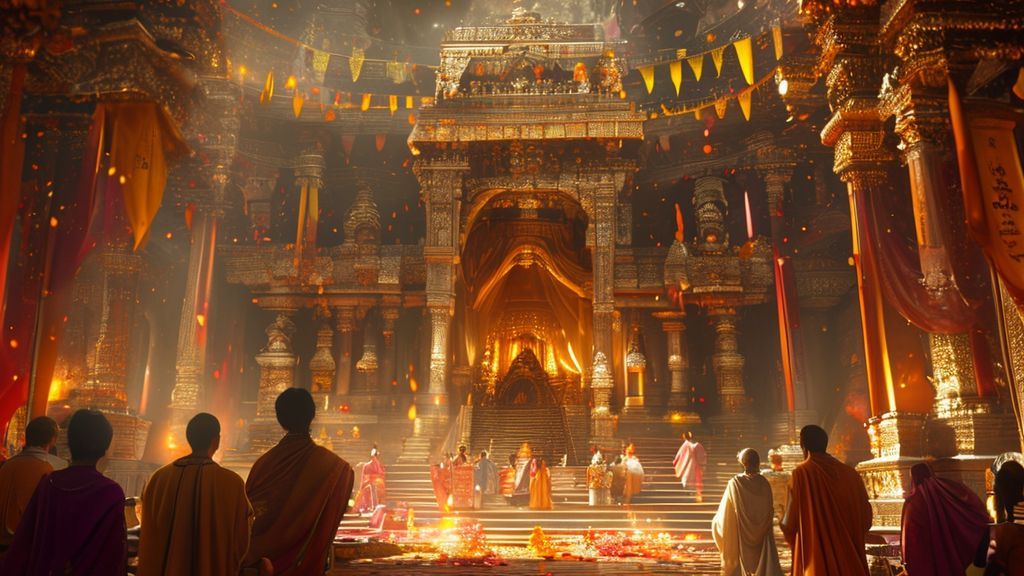
Lakshmi Ashtottarashatanamavali, the sacred recitation of Devi Lakshmi’s 108 epithets, encapsulates her diverse manifestations as the divine bestower of spiritual and material abundance, beauty, courage, and ultimate liberation. This powerful devotional practice purifies the mind, invites auspiciousness, and aligns the sincere devotee with the very essence of universal prosperity and well-being, as revealed in ancient scriptures.
| Attribute | Details |
|---|---|
| Deity | Devi Lakshmi (Goddess of Wealth, Prosperity, Fortune, Beauty, and Auspiciousness) |
| Key Festivals | Diwali (Deepavali), Varalakshmi Vratam, Sharad Purnima, Dhanteras |
| Scripture References | Skanda Purana, Padma Purana, Agni Purana, Lakshmi Tantra, Srimad Bhagavatam, Vishnu Purana |
| Primary Purpose | Invoking Sarvaishwarya (all-encompassing prosperity), dispelling poverty (spiritual and material), spiritual upliftment, fulfillment of righteous desires. |
Introduction to Sri Lakshmi Ashtottarashatanamavali
In the vast ocean of Sanatan Dharma, the chanting of divine names stands as a pre-eminent path to spiritual communion and material well-being. Among these sacred recitations, the Lakshmi Ashtottarashatanamavali, the garland of 108 names of Devi Lakshmi, holds a paramount position. Devi Lakshmi is not merely the goddess of currency or gold; she embodies every facet of prosperity, from material affluence (Dhanya Lakshmi), courage (Dhairya Lakshmi), knowledge (Vidya Lakshmi), progeny (Santana Lakshmi), to victory (Vijaya Lakshmi), and ultimate liberation (Moksha Lakshmi). She is the consort of Lord Vishnu, eternally present wherever Dharma is upheld and truth prevails. This Ashtottara Stotram is a profound meditation, a lyrical invocation that allows the devotee to connect with the multifaceted energies of the Divine Mother, inviting harmony, abundance, and auspiciousness into one’s life. Its regular recitation is considered a powerful spiritual practice for those seeking holistic well-being and to overcome life’s obstacles.
Puranic History & The Manifestation of Devi Lakshmi
The origins and glorious manifestations of Devi Lakshmi are beautifully narrated across various Puranas, establishing her as an eternal and indispensable aspect of the cosmic order. The most iconic narrative is found in the Vishnu Purana and the Srimad Bhagavatam, describing her emergence during the momentous Samudra Manthan, the churning of the cosmic ocean of milk (Ksheer Sagar) by devas and asuras. From the depths of this churning, along with various divine treasures (Ratnas), emerged Devi Lakshmi, radiant and resplendent, seated upon a lotus, holding a lotus in her hand, adorned with celestial ornaments. Her sudden appearance illuminated the three worlds, captivating all beings. She chose Lord Vishnu as her eternal consort, signifying the inseparable bond between prosperity (Lakshmi) and preservation (Vishnu) of Dharma. Thus, she is frequently referred to as Shri (श्री), embodying all auspiciousness and spiritual glory. As mentioned in the Padma Purana, her presence ensures the efficacy of all Yagnas and righteous endeavors. Whenever Dharma wanes, she descends with Lord Vishnu, her divine energy manifest in his various consorts, ensuring the restoration of cosmic balance. Her names in the Ashtottara often reflect these puranic legends and her various divine attributes.
The Mystical Significance of Each Name & The Number 108
The chanting of the Lakshmi Ashtottarashatanamavali is far more than a mere recitation; it is a profound spiritual science. Each of the 108 names (ashtottara shata) of Devi Lakshmi is a potent Bija Mantra in itself, a seed sound encapsulating a specific divine attribute and energy. When chanted with devotion, these names awaken corresponding spiritual energies within the devotee and in their environment. For instance, the name Om Kamalayai Namah invokes her lotus-like purity and beauty, while Om Hiranyamayai Namah connects us to her golden, luminous, and wealth-bestowing aspect. Om Sarvabhutahitapradayai Namah reveals her nature as the benefactor of all beings, and Om Vishnupatnyai Namah reaffirms her eternal bond with Lord Vishnu, ensuring that prosperity aligns with righteousness.
The number 108 itself holds immense significance in Hindu cosmology and spiritual practices. It is considered a mystical number connecting the individual soul (Jivatma) to the universal spirit (Paramatma). In Vedic astrology, there are 12 zodiac signs and 9 planets, and 12 multiplied by 9 equals 108. In Ayurveda, there are 108 Marma points in the body. In yoga, 108 sun salutations are often performed. In Astronomy, the distance of the Sun from Earth is approximately 108 times the Sun’s diameter, and the distance of the Moon from Earth is approximately 108 times the Moon’s diameter. Each bead on a Japa Mala is 108, representing the journey of the soul through the various states of consciousness to attain liberation. Chanting 108 names, therefore, covers the entire spectrum of the Devi’s energies and aligns the devotee with the cosmic rhythm, facilitating holistic transformation. This ancient practice is a cornerstone of devotion, celebrated by devotees on Hindutva.online and beyond.
Rituals & Puja Vidhi for Lakshmi Ashtottara
Performing the puja and recitation of Lakshmi Ashtottara with sincerity and adherence to proper vidhi amplifies its benefits. Here is a step-by-step guide for devotees:
- Achamanam & Sankalpa: Begin by purifying yourself with Achamanam (sipping water with specific mantras) and then take a Sankalpa (vow or intention) for performing the puja, stating your name, gotra, and the purpose of the recitation.
- Ganesha Puja: Invoke Lord Ganesha (Vighnaharta – remover of obstacles) first to ensure an uninterrupted and successful puja. Offer a small prayer, a lamp, and some flowers.
- Deepa Prajwalanam: Light a ghee lamp and incense sticks, symbolizing the dispelling of darkness and the spread of divine fragrance.
- Guru Vandana: Mentally or verbally offer salutations to your Guru, seeking their blessings for the successful completion of the puja.
- Devi Dhyanam: Meditate upon the beautiful form of Devi Lakshmi, visualizing her seated on a lotus, showering blessings and wealth. A suitable Dhyana Shloka can be recited here.
- Lakshmi Pratishthapana & Avahanam: If performing an elaborate puja, install an idol or picture of Devi Lakshmi. Invoke her divine presence (Avahanam) into the idol/picture.
- Offerings: Offer fresh flowers (especially red or pink lotus), Kumkum, turmeric, akshat (rice grains), fruits (banana, pomegranate), sweets (kheer, laddoo), and dry fruits.
- Ashtottara Recitation: With a pure heart and focused mind, begin chanting the Lakshmi Ashtottarashatanamavali. It is common to offer a pinch of Kumkum or akshat at Devi’s feet with each name, saying “Om [Name of Lakshmi] Namah.” Use a Japamala of 108 beads for counting.
- Deepa Arati: After completing the recitation, perform a heartfelt Arati (waving of lamps) to Devi Lakshmi, singing devotional songs (Bhajans) in her praise.
- Prasad Vitarana: Distribute the offerings (Prasad) to all present, symbolizing the sharing of divine blessings.
Mantras & Chants for Devi Lakshmi
Alongside the Ashtottara, integrating other potent Lakshmi Mantras can enhance the spiritual vibrations and benefits:
- Mahalakshmi Moola Mantra: This powerful bija mantra invokes the essence of Mahalakshmi.
ॐ ह्रीं श्रीं क्लीं ऐं सौः महालक्ष्म्यै नमः ॥
Om Hrim Shrim Klim Aim Sauh Mahalakshmyai Namah ॥
- Lakshmi Gayatri Mantra: A Vedic mantra for wisdom and illumination through Devi Lakshmi.
ॐ महालक्ष्म्यै च विद्महे विष्णु पत्न्यै च धीमहि तन्नो लक्ष्मी प्रचोदयात् ॥
Om Mahalakshmyai Cha Vidmahe Vishnupatnyai Cha Dhimahi Tanno Lakshmiprachodayat ॥
- Dhyana Shloka (Meditation Verse): To visualize Devi Lakshmi before chanting.
नमस्तेस्तु महामाये श्रीपीठे सुरपूजिते ।
शङ्खचक्रगदाहस्ते महालक्ष्मि नमोऽस्तु ते ॥
Namastestu Mahamaye Shripithe Surapujite |
Shankhachakragadahaste Mahalakshmi Namo’stu Te ||
(Salutations to You, O Great Enchantress, worshipped by the gods on the seat of prosperity. O Mahalakshmi, who holds the conch, discus, and mace, salutations to You!)
Dos and Don’ts for Lakshmi Puja & Ashtottara Chanting
- Dos:
- Maintain utmost cleanliness and purity of body, mind, and puja space.
- Perform the puja with genuine devotion (Bhakti) and faith (Shraddha).
- Offer fresh flowers, especially lotus, and pure, sattvic foods.
- Chant with clear pronunciation and a focused mind, avoiding distractions.
- Share the Prasad with others, embodying generosity.
- Practice gratitude for all blessings received.
- Don’ts:
- Perform puja in an impure state or with an unclean mind.
- Engage in greedy thoughts or desires while chanting.
- Use stale or artificial offerings.
- Be disrespectful towards others or the environment.
- Chant with ego or a sense of superiority.
Frequently Asked Questions About Lakshmi Ashtottara
What is the most auspicious time to chant Lakshmi Ashtottara?
While Lakshmi Ashtottara can be chanted daily, specific times are considered highly auspicious. Friday is Devi Lakshmi’s day. Chanting during the Brahma Muhurta (approximately 1.5 hours before sunrise) or in the evening during Shubha Horas is highly recommended. Special occasions like Diwali, Varalakshmi Vratam, and Sharad Purnima are particularly potent for this recitation.
Can anyone chant the 108 names of Devi Lakshmi?
Yes, absolutely. The chanting of divine names is a universal practice open to all sincere devotees, irrespective of caste, creed, or gender. What matters most is the purity of intention, devotion, and faith. While traditional initiation (Diksha) may enhance the benefits, it is not a prerequisite for personal devotional chanting.
How does chanting Lakshmi Ashtottara bring wealth?
The wealth invoked by Lakshmi Ashtottara is holistic. While it can certainly attract material prosperity for those who lead a Dharmic life, it primarily bestows spiritual wealth: inner peace, contentment, wisdom, courage, good health, and harmonious relationships. True wealth, in Sanatan Dharma, encompasses all aspects of well-being, and Devi Lakshmi grants this comprehensive abundance by purifying negative karmas and aligning the devotee with divine auspiciousness.
Is it necessary to use a Japamala for chanting?
While not strictly mandatory, using a Japamala (rosary) of 108 beads helps maintain count, focus, and imbues the mala itself with spiritual energy over time. A lotus seed (Kamal Gatta) mala or crystal mala is particularly suitable for Lakshmi Sadhana.
The Dharmic Significance of Preserving this Practice
The regular practice of chanting the Lakshmi Ashtottarashatanamavali is more than a personal devotional act; it is a vital thread in the tapestry of Sanatan Dharma. In an age often driven by materialism and fleeting desires, this sacred recitation reminds us that true prosperity is multifaceted, encompassing spiritual growth, ethical living, and compassionate action. It reinforces our connection to the divine feminine energy, which nurtures, sustains, and empowers the cosmos. By engaging in such practices, we not only invite auspiciousness into our individual lives but also contribute to the collective spiritual well-being of society, upholding the rich traditions passed down through millennia. It is through dedicated endeavors like those promoted by Hindutva.online that the profound wisdom and timeless practices of our ancestors continue to flourish, guiding humanity towards a path of righteousness and enduring peace.