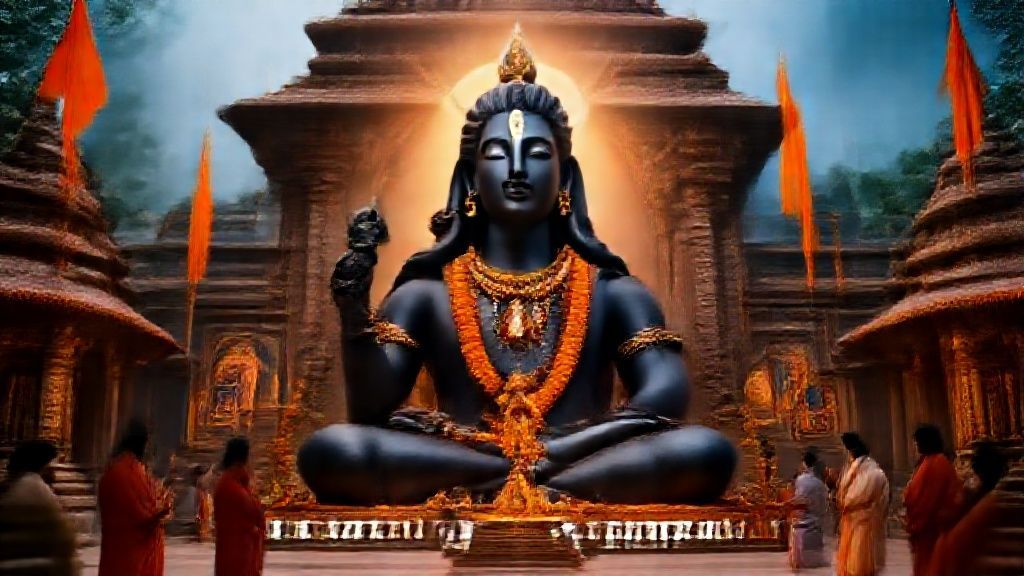
Maha Shivaratri 2026, the “Great Night of Shiva,” falls on Thursday, February 26, 2026, leading into the early hours of February 27. This auspicious observance marks the profound convergence of devotion, cosmic energy, and spiritual awakening, commemorating Bhagwan Shiva’s divine manifestations, notably the cosmic dance of creation and the sacred union with Devi Parvati, inspiring devotees to undertake fasting, vigil, and fervent prayer for inner purification and liberation.
| Attribute | Details |
|---|---|
| Deity | Bhagwan Shiva, the Mahadeva, the Destroyer and Transformer within the Trimurti. |
| Date (2026) | Thursday, February 26, 2026. The observance takes place overnight, leading into February 27. |
| Tithi | Chaturdashi Tithi (14th day) of the Krishna Paksha (dark fortnight) in the month of Phalguna (as per Amanta calendar) or Magha (as per Purnimanta calendar). |
| Auspicious Time (Nishita Kaala) | Typically the middle of the night, from 12:09 AM to 01:00 AM on February 27, 2026 (specific timings vary by location). |
| Key Festival Theme | Celebrating Shiva’s cosmic dance (Tandava), His marriage to Parvati, and His saving the world by consuming the Halahala poison. |
| Scripture Reference | Shiva Purana, Linga Purana, Skanda Purana, Vamana Purana. |
The Spiritual Essence of Maha Shivaratri
Maha Shivaratri is not merely a festival; it is a profound spiritual phenomenon, a night dedicated to the contemplation of the ultimate reality embodied by Bhagwan Shiva. Across Bharatavarsha and beyond, millions of devotees engage in rigorous austerities, fasting, prayers, and meditations to honor the Adi Yogi. This sacred night offers a unique opportunity for seekers to transcend worldly attachments and align themselves with the boundless energy of the Mahadeva, paving the way for spiritual purification and the realization of one’s true, divine nature. It is a powerful reminder of the eternal struggle between light and darkness, good and evil, and Shiva’s role as the supreme liberator from all suffering. The very air on this night is imbued with a heightened spiritual potency, making earnest sadhana profoundly impactful.
Puranic History & Sacred Legends of Shivaratri
The significance of Maha Shivaratri is deeply woven into the fabric of our Puranas and Itihasas, offering multiple layers of divine narrative that illuminate Shiva’s cosmic role:
The Lingodbhava Story: The Formless Manifestation
Perhaps the most profound legend associated with Shivaratri is narrated in the Shiva Purana, particularly in the Rudra Samhita and Vidyeshwar Samhita. It describes how Lord Brahma and Lord Vishnu once disputed over their supremacy. To quell their argument, a colossal, fiery Linga, boundless and eternal, appeared before them, piercing the heavens and the netherworlds. Both Lords attempted to find its beginning and end; Brahma, in the form of a swan, flew upwards, and Vishnu, as a boar, delved downwards. Neither could find its limits. Humbled, they realized that this effulgent column was the formless manifestation of Shiva, the supreme, incomprehensible reality. This cosmic event, known as Lingodbhava, is believed to have occurred on the 14th day of the dark fortnight, giving rise to the worship of Shiva Lingam on Maha Shivaratri. The Lingam thus represents the infinite, unmanifest Brahman.
Samudra Manthan: Shiva as Neelkanth
Another pivotal legend, detailed in the Bhagavata Purana and Vishnu Purana, recounts the “Churning of the Cosmic Ocean” (Samudra Manthan). During this great endeavor by Devas and Asuras to obtain Amrita (the nectar of immortality), a deadly poison named Halahala emerged first, threatening to destroy all creation. Fearing universal annihilation, the Devas sought refuge in Bhagwan Shiva. In an act of unparalleled compassion, Shiva consumed the entire poison, holding it in His throat, which turned blue, earning Him the epithet Neelkanth (Blue-Throated). Devi Parvati held His throat to prevent the poison from descending into His body or escaping, thus saving the cosmos. This selfless act of preservation is widely celebrated on Maha Shivaratri, symbolizing Shiva’s role as the protector of Dharma and the embodiment of compassion.
The Divine Union: Shiva Vivah
Many devotees also celebrate Maha Shivaratri as the night when Bhagwan Shiva performed His celestial dance of creation, preservation, and destruction (the Tandava), and also as the auspicious occasion of His marriage to Devi Parvati. As described in the Shiva Purana (Sati Khanda and Parvati Khanda), Devi Parvati undertook severe penance to win Shiva as her husband. Their sacred union signifies the perfect balance of masculine (Purusha) and feminine (Prakriti) energies, the confluence of consciousness and energy. This marriage represents the ultimate spiritual goal – the merging of individual consciousness with the divine, making the night sacred for those seeking marital harmony and spiritual partnership.
Cosmic Alignments & Yogic Significance
While Maha Shivaratri is not tied to a specific architectural marvel, its celebration is profoundly linked to cosmic alignments and deep yogic principles. The 14th day of the lunar month, especially in the dark fortnight, holds a unique energetic signature. On this night, the Earth’s northern hemisphere is positioned such that there is a natural upward surge of energy within the human system. This makes Maha Shivaratri an exceptionally potent night for spiritual practices, particularly for activating the Mooladhara Chakra, the base energy center, which is crucial for spiritual ascent.
Jagaran, the night vigil, is not merely a tradition but a scientific method. Staying awake with an erect spine allows for the natural upward movement of one’s spiritual energies, enhanced by the planetary positions. Shiva, as the Adi Yogi, the first yogi, represents the pinnacle of yogic realization. His meditative state during this night inspires devotees to turn inwards, transcending the mundane. The cosmic dance of Nataraja, Shiva’s manifestation as the Lord of Dance, is a profound symbol of the universe’s rhythmic processes – creation, preservation, dissolution, illusion, and liberation – all interconnected and eternally unfolding. Meditating on these truths during Shivaratri helps align the individual microcosm with the universal macrocosm.
Rituals & Puja Vidhi for Maha Shivaratri
Observing Maha Shivaratri involves a series of sacred rituals aimed at purifying the mind, body, and spirit. The primary observance is the fasting (Vrat) and night-long worship (Jagaran).
- Sankalpa (Vow): On the morning of Shivaratri, after an early bath (often in sacred waters), take a solemn vow to observe the fast with devotion and sincerity for the well-being of all beings.
- Nirjala Vrat (Optional): Many devotees observe a strict fast, sometimes even abstaining from water (Nirjala Vrat). Others consume fruits, milk, or non-grain items.
- Abhishekam: Throughout the day and especially during the night, devotees perform Abhishekam (ritual bathing) of the Shiva Lingam. This typically involves:
- First Prahar (6 PM – 9 PM): Bath with Milk (Doodh), symbolizing purity and longevity.
- Second Prahar (9 PM – 12 AM): Bath with Curd (Dahi), symbolizing prosperity and progeny.
- Third Prahar (12 AM – 3 AM): Bath with Ghee (Clarified Butter), symbolizing victory and health.
- Fourth Prahar (3 AM – 6 AM): Bath with Honey (Madhu), symbolizing sweetness of speech and blessings.
Each Abhishekam is accompanied by offerings of Bilva Patra (Bael leaves), Dhatura flowers, Aak flowers, cannabis leaves (Bhang), sandalwood paste (Chandan), vibhuti, and fruits, while chanting mantras.
- Jagaran (Night Vigil): Staying awake throughout the night, chanting mantras, singing bhajans, reading sacred texts, and meditating on Shiva’s glory. This is a critical component for spiritual upliftment.
- Parana (Breaking the Fast): The fast is broken on the morning after Shivaratri, after performing the morning puja and offering prayers, typically with a sattvic meal.
Powerful Mantras & Chants for Shiva
Chanting Shiva’s mantras on Maha Shivaratri is highly auspicious and spiritually enriching. Here are some key chants:
- Panchakshari Mantra:
ॐ नमः शिवाय (Om Namah Shivaya)
This five-syllable mantra is the most fundamental and potent Shiva mantra, invoking His presence and energy.
- Mahamrityunjaya Mantra:
ॐ त्र्यम्बकं यजामहे सुगन्धिं पुष्टिवर्धनम्। उर्वारुकमिव बन्धनान् मृत्योर्मुक्षीय माऽमृतात्॥
(Om Tryambakam Yajamahe Sugandhim Pushtivardhanam | Urvarukamiva Bandhanan Mrityor Mukshiya Maamritat ||)
This powerful mantra is dedicated to Shiva as Tryambaka (the three-eyed one), seeking protection from untimely death, diseases, and for overall well-being and liberation.
- Shiva Gayatri Mantra:
ॐ तत्पुरुषाय विद्महे महादेवाय धीमहि तन्नो रुद्रः प्रचोदयात्॥
(Om Tatpurushaya Vidmahe Mahadevaya Dhimahi Tanno Rudrah Prachodayat ||)
This mantra invokes Shiva for spiritual guidance and enlightenment.
- Hara Hara Mahadeva:
हर हर महादेव (Hara Hara Mahadeva)
A popular devotional chant, expressing reverence and surrender to Shiva.
Dos and Don’ts on Maha Shivaratri
Dos:
- Observe a sincere fast, tailored to your health capacity.
- Perform Abhishekam of the Shiva Lingam with devotion.
- Chant Shiva mantras, especially “Om Namah Shivaya,” continuously.
- Stay awake during the night (Jagaran) and engage in prayers, meditation, or Kirtan.
- Visit a Shiva temple and offer prayers.
- Practice charity and selfless service (Seva).
- Maintain a sattvic (pure) state of mind, avoiding anger, lust, and greed.
Don’ts:
- Consume non-vegetarian food, alcohol, or tobacco.
- Engage in lying, gossip, or hurtful speech.
- Sleep during the night vigil (Jagaran).
- Harm any living being, intentionally or unintentionally.
- Break the fast before the designated time or without performing morning rituals.
- Disrespect elders, gurus, or fellow devotees.
Why is Fasting on Maha Shivaratri Important?
Fasting (Vrat) on Maha Shivaratri holds profound spiritual significance. It is a form of penance (Tapasya) that helps purify the body and mind, making them more receptive to divine energies. By abstaining from food, one conserves energy typically spent on digestion, redirecting it towards spiritual contemplation and heightened awareness. It also signifies control over one’s senses and desires, which is crucial for spiritual discipline.
What is the Significance of Bilva (Bael) Leaves for Shiva Puja?
The Bilva Patra (Bael leaf) is exceptionally sacred to Bhagwan Shiva. According to the Skanda Purana and Linga Purana, the Bilva tree is believed to be a manifestation of Devi Parvati, and its leaves are symbolic of Shiva’s three eyes (Trinetra) or the Trimurti (Brahma, Vishnu, Shiva). Offering Bilva leaves is considered highly meritorious, capable of absolving sins and fulfilling desires. It is said that merely offering a single Bilva leaf with devotion is more potent than offering gold and jewels.
Can Women Observe Maha Shivaratri Fast and Rituals?
Absolutely. Maha Shivaratri is observed with equal fervor by both men and women. In fact, Devi Parvati herself undertook severe austerities to win Shiva as her consort, making the day particularly significant for women seeking a good spouse, marital bliss, and the well-being of their family. Women are encouraged to perform all rituals, observe the fast, and participate in the night vigil with devotion.
What is Nishita Kaala during Shivaratri?
Nishita Kaala refers to the most auspicious and potent period during the night of Maha Shivaratri, often considered the time when Shiva manifested as the Lingodbhava or when He performs His cosmic dance. It typically falls around midnight, specific timings varying slightly based on geographical location and panchang calculations. Performing puja, chanting, and meditation during Nishita Kaala is believed to yield maximum spiritual benefits, as the Shiva Tattva (principle) is said to be most active and accessible during this time.
The Eternal Resonance: Why This Matters for Every Hindu
Maha Shivaratri transcends mere ritual; it is an annual reminder of the profound spiritual truths central to Sanatan Dharma. It calls upon every seeker to confront inner darkness, cultivate compassion, and strive for self-realization. By observing this sacred night, we not only honor Bhagwan Shiva but also connect with the eternal source of cosmic energy that sustains and transforms the universe. It is a period of intense introspection, purification, and renewal, fostering unwavering faith and guiding us towards moksha. The traditions surrounding this night, meticulously preserved and passed down through generations, ensure that the timeless wisdom of our Rishis and Devas remains vibrant and accessible, reinforcing the foundations of Hindu spirituality and culture for future generations. Explore more such insights on Hindutva.online.