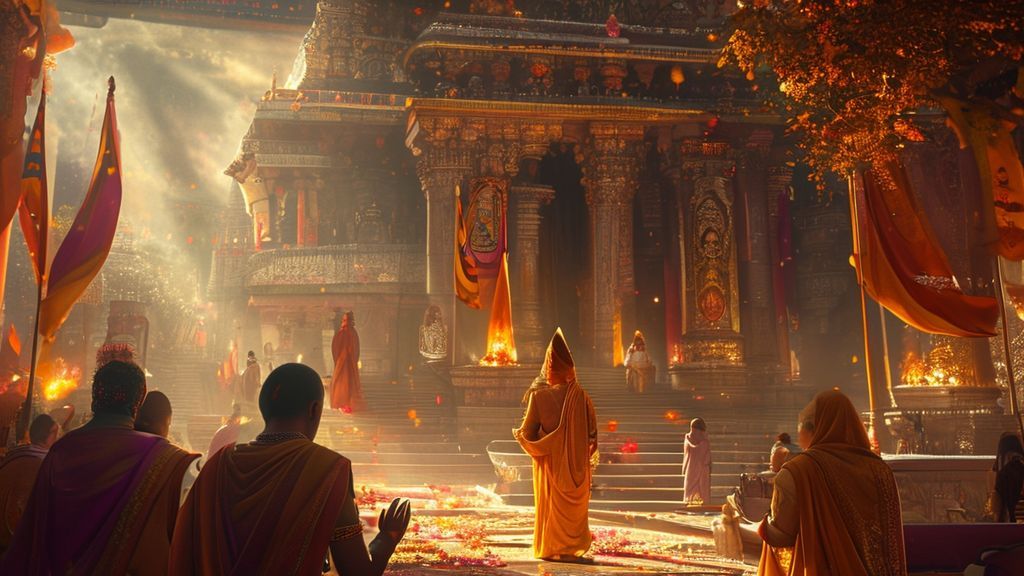
Hindu Marriage Wisdom offers profound antidotes to relationship anxiety by framing marriage not merely as a social contract but as a sacred Samskara—a spiritual journey towards Dharma, Artha, Kama, and Moksha. It emphasizes mutual respect, shared spiritual growth, and a deep understanding of one’s partner as a divine reflection, fostering enduring harmony and mitigating modern relationship stresses through time-tested Vedic principles.
| Attribute | Details |
|---|---|
| Concept of Marriage | Vivaha Samskara, a sacred sacrament and spiritual union for progeny and Dharma, not merely a social contract. |
| Core Principles | Dharma (righteous conduct), mutual respect, shared spiritual journey, fulfillment of Purusharthas (life goals). |
| Key Ritual | Saptapadi (Seven Steps around the sacred fire), symbolizing seven vows for a lifetime of partnership. |
| Primary Scripture Reference | Rig Veda (X.85), Atharva Veda, various Grihya Sutras, Manusmriti. |
The Sacred Tapestry of Vivaha: An Anchor Against Anxiety
In an age increasingly characterized by fleeting connections and existential unease, relationship anxiety has become a prevalent challenge, even for the most sincere hearts. Sanatan Dharma, with its eternal wisdom, offers a profound antidote through its understanding of Vivaha—the sacred institution of Hindu marriage. Far from a mere societal convention, Hindu marriage is a Samskara, a purifying rite of passage that elevates individuals to a higher spiritual plane, uniting two souls with a shared purpose guided by Dharma. It is a journey conceived not for transient pleasure, but for mutual growth, spiritual liberation, and the propagation of righteous generations, inherently designed to alleviate the anxieties born of uncertainty and self-centeredness.
This ancient wisdom, codified over millennia, provides a robust framework that instills permanence, purpose, and peace into the marital bond. By grounding relationships in sacred duty, selfless love, and cosmic understanding, it transforms potential anxieties into opportunities for deeper devotion and unwavering commitment. Understanding the intricate principles and practices of Hindu marriage is thus essential for every seeker aiming to build relationships imbued with stability and spiritual fulfillment.
Puranic Narratives and the Divine Blueprint of Union
The concept of marriage in Sanatan Dharma is not a human invention but a reflection of cosmic unions, exemplified by the divine couples whose narratives fill our Itihasas and Puranas. The Rig Veda (X.85), often referred to as the ‘Surya Suktam’, describes the marriage of Surya’s daughter, Suryasa, setting the prototype for Vedic weddings, emphasizing blessings for prosperity, progeny, and long life. The Atharva Veda further elaborates on rites to ensure marital harmony and ward off discord.
Consider the unparalleled union of Shiva and Parvati, detailed in the Shiva Purana. Their marriage signifies the harmonious integration of Purusha (Consciousness) and Prakriti (Nature), the ultimate masculine and feminine principles. Parvati’s intense penance (*tapasya*) to win Shiva illustrates unwavering devotion and determination, demonstrating that true union often requires profound sacrifice and spiritual effort. Similarly, the sacred bond between Rama and Sita, as narrated in the Valmiki Ramayana, epitomizes Dharma, unwavering loyalty, and steadfastness in the face of immense adversity. Their story teaches that mutual respect and adherence to righteous conduct are the bedrock upon which a marriage endures, mitigating anxiety through resolute faith and shared values.
The union of Lakshmi and Vishnu, revered in the Vishnu Purana, symbolizes prosperity, spiritual grace, and the perfect partnership in upholding cosmic order. These divine archetypes provide the blueprint for human relationships, guiding devotees to view their marital journey not just as a personal endeavor but as a microcosm of the divine lila, inspiring awe and profound respect for the institution.
The Sacred Mandap: Architectural Symbolism and Psychological Engineering
While Hindu marriage wisdom doesn’t revolve around a single temple’s architecture, the marriage ceremony itself is a masterpiece of symbolic architecture and profound psychological engineering, most notably enacted within the sacred space of the Vivaha Mandap. This temporary, consecrated pavilion, often adorned with vibrant colors and auspicious symbols, is not just a stage but a microcosm of the universe where the divine union takes place. Its four pillars represent the four Purusharthas (Dharma, Artha, Kama, Moksha) that the couple vows to pursue together.
The elaborate design of the rituals themselves constitutes a “scientific marvel” of human psychology and societal stability. Each step, from the welcoming of the groom (Varagamana) to the final blessings, is meticulously crafted to progressively deepen the couple’s commitment, foster mutual understanding, and integrate them into their extended families. The presence of the sacred fire (Agni) as the divine witness, the chanting of Vedic mantras, and the participation of elders all serve to imbue the union with gravitas and cosmic significance. This carefully orchestrated process helps alleviate relationship anxiety by providing a structured, universally recognized framework for transition, reinforcing the sanctity and permanence of the bond, thus anchoring the couple in a sense of security and shared destiny. It’s a profound demonstration of how Sanatan Dharma meticulously crafts environments and experiences for spiritual and social well-being.
Rituals and Puja Vidhi: Fortifying the Marital Bond
The Hindu marriage ceremony is a sequence of powerful rituals, each designed to weave a stronger, more resilient bond, directly counteracting sources of relationship anxiety. These steps are not mere customs but profound spiritual practices:
- Kanyadaan (Giving Away the Daughter): The father offers his daughter to the groom, symbolizing the transfer of responsibility and trust. This act alleviates the anxiety of parting by emphasizing the sacredness of the new bond and the groom’s dharma to protect and cherish.
- Panigrahan (Accepting the Hand): The groom takes the bride’s hand, signifying his acceptance of her as his life partner and his pledge to protect her. The mantra chanted, “Dharmo prajayaai dhanayaai griheshu,” invokes blessings for Dharma, progeny, and prosperity in the home.
- Laja Homam (Offering Puffed Rice to Agni): The bride offers puffed rice to the sacred fire, symbolizing prosperity and seeking blessings for her husband’s long life and well-being. This act fosters a sense of selfless contribution and shared responsibility.
- Agni Parinayanam (Circumambulating the Fire): The couple circumambulates the sacred fire four times, symbolizing their commitment to Dharma, Artha, Kama, and Moksha. Agni is the divine witness to their vows, imbuing them with cosmic significance and reducing anxiety about the future through divine sanction.
- Saptapadi (Seven Steps): This is the most crucial part, where the couple takes seven steps together, each with a specific vow. This ritual explicitly lays down the foundation of their partnership, reducing ambiguity and anxiety about mutual expectations.
- Mangalsutra Dharanam (Tying the Sacred Thread): The groom ties the Mangalsutra around the bride’s neck, a sacred thread symbolizing their marital union, commitment, and the protection of the husband. It is a visible sign of their bond, offering reassurance.
- Grihapravesha (Entry into the New Home): The bride’s first entry into her new home, often preceded by rituals, signifies her becoming an integral part of her new family, minimizing the anxiety of integration and fostering a sense of belonging.
Mantras and Chants for Marital Harmony
Vedic mantras are the very breath of these rituals, imbuing them with spiritual power. Chanting them daily or reflecting upon their meaning can profoundly soothe relationship anxieties by aligning the couple with higher cosmic truths:
- During Panigrahan, the groom might chant:
ओ३म् गृह्णामि ते सौभगत्वाय हस्तं मया पत्या जरदष्टिर्यथासः।
भगो अर्यमा सविता पुरन्धिर्मह्यं त्वादुर्गार्हपत्याय देवाः॥“Om Grihnami te saubhagatvaya hastam maya patya jaradashtiryathasah.
Bhago Aryama Savita Purandhirmahyam tvadurgarhapatyaya devah.”
(I seize your hand for good fortune, that you may live with me, your husband, until old age. The gods Bhaga, Aryaman, Savitar, and Purandhi have given you to me for performing the duties of a householder.) - During Saptapadi, for each step, specific vows are made. For example, the first step:
इष एकपदी भव सा मां अनुव्रता भव। विष्णुस्त्वा नयतु पुत्रान् विन्दावहै बहून् ते सन्तु जरदष्टयः॥
“Iṣa ekapadī bhava sā māṁ anuvratā bhava. Viṣṇustvā nayatu putrān vindāvahai bahūn te santu jaradaṣṭayaḥ.”
(May you take one step for food and nourishment, be devoted to me. May Vishnu lead you, may we obtain many sons who live to old age.) - A general mantra for seeking harmony and mutual understanding:
ओ३म् सहनाववतु। सह नौ भुनक्तु। सह वीर्यं करवावहै।
तेजस्वि नावधीतमस्तु मा विद्विषावहै। ओ३म् शान्तिः शान्तिः शान्तिः॥“Om Saha Navavatu. Saha Nau Bhunaktu. Saha Veeryam Karavavahai.
Tejasvi Navadheetamastu Ma Vidvishavahai. Om Shantih Shantih Shantih.”
(May we be protected together; may we be nourished together; May we work together with great energy. May our intellect be sharpened; May we not quarrel with each other. Om Peace, Peace, Peace.) This Upanishadic mantra beautifully encapsulates the spirit of joint endeavor and non-conflict essential for marital bliss.
Dos and Don’ts for a Harmonious Vivaha
To cultivate a marriage free from unnecessary anxiety and full of mutual respect, certain Dharmic principles must be diligently followed:
- Do Practice Dharma: Always act with righteousness and integrity towards your partner and family. Understand your specific roles (Dharma) as a spouse and fulfill them with devotion.
- Do Communicate Openly and Respectfully: Address concerns with humility and patience, seeking understanding rather than victory. Use words that build, not break.
- Do Cultivate Selflessness: Prioritize your partner’s well-being and happiness. The Vedic ideal is to see the divine in your spouse.
- Do Engage in Shared Spiritual Practices: Pray together, visit temples, or study scriptures. A shared spiritual journey strengthens the bond and provides perspective. Hindutva.online offers many resources for this.
- Don’t Harbor Resentment: Forgive readily and seek forgiveness humbly. Dwelling on past hurts erodes the foundation of trust.
- Don’t Compare Your Marriage: Every union is unique. Comparing your relationship to others’ idealized versions on social media breeds discontent and anxiety.
- Don’t Neglect Your Own Growth: While marriage is about unity, individual spiritual and personal growth is vital. A fulfilled individual contributes more positively to the relationship.
- Don’t Underestimate the Role of Elders: Seek guidance from wise elders who have successfully navigated marital life. Their experience is invaluable.
How does Dharma help overcome marital conflicts?
Dharma provides an unwavering moral compass. When both partners operate from a foundation of Dharma, their actions are guided by truth, integrity, and duty, rather than fleeting emotions or selfish desires. This framework encourages self-reflection, encourages one to prioritize the well-being of the unit over individual ego, and fosters a sense of accountability and commitment, making conflicts resolvable through righteous conduct and mutual understanding rather than escalating into destructive battles.
Is an arranged marriage inherently less prone to relationship anxiety?
While often stereotyped, a traditional Hindu arranged marriage, when done correctly, can indeed mitigate certain anxieties. It often involves extensive family vetting, shared cultural and spiritual values, and the counsel of experienced elders, providing a strong support system and reducing uncertainties about background or future compatibility. The initial “arrangement” is merely an introduction; the couple then consciously builds their love and commitment within this secure framework, often finding a unique sense of stability that addresses many common sources of anxiety.
What is the role of individual growth in a Hindu marriage?
Hindu marriage, while emphasizing unity, does not negate individual growth; rather, it provides a sacred crucible for it. The relationship becomes a ‘yoga’ for self-realization, where each partner helps the other overcome imperfections, practice detachment, cultivate virtues, and ultimately move closer to Moksha. Anxiety often arises from stagnation or a feeling of being limited; a dharmic marriage encourages continuous introspection and improvement, ensuring both partners evolve spiritually and personally.
How can modern couples apply this ancient wisdom to reduce anxiety?
Modern couples can adopt key principles: understand marriage as a sacred commitment for mutual growth, not just personal happiness. Practice regular communication rooted in respect (Dharma). Dedicate time for shared spiritual practices, even if it’s just daily gratitude. Embrace the concept of selfless service within the relationship. Seek wisdom from spiritual texts and respected elders. By consciously integrating these time-tested principles, they can transform anxiety into enduring peace and profound connection, finding invaluable guidance on Hindutva.online.
Vivaha: A Path to Moksha and the Preservation of Sanatan Dharma
The wisdom inherent in Hindu marriage is more than just a remedy for relationship anxiety; it is a profound pathway to Moksha—spiritual liberation. By embracing the sacred duties and spiritual opportunities within Vivaha, individuals learn selfless love, patience, compromise, and the intricate dance of divine partnership. A stable, dharmic marriage contributes directly to the well-being of the family (Grihastha Dharma), which in turn forms the bedrock of a righteous society.
When relationships are anchored in these eternal truths, they become powerful vehicles for preserving Sanatan Dharma itself, ensuring that future generations inherit not just cultural traditions but a vibrant, living spiritual legacy that guides them towards joy, purpose, and ultimate freedom from all forms of anxiety. This sacred institution is truly a gift to humanity, offering peace in a turbulent world.
