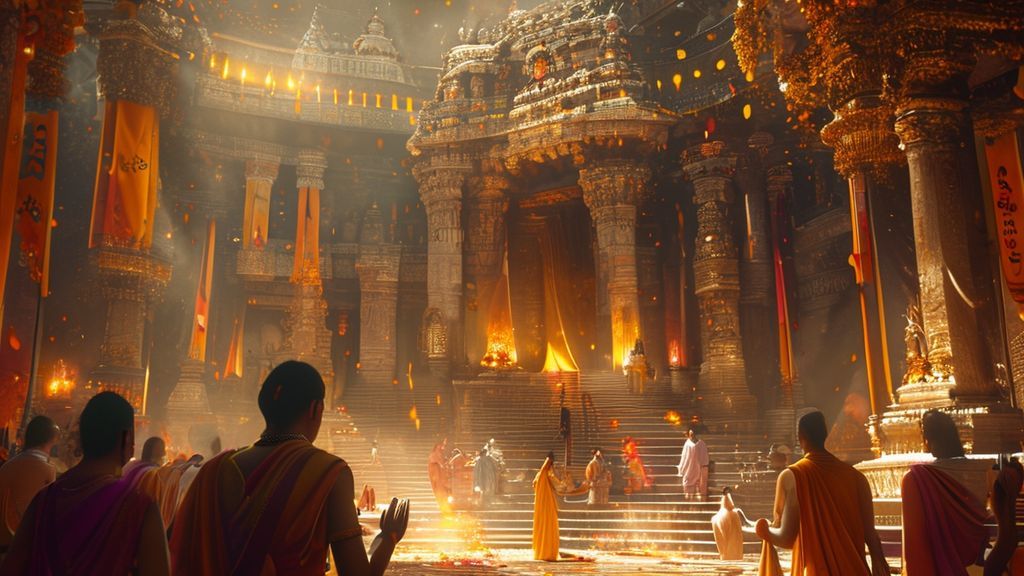
Shiva Sahasranamam, meaning “the thousand names of Lord Shiva,” is a sacred compilation of epithets extolling the boundless glories, attributes, and cosmic functions of Mahadeva. Chanting these divine names purifies the mind, eradicates sins, bestows immense spiritual merit, and facilitates a profound connection with the Supreme Being, paving the path to liberation and inner peace.
| Attribute | Details |
|---|---|
| Deity | Bhagavan Shiva, the Destroyer and Regenerator, the Supreme Consciousness. |
| Origin/Compiler | Various traditions; prominent versions by Maharishi Vyasa (Mahabharata), and others in Puranas. |
| Key Festival for Chanting | Maha Shivaratri, Mondays, Pradosham, Shravan Maas. |
| Scripture Reference | Mahabharata (Anushasana Parva, Chapter 17), Linga Purana (Chapter 65), Padma Purana (Srishti Khanda), Skanda Purana (Avantya Khanda). |
The Ineffable Glory: Introduction to Shiva Sahasranamam
In the vast ocean of Sanatan Dharma, the chanting of divine names, known as Nama Smarana, is hailed as one of the most potent paths to spiritual realization in this Kali Yuga. Among these, the Shiva Sahasranamam stands as a colossal hymn, a profound testament to the infinite glories of Bhagavan Shiva. It is not merely a collection of words, but a garland of potent mantras, each name encapsulating a specific attribute, power, or cosmic function of the Great Lord. For the sincere seeker, this sacred recitation is a journey into the heart of Shiva Tattva, offering solace, protection, and liberation from the cycles of suffering. Its recitation transcends the boundaries of time and space, elevating the consciousness and drawing the devotee closer to the ultimate reality, Para Brahman, personified as Lord Shiva.
The practice of chanting these thousand names is a spiritual discipline that purifies the mind (Chitta Shuddhi), calms the senses (Indriya Nigraha), and instills unwavering devotion (Bhakti). It is a direct invocation of Shiva’s grace, dissolving negative karmas and illuminating the path towards inner wisdom and eternal bliss. Every name is a key to unlocking a specific aspect of Shiva’s multifaceted being, allowing the devotee to experience His immanence and transcendence simultaneously. Through this profound spiritual practice, one can truly understand the essence of Shiva, the benevolent one, the destroyer of ignorance, and the bestower of ultimate liberation.
Puranic History and Legendary Origins
The origins of the Shiva Sahasranamam are deeply embedded in our sacred scriptures, particularly the Itihasas and Puranas, presenting multiple venerable versions, each with its unique narrative context but converging on the glorification of Shiva.
The Mahabharata Version: The most widely known and revered version originates from the Anushasana Parva of the Mahabharata (Chapter 17). Here, Bhagavan Krishna, the Supreme Personality of Godhead, imparts this profound knowledge to Yudhishthira, the eldest of the Pandavas, describing how he himself worships Shiva through these thousand names. Krishna recounts the legend of Upamanyu, a great devotee of Shiva, who attained immense spiritual powers and boons by constant chanting of Shiva’s names. This version is celebrated for its authenticity and the authority of its narrator, Lord Krishna, making it a cornerstone for devotees.
The Linga Purana Version: Another significant rendition is found in the Linga Purana (Chapter 65). This version is narrated by Lord Vishnu to Brahma, emphasizing Shiva’s supreme position and Vishnu’s own devotion to Him. It elaborates on Shiva’s cosmic dance, His forms as creator, preserver, and destroyer, and His transcendental attributes. The Linga Purana’s Sahasranamam is rich in philosophical insights, portraying Shiva as the ultimate reality, the source of all existence.
The Padma Purana Version: The Padma Purana, specifically in its Srishti Khanda, also presents a Shiva Sahasranamam, albeit with a slightly different set of names and narrative. This version often emphasizes Shiva’s role in the creation of the universe and His benevolent nature towards all beings.
The Skanda Purana Version: In the Skanda Purana (Avantya Khanda), a Sahasranamam is recounted, often emphasizing Shiva’s fierce aspects and His power to destroy evil and protect the righteous. It highlights various historical and mythological accounts associated with Shiva’s interventions.
Despite these variations, the core essence remains the same: the infinite nature of Shiva cannot be contained by mere words, yet these thousand names offer a glimpse into His divine majesty, allowing devotees to connect with different facets of His cosmic play (Lila). Each version serves to deepen the understanding and devotion towards Sarveshwara, the Lord of all.
The Architecture of Sound: Scientific Marvels of the Names
While the term “architecture” typically refers to physical structures, within the realm of Sanatan Dharma, it extends to the very structure of creation, the cosmos, and even the human consciousness. The Shiva Sahasranamam is not a physical temple, but a sublime *architecture of sound* (Shabda Brahma) and a sophisticated *engineering of consciousness*.
Each of the thousand names of Shiva is a potent bija mantra, a seed sound imbued with specific vibrational energy. According to Vedic phonetics and spiritual science, sounds have distinct forms (rupa) and effects. When these names are chanted with precision (shuddhi) and devotion (bhava), they generate specific vibratory patterns that resonate with the universal consciousness of Shiva. This resonance has a profound impact:
Sonic Resonance & Energy Fields: The collective vibrations from chanting purify the individual’s aura (pranamaya kosha) and create a sanctified energetic field around the chanter. This aligns the individual’s subtle body with cosmic energies, fostering healing, mental clarity, and spiritual elevation.
Neuro-Linguistic Programming: From a modern perspective, the repetitive chanting of positive divine attributes is akin to profound neuro-linguistic programming. It rewires neural pathways, diminishes negative thought patterns, and reinforces virtues like compassion, fearlessness, and detachment, which are epitomized by Shiva.
Cosmic Microcosm: Just as the cosmos is an intricate design of divine intelligence, the Sahasranamam is a microcosm of Shiva’s infinite attributes. Each name, like “Om Omkaraya Namah” (Salutations to the primal sound ‘Om’), “Om Vayuve Namah” (Salutations to the Wind), “Om Pranathave Namah” (Salutations to the Prana), connects the chanter to various elements, forces, and principles of the universe that are ultimately Shiva. This reveals the immanence of the Divine in every aspect of existence.
Numerical Significance: The number “thousand” (sahasra) is not merely a count but often signifies infinitude and completeness in Vedic texts. Chanting a thousand names implies an attempt to comprehend and merge with the boundless and limitless nature of the Divine.
The structured recitation of these names, often accompanied by specific meters (chandas), is a yogic practice in itself, harnessing the power of speech (Vaak Shakti) to transcend the limitations of the material world and experience the sublime unity with the Supreme. This internal architecture transforms the very fabric of one’s being, guiding towards enlightenment, a journey powerfully supported by resources like those found at Hindutva.online.
Rituals and Puja Vidhi for Chanting
Chanting the Shiva Sahasranamam is a sacred act that requires preparation, sincerity, and devotion. While the primary emphasis is on internal purity (antar shuddhi), certain external observances enhance the experience and multiply the benefits.
Purification (Shuddhi): Begin with a purifying bath. Wear clean, traditional attire. Ensure your mind is calm and free from distractions. This external cleanliness reflects and aids internal purity.
Altar Preparation: If possible, sit before an image or idol of Lord Shiva (a Lingam is ideal). Light a lamp (Deepam) and incense (Dhupam). Offer fresh flowers, especially Bilva leaves (Bilvapatra), which are exceedingly dear to Shiva. A small offering of fruits or milk can also be placed.
Sankalpa (Intention): Before commencing, make a clear mental or verbal resolution (Sankalpa) for why you are performing the chanting – for spiritual growth, peace, removal of obstacles, or simply out of devotion.
Dhyana (Meditation): Briefly meditate on the form of Lord Shiva – perhaps white-complexioned, with a blue throat, matted locks, crescent moon, Ganga, trident, and snake. Visualize His serene and benevolent aspect.
Chanting: Begin the recitation of the Shiva Sahasranamam. You may follow a text, or if memorized, chant without it. Focus on the pronunciation (उच्चारण) and, more importantly, the meaning (अर्थ) and the feeling (भाव) behind each name. Chanting slowly and clearly is more beneficial than rushing.
Japa Mala: A Rudraksha mala can be used to keep count if you are performing multiple rounds, though it is not strictly necessary for a single recitation of the entire Sahasranamam.
Offering and Aarti: After completing the chanting, offer a final prayer to Lord Shiva, expressing gratitude. You may perform a simple Aarti, waving a lamp before the deity. Conclude by prostrating before the Lord, seeking forgiveness for any errors.
Regular practice, especially during auspicious times like Mondays, Pradosham, or Maha Shivaratri, greatly amplifies the spiritual benefits.
Mantras & Chants: Glimpses of Divine Attributes
The Shiva Sahasranamam is itself a grand mantra, a continuous stream of Shiva’s names. Each name acts as an individual mantra, invoking a specific aspect of His divinity. While reciting the entire Sahasranamam is ideal, understanding a few key names can deepen the appreciation:
ॐ शिवाय नमः (Om Shivaya Namah): Salutations to Shiva, the Auspicious One, the embodiment of goodness and purity.
ॐ महेश्वराय नमः (Om Maheshwaraya Namah): Salutations to Maheshwara, the Great Lord, the Supreme Ruler of the universe.
ॐ शंभवे नमः (Om Shambhave Namah): Salutations to Shambhu, the Bestower of Happiness and Prosperity, the source of well-being.
ॐ पिनाकिने नमः (Om Pinakine Namah): Salutations to Pinakine, the Wielder of the Pinaka Bow, symbolizing His power to destroy evil and ego.
ॐ शूलपाणये नमः (Om Shoolapanaye Namah): Salutations to Shoolapanaye, the One with the Trident in Hand, signifying His control over the three Gunas (Sattva, Rajas, Tamas) and His power to destroy ignorance.
ॐ विरूपाक्षाय नमः (Om Virupakshaya Namah): Salutations to Virupakshaya, the Odd-Eyed One (with the third eye), symbolizing His transcendental vision beyond the ordinary.
ॐ नीलकण्ठाय नमः (Om Neelakanthaya Namah): Salutations to Neelakantha, the Blue-Throated One, who consumed the Halahala poison to save the world, exemplifying His compassion.
The Phala Shruti, the section enumerating the benefits, often found at the end of the Sahasranamam, promises immense rewards for regular chanting:
“आयुष्यं वर्धनं पुण्यं सर्वशत्रुविनाशनम्।
सर्वार्थसाधकं चैव व्याधिदारिद्र्यनाशनम्।।”
(It increases longevity and merit, destroys all enemies.
It grants all desired objectives, and eradicates disease and poverty.)
These powerful affirmations serve to inspire and remind the devotee of the boundless grace of Shiva that flows through these sacred names. Regular chanting cultivates inner strength, peace, and a profound connection to the divine, leading to both material prosperity and spiritual enlightenment.
Dos and Don’ts for Chanting Shiva Sahasranamam
To maximize the spiritual efficacy and uphold the sanctity of chanting the Shiva Sahasranamam, certain guidelines are traditionally followed:
Dos:
- Maintain Purity: Chant in a clean body and mind. A bath before recitation is highly recommended.
- Cultivate Devotion (Bhakti): Approach the chanting with utmost reverence, love, and surrender to Lord Shiva.
- Focus and Concentration: Keep your mind on the names and their meanings. Avoid distractions.
- Regular Practice: Consistency is key. Daily chanting, or at least regularly on auspicious days, yields profound results.
- Sincere Intention (Sankalpa): Set a clear, positive intention for your chanting, be it spiritual growth, peace, or selfless service.
- Chant Clearly: Pronounce the Sanskrit names correctly to ensure the proper vibration is generated.
- Respect the Text: Treat the Sahasranamam text with reverence, placing it in a clean, high place.
Don’ts:
- Do Not Chant in Impure State: Avoid chanting after consuming non-vegetarian food, intoxicants, or in a state of extreme anger or impurity.
- Do Not Treat Casually: Avoid treating the Sahasranamam as mere words or a routine task. Its power comes from sincere devotion.
- Avoid Distractions: Do not engage in other activities or allow your mind to wander excessively while chanting.
- Do Not Criticize: Refrain from criticizing or questioning the efficacy of the divine names. Have faith.
- Do Not Seek Only Material Gains: While material benefits may accrue, the primary goal should be spiritual advancement and devotion.
- Do Not Brag: Avoid boasting about your chanting practice or spiritual achievements. Humility is a hallmark of true devotion.
Frequently Asked Questions
What is the best time to chant Shiva Sahasranamam?
While it can be chanted at any time with devotion, auspicious periods amplify its benefits. Brahma Muhurta (early morning, 1.5 hours before sunrise) is considered ideal for spiritual practices. Mondays, Pradosham evenings (twilight before and after sunset), and especially Maha Shivaratri are highly potent times for Shiva worship and Sahasranamam recitation.
Can women chant Shiva Sahasranamam?
Absolutely. There are no restrictions on gender for chanting the names of the Divine in Sanatan Dharma. Any sincere devotee, male or female, can chant the Shiva Sahasranamam with devotion and reap its immense spiritual benefits. Purity of heart and intent are the only prerequisites.
Do I need initiation (diksha) to chant Shiva Sahasranamam?
For chanting the Sahasranamam, formal initiation (diksha) is generally not mandatory, especially for lay devotees. The Sahasranamam is a compilation of divine names, which are considered universally beneficial. However, if one seeks to delve deeper into specific Shiva mantras or tantric practices, then guidance and initiation from a qualified Guru are highly recommended. For the general recitation, sincere devotion suffices.
What are the primary spiritual benefits of chanting?
The primary spiritual benefits include immense purification of karma (karma kshaya), attainment of inner peace and mental clarity (chitta shanti), removal of obstacles (vighna nashana), spiritual growth (adhyatmik unnati), and ultimately, liberation (moksha) through unwavering devotion to Shiva. It fosters detachment, courage, and wisdom, bringing the chanter closer to Shiva Tattva.
Why This Matters for Every Hindu
The Shiva Sahasranamam is more than just a devotional hymn; it is a profound spiritual anchor in the ever-turbulent ocean of Kali Yuga. For every Hindu, it represents a direct, accessible, and potent means to connect with the Supreme Reality, Bhagavan Shiva, who embodies both the cosmic dance of destruction and creation, and the serene stillness of ultimate liberation.
In an age marked by distraction, anxiety, and a disconnect from the divine, the consistent chanting of these thousand names offers a sanctuary. It helps preserve the timeless wisdom of Sanatan Dharma by keeping alive the tradition of Nama Smarana, which our Rishis and Saints have extolled for millennia. It cultivates Dharma (righteousness), Artha (prosperity), Kama (fulfillment of desires), and ultimately, Moksha (liberation), aligning the individual’s life with the cosmic order.
By immersing oneself in the Shiva Sahasranamam, a devotee not only cleanses their own being but also contributes to the collective spiritual upliftment. It is a legacy passed down through generations, ensuring that the profound understanding of Shiva Tattva remains vibrant and accessible. Embracing this practice is a reaffirmation of one’s faith, a commitment to spiritual growth, and a celebration of the boundless mercy and grandeur of Mahadeva. For further insights into Sanatan Dharma’s rich traditions, visit Hindutva.online.