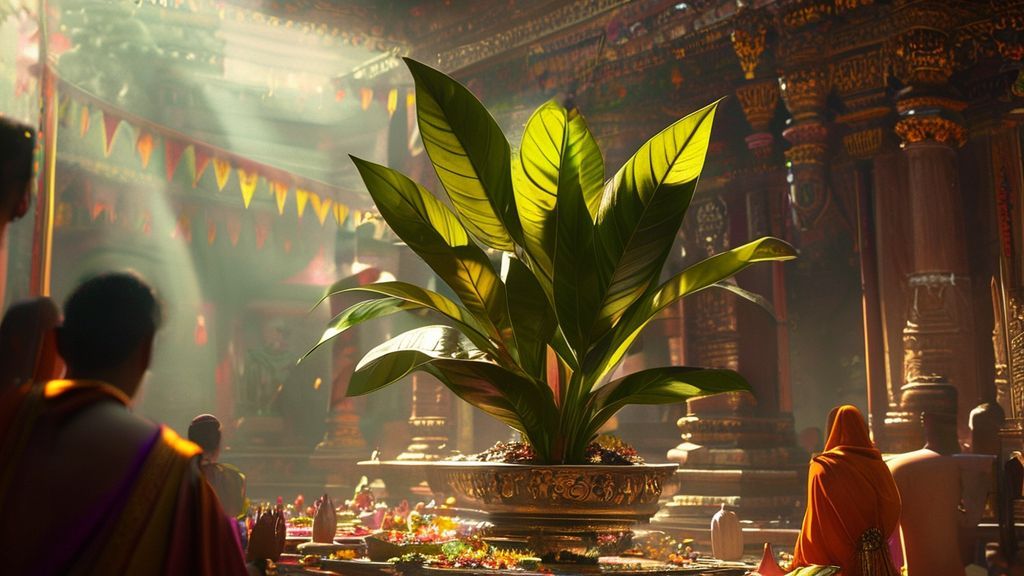
Tulsi Plant Direction in a Hindu home is primarily governed by Vastu Shastra, stipulating that the sacred Tulsi plant (Ocimum sanctum) should be placed in the North, North-East, or East directions to invite prosperity, positive energy, and spiritual well-being. Placing Tulsi in the South is generally considered inauspicious. This placement aligns with the cosmic energies believed to flow from these directions.
| Attribute | Details |
|---|---|
| Deity Associated | Bhagavan Vishnu, Devi Lakshmi, Vrinda Devi |
| Botanical Name | Ocimum tenuiflorum (syn. Ocimum sanctum) |
| Auspicious Directions | North, North-East (Ishanya Kona), East |
| Inauspicious Directions | South |
| Key Scripture Reference | Padma Purana, Devi Bhagavata Purana, Skanda Purana, Garuda Purana |
| Significance | Purity, prosperity, devotion, medicinal value, protector from evil |
The Inestimable Significance of Tulasi Devi in Sanatan Dharma
The sacred Tulsi plant, revered as Tulasi Devi, is far more than a mere herb; it is a living embodiment of divinity, an omnipresent goddess who bestows purity, prosperity, and spiritual liberation upon the devoted. Every Hindu home, irrespective of its opulence, aspires to shelter a Tulsi plant, for its presence is believed to sanctify the dwelling, neutralize negative energies, and invite the blessings of Bhagavan Vishnu and Devi Lakshmi. Her every leaf, every fragrant exhalation, is a benediction, connecting the physical realm with the subtle spiritual dimensions. The very act of nurturing Tulsi is an act of devotion, a daily ritual that reinforces one’s connection to the Divine and the timeless traditions of Sanatan Dharma.
The Puranic Narrative: Vrinda’s Transcendence to Tulasi
The profound sanctity of Tulsi originates from a compelling narrative found primarily in the Padma Purana and the Devi Bhagavata Purana, detailing the saga of Vrinda. Vrinda was the exceptionally chaste and devoted wife of the formidable demon king Jalandhar. Such was the power of her unwavering fidelity that it rendered her husband invincible, even to the Devas and Bhagavan Shiva himself. The Devas, imperiled by Jalandhar’s tyranny, implored Bhagavan Vishnu for aid.
To vanquish Jalandhar, Bhagavan Vishnu was compelled to breach Vrinda’s chastity. He assumed Jalandhar’s form and deceived Vrinda. Upon realizing the deceit, her heart shattered, and she cursed Vishnu to be transformed into a stone (which became the Shaligrama Sila) and then immolated herself. From her ashes, a divine plant emerged, which Bhagavan Vishnu himself declared to be Tulasi, granting her the boon that she would forever be his dearest consort, worshipped alongside him. He decreed that no worship offered to Him would be complete without a sprig of Tulasi. Thus, Vrinda, through her immense penance and sacrifice, transcended her mortal form to become the eternal, sacred Tulasi, forever entwined with Bhagavan Vishnu, symbolizing ultimate devotion and purity.
The तुलसी चौरा: A Miniature Temple of Vastu Harmony
While Tulsi is a plant, its placement and nurturing within a home are guided by principles akin to temple architecture and Vastu Shastra. The traditional Tulsi Chaura or Vrinda Vana (वृंदा वन) is a raised, often intricately designed pedestal, usually made of brick or stone, specifically constructed to house the Tulsi plant. This structure itself is a miniature temple, a sacred space within the domestic environment. Its design often incorporates niches for a lamp (diya) and water pot, signifying perpetual devotion. According to Vastu, placing the Tulsi Chaura in the North, North-East (Ishanya Kona), or East directions is paramount. The North-East, particularly, is the direction of Ishana (Lord Shiva), associated with spiritual enlightenment and divine energies. These directions are believed to channel positive cosmic vibrations into the home, promoting health, wealth, and peace. Conversely, placement in the South is strictly avoided, as it is considered the direction of Yama (the deity of death) and negative energies. From a scientific perspective, Tulsi is a renowned adaptogen and air purifier, releasing oxygen for 20 hours a day and absorbing harmful gases. Its leaves are rich in antioxidants and possess antibacterial, antiviral, and anti-inflammatory properties, making it a cornerstone of Ayurvedic medicine. This harmony between spiritual sanctity and tangible health benefits underscores its profound significance.
Rituals and Puja Vidhi for Tulasi Devi
Worshipping Tulasi Devi is a daily ritual for millions, a simple yet deeply meaningful act of devotion. Adherence to a specific Puja Vidhi ensures that the worship is performed with utmost respect and spiritual efficacy.
- Auspicious Time: The best time for Tulsi Puja is typically in the morning, after bathing, or during the evening twilight (Sandhya Kaal). Avoid plucking leaves after sunset.
- Cleanliness (Shaucha): Ensure both the worshipper and the area around the Tulsi Chaura are impeccably clean. The devotee should bathe and wear clean clothes.
- Preparation: Gather offerings: fresh water, Ganga Jal (if available), Kumkum (vermilion), Haldi (turmeric), rice grains (Akshata), fresh flowers, incense (agarbatti), and a Ghee Diya (lamp).
- Abhishekam (Watering): Gently water the Tulsi plant, offering prayers. Some traditions sprinkle Ganga Jal.
- Tilak and Adornment: Apply Kumkum and Haldi at the base of the plant. Adorn with a small amount of rice grains. Offer fresh flowers, particularly yellow ones, dear to Vishnu.
- Dhoop and Deepam: Light an incense stick and offer its fragrance to Tulasi Devi. Then, light a Ghee Diya and circumambulate it around the plant in a clockwise direction.
- Pradakshina (Circumambulation): Perform 3, 5, 7, 11, or 21 circumambulations (parikrama) around the Tulsi Chaura, chanting mantras. Each circumambulation should be done with reverence.
- Prayers and Sankalpa: Offer personal prayers, expressing gratitude and seeking blessings for health, prosperity, and spiritual growth. Dedicate the puja to Tulasi Devi and Bhagavan Vishnu.
- Tulsi Vivah (Special Occasion): On Kartik Ekadashi, Tulsi Vivah (marriage) with Shaligrama Bhagavan (representing Vishnu) is celebrated, marking the beginning of auspicious marriage seasons.
Sacred Mantras and Chants for Tulasi Devi
Chanting specific mantras elevates the worship of Tulasi Devi, invoking her divine grace and blessings. These powerful vibrations resonate with the spiritual essence of the plant.
Tulasi Pranam Mantra (Salutation to Tulasi):
ॐ वृंदावन्यै तुलसी देव्यै नमः।
Om Vrindaavanyai Tulasi Devyai Namah.
(Salutations to Vrinda, the divine Tulasi Devi.)
Tulasi Gayatri Mantra:
ॐ श्री तुलस्यै विद्महे। विष्णुप्रियायै धीमहि। तन्नो वृन्दा प्रचोदयात्॥
Om Shri Tulasyai Vidmahe. Vishnu Priyaayai Dhimahi. Tanno Vrinda Prachodayat.
(Om, let us meditate on Shri Tulasi. Oh, darling of Vishnu, grant us higher intellect. May Vrinda enlighten us.)
Mantra for Plucking Tulsi Leaves (to be chanted before plucking):
महाप्रसाद जननी सर्वसौभाग्यवर्धिनी।
आधि व्याधि हरा नित्यं तुलसी त्वं नमोस्तुते॥
Mahaprasada Janani Sarvasaubhagyavardhini.
Aadhi Vyaadhi Hara Nityam Tulasi Tvam Namostute.
(O Tulasi, Mother of great bounty, bestower of all good fortune, always remover of mental and physical ailments, I humbly bow to you.)
Chanting these mantras with genuine devotion and understanding enhances the spiritual experience and draws forth the profound benefits associated with Tulasi Devi.
Dos and Don’ts for Nurturing Tulasi Devi
Respectful care of the Tulsi plant involves adherence to certain traditional guidelines, ensuring its sanctity is maintained and blessings are received. These practices are rooted in centuries of cultural and spiritual reverence.
- DO place Tulsi in the North, North-East, or East directions for maximum auspiciousness, as per Vastu Shastra.
- DO water the plant daily, especially in the morning, offering it with devotion.
- DO offer a Diya (lamp) and incense to Tulasi Devi every evening, signifying reverence.
- DO ensure the Tulsi Chaura is clean and well-maintained.
- DO prune the plant gently to encourage growth, but always use the plucking mantra and do it respectfully.
- DO perform Pradakshina (circumambulation) around the plant daily.
- DON’T place the Tulsi plant in the South direction of the home.
- DON’T pluck Tulsi leaves after sunset or on Ekadashi, Amavasya, Purnima, and Sundays.
- DON’T use scissors or sharp objects to cut Tulsi leaves; pluck them gently with your fingers.
- DON’T allow the plant to dry out or wither, as this is considered inauspicious.
- DON’T touch Tulsi without bathing or with unclean hands.
- DON’T use Tulsi wood or leaves for selfish, materialistic gains alone; her purpose is devotional.
Why Should I Avoid Placing Tulsi in the South Direction?
According to Vastu Shastra, the South direction is associated with Yama, the deity of death and dissolution, and is considered inauspicious for living, growing things that symbolize prosperity and life. Placing Tulsi, a symbol of life, purity, and Vishnu’s grace, in this direction can counteract its positive energies, potentially leading to losses in wealth and health, and creating an imbalance of cosmic forces within the home. The flow of positive energy (prana) is believed to be optimal from the North-East axis, making it the most beneficial placement for sacred objects like Tulsi.
Can I Keep Tulsi Inside the House?
Traditionally, Tulsi is kept outdoors, either in the courtyard or balcony, where it receives ample sunlight and fresh air. However, if outdoor space is limited or climatic conditions are harsh, Tulsi can be kept indoors near a window that provides direct sunlight for several hours a day. The key is to ensure it is in an auspicious direction (North, North-East, East) and receives adequate light and ventilation to thrive. Ensure that the placement is elevated and respectful, not directly on the floor. For more insights on indoor sacred plant care, visit Hindutva.online.
What is the Significance of Tulsi Vivah?
Tulsi Vivah is a significant Hindu ritual celebrating the ceremonial marriage of Tulasi Devi with Shaligrama Bhagavan, an aniconic representation of Bhagavan Vishnu. This sacred event typically occurs on the Prabodhini Ekadashi of the Kartik month. It marks the end of Chaturmas, a four-month period when Vishnu is believed to be in cosmic sleep, and signifies the beginning of the auspicious Hindu wedding season. The ritual symbolizes the divine union, spiritual purity, and is believed to bestow immense blessings, happiness, and prosperity upon the devotees, particularly those aspiring for a harmonious marital life or progeny.
The Dharmic Imperative: Preserving Sanatan Dharma through Tulasi
The reverence for Tulasi Devi transcends mere botanical appreciation; it is a profound testament to the holistic vision of Sanatan Dharma, where the divine is perceived in every aspect of creation. Nurturing a Tulsi plant is a daily act of dharma, fostering not just spiritual well-being but also environmental consciousness and respect for nature. By meticulously following the scriptural injunctions regarding its placement, care, and worship, we do not merely tend to a plant; we preserve a vital thread of our ancient spiritual heritage. It is through such living traditions, passed down through generations, that the timeless wisdom and sacred vibrations of our ancestors continue to purify our homes and hearts, ensuring the continuity and vibrancy of Sanatan Dharma for all time.