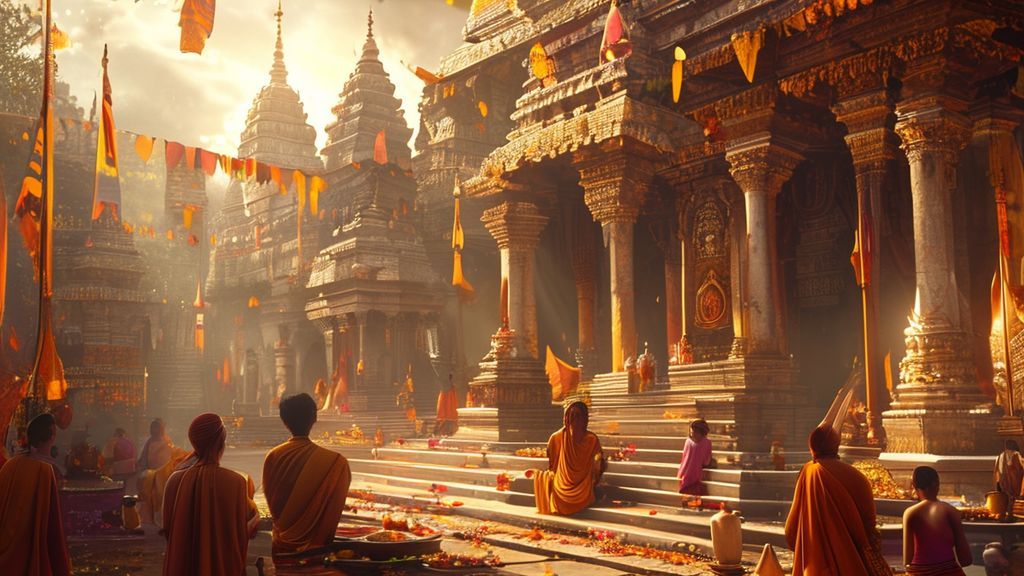
Tamil Hindu Culture is a vibrant tapestry woven with profound devotion, ancient temple traditions, and sacred culinary practices, rooted in the Agamic scriptures and Dravidian heritage. It emphasizes community worship, elaborate festivals like Pongal and Thaipusam, and the offering of sattvic prasadams, embodying the spiritual essence of Sanatan Dharma across Tamil Nadu and beyond.
| Attribute | Details |
|---|---|
| Principal Deities | Shiva (Shaivism), Vishnu (Vaishnavism), Murugan, Amman (Devi), Ganesha |
| Architectural Style | Dravidian Architecture (Gopurams, Vimanas, Mandapams) |
| Key Festivals | Pongal, Thaipusam, Karthigai Deepam, Mahashivaratri, Navaratri, Brahmotsavam |
| Scripture References | Agamas (Saiva, Vaishnava), Silpa Shastras, Puranas, Sangam Literature |
Introduction to Tamil Hindu Culture: A Sacred Heritage
Tamil Hindu culture stands as a magnificent pillar of Sanatan Dharma, preserving ancient traditions, profound philosophical insights, and an unparalleled artistic legacy. At its heart lie the majestic temples and the sacred culinary practices that sustain both body and soul. For millennia, the land of Tamizhagam has been a crucible of devotion, where the divine presence is felt not just in grand edifices but in every aspect of daily life. This culture is a living testament to the unwavering faith of its people, offering a gateway to understanding the intricate spiritual heritage passed down through generations. From the towering Gopurams that pierce the sky to the humble offering of prasadam, every element is imbued with deep symbolic meaning and spiritual significance, inviting sincere seekers to experience the divine.
Puranic History & Legend: Roots of Devotion
The genesis of Tamil temple traditions is deeply intertwined with ancient Puranic narratives and the rich corpus of Sangam literature, predating many other forms of organized worship in Bharatavarsha. The land of Tamil Nadu is mentioned in numerous Puranas, sanctified by the presence and leelas of various deities. For instance, the Skanda Purana extensively narrates the legends of Lord Murugan (Kartikeya), whose six abodes (Arupadaiveedu) in Tamil Nadu are pivotal pilgrimage sites. The Sthala Puranas specific to each temple often detail miraculous origins, divine interventions, and the reasons for their consecration, connecting local legends to the broader Hindu cosmic drama. The glorious temple city of Madurai, home to the Meenakshi Amman Temple, finds its legendary origins in the Tiruvilaiyadal Puranam, detailing the 64 sacred plays (Tiruvilaiyadal) of Lord Shiva. Similarly, the sacred Rameshwaram Temple is immortalized in the Ramayana as the place where Lord Rama worshipped Shiva to atone for slaying Ravana. These narratives are not mere stories; they are the spiritual bedrock, cementing the sanctity of these temples and the rituals performed within them, as prescribed by the Hindutva.online principles.
Architectural & Scientific Marvels: Dravidian Grandeur
Tamil temple architecture, primarily adhering to the Dravidian style, is a breathtaking display of engineering prowess, artistic finesse, and deep cosmological understanding. Guided by the principles of the Agama Shastras and Silpa Shastras (like the Manasara and Mayamata), these temples are designed as microcosms of the universe, aligning with celestial patterns and Vaastu principles. Key features include the monumental Gopurams (entrance towers), intricately sculpted with thousands of deities, and the Vimanas (sanctum towers) that soar above the main shrine. The Pandyas, Cholas, Pallavas, and Vijayanagara emperors were prolific builders, each adding distinct styles. The Brihadeeswarar Temple in Thanjavur, a UNESCO World Heritage site built by Raja Raja Chola I, is a prime example. Its 80-ton single-stone Vimana capstone was reportedly lifted into place using an elaborate ramp system, demonstrating an advanced understanding of mechanics. The use of granite, the precise mathematical calculations for proportions, and the acoustical marvels found in many mandapams (halls) highlight the profound scientific knowledge embedded in their construction, allowing for resonant chanting and spiritual experiences.
Rituals & Puja Vidhi: The Path of Devotion
Temple rituals in Tamil Nadu are governed by the rigorous traditions of the Agamas—the authoritative texts on temple construction, deity installation, and daily worship. Shaiva temples largely follow the Kāmikāgama or Karanāgama, while Vaishnava temples adhere to the Pancharatra Agamas or Vaikhanasa Agamas. The daily schedule, known as Nithya Puja, typically involves several phases:
- Suprabhatham/Tirupalliyeluchi: Awakening the deity with hymns and chants, such as திருப்பள்ளியெழுச்சி (Tirupalliyeluchi) for Shiva or Venkatesha Suprabhatam for Vishnu.
- Abhishekam (Sacred Bath): The deity is bathed with various auspicious substances like milk, curd, honey, rosewater, and panchamritam. This is a profound act of purification and veneration.
- Alankaram (Adornment): After the bath, the deity is elaborately dressed, adorned with jewels, flowers, and garlands, reflecting their divine beauty and sovereignty.
- Archana (Chanting of Names): The priest chants the 108 or 1000 sacred names (Ashtottarashatanama or Sahasranama) of the deity, while devotees offer flowers.
- Naivedyam (Food Offering): Sacred food, prepared according to strict purity guidelines (sattvic), is offered to the deity. This transforms the food into divine Prasadam.
- Deeparadhana (Lamp Offering): Waving of lamps (Aarti) before the deity, symbolizing the dispelling of darkness and the light of divine knowledge. Devotees often sing devotional hymns like தேவாரப் பாடல்கள் (Tevaram Padalgal) for Shiva or திவ்யப் பிரபந்தப் பாடல்கள் (Divya Prabandham Padalgal) for Vishnu.
- Sattrumurai/Mantra Pushpam: Concluding prayers, benedictions, and distribution of prasadam to devotees.
Mantras & Chants: Echoes of Eternity
Chanting sacred mantras is central to Tamil Hindu devotion, connecting the individual consciousness with the universal divine. Each deity has specific mantras, revered for their vibrational power and spiritual efficacy. Devotees chant these during temple visits, personal pujas, and daily meditation.
- For Lord Shiva: Om Namah Shivaya (ॐ नमः शिवाय) – The Panchakshara Mantra, embodying Shiva’s five aspects.
- For Lord Vishnu: Om Namo Narayanaya (ॐ नमो नारायणाय) – A key Ashtakshara Mantra invoking Vishnu as Narayana.
- For Lord Murugan (Kartikeya): Om Saravanabhava (ॐ सरवण भव) – A powerful Shadakshara Mantra for victory and wisdom.
- For Devi (Amman): Om Aim Hreem Kleem Chamundaye Vichche (ॐ ऐं ह्रीं क्लीं चामुण्डायै विच्चे) – The Navakshari Mantra, invoking the Goddess in her various forms.
- For Ganesha: Om Gam Ganapataye Namaha (ॐ गं गणपतये नमः) – A potent mantra for removing obstacles.
Beyond these, the ancient Tamil hymns like the Tevaram, Tiruvachagam (for Shaivism), and Nalayira Divya Prabandham (for Vaishnavism) are vibrant living traditions, recited daily in temples and homes, providing profound spiritual solace and literary beauty.
Dos and Don’ts: Cultural Etiquette for Devotees
Visiting a Hindu temple in Tamil Nadu is a sacred experience that comes with specific cultural and spiritual protocols, ensuring respect for the divine and the sanctity of the space.
- Do remove footwear before entering the temple premises.
- Do dress modestly: Traditional attire is preferred; shoulders and knees should be covered.
- Do maintain silence and reverence: Speak softly, avoid loud conversations, and refrain from unnecessary noise.
- Do circumambulate (Pradakshina): Walk clockwise around the sanctum and subsidiary shrines.
- Do offer prayers with folded hands (Namaskaram): Express humility and devotion.
- Don’t bring non-vegetarian food, alcohol, or tobacco into the temple or its vicinity.
- Don’t take photographs inside the sanctum sanctorum or where explicitly prohibited.
- Don’t point your feet towards the deities or other devotees.
- Don’t touch idols or sacred objects unless you are the authorized priest.
Frequently Asked Questions
What is the significance of Prasadam in Tamil Hindu culture?
Prasadam (प्रसादम्) is food consecrated by first offering it to a deity. It signifies the divine grace and blessings bestowed upon devotees. Consuming prasadam is believed to purify the body and mind, conferring spiritual merit and establishing a direct connection with the divine, as the offering has been sanctified by the deity’s acceptance.
How does Tamil cuisine reflect its spiritual values?
Tamil cuisine, especially traditional temple and festival food, is predominantly sattvic – pure, wholesome, and free from onion, garlic, and non-vegetarian ingredients. This dietary philosophy is rooted in Ayurvedic and Yogic principles, believing that sattvic food promotes clarity of mind, spiritual well-being, and a peaceful disposition, making it ideal for spiritual practices and offerings.
What role do festivals play in Tamil temple traditions?
Festivals are the pulsating heart of Tamil temple traditions, serving as vibrant expressions of collective devotion, cultural identity, and communal harmony. Major festivals like Brahmotsavam (annual temple festival), Thaipusam (for Lord Murugan), Karthigai Deepam (festival of lights), and Pongal (harvest festival) involve elaborate processions, special pujas, sacred music, and dance, drawing millions of devotees and reinforcing the spiritual bonds within the community.
Dharmic Significance: Preserving Sanatan Dharma
Tamil Hindu culture, with its profound temple traditions and sacred culinary practices, is a living embodiment of Sanatan Dharma. It offers a tangible link to our ancient past, preserving Vedic and Agamic wisdom through its rituals, art, and philosophy. The temples serve as spiritual powerhouses, centers for learning, and custodians of a rich heritage, fostering devotion and community spirit. The preparation and offering of sattvic cuisine underscore the importance of purity, gratitude, and conscious living, reminding us that even the act of nourishment can be a form of worship. By upholding these traditions, we ensure that the eternal values of righteousness, devotion, and cosmic harmony continue to inspire future generations, perpetuating the timeless essence of our Dharma.