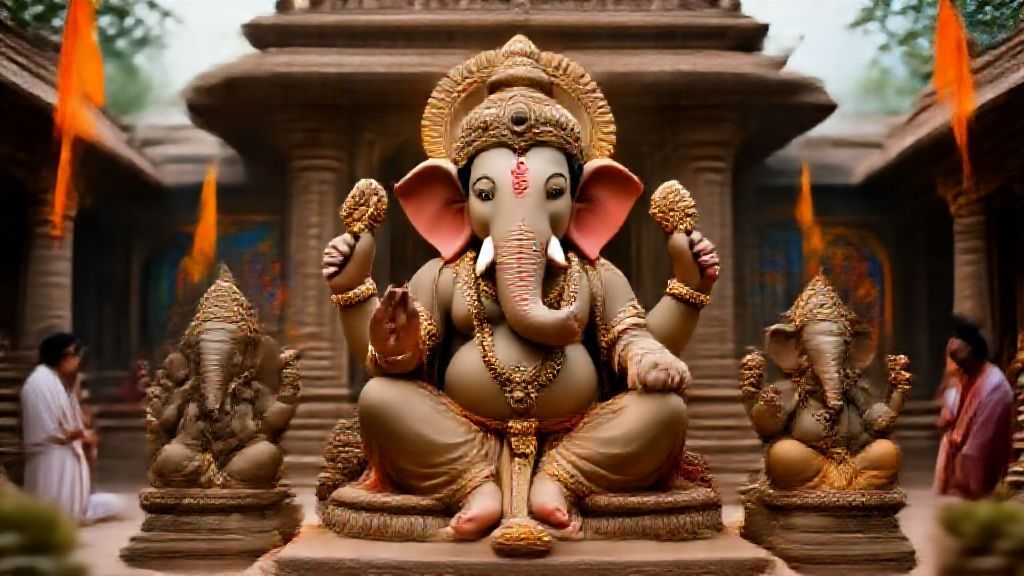
Eco-Friendly Ganesh Idols, primarily crafted from natural clay and biodegradable materials, embody Sanatan Dharma’s profound reverence for nature, ensuring that the sacred Ganesh Chaturthi festival celebrates divinity without ecological harm. These alternatives uphold the Puranic tradition of Ganesha’s creation from earth, facilitating a spiritually enriching and environmentally responsible Visarjan, harmonizing devotion with cosmic order.
| Attribute | Details |
|---|---|
| Deity | Bhagwan Ganesha (Ganapati, Vinayaka, Vighneshvara) |
| Core Material | Natural clay (Shadu Mati), unbaked, unpainted or naturally painted. |
| Origin of Practice | Rooted in Vedic reverence for Earth (Bhumi Devi) and the Panchabhuta (five elements) philosophy. Ganesha’s creation from earth by Parvati. |
| Key Festival | Ganesh Chaturthi (Vinayaka Chaturthi) |
| Scripture Reference | Shiva Purana (Ganesha’s birth), Atharva Veda (Bhoomi Suktam), Padma Purana (ecological principles), Mudgala Purana (Ganesha’s forms). |
| Spiritual Principle | Return to the source (earth), dissolution and rebirth, elemental harmony. |
The Earth-Born Divinity: Reclaiming the Sacredness of Ganesh Chaturthi
Ganesh Chaturthi, the magnificent festival celebrating the advent of Bhagwan Ganesha, the remover of obstacles and bestower of wisdom, is a cornerstone of Sanatan Dharma. For millennia, this sacred observance has been performed with profound devotion, invoking the presence of Hindutva.online. The tradition of crafting murtis (idols) of Ganesha from natural clay and immersing them in water at the culmination of the festival is not merely a custom but a profound spiritual statement, deeply rooted in our Vedic understanding of creation, sustenance, and dissolution. This practice reflects the ancient wisdom that recognizes the divine in all elements, particularly Prithvi (Earth), from which all life springs and to which it ultimately returns. Embracing eco-friendly Ganesh idols is not a modern innovation but a powerful return to our ancestral Dharmic principles, ensuring that our devotion does not inadvertently harm the very nature we revere as divine.
Puranic History & The Elemental Creation of Ganapati
The very genesis of Bhagwan Ganesha, as chronicled in the **Shiva Purana**, specifically in the Rudra Samhita, section II, Chapter 13, narrates a tale profoundly symbolic of his connection to the earth element. Devi Parvati, seeking a guard for her abode, fashioned Ganesha from the dirt (mala) and sweat from her own body, infusing life into this creation. This primal act of creation from **Prithvi** (earth) highlights Ganesha’s intrinsic link to nature. When we craft an idol from natural clay, we are not merely making an object; we are replicating the cosmic act of creation, recognizing the divinity inherent in the earth itself. The subsequent immersion, or **Visarjan**, symbolizes the cyclical nature of existence – from form to formlessness, from earth back to earth, embodying the Vedic concept of **Rta** (cosmic order) and the impermanence of material forms, even divine ones.
Further, the **Atharva Veda’s Bhoomi Suktam** (Hymn to the Earth) extols Bhumi Devi as the mother of all beings, sustaining life and embodying divine patience. This hymn underscores the sacred duty of Hindus to protect and revere the Earth. The practice of using natural clay for Ganesh idols, which dissolves harmlessly into the earth or water, perfectly aligns with these scriptural injunctions, demonstrating our commitment to living in harmony with creation.
Ecological & Artisanal Wisdom: The Marvels of Natural Materials
While we often speak of temple architecture as a marvel, the **artisanal wisdom** embedded in traditional idol crafting from natural materials is an equally profound expression of Sanatan Dharma’s scientific and ecological insights. Unlike modern idols made from Plaster of Paris (PoP), which contain gypsum, sulfur, phosphorus, and magnesium, and are coated with toxic chemical paints, **natural clay idols** (known as *Shadu Mati* in Maharashtra) are a marvel of biodegradable engineering. Shadu Mati is a fine, pliable clay naturally found in riverbeds and ponds, devoid of harmful chemicals.
The scientific principle at play is simple yet powerful: **biodegradation**. When immersed, natural clay idols readily dissolve, returning to their elemental form without polluting water bodies. The traditional vibrant colors were derived from natural pigments like turmeric (yellow), geru (ochre red), indigo (blue), and rice paste (white), all harmless and beneficial. This approach reflects an ancient understanding of materials science, where sustainability was an inherent part of creation and ritual. The artisans, guided by ancient texts like the **Shilpa Shastras**, understood the properties of earth and minerals, creating forms that were not only aesthetically pleasing but also ecologically sound. This holistic approach ensures that the veneration of Bhagwan Ganesha enriches both our spiritual lives and the environment.
Rituals & Puja Vidhi with Eco-Conscious Devotion
The **Ganesh Sthapana** (installation) and **Visarjan** (immersion) are central to Ganesh Chaturthi. Performing these with an eco-friendly idol elevates the spiritual merit, aligning our actions with the profound reverence for nature inherent in Sanatan Dharma.
- Sthapana (Installation):
- **Selection of Idol:** Choose an idol made solely from natural, unbaked clay, ideally unpainted or painted with natural, water-soluble colors.
- **Preparation of Mandap:** Cleanse and purify the puja area. Place the idol on a clean platform, often adorned with traditional fabrics and natural flowers.
- **Pranapratishtha:** After initial puja, invoke the divine presence of Ganesha into the idol through specific Vedic mantras.
- **Offerings:** Present traditional offerings (Modak, Durva grass, hibiscus flowers) with pure intention.
- Visarjan (Immersion):
- **Preparation:** Before Visarjan, perform a final Aarti and offerings, seeking Ganesha’s blessings.
- **Procession:** Carry the idol respectfully, chanting mantras and Bhajans.
- **Eco-Visarjan:** Immerse the natural clay idol in a designated natural water body (river, lake, sea) where it can safely dissolve. Alternatively, for urban settings, use a large container filled with water at home or community eco-ponds, allowing the clay to dissolve. The resulting clay-rich water can then be used to nourish plants.
- **Purpose:** This act symbolizes the return of the divine form to its elemental source, emphasizing detachment and the eternal cycle of creation and dissolution.
Sacred Mantras for Ganapati’s Blessings
Chanting the sacred mantras of Bhagwan Ganesha enhances the spiritual experience, invoking his grace and wisdom. These chants purify the mind and surroundings, connecting the devotee to the divine energy.
- **Moola Mantra (Primary Mantra):**
ॐ गं गणपतये नमः (Om Gam Ganapataye Namaha)
Meaning: Salutations to Lord Ganesha, the lord of multitudes. - **Vakratunda Mahakaya Mantra (for removing obstacles):**
वक्रतुण्ड महाकाय सूर्यकोटि समप्रभ।
निर्विघ्नं कुरु मे देव सर्वकार्येषु सर्वदा॥
(Vakratunda Mahakaya Suryakoti Samaprabha.
Nirvighnam Kuru Me Deva Sarvakaryeshu Sarvada.)
Meaning: O Lord Ganesha, with a curved trunk, a mighty body, and the radiance of a million suns, please make all my endeavors free of obstacles, always. - **Ganesha Gayatri Mantra:**
ॐ एकदन्ताय विद्महे वक्रतुण्डाय धीमहि तन्नो दन्ति प्रचोदयात्॥
(Om Ekadantaya Vidmahe Vakratundaya Dhimahi Tanno Danti Prachodayat.)
Meaning: Om, Let us meditate on the one-tusked Lord, Oh, curved-trunk god, grant us higher intellect, and let the elephant-faced one illuminate our mind.
Dos and Don’ts for Eco-Friendly Ganesha Worship
- DO:
- Choose idols made from natural clay (Shadu Mati) or other biodegradable materials like unbaked mud, cow dung, or even edible materials.
- Opt for idols painted with natural dyes (e.g., turmeric, kumkum, geru) or unpainted idols.
- Immerse idols in natural bodies of water (rivers, lakes) if permitted and appropriate, or in designated artificial ponds for dissolution.
- Collect all puja offerings (flowers, leaves, food) separately and compost them, rather than immersing them with the idol.
- Encourage community participation in eco-friendly practices and raise awareness about their spiritual and environmental benefits.
- Reaffirm your commitment to **Vasudhaiva Kutumbakam** (the world is one family) by protecting the environment.
- DON’T:
- Purchase idols made from Plaster of Paris (PoP), plastic, or other non-biodegradable materials.
- Use idols adorned with artificial colors, glitter, or plastic decorations that harm aquatic life.
- Immerse idols in private swimming pools or small, stagnant ponds that cannot handle the residue.
- Dispose of puja waste (like plastic wrappers, thermocol decorations) indiscriminately in water bodies or natural surroundings.
- Be swayed by commercial interests that promote environmentally harmful materials over traditional, sustainable practices.
Frequently Asked Questions
Why are traditional Plaster of Paris (PoP) idols harmful?
Plaster of Paris (PoP) idols contain gypsum, sulfur, phosphorus, and magnesium, which are non-biodegradable and dissolve very slowly, polluting water bodies, harming aquatic life, and increasing the acidity of the water. The chemical paints used on them are toxic, leaching heavy metals into the ecosystem, posing a severe threat to environmental and public health.
What are the best alternatives to natural clay?
Beyond traditional natural clay (Shadu Mati), excellent eco-friendly alternatives include idols made from red soil, cow dung, paper mache (using natural glues), turmeric, or even edible materials like chocolate or atta (flour). These options are fully biodegradable and return to nature without adverse effects.
Can we reuse eco-friendly idol materials?
Once a natural clay idol dissolves, the resulting mud can be repurposed for gardening, enriching the soil with its natural minerals. This embodies the principle of returning to the earth and sustaining life, completing the cycle of creation and dissolution in a truly regenerative manner. Some smaller idols can even be immersed in a pot at home, and the resulting soil used to plant a sapling, symbolizing new life from divine dissolution.
Dharmic Significance: Preserving Sanatan Dharma through Reverence for Creation
The movement towards **Eco-Friendly Ganesh Idols** is more than just an environmental initiative; it is a profound reaffirmation of the core tenets of Sanatan Dharma. Our scriptures, from the Vedas to the Puranas, consistently emphasize reverence for nature – **Prakriti** – as a manifestation of the Divine. The **Pancha Mahabhutas** (Earth, Water, Fire, Air, Ether) are not merely elements but sacred expressions of Brahman. By choosing clay idols, we honor Prithvi and Apas (Water), recognizing their sanctity and our role as custodians, not exploiters, of creation.
This conscious choice bridges the perceived gap between spiritual practice and ecological responsibility. It teaches our future generations the invaluable lesson of living in harmony with all existence, embodying the principle of **Ahimsa** not just towards sentient beings but towards the entire ecosystem. It ensures that our devotion, expressed through magnificent festivals like Ganesh Chaturthi, truly uplifts all aspects of life, leaving behind a legacy of purity and sustainability. Engaging in such practices reinforces the timeless wisdom found on Hindutva.online, ensuring Sanatan Dharma continues to illuminate the path for a harmonious and virtuous existence for all.