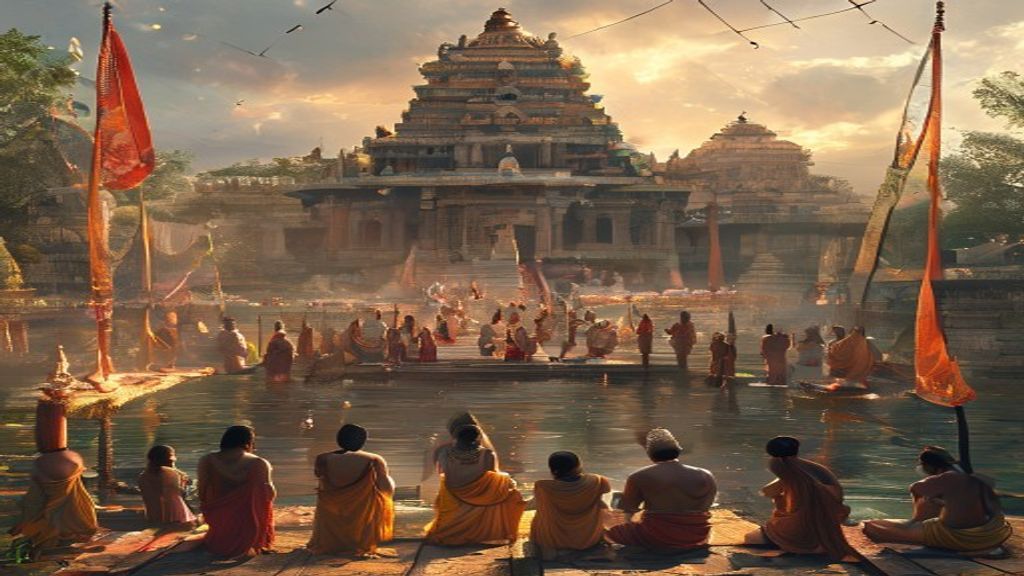
The Krishna River, revered as Krishnaveni, is one of the most sacred rivers in Bharatavarsha, originating from Mahabaleshwar in the Sahyadri mountains, Maharashtra. It flows approximately 1,400 kilometers through Maharashtra, Karnataka, Telangana, and Andhra Pradesh, embodying immense spiritual power and sustaining vast agricultural lands, making it a pivotal life-source and a venerated Mother Goddess in Sanatan Dharma.
| Attribute | Details |
|---|---|
| Deity Associated | Goddess Krishna Devi, Lord Vishnu, Lord Shiva, Goddess Lakshmi |
| Origin/Source | Mahabaleshwar, Sahyadri Mountains (Western Ghats), Maharashtra |
| Key Festival | Krishna Pushkaram (celebrated once every 12 years) |
| Major States Flowing Through | Maharashtra, Karnataka, Telangana, Andhra Pradesh |
| Sacred Confluence | Sangameshwara (confluence with Tungabhadra), many others |
| Scripture Reference | Skanda Purana (Sahyadri Khanda), Brahmanda Purana, Varaha Purana |
Introduction: The Spiritual Pulse of Dakshina Bharat
The Krishna River, affectionately known as Krishnaveni (कृष्णवेणी), is far more than a geographical feature; it is a profound embodiment of divinity, nurturing the spiritual and material fabric of South India for millennia. From its mystical origins in the verdant Sahyadri ranges to its majestic confluence with the Bay of Bengal, the Krishna flows as a river of piety, blessing the lands it traverses with fertility and spiritual solace. For countless devotees, a dip in its sacred waters is believed to cleanse sins, bestow merit, and lead to liberation (मोक्ष). Its banks are adorned with ancient temples, revered Tirthas, and vibrant cultural traditions, each narrating a chapter of Bharat’s rich Sanatan Dharma heritage. The river’s significance is interwoven with ancient Puranic legends, making it a living symbol of devotion and a vital artery of Hindu civilization.
Puranic History & Legend: The Descent of Krishnaveni
The divine genesis of the Krishna River is beautifully chronicled in various Puranas, particularly the Skanda Purana and the Brahmanda Purana. The most prominent legend locates its origin at Mahabaleshwar, a revered Shiva Kshetra in the Sahyadri mountains. As detailed in the Sahyadri Khanda of the Skanda Purana, the Krishna is said to have manifested from the tears of Lord Vishnu himself, shed in joy or compassion. Another significant narrative from the same Purana links its birth to a boon granted to the Devas. It is believed that Lord Brahma performed a rigorous penance in the Sahyadri hills. Pleased with his devotion, Lord Vishnu appeared, and from a spring at the feet of a holy fig tree (Audumbar Vruksha) emerged the divine stream, named Krishna. The river is also associated with the glorious deeds of Lord Dattatreya, whose sacred abode, Audumbar, lies on its banks, signifying its profound connection to the Trimurtis.
The river’s name, Krishna, is often interpreted as “dark” or “black,” referring to the dark alluvial soil it carries, or more profoundly, linking it to Lord Krishna, the eighth avatar of Vishnu. The Varaha Purana mentions its association with various Rishis and ancient kings who performed great sacrifices (यज्ञ) and austerities (तपस्या) on its shores, further sanctifying its waters. Each major tributary, such as the Tungabhadra, Bhima, and Koyna, also carries its own legendary history, making the entire Krishna river basin a tapestry of divine narratives and spiritual lore. The confluence points, known as Sangams, are particularly sacred, believed to be potent sites for spiritual cleansing and ancestral rites (पिंडदान).
Architectural & Natural Marvels Along the Krishnaveni
The banks of the Krishna River are a veritable museum of ancient Indian architecture and natural grandeur. The river has been a lifeline, fostering the growth of numerous empires and their architectural expressions. The most iconic example is the Srisailam Jyotirlinga Temple in Andhra Pradesh, dedicated to Lord Mallikarjuna Swamy and Goddess Bhramaramba Devi. This temple complex, a magnificent example of Dravidian architecture, stands majestically on the Nallamala Hills, overlooking the Krishna gorge. Its elaborate gopurams, intricate carvings, and extensive prakaras showcase centuries of devotional artistry and engineering prowess.
Further downstream, at Vijayawada, the Kanaka Durga Temple, perched on Indrakeeladri Hill, offers breathtaking views of the Krishna River. This temple, mentioned in the Brihat Samhita, is a testament to ancient structural engineering, enduring centuries of natural forces. The region around the Krishna is also home to ancient cave temples like the Mogalrajapuram Caves and Undavalli Caves, showcasing early rock-cut architecture. The river itself, with its deep gorges like the Srisailam Dam region and the vast plains it nourishes, is a natural marvel. Ancient civilizations mastered the river’s flow, building sophisticated anicuts and irrigation canals thousands of years ago, a testament to Bharat’s advanced scientific understanding of hydro-engineering. These interventions, while serving practical purposes, were also undertaken with profound reverence for the river as a divine entity.
Rituals & Puja Vidhi: Honoring the Divine River
Devotion to the Krishna River primarily manifests through ritual bathing (स्नान) and offering prayers (पूजा). The most significant event is the Krishna Pushkaram, a festival that occurs once every twelve years when Jupiter (बृहस्पति) enters the Virgo (कन्या) zodiac sign. Millions of devotees gather at sacred ghats to take a holy dip, believing it purifies the soul and grants immense spiritual benefits. This festival is detailed in ancient almanacs and is a major pilgrimage for followers of Sanatan Dharma.
- Sankalpa (Intention): Before entering the waters, a devotee recites a prayer, stating their intention for the holy bath, often for cleansing sins or seeking blessings for ancestors.
- Snana (Holy Dip): With reverence, devotees immerse themselves fully in the river, typically three times, remembering Goddess Krishna Devi.
- Tarpana & Pind Daan: Offerings of water (तर्पण) and cooked rice balls (पिंडदान) are made to ancestors, particularly at sacred Sangams, ensuring their peace and liberation. This ritual finds mention in the Garuda Purana regarding ancestral rites.
- Arghyam (Water Offering): Cupped hands filled with river water are offered back to the river, often accompanied by mantras, as a gesture of gratitude and reverence to the river goddess.
- Deepotsava (Lamp Offering): Small lamps (दीपक) are lit and set afloat on the river, symbolizing light, devotion, and hope.
- Puja & Archana: At the riverbanks, priests perform specific pujas to Goddess Krishna, offering flowers, incense, and bhog (food offerings).
Pilgrimage along the Krishna River is a transformative journey. Sites like Gangapur (Karnataka) and Audumbar (Maharashtra) are renowned for their Dattatreya temples, where devotees perform specific anushthanas for spiritual growth. For more details on pilgrimage circuits, one can explore resources on Hindutva.online.
Mantras & Chants for Krishnaveni
Chanting specific mantras while performing rituals or simply meditating on the river enhances the spiritual experience and invokes the blessings of the river goddess. While there isn’t one universal mantra exclusively for the Krishna River, general river mantras and those invoking Lord Vishnu are commonly used.
- General River Mantra:
गंगे च यमुने चैव गोदावरि सरस्वति।
नर्मदे सिन्धु कावेरि जलेऽस्मिन् संनिधिं कुरु॥(Gaṅge ca Yamune caiva Godāvari Sarasvati,
Narmade Sindhu Kāveri jale’smin sannidhiṁ kuru.)
This mantra invokes the presence of all sacred rivers, including their spiritual essence, into the waters where one is bathing or offering prayers. Its recitation implies that the virtues of all rivers are present in the Krishna. - Invocation to Lord Vishnu (Krishna’s divine association):
ॐ नमो भगवते वासुदेवाय॥
(Om Namo Bhagavate Vasudevaya.)
Reciting this powerful Dvadasakshari Mantra connects the devotee directly to Lord Vishnu, the source from which Krishnaveni is said to have manifested. - Dhyana Sloka for Rivers:
नदीनां च मुख्या त्वं देवि कृष्णवरप्रदे।
पवित्रं कुरु मां नित्यं स्नानेन तव निर्मले॥(Nadīnāṁ ca mukhyā tvaṁ devi kṛṣṇavaraprade,
Pavitraṁ kuru māṁ nityaṁ snānena tava nirmale.)
“O Goddess, chief among rivers, bestower of boons, make me eternally pure by bathing in your pristine waters.”
Dos and Don’ts: Cultural Etiquette on Krishna River Banks
Observing proper etiquette along the Krishna River is paramount for maintaining its sanctity and respecting local customs.
- Do:
- Approach the river with reverence and a devotional attitude.
- Take a holy dip in designated bathing ghats, facing the sun at sunrise.
- Offer traditional prayers, flowers, and lamps respectfully.
- Maintain cleanliness and hygiene on the riverbanks.
- Seek blessings from local priests for performing specific rituals.
- Contribute to efforts for river conservation and cleanliness.
- Don’t:
- Pollute the river with plastics, garbage, or harmful chemicals.
- Wash clothes or animals directly in sacred bathing areas.
- Engage in noisy or disruptive behavior that disturbs the sanctity.
- Disrespect local traditions or deities associated with the river.
- Throw non-biodegradable offerings into the water.
- Consume intoxicants or non-vegetarian food near the sacred ghats.
Frequently Asked Questions About the Krishna River
What is the spiritual significance of the Krishna River?
The Krishna River holds profound spiritual significance as a manifestation of divine energy, believed to cleanse sins, purify the soul, and grant liberation (मोक्ष). Its association with Lord Vishnu and various Puranic legends makes it a revered Mother Goddess (नदी देवी) whose waters bestow blessings and facilitate ancestral rites, particularly during the Krishna Pushkaram festival.
Which major temples are located on the banks of the Krishna River?
Many prominent temples grace the banks of the Krishna. Key among them are the Srisailam Jyotirlinga Temple (Andhra Pradesh), the Kanaka Durga Temple at Vijayawada, the Dattatreya temples at Ganagapur and Audumbar, and the ancient temples at Alampur (Jogulamba Temple, a Shakti Peetha). These temples are vibrant centers of pilgrimage and devotion.
How often is the Krishna Pushkaram celebrated, and what is its importance?
The Krishna Pushkaram is celebrated once every twelve years, coinciding with the entry of Jupiter (Brihaspati) into the Virgo (Kanya Rashi) zodiac sign. It is a period of immense spiritual merit, where devotees undertake a holy dip (पवित्र स्नान) in the Krishna River, offer prayers, and perform ancestral rites (पितृ तर्पण) to seek blessings and attain spiritual purification and liberation for themselves and their forefathers.
Dharmic Significance: Preserving the Sacred Flow of Sanatan Dharma
The Krishna River is not merely a water body; it is a profound symbol of the enduring power and reverence embedded in Sanatan Dharma. Its sacred waters nourish not just the land but also the spiritual aspirations of millions. From the Puranic accounts of its divine birth to the grand celebrations of Krishna Pushkaram, the river embodies the living traditions, beliefs, and interconnectedness of our faith. Respect for rivers, known as Nadi Vandana, is a core tenet of Hinduism, recognizing these natural wonders as life-givers and divine mothers. By understanding and revering the Krishna River, we reaffirm our commitment to ecological balance, cultural preservation, and the timeless wisdom of our ancestors. It reminds us that our spiritual journey is intrinsically linked to the health and sanctity of our environment, urging us to protect these sacred arteries of Bharatavarsha for future generations. This reverence for nature, particularly for rivers like the Krishna, reinforces the holistic worldview of Sanatan Dharma, where the divine is perceived in every aspect of creation. Learn more about such invaluable heritage on Hindutva.online.