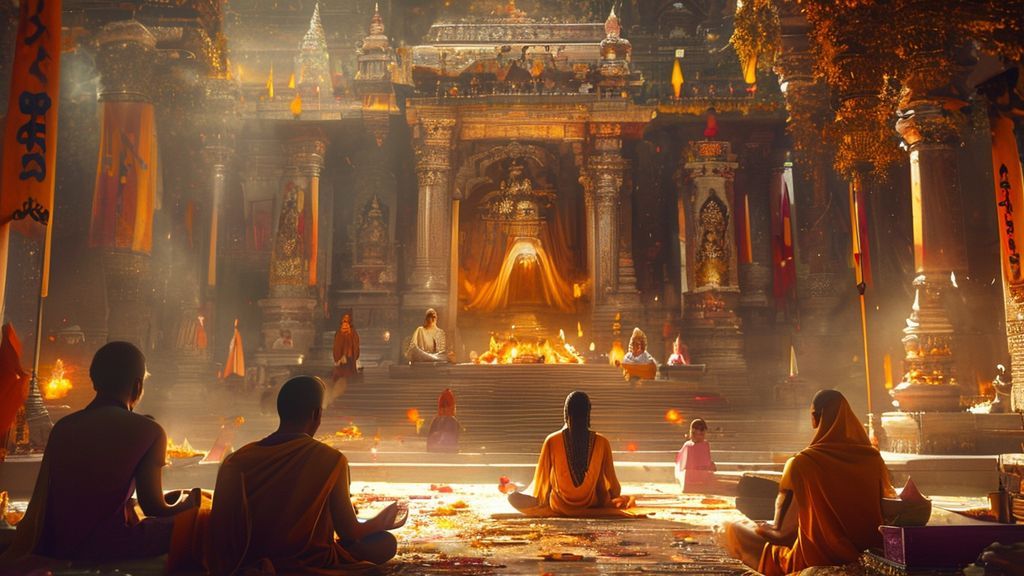
The Hindu balance approach to meditation vs medication advocates for a holistic synergy, recognizing both Dhyana (meditation) and Chikitsa (medication/treatment) as vital, complementary tools for well-being. Rooted in Sanatan Dharma’s comprehensive understanding of body, mind, and spirit, this perspective emphasizes integrated health, not an exclusive choice, ensuring optimal physical and spiritual flourishing.
| Attribute | Details: Meditation (Dhyana) | Details: Medication (Chikitsa) | Details: Hindu Balance Approach |
|---|---|---|---|
| Concept | Cultivation of inner peace, mental clarity, spiritual realization through focused awareness. | Therapeutic interventions to alleviate physical ailments, psychological distress, and restore bodily functions. | Holistic integration of spiritual practices and material treatments for comprehensive well-being (Arogya). |
| Origin | Vedic traditions, Upanishads, Yoga Sutras of Patanjali, Bhagavad Gita. | Ayurveda (Upaveda of Atharvaveda), ancient medical treatises (Charaka Samhita, Sushruta Samhita). | Sanatan Dharma’s holistic worldview, emphasizing Purusharthas and the Kosha system. |
| Purpose | Mental tranquility, stress reduction, spiritual growth, self-realization (Moksha). | Disease management, pain relief, physical healing, restoration of health. | Optimal health (Svasthya) at all levels – physical, mental, emotional, spiritual – to live a Dharmic life. |
| Key Scripture Reference | Bhagavad Gita, Chapter 6 (Dhyana Yoga), Yoga Sutras (Ashtanga Yoga). | Atharvaveda (hymns for healing), Charaka Samhita (foundational text of Ayurveda). | Upanishads (Kosha philosophy), Vedas (concept of Arogya). |
| Complementary Practice | Yoga Asanas, Pranayama, Swadhyaya (self-study). | Dietary regulation (Pathya), herbal remedies, surgical procedures. | Dharma, Artha, Kama, Moksha – healthy pursuit of life’s four goals. |
The Holistic Vision of Sanatan Dharma: Beyond Dichotomy
In the profound wisdom of Sanatan Dharma, the human experience is understood as a magnificent interplay of the physical, mental, intellectual, and spiritual realms. The perceived dichotomy between meditation and medication dissolves when viewed through the lens of this ancient tradition, which advocates for a harmonious integration rather than a forced choice. Our scriptures consistently teach that true well-being, or Arogya (health), is a state of equilibrium across all these dimensions, a prerequisite for pursuing the Purusharthas—Dharma (righteousness), Artha (prosperity), Kama (desire), and Moksha (liberation). To neglect any aspect of our being, be it the physical body requiring medication or the restless mind yearning for the tranquility of meditation, is to impede our spiritual journey. The Hindu approach is therefore not about ‘vs’ but about ‘and,’ embracing all legitimate means to foster health and harmony.
The Ancient Tapestry of Healing: Puranic Roots and Ayurvedic Wisdom
The origins of both meditative practices and medical science are deeply embedded in the Vedic and Puranic narratives. The very concept of healing is deified in the figure of Dhanvantari, the celestial physician and an avatar of Lord Vishnu, who emerged from the Samudra Manthan (churning of the cosmic ocean) bearing the pot of Amrita, the elixir of immortality. As detailed in the Bhagavata Purana, Dhanvantari is revered as the Adi-Deva of Ayurveda, the science of life and longevity, which is itself an Upaveda (subsidiary Veda) of the Atharvaveda.
Ayurveda, with its foundational texts like the Charaka Samhita and Sushruta Samhita, systematically categorized diseases, described intricate surgical procedures, and outlined herbal pharmacopeia thousands of years ago. It emphasizes a personalized approach based on an individual’s unique Dosha (Vata, Pitta, Kapha) constitution, diet (Aahar), lifestyle (Vihar), and mindset (Vichar). This sophisticated system, far from rejecting medication, perfected it within its framework, understanding that material imbalances often require material interventions.
Concurrently, the science of Dhyana, or meditation, is as ancient as the Rishis themselves, who retreated to forests and mountains to achieve inner stillness and self-realization. The Yoga Sutras of Patanjali codify meditation as a pivotal limb of Ashtanga Yoga, leading to Samadhi. The Bhagavad Gita, particularly Chapter 6, known as Dhyana Yoga, offers profound insights into the practice of meditation, describing how a disciplined mind can achieve tranquility, equating it to a lamp steady in a windless place. The Puranas are replete with stories of great sages and even deities undertaking rigorous meditation to attain divine powers or profound wisdom, underscoring its spiritual and psychological efficacy.
The Scientific Basis and Ancient Wisdom: Unveiling the Koshas
Sanatan Dharma’s understanding of the human being is exquisitely articulated through the concept of the Pancha Koshas, or five sheaths, as described in the Taittiriya Upanishad. This framework provides a profound scientific basis for why both meditation and medication are indispensable:
- Annamaya Kosha (Food Sheath): The physical body. Its health is maintained through proper diet, exercise, and crucially, medication when afflicted by disease. Ayurveda directly addresses this sheath.
- Pranamaya Kosha (Life-Force Sheath): The energy body, governing vital life forces (Prana) and breathing. Pranayama (breath control) and specific herbal remedies can balance this sheath.
- Manomaya Kosha (Mind Sheath): The realm of thoughts, emotions, and sensory perceptions. This is where meditation (Dhyana) directly works, calming the incessant chatter of the mind (Chitta Vritti Nirodha, as per Patanjali).
- Vijnanamaya Kosha (Intellect Sheath): The sheath of wisdom, discrimination, and higher reasoning. Meditation and spiritual practices refine this kosha, leading to clarity and insight.
- Anandamaya Kosha (Bliss Sheath): The deepest sheath, representing pure joy and inherent bliss, untouched by worldly suffering. This is accessed through deep meditative states and spiritual realization.
Illness, whether physical or mental, can originate in or affect any of these koshas. A physical ailment (Annamaya Kosha) might require medication, but its mental stress component (Manomaya Kosha) can be alleviated by meditation. Conversely, mental distress might manifest as physical symptoms. The ancient Rishis understood this intricate psychosomatic connection, validating approaches that address the entire spectrum of human experience. This multi-layered understanding predates modern holistic health concepts by millennia, showcasing an unparalleled ancient scientific insight into human physiology and psychology.
Integrated Practices: Puja, Dhyana, and Chikitsa Vidhi
The Hindu balance approach translates into actionable practices that encompass both spiritual discipline and pragmatic health management.
Practices for Mental and Spiritual Well-being (Dhyana)
- Asana & Pranayama: Begin with a comfortable posture (e.g., Padmasana, Sukhasana) and regulate breath (Pranayama) to prepare the mind for stillness.
- Dharana (Concentration): Focus the mind on a single point, such as the breath, a mantra, or a deity’s image. This calms the mind’s fluctuations.
- Dhyana (Meditation Proper): Maintain an unbroken flow of concentration, where the meditator, the act of meditating, and the object of meditation begin to merge. Sit quietly, observe thoughts without judgment, and gently return to the chosen anchor. Regularity is key, even for short periods.
- Mantra Japa: Repeating sacred sounds or names of deities helps to focus and purify the mind.
Practices for Physical Healing (Chikitsa & Prayers)
- Consultation: Seek the advice of qualified medical professionals (modern doctors or Ayurvedic physicians) for any physical or severe mental ailments. This is a Dharmic responsibility.
- Adherence to Treatment: Diligently follow prescribed medications, dietary restrictions (Pathya), and lifestyle adjustments.
- Prayers to Dhanvantari: Regularly offer prayers to Lord Dhanvantari for healing and well-being. This invokes divine grace and positive energy.
- Herbal Remedies (Ayurveda): Under expert guidance, integrate Ayurvedic herbal formulations that support the body’s natural healing processes and balance Doshas.
- Sattvic Lifestyle: Maintain a pure diet, regular sleep, and positive environment to support the body’s innate capacity for healing.
Sacred Mantras for Mind and Body
Mantras serve as powerful vibrations that can purify the mind, invoke divine energy, and facilitate healing.
- For Dhyana (Meditation) and Inner Peace:
ॐ (Om) – The primordial sound, the essence of the universe, ideal for silent meditation.
गायत्री मंत्र (Gayatri Mantra):
ॐ भूर्भुवः स्वः
तत् सवितुर्वरेण्यं
भर्गो देवस्य धीमहि
धियो यो नः प्रचोदयात्॥(Om Bhur Bhuvah Svah, Tat Savitur Varenyam, Bhargo Devasya Dhimahi, Dhiyo Yo Nah Prachodayat.)
Meaning: We meditate on the adorable glory of the resplendent Vivifier, Savitur; May He inspire our intellects. - For Healing and Health (Chikitsa):
धन्वंतरि मंत्र (Dhanvantari Mantra):
ॐ नमो भगवते वासुदेवाय धन्वन्तरये अमृतकलश हस्ताय सर्वमय विनाशनाय त्रैलोक्यनाथाय श्री महाविष्णवे नमः॥
(Om Namo Bhagavate Vasudevaya Dhanvantaraye Amritakalasha Hastaya Sarvamaya Vinashanaya Trailokyanathaya Shri Mahavishnave Namah.)
Meaning: Salutations to Lord Dhanvantari, the one holding the pot of nectar, who destroys all diseases, the Lord of the three worlds, Lord Vishnu.महामृत्युंजय मंत्र (Mahamrityunjaya Mantra):
ॐ त्र्यम्बकं यजामहे सुगन्धिं पुष्टिवर्धनम्।
उर्वारुकमिव बन्धनान् मृत्योर्मुक्षीय माऽमृतात्॥(Om Tryambakam Yajamahe Sugandhim Pushtivardhanam. Urvarukamiva Bandhanan Mrityor Mukshiya Maamritat.)
Meaning: We worship the three-eyed Lord Shiva, who is fragrant and nourishes all beings. May he liberate us from death for the sake of immortality, just as the cucumber is severed from its bondage to the vine.
Dos and Don’ts: Navigating the Path of Integrated Well-being
- Do:
- Consult Qualified Professionals: Always seek advice from certified medical doctors for physical ailments and experienced spiritual guides (Gurus, Acharyas) for meditation guidance.
- Maintain a Balanced Lifestyle: Emphasize proper diet (Sattvic Aahar), adequate sleep, and regular physical activity (Vyayam).
- Practice Dhyana Regularly: Consistency is paramount for deriving benefits from meditation, even if for short durations daily.
- Respect Both Approaches: Recognize the validity and efficacy of both modern medicine and ancient spiritual practices. They are not mutually exclusive.
- Cultivate Positivity: Foster optimism, gratitude, and faith (Shraddha) as these positively influence healing processes.
- Don’t:
- Self-diagnose or Self-medicate: This can be dangerous and lead to complications.
- Abandon Medication for Meditation Alone: For serious illnesses, medication is often crucial and should not be discontinued without medical advice.
- Neglect Physical Symptoms: Ignoring physical discomfort or pain in favor of only spiritual remedies can lead to worsening conditions.
- Force Meditation: Meditation should be a natural, gentle process. Avoid straining or judging your progress.
- Judge Others’ Choices: Everyone’s path to well-being is unique; avoid imposing one approach over another.
Can meditation cure all diseases?
While meditation profoundly impacts mental and emotional well-being, reducing stress, improving resilience, and even enhancing the body’s immune response, it is generally not considered a standalone cure for all serious physical diseases. It should complement, not replace, medical treatment for conditions requiring medication or surgery. Sanatan Dharma encourages using all appropriate means for healing.
Is it unspiritual to take medicine?
Absolutely not. Taking medicine for physical ailments is a Dharmic act of caring for the body, which is considered a vehicle (Sharira) for spiritual pursuit. Ayurveda, a branch of the Vedas, is dedicated to medicine and healing. Neglecting the body through disdain for medication would be considered a form of self-harm, impeding one’s ability to perform Dharma and seek Moksha.
How do I integrate both into my daily life?
Integration involves conscious choices. Maintain your medical treatments as prescribed. Simultaneously, allocate dedicated time for daily meditation, even if just 10-15 minutes. Incorporate Ayurvedic dietary principles, engage in mindful activities, and practice gratitude. View your body as a temple and your mind as a sacred space, deserving of care through both physical and spiritual disciplines.
Dharmic Significance: Why This Matters for Every Hindu
The balanced approach to meditation and medication is not merely a practical strategy for health; it is a profound embodiment of Sanatan Dharma itself. It underscores the principle of Samatvam, or equanimity, where all aspects of existence are acknowledged and integrated. A healthy body (Sarira Madhyam Khalu Dharma Sadhanam – “Indeed, the body is the primary instrument for the performance of Dharma”) provides the foundation for action and spiritual practice. A calm and focused mind, cultivated through Dhyana, is essential for understanding scriptures, performing rituals with sincerity, and attaining higher consciousness. By embracing both material healing and spiritual growth, we honor the holistic vision of our ancestors, preserving not just our individual well-being but the very essence of a Dharma-driven life. This integrated path ensures that every Hindu can pursue their spiritual journey with optimal vitality, mental clarity, and divine grace.
