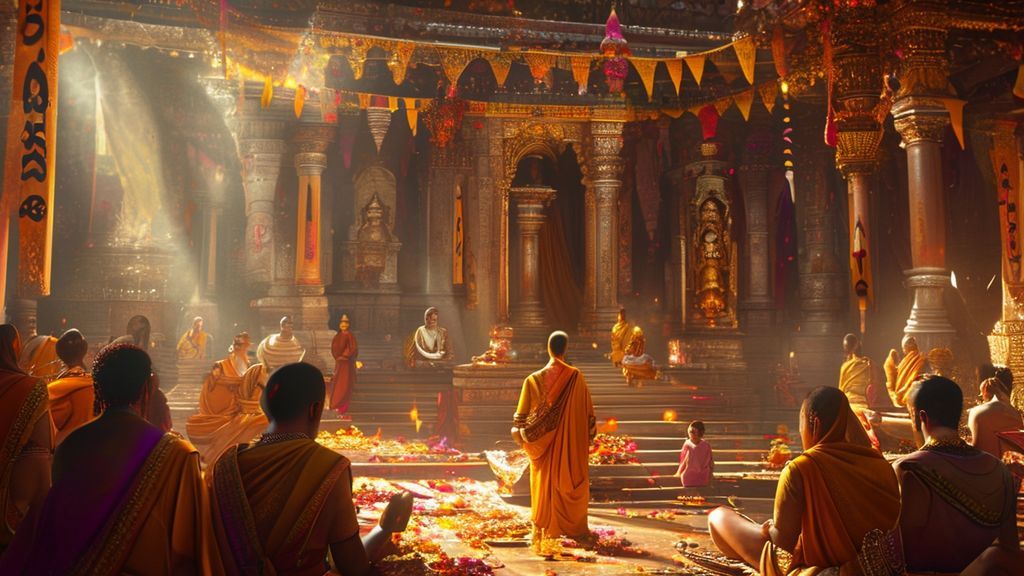
Naming Ceremony Gifts, known as Namakarana Upayana (उपायन), are sacred offerings presented during the Vedic Namakarana Samskara, designed to bestow blessings, auspiciousness, and spiritual prosperity upon the newborn. These gifts transcend mere material value, serving as conduits for prayers, good wishes, and the collective intent of guiding the child on a righteous Dharmic path.
| Attribute | Details |
|---|---|
| Ceremony Name | Namakarana Samskara (नामकरण संस्कार) |
| Purpose | Bestowing an auspicious name, invoking divine blessings, and marking the child’s entry into the Hindu community. |
| Ideal Time | Typically on the 10th or 12th day after birth, or within the first year, chosen astrologically for maximal benefit. |
| Key Rituals | Purification (Punyaha Vachanam), Homa (fire ritual), ancestral prayers, whispering the name into the child’s ear, blessings from elders and Brahmins. |
| Scriptural Basis | Grihya Sutras (e.g., Ashvalayana Grihya Sutra, Paraskara Grihya Sutra), Manusmriti, various Puranas. |
The Sacred Significance of Namakarana and the Art of Giving
The Namakarana Samskara, the Vedic naming ceremony, stands as one of the most pivotal of the Shodasha Samskaras (sixteen rites of passage) in Sanatan Dharma. It is not merely a social event but a profound spiritual initiation, wherein the child is formally identified within the cosmos and receives blessings for a life aligned with Dharma, Artha, Kama, and Moksha. The name chosen is believed to influence the child’s destiny, character, and spiritual trajectory. In this sacred context, the act of giving gifts, or Daana (दान), transforms into an integral part of the blessing process. These aren’t just material exchanges but symbolic conduits of love, well-wishes, and an investment in the child’s spiritual future.
The gifts offered during Namakarana are infused with the collective prayers of family and friends, invoking divine grace upon the newborn. They represent the community’s commitment to nurturing the child’s journey, providing protection, knowledge, and prosperity. Understanding the deeper meaning behind these offerings allows devotees to choose gifts that truly resonate with the sanctity of the occasion, embodying the timeless wisdom of our Vedic traditions.
The Vedic Roots of Namakarana and the Philosophy of Daana
The injunctions for Namakarana are meticulously laid out in our ancient scriptures. The Grihya Sutras, particularly the Ashvalayana Grihya Sutra (I.15) and the Paraskara Grihya Sutra (I.4.1-2), describe the appropriate timing and rituals for the naming ceremony. They emphasize the importance of choosing a name that is auspicious, easy to pronounce, and often indicative of a deity, a Rishi, or a virtue. The Manusmriti (II.30-33) further elaborates on the characteristics of suitable names for each Varna, highlighting the profound impact a name has on an individual’s identity and societal role.
In this framework, Daana, the act of giving, holds immense spiritual merit. The Bhagavad Gita (Chapter 17, Verse 20) categorizes Daana performed with Shraddha (faith), at the right place and time, to a worthy recipient, without expectation of return, as Satvika (pure) charity. While the primary Daana in Namakarana is often given to Brahmins and the needy, the gifts presented to the child are also a form of benevolent Daana, rooted in a desire for the child’s well-being. These gifts are an extension of the blessings, carrying the positive vibrations of the giver’s intentions. They symbolize the material and spiritual support the child receives as they embark on their earthly journey, reinforcing the interconnectedness of family and community in Sanatan Dharma.
The Philosophy of Auspicious Giving: Categories of Namakarana Upayana
When selecting a gift for a Namakarana ceremony, the devotee should consider items that embody purity, knowledge, protection, and prosperity, aligning with Vedic ideals. These are not mere presents but sacred tools for the child’s development.
- Vedic (Spiritual) Gifts: These gifts nurture the child’s nascent spiritual consciousness.
- Scriptures: A beautifully bound copy of the Bhagavad Gita, Upanishads, or selected Puranic stories. This instills a love for Dharma from an early age.
- Deity Idols: Small, pure silver or brass idols of Bal Krishna, Ganesha, or Saraswati, representing divine playfulness, remover of obstacles, and knowledge respectively. These introduce the child to the concept of Ishvara.
- Sacred Water/Vibhuti: A small pot of Ganga Jal or sacred Bhasma from a renowned Shiva temple, for purification and blessings.
- Mantra Books: Simple books containing common mantras like “Om Namah Shivaya” or “Om Namo Narayanaya” for future recitation.
- Educational & Intellectual Gifts: Fostering a love for learning and wisdom.
- Traditional Storybooks: Illustrated books depicting tales from the Ramayana, Mahabharata, or the Panchatantra, imparting moral values.
- Sanskrit Alphabet Blocks or Books: To introduce the child to the divine language of Sanskrit early on.
- Musical Instruments: Small traditional instruments like a harmonium or tabla if the family has an inclination towards music, which is considered a path to devotion (Bhakti Yoga).
- Practical & Protective Gifts: Items symbolizing purity, protection, and material well-being.
- Precious Metals (Silver & Gold): Small silver bowls, spoons, anklets (payal), or bangles (kadas). Silver is associated with purity (शुद्धता) and cooling energy, while gold symbolizes prosperity (समृद्धि), divine light, and auspiciousness (मंगल). The Atharva Veda extols gold’s purifying qualities.
- Traditional Clothing: Soft, hand-stitched traditional attire like silk
dhoti
and
kurta
sets or beautiful saris for girls, symbolizing cultural heritage.
- Ayurvedic Balms & Oils: Organic, child-safe Ayurvedic massage oils or Kajal (kohl) believed to protect from the ‘evil eye’ (nazar) and enhance vision.
- Symbolic Gifts: Items representing growth and good fortune.
- Auspicious Plants: A small Tulasi plant (holy basil) or a Banyan sapling, if appropriate for the household, symbolizing spiritual growth and longevity.
- Honey: A small jar of pure honey, symbolizing sweetness of speech and life.
The Sacred Act of Offering Gifts (Daana Vidhi)
The manner in which a gift is presented is as crucial as the gift itself. The act of giving during Namakarana is a ritualistic offering, embodying respect and devotion.
- Purification of Intention (Shuddha Sankalpa): Before presenting the gift, take a moment to purify your intention. The gift should be offered with genuine love, blessings, and a desire for the child’s welfare, free from any expectation of return. Recite a short prayer for the child’s well-being.
- Cleanliness and Presentation: Ensure the gift is clean, beautifully wrapped (if applicable), and presented respectfully. Traditionally, gifts are offered with both hands as a mark of humility and reverence.
- Offering with Mantra: As you offer the gift, you may mentally or softly chant a blessing mantra for the child. For instance, “ओम आयुर आरोग्यम् ऐश्वर्यम् अस्तु” (Om Ayur Arogyam Aishvaryam Astu – May there be longevity, health, and prosperity).
- Seeking Blessings: Present the gift to the parents, and if the child is awake and amenable, gently place your hand on the child’s head and offer your personal blessings, wishing them a life full of Dharma and happiness.
- Respect for Tradition: Be mindful of the family’s specific traditions and cultural nuances. Some families might prefer certain types of gifts over others.
Mantras and Chants for Blessing the Newborn
Chanting mantras during the Namakarana ceremony or while offering gifts amplifies the positive vibrations and spiritual efficacy of the occasion. Devotees may choose to recite these during their offerings:
- General Blessing for Longevity and Health:
"ओम आयुर आरोग्यम् ऐश्वर्यम् अस्तु।
दीर्घायुष्यं भव। यशस्वि भव।
तेजस्वी भव। ब्रह्मवर्चसी भव।"
“Om Ayur Arogyam Aishvaryam Astu.
Dirghayushyam Bhava. Yashasvi Bhava.
Tejasvi Bhava. Brahmavarchasi Bhava.”
(May there be longevity, health, and prosperity. May you be long-lived. May you be famous. May you be radiant. May you be endowed with spiritual brilliance.) - For the Removal of Obstacles and Auspiciousness:
"वक्रतुण्ड महाकाय सूर्यकोटि समप्रभ।
निर्विघ्नं कुरु मे देव सर्वकार्येषु सर्वदा॥"
“Vakratunda Mahakaya Suryakoti Samaprabha.
Nirvighnam Kuru Me Deva Sarvakaryeshu Sarvada.”
(O Lord with a curved trunk, mighty body, and the radiance of a million suns, please make all my endeavors free from obstacles, always.) – A prayer to Ganesha. - For Knowledge and Wisdom:
"ओम ऐं सरस्वत्यै नमः।"
“Om Aim Saraswatyai Namaha.”
(Salutations to Devi Saraswati, the goddess of knowledge.)
Dos and Don’ts of Namakarana Gift Giving
Adhering to cultural etiquette ensures that your offering is received with joy and respect.
- Dos:
- Do choose thoughtful and auspicious gifts: Opt for items that encourage spiritual growth, knowledge, protection, or prosperity as per Vedic tradition.
- Do offer gifts with a pure heart (Shraddha): The intention behind the gift is paramount.
- Do consider the family’s traditions: Some families have specific preferences or traditions for gifts. A subtle inquiry can be helpful.
- Do present the gift respectfully: Use both hands and offer your verbal blessings to the child and parents.
- Do focus on the child’s future well-being: Think of how the gift can contribute positively to their Dharmic journey.
- Don’ts:
- Don’t give inappropriate or inauspicious gifts: Avoid items that are sharp, black in color (unless specifically requested for a particular ritual), or associated with negative connotations.
- Don’t boast about your gift: True Daana is performed humbly, without seeking praise or recognition.
- Don’t give a gift with an expectation of return: The spirit of giving is selfless.
- Don’t neglect the power of blessings: Your heartfelt prayers and well-wishes are often the most cherished gifts.
- Don’t feel pressured by monetary value: A small, meaningful, and spiritually resonant gift is always preferred over an expensive but thoughtless one.
Frequently Asked Questions About Namakarana Gifts
What is the significance of giving silver or gold items?
Silver (रूप्य) and gold (स्वर्ण) are considered highly auspicious and purifying metals in Hindu traditions. Silver is associated with the moon, purity, peace, and cooling energies, believed to cleanse negative influences. Gold, linked to the sun, symbolizes divine energy, prosperity, immortality, and wealth. Gifting items made of these metals is believed to imbue the child with these qualities and attract good fortune and protection throughout their life, as mentioned in various Smritis regarding their ritualistic purity.
Is it acceptable to give cash (Dakshina) as a gift?
Yes, giving cash, often referred to as Dakshina (दक्षिणा) or a monetary blessing, is perfectly acceptable and common. It allows the parents to purchase necessities for the child or contribute to their future. When offering cash, it is customary to present it in an auspicious envelope, sometimes with an additional small gift, and always with blessings. The spiritual significance lies in the intention behind the giving, not just the form.
Are modern gifts, like baby clothes or toys, appropriate?
While traditional and spiritual gifts are emphasized for their Dharmic value, modern baby clothes, educational toys, or practical items are also widely accepted and appreciated. The key is to ensure they are age-appropriate, safe, and of good quality. When combining modern gifts with traditional values, consider themes that are positive, culturally relevant, or educational, such as toys depicting Hindu deities or moral stories. The ultimate goal is the child’s well-being and development, encompassing both material and spiritual aspects.
What if I cannot afford expensive gifts?
The spirit of giving in Sanatan Dharma emphasizes pure intention (Shraddha) over monetary value. A simple, thoughtful gift, such as a hand-stitched item, a small devotional book, or even a heartfelt blessing and prayer, is considered immensely valuable. As stated in the Skanda Purana, “Even a small gift, given with devotion, is far superior to a large one given without it.” Your presence and sincere good wishes for the child’s journey in Dharma are the most precious offerings.
Preserving Sanatan Dharma Through Thoughtful Giving
The Namakarana Samskara is a profound reminder of our rich spiritual heritage and the responsibilities we hold towards the next generation. The act of choosing and giving gifts for this sacred occasion is not a trivial matter but an opportunity to participate actively in the child’s spiritual foundation. By offering gifts that reflect Vedic values – purity, knowledge, protection, and prosperity – we are not merely presenting objects, but bestowing blessings that will guide the child on their Dharmic path. Each gift, given with a pure heart and conscious intent, reinforces the timeless principles of Sanatan Dharma, ensuring its continuity and vibrancy through future generations. It is a collective affirmation of our faith and a joyous welcome to a new soul embarking on its journey within this ancient tradition. For further insights into the profound wisdom of our traditions, please explore Hindutva.online.
