Punjabi Hindu culture, deeply rooted in the ancient traditions of Sanatan Dharma, fundamentally differs from Sikhism in its theological foundations, scriptural authority, devotional practices, and socio-religious institutions. While sharing a common geographic and linguistic heritage with Sikhs, Punjabi Hindus uphold Vedic tenets, idol worship, and the diverse pantheon of Hindu deities, distinct from Sikhism’s monotheistic focus on Ik Onkar and the Guru Granth Sahib.
| Attribute | Details |
|---|---|
| Deity Worship | Polytheistic, worship of Ishvara in various forms (Devi, Vishnu, Shiva, Rama, Krishna), idol worship (Murti Puja). |
| Location/Origin | Punjab region of Bharatavarsha, with roots in Vedic civilization along the Sindhu-Saraswati plains. |
| Key Festivals | Diwali, Holi, Navaratri, Janmashtami, Shivaratri, Lohri, Basant Panchami, Raksha Bandhan. |
| Scripture Reference | Vedas (Rigveda, Yajurveda, Samaveda, Atharvaveda), Upanishads, Bhagavad Gita, Puranas, Ramayana, Mahabharata. |
| Place of Worship | Mandirs (Temples), home altars. |
| Spiritual Authority | Vedic Rishis, Acharyas, human Gurus (spiritual teachers), ancient scriptures. |
The Ancient Roots of Sanatan Dharma in Punjab
The land of Punjab, historically known as Sapta Sindhu, holds an ancient and hallowed place in the annals of Sanatan Dharma. It is the cradle of Vedic civilization, where the hymns of the Rigveda resonated through the banks of the mighty Sindhu and the now-lost Saraswati rivers. Punjabi Hindu culture is a vibrant continuation of this eternal tradition, shaped by millennia of spiritual evolution, philosophical inquiry, and devotional practices. While often conflated or superficially compared with Sikhism due to geographical proximity and shared linguistic heritage, the distinct theological framework, ritualistic observances, and spiritual goals of Punjabi Hindus align firmly with the pan-Indian Sanatan Dharma.
This enduring Hindu identity in Punjab is not merely a historical footnote but a living, breathing tradition that has adapted, thrived, and contributed profoundly to the broader Hindu ethos. It represents a unique regional expression of Dharma, characterized by unwavering devotion to Bhagavan, reverence for sacred texts, and adherence to the time-honored rituals passed down through generations. Understanding this distinction is crucial for appreciating the rich tapestry of Indic spiritual traditions.
Puranic History and Legend: Punjab’s Dharmic Heritage
The Puranas and Itihasas consistently highlight the sacredness of the Punjab region. The area around Kurukshetra, mentioned extensively in the Mahabharata, falls within the broader historical ambit of Punjab, witnessing the epic war that established Dharma. The Vamana Purana and Skanda Purana speak of the holy rivers and pilgrimage sites in the region. Rishi Valmiki’s ashram, where Sita Devi resided and Lava-Kusha were born, is traditionally located near modern-day Amritsar, underscoring Punjab’s connection to the Ramayana.
Indeed, numerous revered sages, or Rishis, performed their austerities (tapasya) in this sacred land. Rishi Parashara, father of Vyasa, is associated with the region. The very word “Punjab” (Panj-Aab, five waters) refers to the five rivers — Jhelum, Chenab, Ravi, Beas, and Sutlej — all tributaries of the Sindhu, which nurtured Vedic culture. The continuous presence of Hindu kingdoms and the flourishing of Hindu philosophy, arts, and sciences in Punjab for thousands of years form the bedrock of Punjabi Hindu identity, a heritage distinct from the relatively younger Sikh faith which emerged in the 15th century CE as a reformist movement.
Architectural & Scientific Marvels: Temples of Punjab
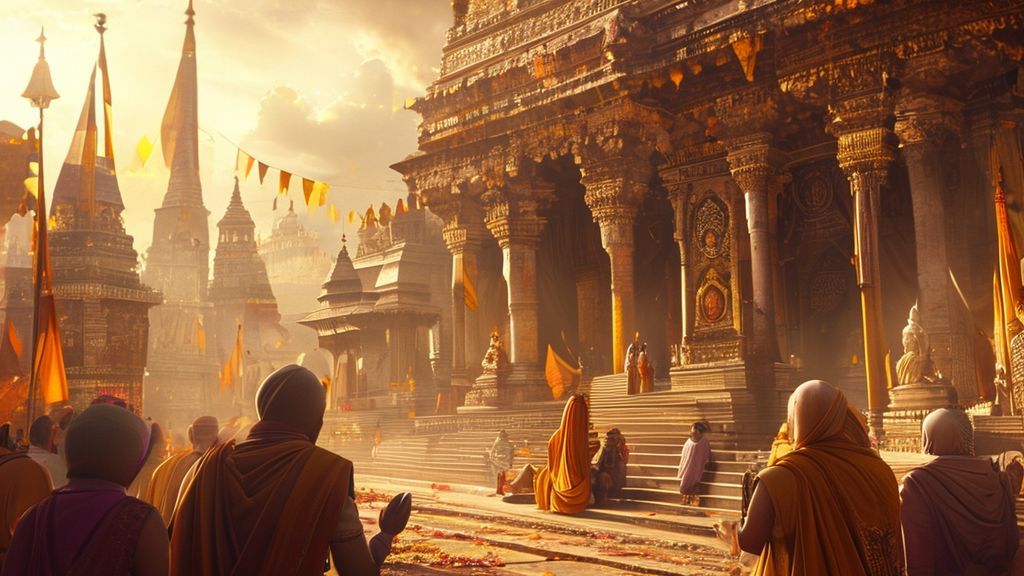
The architectural landscape of Punjab bears witness to centuries of Hindu devotion, showcasing distinct styles that have evolved over millennia. While many ancient temples were lost to invasions, surviving structures and reconstructed sites stand as testaments to enduring faith. The Durgiana Mandir in Amritsar, often called the “Silver Temple,” is a magnificent example, architecturally resembling the Golden Temple but dedicated to Devi Durga. Its intricate carvings and serene ambiance reflect the Nagara style, a predominant North Indian temple architecture.
Another significant site is the Devi Talab Mandir in Jalandhar, dedicated to Goddess Durga and a revered Shakti Peeth. Though the current structure is relatively modern, its history is ancient, emphasizing the continuous tradition of Devi worship. Historically, sites like the Katas Raj Temples (now in Pakistan Punjab), a complex of ancient Hindu temples surrounding a sacred pond, embody scientific marvels in their construction, water management systems, and astronomical alignments, deeply rooted in Hindu cosmology and engineering. These temples demonstrate the dedication of Punjabi Hindus to preserving and celebrating their spiritual heritage through monumental art and architecture, directly connecting them to the widespread temple culture of Sanatan Dharma.
Rituals and Puja Vidhi in Punjabi Hindu Households
The daily life of a Punjabi Hindu is imbued with the spirit of Dharma, centered around traditional rituals and festivals. Puja (worship) is a core practice, performed with utmost devotion. Typically, a home altar (mandir) is maintained, adorned with Murtis (idols) of preferred deities like Shiva, Vishnu, Rama, Krishna, Durga, Lakshmi, and Ganesha. Daily Aarti, the waving of lamps, is a common ritual, accompanied by devotional songs (bhajans).
Steps for a Simple Home Puja (Griha Puja)
- Sankalpa: The devotee takes a vow or intention for the puja.
- Achamana: Purification by sipping water while chanting Vishnu’s names.
- Deep Prajwalana: Lighting the lamp, symbolizing the dispelling of darkness.
- Avahana: Invoking the deity to be present in the Murti or image.
- Asana & Padya: Offering a seat and washing the deity’s feet (symbolically).
- Arghya & Snana: Offering water for hands and ritual bathing.
- Vastra & Upaveeta: Offering clothes and sacred thread (if applicable).
- Gandha & Pushpa: Applying fragrant paste (sandalwood) and offering flowers.
- Dhupa & Deepa: Offering incense and waving a lamp (Aarti).
- Naivedyam: Offering food (prasad), usually vegetarian and prepared with purity.
- Pradakshina & Namaskara: Circumambulating the deity and prostrating.
- Pranama & Kshama Prarthana: Offering obeisance and seeking forgiveness for any errors.
Major festivals like Lohri, Basant Panchami, Shivaratri, Holi, Navaratri, Janmashtami, and Diwali are celebrated with immense fervor, involving specific pujas, fasting (vratas), community gatherings, and traditional foods. These observances are integral to the cultural and spiritual identity of Punjabi Hindus, marking their unique adherence to the Sanatan calendar and traditions.
Mantras and Chants: Echoes of Eternity
Mantras are the very essence of Hindu spirituality, embodying divine vibrations and profound meanings. Punjabi Hindus, like their brethren across Bharatavarsha, regularly chant sacred mantras for spiritual upliftment, protection, and the fulfillment of righteous desires. These ancient sound formulas connect the devotee to the cosmic consciousness.
- Gayatri Mantra: ॐ भूर् भुवः स्वः तत् सवितुर्वरेण्यं भर्गो देवस्य धीमहि धियो यो नः प्रचोदयात् ॥ (Om Bhur Bhuvah Swah, Tat Savitur Varenyam, Bhargo Devasya Dhimahi, Dhiyo Yo Nah Prachodayat) – A universal Vedic hymn for illumination and wisdom.
- Om Namah Shivaya: ॐ नमः शिवाय (Om Namah Shivaya) – A powerful mantra dedicated to Lord Shiva, the auspicious one.
- Maha Mrityunjaya Mantra: ॐ त्र्यम्बकं यजामहे सुगन्धिं पुष्टिवर्धनम् उर्वारुकमिव बन्धनान् मृत्योर्मुक्षीय मामृतात् ॥ (Om Tryambakam Yajamahe Sugandhim Pushtivardhanam Urvarukamiva Bandhanan Mrityor Mukshiya Maamritat) – For health, longevity, and liberation.
- Hare Krishna Maha Mantra: हरे कृष्ण हरे कृष्ण कृष्ण कृष्ण हरे हरे । हरे राम हरे राम राम राम हरे हरे ॥ (Hare Krishna Hare Krishna, Krishna Krishna Hare Hare, Hare Rama Hare Rama, Rama Rama Hare Hare) – Chanted by devotees of Lord Krishna and Rama for spiritual purification.
These mantras, recited during puja, meditation, or daily activities, form a vital part of the spiritual discipline of Punjabi Hindus, reinforcing their connection to the timeless wisdom of the Vedas and Upanishads.
Dos and Don’ts for Devotees and Visitors
To engage respectfully with Punjabi Hindu culture and its spiritual practices, it is beneficial to observe certain etiquette:
- Do remove your shoes before entering a temple or a home altar area.
- Do dress modestly, covering shoulders and knees, as a sign of respect.
- Do offer prayers or a simple “Namaste” to deities and elders.
- Do accept Prasad (sanctified food) with reverence, typically with the right hand.
- Do observe silence or speak softly in sacred spaces.
- Don’t touch idols or sacred objects without permission from a priest or host.
- Don’t point your feet towards deities or elders.
- Don’t consume meat, alcohol, or tobacco within temple premises or when participating in rituals.
- Don’t enter temples if you are feeling unwell or are observing a period of ritual impurity.
- Don’t disrupt prayers or ceremonies with loud talking or photography without consent.
Frequently Asked Questions
Are Punjabi Hindus and Sikhs the same people culturally?
While Punjabi Hindus and Sikhs share a common regional heritage, language (Punjabi), and many folk customs, their religious identities are distinct. Punjabi Hindus follow Sanatan Dharma, with its diverse philosophies, deities, and rituals rooted in the Vedas. Sikhs adhere to Sikhism, a monotheistic faith founded by Guru Nanak Dev Ji, whose primary scripture is the Guru Granth Sahib, and whose practices center around Gurdwaras and the Khalsa code of conduct.
What are the core scriptural differences between Punjabi Hindus and Sikhs?
Punjabi Hindus primarily draw their spiritual wisdom and practices from the extensive Hindu scriptural canon, including the Vedas, Upanishads, Bhagavad Gita, Puranas, Ramayana, and Mahabharata. These scriptures endorse a wide range of theological perspectives, including idol worship and the concept of multiple divine manifestations. Sikhs, on the other hand, hold the Guru Granth Sahib as their sole living Guru and ultimate spiritual authority, which emphasizes the worship of one transcendent God (Ik Onkar) and rejects idol worship and the Hindu pantheon.
Do Punjabi Hindus and Sikhs share any common festivals or celebrations?
Yes, there are some festivals and celebrations that have cultural resonance across both communities, often due to shared regional traditions rather than identical religious interpretation. For example, Lohri, a winter harvest festival, is celebrated by both, though the specific rituals and songs might differ. Similarly, Vaisakhi, while a major religious festival for Sikhs (Khalsa creation), is also celebrated by Punjabi Hindus as a harvest festival and the beginning of the solar new year, often with visits to temples or local fairs.
What is the significance of “Gurus” in both traditions?
In Hinduism, a Guru is a spiritual teacher (अचार्य, Acharya or सद्गुरु, Sadguru) who guides a disciple on the path of Dharma, often through a Guru-shishya parampara (teacher-disciple lineage). These are human teachers, embodying spiritual wisdom. In Sikhism, the term Guru refers specifically to the Ten historical Gurus (from Guru Nanak Dev Ji to Guru Gobind Singh Ji), who established the Sikh faith, and subsequently, the Guru Granth Sahib, which is revered as the eternal, living Guru.
Why This Matters for Every Hindu
The study of Punjabi Hindu culture is vital for every Hindu, as it underscores the immense diversity and resilience within Sanatan Dharma. It serves as a powerful reminder that while the core principles of Dharma are universal, their expressions are beautifully varied, adapted to local customs and historical contexts. Recognizing the distinct identity of Punjabi Hindus, separate from Sikhism, is not about division but about clarity and respect for each tradition’s unique spiritual journey. It reinforces the understanding that Sanatan Dharma is not monolithic but a grand mosaic of philosophies, practices, and deities that has flourished across generations and geographies, including the sacred land of Punjab. Preserving and understanding this unique cultural facet enriches the global Hindu narrative and strengthens the collective appreciation for our ancient, eternal Dharma.