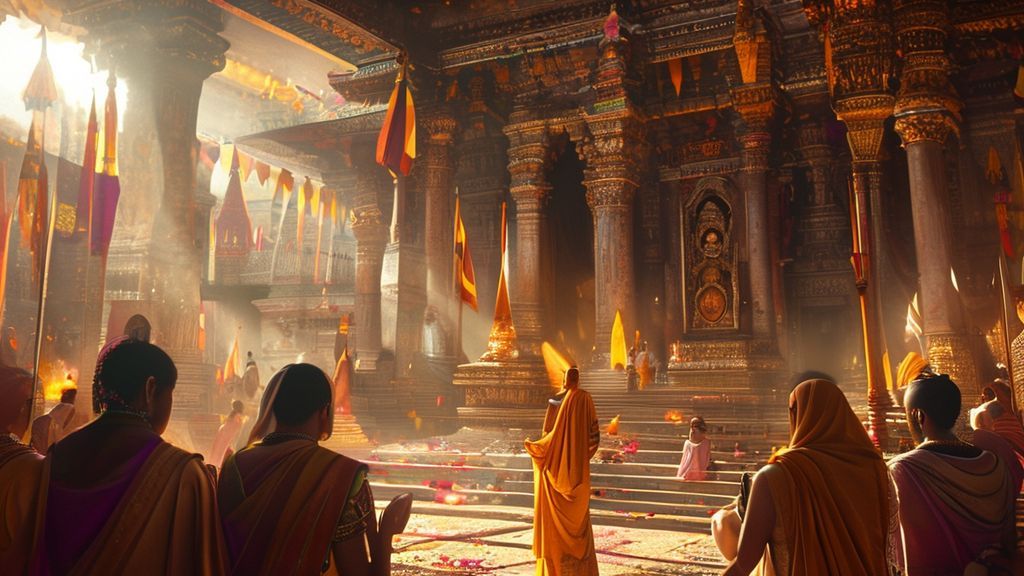
Hindu women can indeed serve as priests, a practice gaining traction in contemporary Sanatana Dharma, though traditional temple priesthood (archakatvam) primarily remains male-dominated due to specific Agamic and Vedic injunctions. While women have historically been revered as Vedic seers (Rishikas) and active participants in domestic rituals, their formal role in public temple worship is a nuanced discussion rooted in scriptural interpretation and evolving societal dynamics.
| Attribute | Details |
|---|---|
| Role of Women in Dharma | Integral as spiritual seekers, educators, householders (Grihinis), and partners in Vedic rituals (Sahadharminis). |
| Traditional Priesthood Eligibility | Historically reserved for male Dvija castes who undergo Upanayana (sacred thread) and extensive Gurukula training in Vedas, Agamas, and Karmakanda. |
| Modern Movements | Increasing number of women serving as priests (Purohitas) for domestic ceremonies, community functions, weddings, and some non-Agamic temple rituals. |
| Scriptural Basis | Vedas mention Rishikas (female seers) like Gargi and Maitreyi. Puranas and Epics show women actively participating in and even leading certain spiritual practices and Yajnas. |
Introduction: Dharma, Tradition, and Evolving Roles
Sanatana Dharma, often referred to as Hinduism, is a timeless spiritual tradition that has gracefully adapted through millennia while retaining its core eternal truths. The role of women within this profound spiritual framework has always been revered, from the Divine Mother (Devi) representing ultimate power and wisdom, to the earthly mother as the first guru. While spiritual equality is a foundational tenet, the specific roles in ritualistic priesthood, particularly within established temples, have historically been delineated along gender lines. This guide explores the scriptural foundations, historical precedents, and contemporary landscape concerning the question of Hindu women as priests, illuminating the rich tapestry of tradition and the nuanced shifts occurring in the modern era.
Understanding this topic requires a devotional yet critical examination of our sacred texts, distinguishing between universal spiritual principles and specific ritualistic injunctions. The essence of Dharma lies in righteous conduct and spiritual pursuit, which transcend gender. However, the precise performance of Vedic rituals (Yajnas) and Agamic temple worship (Archana) involves intricate rules (vidhi) and lineages (paramparas) that have traditionally shaped priestly eligibility.
Puranic History & Vedic Legends: Women of Spiritual Eminence
The history of Sanatana Dharma is replete with examples of women who attained the highest spiritual realization and contributed immensely to Vedic thought. The Rig Veda itself mentions twenty-seven Rishikas (female seers) who composed hymns, including Lopamudra, Ghosha, Apala, and Vishwavara. Their profound insights are enshrined forever in the Shruti (revealed texts), demonstrating the highest intellectual and spiritual capacity of women in Vedic times. The Brihadaranyaka Upanishad records the profound philosophical dialogues between Sage Yajnavalkya and the brilliant female philosopher Gargi Vachaknavi, where she challenges him on the nature of Brahman. Similarly, Maitreyi, another wife of Yajnavalkya, sought knowledge of the immortal Self.
In the Itihasas (epics) and Puranas, we find queens and noblewomen who actively participated in and even initiated significant religious rites. Queen Kausalya, mother of Sri Rama, is depicted in the Ramayana performing various Vedic rituals for the welfare of her family and kingdom. The story of Sati Anasuya in the Brahma Purana showcases her unparalleled ascetic power and devotion. While these narratives emphasize women’s spiritual prowess and active participation, they primarily illustrate roles within the domestic sphere or as patrons/co-performers, rather than as sole officiants (Purohitas or Archakas) in large-scale public temple rituals or complex Yajnas requiring specific male initiation (Upanayana) and lineage. This distinction is crucial for understanding the traditional context.
Scriptural Foundations and Traditional Structures
The Vedic tradition, particularly the Grihya Sutras, emphasizes the wife (patni) as the indispensable partner (sahadharmini) in all domestic fire rituals (Grihya-agni-hotras). No Vedic ritual performed by a householder is considered complete without the presence and active participation of his wife. This highlights the inherent spiritual equality and partnership within the sacred institution of marriage. However, the role of a *Purohita* (family priest) or *Archaka* (temple priest) traditionally required specific qualifications:
- Upanayana (Sacred Thread Ceremony): Traditionally, this initiation into Vedic studies was prescribed for Dvija (twice-born) males, marking their eligibility to study Vedas and perform specific rituals.
- Gurukula Education: Extensive training under a Guru, mastering Vedic chants, Karmakanda (ritualistic portion of Vedas), and associated knowledge.
- Agamic Diksha (Initiation): For temple priesthood, specific initiations into Agamic traditions, often tied to particular lineages (paramparas), are required, especially for the consecration and daily worship of deities (Murti Puja).
- Physical Purity and Discipline: Priests are expected to maintain rigorous standards of purity and ascetic discipline, which sometimes included specific injunctions related to natural physiological cycles for women.
While the Vedas affirm the spiritual capacity of women, the elaborate public and temple rituals developed through the Puranas and Agamas evolved with a specific framework for priesthood. The distinction often lies between personal spiritual practice or domestic rituals, where women’s participation is universally accepted and often crucial, and the professional, public, and often lineage-bound role of a temple priest.
Rituals & Puja Vidhi Performed by Women Priests Today
In contemporary times, a growing number of Hindu women are stepping into priestly roles, particularly in the diaspora and in various community-based organizations within India. These women often specialize in:
- Grihya Karmas (Domestic Rites): Weddings (Vivaha Samskara), naming ceremonies (Nama Karana), housewarming (Griha Pravesh), and other household pujas. These rituals, guided by Grihya Sutras, naturally lend themselves to female participation as the woman is central to the home.
- Sankirtan and Bhakti Programs: Leading devotional singing, discourses, and community prayers, where spiritual fervor and knowledge of scriptures are paramount.
- Community Worship: Officiating at general community gatherings, festivals, and social ceremonies where the focus is on collective devotion rather than strict Agamic temple consecration.
- Educational Roles: Teaching Sanskrit, Vedas, and Puranas, guiding spiritual seekers, and leading meditation sessions.
The eligibility for these roles typically involves deep scriptural knowledge, proficiency in chanting mantras, understanding the procedural aspects of rituals, and unwavering devotion. Many women undergo formal training in specialized Gurukulas or institutions that are adapting to meet this contemporary demand. This expansion often happens in areas where the Agamic strictures of specific deity worship are less emphasized, or in traditions that prioritize universal access to spiritual service. For those seeking resources on various Dharmic practices and current trends, Hindutva.online offers insightful articles.
Mantras & Chants for Devotion and Priesthood
The power of Mantra is universal and accessible to all sincere devotees, irrespective of gender. Any woman can chant any mantra with devotion and proper understanding to attain spiritual benefits. Priests, whether male or female, utilize a wide array of mantras depending on the ritual and deity. Some universally cherished mantras include:
- Gayatri Mantra: ॐ भूर्भुवः स्वः तत्सवितुर्वरेण्यं भर्गो देवस्य धीमहि धियो यो नः प्रचोदयात् ॥ (Om Bhur Bhuvah Svah, Tat Savitur Varenyam, Bhargo Devasya Dhimahi, Dhiyo Yo Nah Prachodayat.) – A powerful Vedic mantra for intellectual and spiritual illumination.
- Maha Mrityunjaya Mantra: ॐ त्र्यम्बकं यजामहे सुगन्धिं पुष्टिवर्धनम्। उर्वारुकमिव बन्धनान् मृत्योर्मुक्षीय मामृतात्॥ (Om Tryambakam Yajamahe Sugandhim Pushtivardhanam, Urvarukamiva Bandhanan Mrityor Mukshiya Maamritat.) – For health, longevity, and liberation.
- Om Namah Shivaya: ॐ नमः शिवाय – The Panchakshari mantra dedicated to Lord Shiva, epitomizing surrender and devotion.
- Hare Krishna Maha Mantra: हरे कृष्ण हरे कृष्ण कृष्ण कृष्ण हरे हरे। हरे राम हरे राम राम राम हरे हरे॥ (Hare Krishna Hare Krishna, Krishna Krishna Hare Hare, Hare Rama Hare Rama, Rama Rama Hare Hare.) – A potent mantra for Bhakti and spiritual awakening.
The efficacy of a mantra lies in its correct pronunciation (shuddhi), understanding of its meaning (artha), and the devotee’s sincerity (bhava). Women priests, by mastering these aspects, effectively transmit the spiritual energy of the mantras to the community.
Dos and Don’ts for Aspiring Women Priests
- Do:
- Seek authentic scriptural education (Shastra Adhyayan) from qualified gurus or institutions.
- Cultivate deep devotion (Bhakti) and understanding of the rituals (Karmakanda).
- Adhere to principles of purity (Shaucha) and discipline (Tapasya).
- Focus on serving the community and guiding them in their spiritual journey.
- Respect established traditions and temple protocols while promoting inclusivity.
- Don’t:
- Undertake rituals without proper knowledge, training, or initiation (Diksha) where required.
- Disregard the specific injunctions (Vidhis) of particular Agamic or Vedic traditions, especially for consecrated temple deities.
- Engage in practices solely for personal gain or prestige without a foundation of Dharma.
- Criticize or dismiss traditional roles without understanding their historical and scriptural context.
Frequently Asked Questions
What scriptures support women performing priestly duties?
The Vedas, especially the Rig Veda, highlight Rishikas (female seers) who composed hymns, indicating their profound spiritual authority. The Grihya Sutras emphasize the wife’s essential role as a co-performer (sahadharmini) in domestic rituals. While specific injunctions for public temple priesthood (Archakatvam) are complex, these texts affirm women’s spiritual capacity and ritual participation.
Are women priests allowed in all Hindu temples?
No, not in all temples. Many traditional temples, especially those following strict Agamic traditions in South India, adhere to centuries-old practices that limit priestly roles to specific male lineages (paramparas). However, some newer temples, community centers, and organizations, particularly in the West, are open to or actively employ women priests, especially for non-Agamic or general devotional services.
What kind of ceremonies do women priests typically perform?
Women priests most commonly officiate at domestic ceremonies (Grihya Karmas) such as weddings (Vivaha Samskara), baby showers (Seemantham), naming ceremonies (Nama Karana), housewarmings (Griha Pravesh), and other family pujas. They also frequently lead devotional singing (Sankirtan), discourses, and community prayer events.
How can a woman become a Hindu priest?
A woman aspiring to become a Hindu priest should undertake rigorous scriptural study (Vedas, Puranas, Dharmashastras), learn correct mantra chanting, and understand ritual procedures (Karmakanda). Many institutions and Gurukulas now offer comprehensive training programs specifically for women, focusing on various aspects of ritual leadership and spiritual guidance. Dedication to spiritual practice (sadhana) and a strong sense of service (seva) are also essential.
Dharmic Significance: Preserving and Evolving Sanatana Dharma
The ongoing discussion and the increasing presence of women in priestly roles signify the dynamic nature of Sanatana Dharma. It demonstrates the tradition’s inherent ability to introspect, adapt, and expand its expressions while staying true to its eternal principles. Empowering women to lead spiritual rites, where appropriate and within the framework of scriptural knowledge, enriches the spiritual fabric of our society. It ensures that the profound wisdom of Dharma remains accessible and vibrant for future generations. The inclusion of women priests, particularly in areas like domestic rituals and community services, can foster deeper engagement with Dharmic practices within families and local communities, reinforcing the spiritual foundation of Hindu society. For further exploration of such topics, one can always refer to the extensive resources available on Hindutva.online, dedicated to upholding the tenets of Sanatana Dharma.
