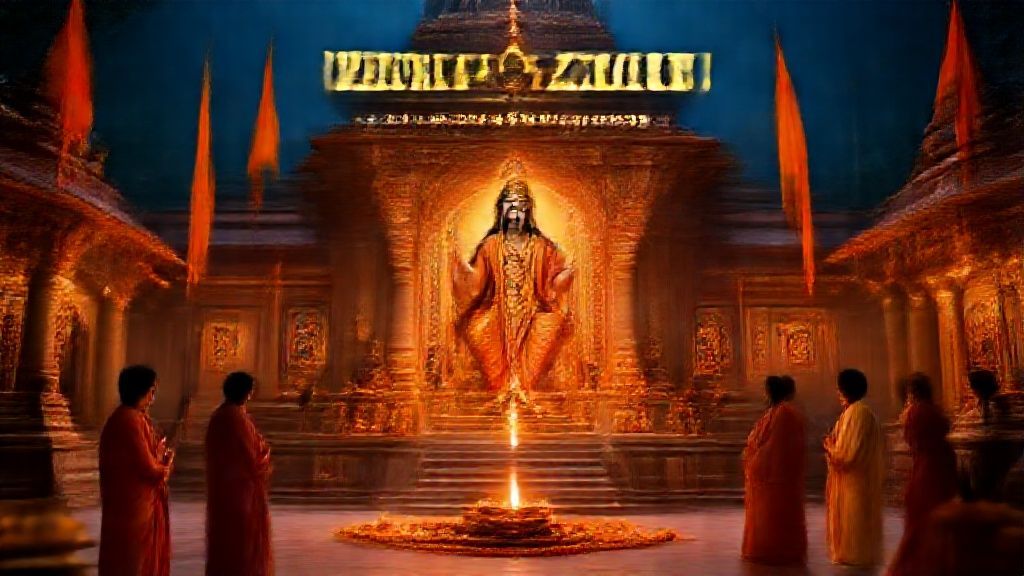
Diwali 2026, the profound Festival of Lights, culminates on Sunday, November 1st, 2026, with the sacred Lakshmi Puja, observed on the Amavasya Tithi of the Kartik month. This five-day observance, spanning October 30th to November 3rd, heralds the victory of light over darkness and good over evil, sanctifying homes and bringing immense spiritual merit.
| Attribute | Details for Diwali 2026 |
|---|---|
| Main Deities | Devi Lakshmi, Sri Ganesha, Kubera, Sri Rama, Sri Krishna, Dhanvantari, Yama, Chitragupta. |
| Key Dates (Gregorian) |
|
| Key Dates (Vikram Samvat) |
|
| Core Significance | Triumph of Dharma, prosperity, spiritual enlightenment, removal of darkness, new beginnings. |
| Primary Scripture Reference | Skanda Purana, Padma Purana, Bhavishya Purana, Ramayana, Bhagavata Purana. |
The Cosmic Illumination: Understanding Diwali
Diwali, or Deepavali (Sanskrit: दीपावली), meaning “row of lamps,” is not merely a festival but a profound spiritual awakening, celebrated across Bharatavarsha and by Sanatan Dharma followers globally. It is an auspicious period that transcends regional variations, uniting devotees in a shared experience of joy, light, and the triumph of righteousness. This five-day celebration, anchored in the lunar calendar, represents a deep cosmological harmony, marking the transition from the dark fortnight to the bright, symbolizing the inner journey from ignorance to knowledge.
Each day of Diwali carries distinct significance, layered with ancient legends and specific rituals designed to invoke blessings for health, wealth, peace, and spiritual growth. Far from being a mere calendar date, Diwali 2026, like every year, is a sacred moment meticulously calculated through Vedic astronomy to align humanity with auspicious cosmic energies. It is a period for introspection, purification, and the re-affirmation of the eternal principles of Sanatan Dharma.
Puranic History & Sacred Legends of Deepavali
The myriad tales associated with Diwali are not mere folklore; they are divine narratives (Itihasa) that encapsulate the essence of Dharma and provide profound spiritual lessons. Each day’s observance is rooted in specific Puranic accounts:
Dhanteras: Honoring Health and Wealth
The first day, Dhanteras (Sanskrit: धनतेरस), or Dhanatrayodashi, falls on the thirteenth lunar day of the dark fortnight of Kartik. As narrated in the Skanda Purana, this day marks the emergence of Lord Dhanvantari, the divine physician and an avatar of Vishnu, from the Samudra Manthan (churning of the cosmic ocean) with the pot of Amrita (elixir of immortality). Worship of Dhanvantari ensures good health. Simultaneously, it is dedicated to Devi Lakshmi and Kubera, the treasurer of the gods, for wealth and prosperity. Devotees light Yama Deepam, a lamp facing south, for Lord Yama to ward off untimely death, a tradition cited in the Bhavishya Purana.
Naraka Chaturdashi: The Victory of Light Over Darkness
The fourteenth day, Naraka Chaturdashi (Sanskrit: नरक चतुर्दशी), commemorates Lord Krishna’s triumphant slaying of the demon Narakasura. As detailed in the Bhagavata Purana (Canto 10, Chapter 59), Narakasura had abducted 16,100 princesses and terrorized the three worlds. Krishna, accompanied by Satyabhama, defeated the demon and freed the captive women, an act that restored cosmic balance. This day is celebrated with early morning oil baths (अभ्यंगस्नानम्) to cleanse oneself of evil influences, symbolic of ridding the self of internal ‘narakasura’ (demonic tendencies).
Lakshmi Puja (Main Diwali): The Apex of Prosperity
The most significant day, Lakshmi Puja, falls on the Amavasya Tithi (new moon day) of the Kartik month. This night is revered for multiple divine events:
- Devi Lakshmi’s Birth & Union: The Vishnu Purana describes Devi Lakshmi emerging from the Samudra Manthan on this day, choosing Lord Vishnu as her consort. Worshipping her brings blessings of wealth, fortune, and spiritual abundance.
- Sri Rama’s Return to Ayodhya: The epic Ramayana describes the joyous return of Sri Rama, Sita, and Lakshmana to Ayodhya after 14 years of exile and the defeat of Ravana. The citizens of Ayodhya lit countless lamps (deepas) to illuminate their path and express their jubilation, hence the origin of Deepavali.
- Vamana Avatar’s Triumph: In South India, Diwali also commemorates Lord Vishnu’s Vamana avatar subduing the benevolent demon king Mahabali, pushing him to Patala, thus restoring the cosmic order, as chronicled in the Bhagavata Purana.
Govardhan Puja: Reverence for Nature
The day after Lakshmi Puja, Govardhan Puja (Sanskrit: गोवर्धन पूजा) or Annakut, commemorates Lord Krishna’s miraculous act of lifting the Govardhan Hill to protect the villagers of Vrindavan from the wrath of Indra, as depicted in the Bhagavata Purana (Canto 10, Chapter 25). This festival teaches reverence for nature and emphasizes the protection of the environment, a core tenet of Sanatan Dharma.
Bhai Dooj: Celebrating Sibling Bonds
The final day, Bhai Dooj (Sanskrit: भाई दूज), also known as Yama Dwitiya, celebrates the sacred bond between brothers and sisters. According to the Bhavishya Purana, on this day, Lord Yama (the God of Death) visited his sister Yamuna, who welcomed him with an Aarti and a lavish meal. Yama was so pleased that he declared that anyone who visits their sister on this day would be blessed with longevity. Sisters pray for their brothers’ well-being, and brothers pledge their protection.
The Celestial Architecture: Vedic Astronomy & Tithi Calculation
While Diwali is celebrated on Earth, its timing is dictated by the celestial movements meticulously charted by ancient Vedic seers. The determination of Diwali 2026, particularly the Lakshmi Puja on Kartik Amavasya, is a marvel of Vedic astronomy, known as Jyotisha Shastra.
Unlike fixed-date festivals, Diwali’s dates shift annually according to the lunisolar Hindu calendar. The Amavasya Tithi (new moon phase) in the month of Kartik (which broadly corresponds to October/November in the Gregorian calendar) is the pivotal moment. Vedic astronomers calculate the precise start and end times of each lunar day (Tithi) based on the longitudinal angle between the Sun and the Moon. A Tithi is approximately 23.6 hours, meaning it can begin or end at any time of day or night.
The Panchang (Sanskrit: पंचांग), the traditional Hindu calendar, integrates five key elements: Tithi (lunar day), Vara (weekday), Nakshatra (lunar mansion), Yoga (astrological combination), and Karana (half-lunar day). For Lakshmi Puja, the Amavasya Tithi is paramount. The muhurta (auspicious time) for the Puja is typically during Pradosh Kaal (प्रदोष काल), the period just after sunset, when the cosmic energies of Devi Lakshmi are believed to be most potent. This precise calculation ensures that devotees align their worship with the most spiritually charged moments, harnessing the celestial architecture to enhance their prayers and rituals.
Rituals & Puja Vidhi for Lakshmi Puja (November 1, 2026)
Performing Lakshmi Puja on Diwali 2026 with devotion and adherence to scriptural guidelines invites immense blessings. Here is a step-by-step guide:
- Purification & Preparation: Clean your home thoroughly. Decorate with rangoli, fresh flowers, and light numerous oil lamps (diyas) and candles. Place the idols of Devi Lakshmi and Sri Ganesha on a clean altar (chowki) covered with a red cloth.
- Sankalpa (Taking a Vow): Facing East or North, sit with folded hands and mentally or verbally state your intention to perform the Puja for the well-being of your family and for spiritual prosperity.
- Ganesha Puja: Begin by invoking Lord Ganesha, the remover of obstacles. Offer water, flowers, and sweets. Chant “वक्रतुण्ड महाकाय सूर्यकोटि समप्रभ। निर्विघ्नं कुरु मे देव सर्वकार्येषु सर्वदा॥” (Vakratunda Mahakaya Suryakoti Samaprabha. Nirvighnam Kuru Me Deva Sarvakaryeshu Sarvada.).
- Kalash Sthapana (Pot Placement): Place a copper or brass pot filled with water, mango leaves, and a coconut on the altar. This represents the universe and divine energy.
- Lakshmi Avahanam (Invocation): Invoke Devi Lakshmi. Offer flowers, incense, and lamps. Bathe her idol with Panchamrita (mixture of milk, curd, ghee, honey, sugar) and then with Ganga Jal or clean water. Dress her in new clothes and adorn her with jewelry.
- Offerings: Present offerings (Naivedyam) to Devi Lakshmi, including sweets (like Kheer, Gulab Jamun), fruits, coins, lotus flowers, betel leaves, and especially Dhanya (grains) and Kheel (puffed rice) and Battashe (sugar drops).
- Kuber Puja: Alongside Lakshmi, worship Lord Kubera. Place his idol or a picture, offering coins and prayers for financial abundance.
- Aarti: Conclude the Puja by performing Aarti (waving of lamps) to Devi Lakshmi, Sri Ganesha, and other deities, singing devotional hymns.
- Prasad Distribution: Distribute the consecrated offerings (Prasad) to family members and guests.
Sacred Mantras & Chants for Deepavali
Reciting these sacred mantras enhances the spiritual potency of your Diwali worship:
-
Mahalakshmi Moola Mantra:
“ॐ श्रीं ह्रीं क्लीं ऐं सौं ॐ ह्रीं क ए ई ल ह्रीं ह स क ल ह्रीं सकल ह्रीं सौं ऐं क्लीं ह्रीं श्रीं ॐ।”
(Om Shrim Hreem Kleem Aim Saum Om Hreem Ka Ee I La Hreem Ha Sa Ka La Hreem Sakala Hreem Saum Aim Kleem Hreem Shreem Om.)
This potent mantra invokes all forms of Devi Lakshmi for prosperity and spiritual power. -
Lakshmi Gayatri Mantra:
“ॐ महालक्ष्म्यै च विद्महे, विष्णु पत्न्यै च धीमहि, तन्नो लक्ष्मी प्रचोदयात्।”
(Om Mahalakshmyai Cha Vidmahe, Vishnu Patnyai Cha Dhimahi, Tanno Lakshmi Prachodayat.)
This mantra invokes the consort of Vishnu for wealth and enlightenment. -
Ganesha Mantra:
“ॐ गं गणपतये नमः।” (Om Gam Ganapataye Namah.)
Chant this before any Puja for success and removal of obstacles.
Dos and Don’ts for a Sacred Diwali
To observe Diwali with utmost reverence and receive complete blessings:
-
Dos:
- Maintain absolute cleanliness in your home and surroundings.
- Light numerous traditional oil lamps (diyas) and candles, symbolizing the dispelling of inner and outer darkness.
- Share sweets, gifts, and blessings with family, friends, and those in need.
- Meditate and chant mantras for spiritual upliftment.
- Wear clean, traditional attire during Puja.
- Offer sincere prayers for peace and prosperity for all.
-
Don’ts:
- Avoid excessive gambling, as it is a distortion of the spirit of prosperity.
- Refrain from consuming alcohol and non-vegetarian food, especially during the Puja days.
- Do not engage in arguments, negativity, or unkind speech.
- Avoid leaving the house unclean or in disarray during the festive period.
- Do not waste food or resources; practice gratitude and conservation.
Frequently Asked Questions About Diwali 2026
When exactly is Lakshmi Puja for Diwali 2026?
The primary Lakshmi Puja for Diwali 2026 is observed on Sunday, November 1st, 2026. This sacred day falls on the Amavasya Tithi of the Kartik month, according to the Hindu lunisolar calendar, with the most auspicious Puja Muhurta typically in the evening during Pradosh Kaal.
Why is Diwali celebrated for five days?
Diwali is a five-day festival because each day commemorates distinct divine events and carries unique spiritual significance, as described in various Puranas and Itihasas. From Dhanteras (health and wealth) to Bhai Dooj (sibling bonds), these consecutive days encapsulate the multifaceted aspects of Dharma, prosperity, and human relationships, culminating in the spiritual victory symbolized by Lakshmi Puja.
Which deities are primarily worshipped during Diwali?
While Devi Lakshmi and Sri Ganesha are central to the main Diwali (Lakshmi Puja), other significant deities worshipped throughout the five days include Lord Dhanvantari and Kubera (Dhanteras), Lord Krishna (Naraka Chaturdashi and Govardhan Puja), Sri Rama and Sita (for their return to Ayodhya), and Lord Yama (Dhanteras and Bhai Dooj). This collective worship highlights the festival’s broad spiritual scope.
Dharmic Significance: Why This Matters for Every Hindu
Diwali 2026, and indeed every Deepavali, is more than a chronological mark on the calendar; it is a profound affirmation of Sanatan Dharma’s eternal values. It reminds us that darkness, whether external in the form of evil or internal as ignorance, can always be dispelled by the light of truth (Satya) and righteousness (Dharma). The lighting of lamps is not just an external ritual but an invitation to ignite the inner lamp of wisdom and compassion. The worship of Lakshmi transcends material gain; it is a prayer for spiritual abundance, moral fortitude, and the prosperity that enables us to serve Dharma.
By understanding the precise astronomical calculations, delving into the rich Puranic narratives, and performing the rituals with devotion, we reconnect with our ancestral heritage and contribute to the preservation of our sacred traditions. May this Deepavali bring light, peace, and prosperity to your homes and hearts. For more insights into our rich heritage, please visit Hindutva.online.
