The Godavari River, revered as the Dakshin Ganga, is the second-longest river in India and holds immense spiritual significance for Hindus. Originating in Trimbakeshwar, Maharashtra, this sacred river is considered a direct manifestation of Ganga Mata, bringing purity, spiritual cleansing, and liberation to the southern lands, as detailed in numerous Puranas and ancient scriptures.
| Attribute | Details |
|---|---|
| Primary Deity Association | Ganga Mata (manifestation), Lord Shiva, Sage Gautama, Lord Brahma |
| Location/Origin | Brahmagiri Mountains, Trimbakeshwar, Nashik District, Maharashtra |
| Key Festivals | Godavari Pushkaram (celebrated once every 12 years), Kartik Purnima, Makar Sankranti |
| Major Scripture References | Brahma Purana, Skanda Purana (Godavari Mahatmyam), Matsya Purana, Valmiki Ramayana |
The Sacred Flow of Dakshin Ganga: An Introduction to Godavari’s Divinity
The Godavari River, affectionately known as the Dakshin Ganga or Southern Ganges, is far more than a geographical feature; it is a living deity, a mother, and a fount of spiritual cleansing for millions across Bharatavarsha. Its waters carry the same purifying essence as the celestial Ganga, bestowing liberation (moksha) and washing away sins for those who bathe in its holy currents with faith and devotion. Spanning over 1,465 kilometers, the Godavari traverses the heartland of India, nurturing vibrant cultures, ancient civilizations, and countless sacred sites along its banks. From its mystical source in the Brahmagiri hills near Trimbakeshwar, Maharashtra, to its confluence with the Bay of Bengal, the Godavari embodies the very spirit of Sanatan Dharma’s reverence for Prakriti, the divine nature.
For sincere seekers and devotees, understanding the profound importance of the Godavari is essential. It is a conduit of divine grace, an enduring symbol of purity, and a testament to the timeless spiritual heritage embedded within our land. The sanctity of the Godavari is celebrated in hymns, enshrined in temples, and perpetuated through rituals performed for millennia, guiding the spiritual journey of countless souls.
Puranic History and Legend: The Advent of Godavari on Earth
The epic narrative of the Godavari’s descent to Earth is one of devotion, penance, and divine intervention, primarily elucidated in the Brahma Purana and the Skanda Purana’s Godavari Mahatmyam. According to these scriptures, the Godavari’s earthly manifestation is inextricably linked to the revered Sage Gautama.
Legend has it that Sage Gautama, a great Rishi, resided with his wife Ahalya in a hermitage on the Brahmagiri mountain, near Nashik. During a severe drought that plagued the region for over a century, all other rivers dried up, leading to immense suffering among ascetics and common people alike. Seeing the distress, Sage Gautama undertook rigorous austerities and penance to please Lord Shiva. Impressed by his unwavering devotion, Lord Shiva appeared before him and granted him a boon. Gautama requested that Ganga, the celestial river, descend to his hermitage to alleviate the drought and provide sustenance for all living beings.
Lord Shiva, pleased, released a stream of Ganga from his matted locks, which flowed down as the Godavari. However, some versions of the legend in the Matsya Purana describe a different origin story for the name. It recounts a miraculous incident where Sage Gautama, through his Yogic powers, created a life-giving spring. One day, a cow wandered into his field and was accidentally killed when Gautama tried to shoo it away with a blade of grass. To purify himself from the sin of ‘go-hatya’ (cow-slaughter), Gautama prayed to Lord Shiva. Shiva, in His compassion, commanded Ganga to emerge from the Brahmagiri mountains to cleanse Gautama. The spot where Ganga emerged was called ‘Go’ (cow) ‘Da’ (giving) ‘Vari’ (water), hence Godavari. The river thus became a symbol of purity, capable of absolving even the gravest of sins.
The Godavari’s journey also finds profound mention in the Valmiki Ramayana. Lord Rama, Sita, and Lakshmana spent a significant part of their exile (Vanavasa) in Panchavati, on the banks of the Godavari near present-day Nashik. The serene surroundings and the sacred waters of the Godavari provided solace and spiritual strength to the divine trio. This association further sanctifies the river, making its banks a pilgrimage site for devotees of Lord Rama.
Architectural and Geological Marvels Along Its Banks
While the Godavari itself is a natural wonder, its banks are adorned with ancient architectural marvels that reflect centuries of spiritual devotion and engineering prowess. The sacred city of Nashik, often referred to as a “Tirtha Raj” (King of Pilgrimage Sites), is a prime example.
- Trimbakeshwar Jyotirlinga Temple: The very source of the Godavari is adjacent to one of the twelve sacred Jyotirlingas, dedicated to Lord Shiva. The temple, built in the Nagara style, is a masterpiece of black stone architecture from the Maratha period, particularly the Peshwa era. Its intricate carvings and unique lingam, which has three faces representing Brahma, Vishnu, and Shiva, draw millions of devotees.
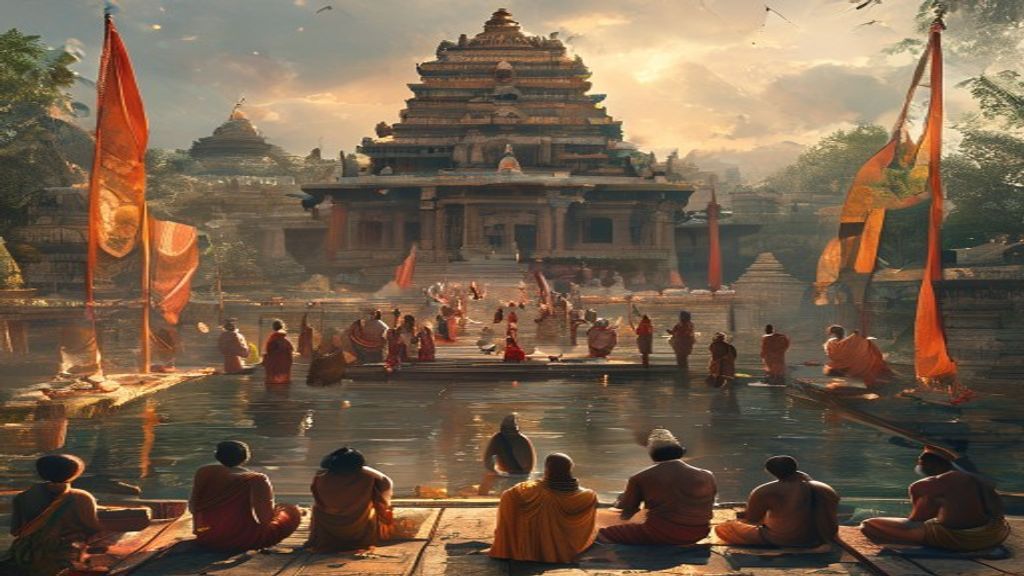
- Ramkund Ghat: In Nashik, Ramkund is the most sacred bathing ghat. It is believed that Lord Rama performed his daily ablutions here. During the Simhastha Kumbh Mela, which occurs every 12 years (alternating with Ujjain, Haridwar, Prayagraj), millions of pilgrims take a holy dip at Ramkund, making it a focal point of immense spiritual energy. The surrounding temples and ancient structures, though rebuilt over centuries, maintain their original sanctity and architectural lines.
- Kalaram Temple: A revered temple dedicated to Lord Rama, located near the Godavari banks in Nashik. The temple is famed for its black idol of Lord Rama, hence “Kalaram.” Its architecture is a blend of ancient Dravidian and Maratha styles, with massive pillars and a towering gopuram.
- Rajamahendravaram (Rajahmundry): Further downstream in Andhra Pradesh, Rajahmundry is another significant city on the Godavari. It is particularly renowned for the Godavari Pushkaram festivities. The city boasts several ancient ghats and temples, including the Markandeya Temple and the Kotilingeswara Temple, reflecting a blend of Kakatiya and Vijayanagara architectural influences. The bridges across the Godavari at Rajahmundry, though modern marvels, stand on a legacy of crossing this mighty river that dates back centuries, with ancient ferry points and smaller crossings mentioned in historical texts.
The river’s course itself is a geological marvel, carving through diverse terrains from the Western Ghats to the Deccan Plateau and finally forming a vast delta before merging with the Bay of Bengal. This journey supports a rich biodiversity and has sustained agriculture for millennia, attesting to its life-giving scientific and ecological significance.
Rituals and Puja Vidhi for Godavari Devi
Worship of the Godavari involves various sacred rituals designed to honor the river goddess and seek her blessings for purification, prosperity, and ancestral liberation. These practices are deeply ingrained in Sanatan Dharma.
- Snana (Holy Dip): The most fundamental ritual is taking a holy dip in the Godavari’s waters. This act, performed with devotion and a pure heart, is believed to cleanse one of sins (paap-nivarana) and grant spiritual merit (punya). Special significance is attached to bathing during auspicious periods like Pushkaram, Makar Sankranti, and new moon days (Amavasya).
- Pind Daan and Tarpana: For ancestral veneration, performing Pind Daan (offering rice balls) and Tarpana (offering water with sesame seeds) to ancestors (pitrus) on the banks of the Godavari is considered highly meritorious. It is believed to bring peace to the departed souls and ensure the well-being of the living descendants.
- Deep Daan (Lamp Offering): Devotees often float lit lamps (deepas) made of clay or leaves on the river, especially during evenings or festivals. This symbolizes offering light to the goddess, seeking guidance, and expressing gratitude.
- Arghyam: Offering water from cupped hands (arghyam) to the rising or setting sun while facing the river, often accompanied by Gayatri Mantra, is a common practice for seeking divine blessings.
- Sankalpa and Puja: Before any ritual, a sankalpa (resolve) is made, stating the purpose of the worship. Simple pujas involving offerings of flowers, incense, kumkum, turmeric, and fruits are performed on the ghats to Godavari Devi.
Mantras and Chants for Godavari Devi
Chanting specific mantras while performing rituals or meditating on the Godavari’s sanctity enhances the spiritual experience and invokes the river goddess’s blessings. Here are a few:
General Ganga Invocation (applicable to Godavari as Dakshin Ganga):
ॐ गंगायै नमः ।
Om Gangayai Namah.
(Meaning: Salutations to Goddess Ganga.)Godavari Pranam Mantra:
पुण्या त्वं गोदावरी गंगे, सर्वतीर्थमयी शुभा ।
पुनासि दर्शनैश्चैव स्नानतः पातकानि नः ॥
Punyaa Tvam Godaavari Gange, Sarvateerthamayee Shubhaa.
Punaasi Darshanairchaiva Snaanatah Paatakaani Nah.
(Meaning: O auspicious Godavari Ganga, you are sacred, embodying all holy tirthas. By your sight and by bathing in you, you purify us from our sins.)Mantra for Purification during Snana:
गंगे च यमुने चैव गोदावरि सरस्वति ।
नर्मदे सिन्धु कावेरि जलेऽस्मिन् सन्निधिं कुरु ॥
Gange Cha Yamune Chaiva Godavari Saraswati.
Narmade Sindhu Kaveri Jale’smin Sannidhim Kuru.
(Meaning: O Ganga, Yamuna, Godavari, Saraswati, Narmada, Sindhu, Kaveri, may your presence sanctify this water.) This mantra invokes all seven sacred rivers, ensuring universal purification.
Dos and Don’ts for Devotees at Godavari Ghats
To maintain the sanctity of the Godavari and show proper reverence, devotees should adhere to certain cultural and spiritual guidelines:
Dos:
- Maintain Purity: Keep the ghats and waters clean. Dispose of offerings respectfully and responsibly, preferably in designated areas.
- Offer Prayers: Perform your rituals and prayers with sincere devotion.
- Respect Life: Be kind to all living beings, including aquatic life. Feeding fish is a common practice.
- Dress Modestly: Wear appropriate, modest clothing, especially when visiting temples or performing rituals.
- Observe Silence: Maintain a peaceful and reverent atmosphere, particularly during prayers or meditation.
- Support Cleanliness Initiatives: Participate in or support efforts to keep the river and its banks pristine, honoring the sacredness of Hindutva.online‘s ethos.
Don’ts:
- Pollute the Waters: Avoid littering, washing clothes with detergents, bathing with soap, or releasing chemical effluents into the river.
- Disrespect the Environment: Do not deface ancient structures or disturb the natural flora and fauna.
- Engage in Unholy Activities: Avoid consuming intoxicants, gambling, or engaging in loud, boisterous behavior on the ghats.
- Take Photography without Permission: Be mindful of others’ privacy and the sanctity of rituals; ask before taking photographs in sensitive areas.
- Throw Non-Biodegradable Items: Strictly refrain from throwing plastic, metal, or other non-biodegradable items into the river.
Frequently Asked Questions
Why is Godavari called Dakshin Ganga?
The Godavari is known as Dakshin Ganga (Southern Ganges) due to its profound spiritual significance and its legend of origin, where Sage Gautama brought Ganga Mata to the South. It holds the same purifying power and cultural reverence for southern India as the Ganges does for the North, making it a pivotal pilgrimage river for attaining liberation and spiritual merit.
What is the Godavari Pushkaram?
Godavari Pushkaram is a major Hindu festival celebrated once every 12 years when Jupiter (Brihaspati) enters the zodiac sign of Leo (Simha). Millions of devotees gather on the banks of the Godavari, especially at places like Nashik and Rajahmundry, to take a holy dip. It is believed that bathing during this auspicious period purifies one from all sins and grants immense spiritual benefits, including liberation for ancestors.
Which major Jyotirlinga is situated on the Godavari’s banks?
The revered Trimbakeshwar Jyotirlinga Temple, one of the twelve most sacred Shiva temples, is located near the source of the Godavari River in Trimbakeshwar, Nashik district, Maharashtra. Devotees often visit both the Jyotirlinga and the river source concurrently for a complete pilgrimage.
What are the major states the Godavari River flows through?
The Godavari River originates in Maharashtra and flows eastward through several states, including Maharashtra, Telangana, Andhra Pradesh, Chhattisgarh, and a small part of Odisha, before emptying into the Bay of Bengal. Its vast basin supports diverse ecosystems and communities across these regions.
The Eternal Flow of Dharma: Godavari’s Enduring Legacy
The Godavari River, the venerable Dakshin Ganga, is not merely a water body; it is a sacred artery of Sanatan Dharma, pulsating with divine energy and ancient wisdom. Its enduring legacy lies in its unparalleled ability to connect humanity with the divine, offering solace, purification, and the promise of liberation. Through its perennial flow, the Godavari reminds us of the continuous cycle of life, death, and spiritual rebirth, urging us to live a life of righteousness (Dharma).
For every Hindu, the Godavari represents a profound connection to our heritage, a tangible link to the Rishis and Bhagavans who walked its banks, and a living testament to the power of unwavering faith. Preserving the sanctity and ecological health of the Godavari is not just an environmental responsibility; it is a profound Dharmic duty. It is through such reverence that we ensure the spiritual well-being of future generations and uphold the timeless values that define our civilization. Let us all strive to honor this divine mother, for in her waters, we find not just purity, but the very essence of our spiritual existence. More insights on preserving our sacred heritage can be found at Hindutva.online.