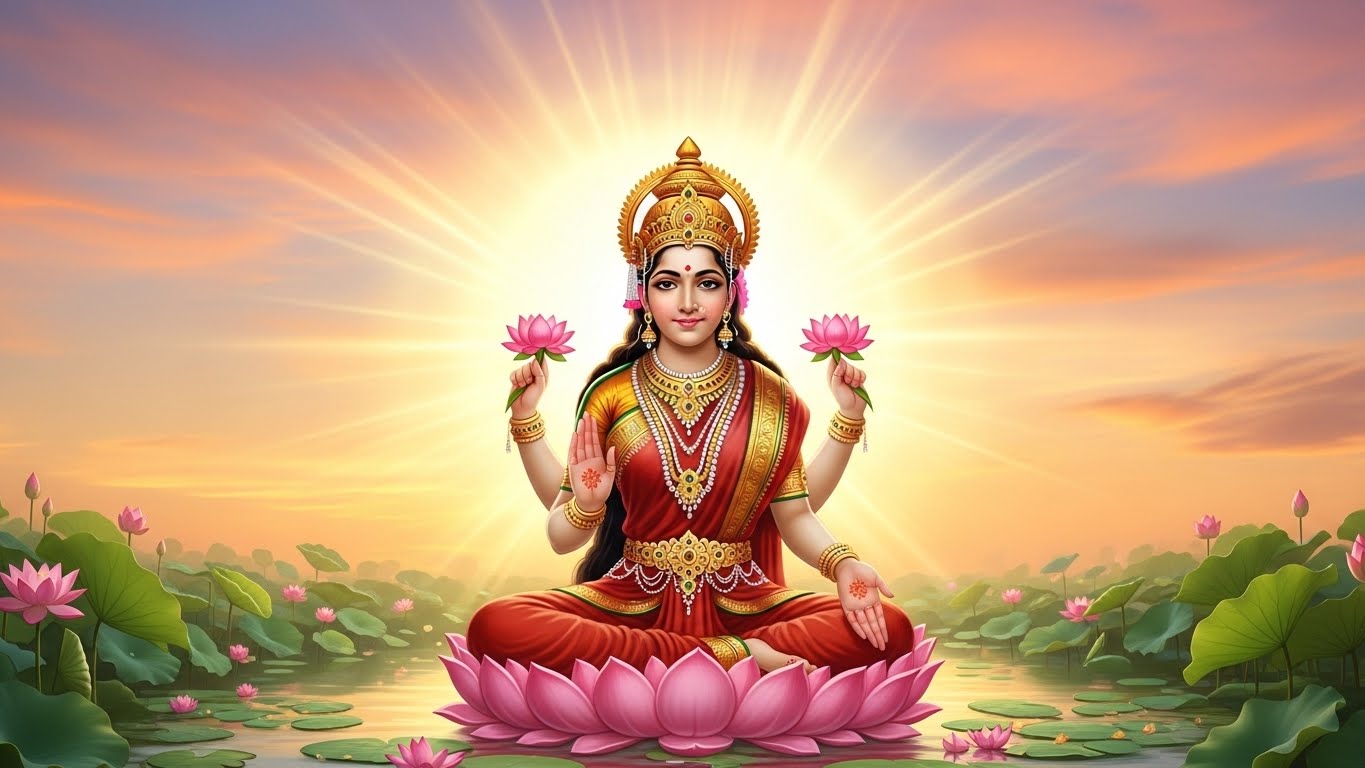
Lakshmi’s Four HandsIn Hindu iconography’s rich symbolic vocabulary where every gesture, object, and ornament carries layered philosophical meanings, Goddess Lakshmi’s four hands represent one of the most visually striking and conceptually profound depictions—each arm holding sacred objects or forming ritual hand gestures (mudras) that together communicate her comprehensive role as bestower of both material prosperity and spiritual abundance, reminding devotees that genuine wealth encompasses not just financial resources but ethical righteousness (dharma), material achievement (artha), fulfilled desires (kama), and ultimate liberation (moksha).
Unlike her two-handed form as Vishnu’s consort where she holds only lotus buds symbolizing spiritual purity, when worshipped independently as the supreme goddess of prosperity, Lakshmi manifests with four arms demonstrating her multidimensional capacity to simultaneously grant protection, blessings, knowledge, and abundance. Her upper two hands typically hold red or pink lotus flowers (padma) representing purity, spiritual enlightenment, fertility, and the capacity to remain unstained by worldly corruption despite growing in muddy waters—just as the lotus rises transcendently above murky depths, true prosperity elevates consciousness above base materialism into refined spiritual awareness.
Her lower right hand forms abhaya mudra (gesture of fearlessness)—palm facing outward with fingers pointing upward—assuring devotees “do not fear, I shall protect you” from material poverty, spiritual ignorance, karmic obstacles, and existential anxieties that prevent human flourishing. Her lower left hand displays varada mudra (gesture of boon-giving)—palm facing outward with fingers pointing downward—from which golden coins cascade in an endless stream, symbolizing the continuous flow of divine grace, material resources, opportunities, and blessings showering upon sincere devotees who approach the goddess with pure intentions and ethical conduct.
This specific arrangement of objects and gestures is not arbitrary but represents the complete spiritual-material balance necessary for human fulfillment—Lakshmi’s iconography teaches that prosperity without protection leads to loss, wealth without wisdom creates corruption, material abundance without spiritual development produces suffering, and financial success unaccompanied by ethical grounding ultimately destroys rather than fulfills.
Her golden complexion, red or pink sari with gold embroidery, abundant jewelry, and seated or standing position on a red lotus throne flanked by elephants pouring sacred water (in the Gaja Lakshmi form) further reinforce her identity as the embodiment of shri (auspiciousness), sampada (wealth), and sowbhagya (good fortune)—qualities devotees invoke especially during Diwali when millions of households clean and decorate homes, light oil lamps, and perform Lakshmi Puja hoping the goddess will enter and permanently reside, bringing year-round prosperity to families who maintain cleanliness, ethical conduct, and generous sharing of resources with those less fortunate.
Understanding what Lakshmi’s four hands hold and why reveals fundamental Hindu values about integrated prosperity encompassing body-mind-spirit, the relationship between divine grace and human effort, the principle that wealth serves dharmic purposes rather than selfish accumulation, and the teaching that material and spiritual aspirations need not conflict but can synergistically elevate human existence when properly balanced through devotion, ethics, and wisdom.
This comprehensive exploration examines each of Lakshmi’s four hands in detail, the philosophical significance of her hand gestures, the symbolism of gold coins and lotus flowers, her eight primary forms (Ashta Lakshmi), Diwali worship practices, and contemporary lessons for prosperity consciousness.
The Four Hands: Representing Life’s Four Goals
Dharma (Righteousness)
The first arm represents dharma—ethical living, moral duty, righteous conduct, and cosmic law. This teaches that genuine prosperity begins with and depends upon ethical foundations. Wealth obtained through adharmic means (unethical practices) ultimately leads to suffering, loss, and karmic consequences.
Dharma encompasses:
- Moral conduct: Living according to truth, non-violence, honesty, and compassion
- Social duty: Fulfilling responsibilities toward family, community, and society
- Cosmic law: Aligning individual actions with universal principles maintaining cosmic order
- Ethical business: Earning wealth through fair trade, honest dealings, and just practices
Artha (Material Prosperity)
The second arm represents artha—material wealth, financial resources, economic success, and worldly achievement. Lakshmi acknowledges that material prosperity is a legitimate human goal, not something to be renounced or despised, but rather pursued ethically and used responsibly.
Artha encompasses:
- Financial wealth: Money, property, assets, and economic resources
- Career success: Professional achievement, business prosperity, and vocational fulfillment
- Material security: Physical comfort, healthcare, housing, and basic necessities
- Entrepreneurial success: Innovations, enterprises, and economic contributions to society
Kama (Fulfilled Desires)
The third arm represents kama—legitimate desires, pleasures, emotional fulfillment, aesthetic enjoyment, and relational satisfaction. This recognizes that human happiness includes sensory pleasure, artistic beauty, romantic love, and emotional wellbeing when pursued within dharmic boundaries.
Kama encompasses:
- Aesthetic appreciation: Enjoyment of music, art, literature, and natural beauty
- Relational fulfillment: Love, marriage, family bonds, and friendship
- Sensory pleasures: Food, comfort, leisure, and appropriate enjoyment
- Emotional satisfaction: Joy, contentment, celebration, and happiness
Moksha (Spiritual Liberation)
The fourth arm represents moksha—spiritual liberation, enlightenment, transcendence, and ultimate freedom from cyclic existence. This indicates that even while bestowing material wealth, Lakshmi ultimately guides devotees toward spiritual realization as the highest goal transcending temporary worldly achievements.
Moksha encompasses:
- Self-realization: Understanding one’s true nature beyond body-mind identity
- Liberation from karma: Freedom from compulsive action-reaction cycles
- Transcendent wisdom: Direct knowledge of ultimate reality (Brahman)
- Eternal peace: Freedom from suffering, desire, and existential anxiety
The four arms together teach that genuine prosperity integrates all four pursuits—not pursuing wealth at dharma’s expense, not seeking moksha while neglecting legitimate worldly responsibilities, but harmoniously balancing material and spiritual, ethical and experiential, temporal and eternal aspirations.
Upper Right Hand: The First Lotus
In Lakshmi’s upper right hand blooms a red or pink lotus flower (padma), one of Hinduism’s most sacred and multi-layered symbols.
Lotus Symbolism in Hindu Thought
The lotus carries profound meanings central to spiritual philosophy:
Purity Amid Impurity: The lotus grows in muddy, murky water yet remains completely unstained—its petals repel water and dirt, symbolizing how spiritual seekers can live in the corrupt material world yet maintain inner purity, ethical conduct, and consciousness untouched by worldly pollution.
Spiritual Enlightenment: The lotus bud represents potential consciousness; the blooming lotus symbolizes awakened enlightenment—the flowering of spiritual understanding through disciplined practice, divine grace, and wisdom cultivation.
Transcendent Beauty: The lotus represents beauty emerging from ugliness, order from chaos, perfection from imperfection—teaching that divinity can manifest anywhere, that circumstances don’t determine spiritual potential, and that transformation remains always possible.
Detachment: Though rooted in mud (material existence) and floating on water (emotional realm), the lotus blooms toward sunlight (spiritual consciousness) without attachment to lower realms—representing engaged detachment, living in the world without being of the world.
Lakshmi’s Lotus: Prosperity with Purity
When Lakshmi holds the lotus, she teaches that genuine wealth must be pursued with pure intentions and used with ethical wisdom. The lotus reminds devotees that:
- Material success should not corrupt inner purity
- Prosperity serves higher purposes beyond selfish accumulation
- Wealth without wisdom becomes poisonous rather than beneficial
- True abundance includes spiritual development alongside financial growth
The red or pink color specifically symbolizes fertility, abundance, life force (prana), and the dynamic creative energy through which prosperity manifests in material forms.
Upper Left Hand: The Second Lotus
Lakshmi’s upper left hand holds a second lotus flower, creating symmetry and doubling the lotus symbolism.
Dual Lotus Significance
Having two lotuses emphasizes multiple interconnected meanings:
Knowledge and Wisdom: The paired lotuses represent both intellectual knowledge (jnana) and practical wisdom (vijnana)—understanding prosperity requires both book learning and lived experience, theoretical understanding and applied skill.
Material and Spiritual: One lotus represents material abundance; the other represents spiritual wealth—teaching that genuine fulfillment requires both dimensions rather than choosing one at the other’s expense.
Self-Realization: Both lotuses together symbolize complete self-knowledge and spiritual liberation (moksha)—the ultimate wealth transcending all material possessions.
Balance and Harmony: The symmetrical dual lotuses represent balanced prosperity—not lopsided focus on career while neglecting family, or material success without ethical grounding, but harmonious integration of all life dimensions.
Righteous Living Symbolism
The two upper hands holding lotuses also signify maintaining righteousness (dharma) even in unjust environments—just as lotuses remain pure in muddy waters, ethical individuals maintain moral integrity despite corrupt surroundings, competitive pressures, or cultural degradation.
This teaches that true prosperity comes to those who refuse ethical compromise regardless of external circumstances—short-term losses from ethical conduct ultimately yield long-term gains through divine grace and karmic rewards.
Lower Right Hand: Abhaya Mudra (Fearlessness)
Abhaya Mudra Meaning
This ancient gesture appears across Hindu and Buddhist iconography, communicating multiple assurances:
“Do Not Fear”: The primary message is divine protection from all forms of fear—fear of poverty, fear of failure, fear of loss, fear of enemies, fear of death, and existential anxieties preventing human flourishing.
Protection and Security: Abhaya mudra promises divine safeguarding of devotees from material hardships, spiritual obstacles, karmic entanglements, and malevolent forces threatening wellbeing.
Inner Peace: Beyond external protection, the gesture bestows inner peace, psychological stability, and emotional confidence enabling devotees to face life’s challenges with courage rather than anxiety.
Removal of Obstacles: Lakshmi’s abhaya mudra specifically assures removal of financial obstacles, career barriers, business difficulties, and economic hardships blocking prosperity manifestation.
Psychological and Spiritual Impact
The fearlessness gesture addresses the psychological dimension of prosperity—many people remain poor not due to lack of resources but due to fear-based thinking: fear of risk, fear of failure, fear of inadequacy, or fear of success itself.
Lakshmi’s abhaya mudra teaches that:
- Divine grace eliminates legitimate fears preventing prosperity pursuit
- Courage and confidence are prerequisites for material success
- Faith in divine protection enables risk-taking necessary for achievement
- Inner security matters more than external circumstances
This hand gesture transforms Lakshmi from a mere wealth-giver into a comprehensive wellbeing goddess addressing psychological, emotional, and spiritual dimensions alongside material needs.
Lower Left Hand: Varada Mudra and Gold Coins
Lakshmi’s lower left hand displays varada mudra—palm facing outward with fingers pointing downward, from which golden coins cascade in an endless stream.
Varada Mudra: The Boon-Granting Gesture
This mudra appears frequently in depictions of Vishnu, Lakshmi, and Ganesha, symbolizing:
Divine Generosity: Varada mudra represents the deity’s willingness to grant boons and fulfill devotees’ legitimate desires—demonstrating that divinity actively responds to sincere prayers and ethical requests.
Granting Wishes: The gesture specifically communicates fulfillment of wishes, bestowal of desired outcomes, and manifestation of prayers when aligned with dharmic principles and offered with pure intention.
Compassionate Response: Varada mudra shows divine compassion actively engaging with human needs rather than remaining transcendently detached—Lakshmi cares about devotees’ material wellbeing and actively intervenes to help.
Charitable Spirit: The downward-facing palm symbolizes giving, sharing, charity, and generous distribution of resources—teaching devotees to emulate divine generosity by sharing their prosperity rather than hoarding selfishly.
The Cascading Gold Coins
From Lakshmi’s varada mudra hand, golden coins flow in an endless waterfall, creating one of her most iconic visual elements.
Gold Coin Symbolism
The flowing gold represents multiple interconnected meanings:
Material Abundance: Most obviously, the coins symbolize financial wealth, monetary prosperity, and material resources flowing continuously to devoted worshippers who maintain ethical conduct and generous hearts.
Endless Flow: The cascading nature—never depleting, constantly flowing—indicates that divine grace is inexhaustible, not a limited resource requiring competition but an infinite fountain benefiting all who approach with sincerity.
Generosity Teaching: The imagery teaches that wealth should flow through us rather than accumulate stagnantly—we receive abundantly when we give generously, creating a virtuous cycle of prosperity circulation benefiting entire communities.
Responsible Use: The coins also carry a teaching about responsible wealth management and ethical use of resources—financial success should accompany charity, gratitude, and ethical conduct, not arrogance, greed, or exploitation.
Spiritual Wealth: Beyond literal coins, the gold represents spiritual treasures—wisdom, compassion, divine love, and inner peace—reminding devotees that ultimate prosperity transcends material possessions.
Gold as Sacred Metal
Gold itself carries symbolic weight in Hindu tradition:
- Incorruptibility: Gold doesn’t rust or tarnish, representing eternal spiritual truths and incorruptible dharmic principles
- Solar symbolism: Gold’s color connects it to the sun, representing divine illumination, consciousness, and life-giving energy
- Purity: Refined gold represents purified consciousness free from mental impurities and karmic residue
- Auspiciousness: Gold is considered inherently auspicious (shubha) in Hindu culture, used for sacred rituals, temple decorations, and divine offerings
Additional Iconographic Elements
Beyond the four hands, Lakshmi’s complete iconography includes other significant elements.
The Red Lotus Throne
Lakshmi sits or stands on a fully bloomed red lotus (padmasana), symbolizing:
- Supreme spiritual attainment and enlightenment
- Fertility, abundance, and life-giving creative energy
- Her transcendent nature above worldly entanglements
- The foundation of prosperity in spiritual realization
The Golden Complexion
Her golden or yellow-hued skin represents:
- Divine radiance and luminous consciousness
- Wealth, prosperity, and abundance manifestation
- Solar energy, vitality, and life force
- Auspiciousness and spiritual illumination
The Red or Pink Sari with Gold Embroidery
Her distinctive red/pink attire symbolizes:
- Activity, dynamism, and engaged worldly participation
- Fertility, creative energy, and life-affirming power
- The gold embroidery represents wealth’s golden touch
- Royal dignity and divine majesty
The Gaja Lakshmi Form: Elephants
In the Gaja Lakshmi manifestation, two elephants flank her, pouring water from sacred pots:
Royal Authority: Elephants historically symbolize kingship, sovereignty, and political power in Indian culture—connecting prosperity with righteous governance.
Rainfall and Fertility: Elephants are traditionally associated with clouds and rain, essential for agricultural prosperity—symbolizing natural abundance.
Animal Wealth: Gaja Lakshmi specifically blesses with animal wealth and agricultural prosperity, representing wealth’s diverse forms beyond just money.
Sacred Ablution: The elephants performing abhisheka (sacred bathing) represents purification, blessing, and consecration of prosperity itself.
The Owl Vahana
Lakshmi’s vehicle (vahana) is the owl (uluka), carrying profound symbolic meaning:
Vigilance and Intelligence: The owl symbolizes watchfulness, intelligence, and wisdom—teaching that prosperity requires alertness, strategic thinking, and informed decision-making.
Seeing in Darkness: The owl’s ability to see in darkness represents spiritual insight penetrating ignorance—warning devotees not to be spiritually blinded by wealth’s glamour.
Patience and Discipline: The owl’s quiet, watchful nature symbolizes the patience and discipline necessary for sustainable prosperity rather than get-rich-quick schemes.
Warning Against Arrogance: The owl warns devotees not to become arrogant, greedy, or spiritually blind when blessed with wealth—maintaining humility and using prosperity for dharmic purposes.
Interestingly, when wealth is misused for adharmic activities, the owl becomes associated with Alakshmi (goddess of misfortune), representing the darkness and disgrace that follows unethical prosperity.
Ashta Lakshmi: Eight Forms of Prosperity
Beyond her standard four-armed form, Lakshmi manifests in eight specific aspects (Ashta Lakshmi), each representing different dimensions of wealth and prosperity.
The Eight Forms
1. Adi Lakshmi (Primordial Lakshmi): The original form seated on pink lotus, holding lotus, flag, and displaying abhaya and varada mudras—represents spiritual wealth and divine origin.
2. Dhana Lakshmi (Money Lakshmi): Bestows material wealth, financial prosperity, and monetary abundance directly—the most commonly worshipped form for business success.
3. Dhanya Lakshmi (Grain Lakshmi): Provides agricultural wealth, food abundance, and nourishment—especially important in agrarian communities and for food security.
4. Gaja Lakshmi (Elephant Lakshmi): Grants luxury, royalty, and animal wealth—flanked by elephants performing sacred ablution, representing sovereign prosperity.
5. Santana Lakshmi (Progeny Lakshmi): Blesses with children, family prosperity, and generational continuity—representing wealth found in descendants and family lineage.
6. Veera/Dhairya Lakshmi (Courage Lakshmi): Provides bravery, strength, and valor to overcome obstacles on the path of prosperity—recognizing that courage is a form of wealth.
7. Vijaya/Jaya Lakshmi (Victory Lakshmi): Grants victory, success, and triumph in endeavors—ensuring devotees succeed in righteous pursuits.
8. Vidya Lakshmi (Knowledge Lakshmi): Bestows educational success, intellectual brilliance, and wisdom—representing knowledge as the highest wealth.
Together, the Ashta Lakshmi demonstrate that prosperity encompasses far more than money—including courage, wisdom, family, food security, victory, and spiritual realization as equally important forms of wealth.
Diwali: The Festival of Lakshmi
Lakshmi worship reaches its annual peak during Diwali (Deepavali), the five-day Festival of Lights, especially on the third day (Lakshmi Puja night).
Diwali Significance
The festival celebrates multiple mythological events, but centrally focuses on inviting Goddess Lakshmi into homes through cleanliness, illumination, and devotion.
Lighting Diyas: Millions of clay oil lamps (diyas) are lit throughout India, creating rows of lights (deepavali means “row of lamps”) that symbolically guide Lakshmi to devotees’ homes while dispelling darkness, ignorance, and negativity.
Home Cleaning: Families thoroughly clean and decorate homes before Diwali, believing Lakshmi enters only clean, organized, beautiful spaces—teaching that prosperity requires preparation, discipline, and aesthetic appreciation.
Lakshmi Puja: Devotees establish Lakshmi idols, offer flowers, incense, sweets, and fruits, and chant mantras seeking her blessings for the coming year.
Ganesha-Lakshmi Worship: Diwali uniquely pairs Ganesha (remover of obstacles) with Lakshmi—recognizing that prosperity requires both obstacle removal and divine grace.
Business Significance: Merchants close old account books and open new ones on Diwali, making it the financial new year—offering prayers for business success in the coming cycle.
Diwali Spiritual Lessons
Beyond material prosperity seeking, Diwali teaches:
- Light (knowledge) triumphs over darkness (ignorance)
- Good conquers evil through righteousness
- Prosperity flows to prepared, disciplined individuals
- Sharing wealth multiplies blessings through charitable giving
Contemporary Prosperity Consciousness
Lakshmi’s iconography offers timeless lessons for modern wealth creation and spiritual development.
Integrated Prosperity
Her four hands teach pursuing holistic prosperity encompassing dharma-artha-kama-moksha simultaneously—not sacrificing ethics for profit, not neglecting material needs while pursuing spirituality, but integrated balanced development.
Fearless Action with Divine Protection
The abhaya mudra encourages taking courageous risks with faith in divine protection—overcoming fear-based thinking that limits potential and prevents necessary action toward prosperity.
Generous Flow
The cascading coins teach wealth circulation rather than hoarding—prosperity multiplies through giving, sharing, and generous community contribution.
Purity in Prosperity
The lotus flowers remind that material success should not corrupt inner purity—maintaining ethical standards, spiritual practices, and human compassion despite financial achievement.
Wisdom with Wealth
The owl vahana warns against spiritual blindness accompanying material success—requiring vigilance, discipline, and ongoing connection to spiritual values preventing arrogance, greed, and ethical compromise.
Frequently Asked Questions
What do Lakshmi’s four hands hold?
Goddess Lakshmi’s four hands hold sacred objects with profound symbolism: 1) Upper right hand—red or pink lotus flower (padma) representing purity, spiritual enlightenment, and the capacity to remain unstained by worldly corruption; 2) Upper left hand—second lotus flower representing knowledge, wisdom, self-realization, and balanced prosperity; 3) Lower right hand—forms abhaya mudra (gesture of fearlessness) with palm facing outward and fingers pointing upward, assuring protection from fears, obstacles, and anxieties;
4) Lower left hand—displays varada mudra (boon-granting gesture) with palm facing outward and fingers pointing downward, from which golden coins cascade continuously representing endless flow of divine grace, material resources, and prosperity. Together, these four hands represent the four life goals: dharma (righteousness), artha (wealth), kama (desires), and moksha (liberation).
What is the significance of Lakshmi’s four arms?
Lakshmi’s four arms represent the purushartha—the four legitimate goals of human life in Hindu philosophy. The first arm symbolizes dharma (righteousness and ethical living); the second represents artha (material prosperity and wealth); the third signifies kama (fulfilled desires and pleasures); the fourth embodies moksha (spiritual liberation and enlightenment). This teaches that genuine prosperity integrates all four pursuits harmoniously—not pursuing wealth at dharma’s expense or seeking moksha while neglecting legitimate worldly responsibilities.
The four arms demonstrate Lakshmi’s multidimensional capacity to simultaneously grant protection, blessings, knowledge, and abundance. When depicted with only two hands as Vishnu’s consort, she holds lotus buds, but when worshipped independently as the supreme goddess of prosperity, she manifests four arms showing her comprehensive role as bestower of both material and spiritual abundance.
What does abhaya mudra mean in Lakshmi’s hand?
Abhaya mudra is the gesture of fearlessness formed by Lakshmi’s lower right hand—palm facing outward with fingers pointing upward. The mudra communicates “do not fear, I shall protect you” and represents divine protection from all forms of fear including fear of poverty, failure, loss, enemies, death, and existential anxieties preventing human flourishing. Abhaya mudra promises safeguarding from material hardships, spiritual obstacles, karmic entanglements, and malevolent forces threatening wellbeing.
Beyond external protection, it bestows inner peace, psychological stability, and emotional confidence enabling devotees to face life’s challenges with courage. Specifically regarding prosperity, it assures removal of financial obstacles, career barriers, business difficulties, and economic hardships blocking abundance manifestation. The gesture addresses the psychological dimension of prosperity—many remain poor due to fear-based thinking rather than lack of resources.
Why do gold coins fall from Lakshmi’s hand?
Golden coins cascade from Lakshmi’s lower left hand displaying varada mudra (boon-granting gesture), symbolizing multiple interconnected meanings. The flowing coins represent: 1) Material abundance—financial wealth, monetary prosperity, and material resources flowing continuously to devoted worshippers maintaining ethical conduct; 2) Endless flow—divine grace is inexhaustible, not a limited resource but an infinite fountain benefiting all who approach sincerely; 3) Generosity teaching—wealth should flow through us rather than accumulate stagnantly, creating a virtuous cycle of prosperity circulation;
4) Responsible use—financial success should accompany charity, gratitude, and ethical conduct rather than arrogance, greed, or exploitation; 5) Spiritual wealth—beyond literal coins, the gold represents spiritual treasures including wisdom, compassion, divine love, and inner peace. The cascading imagery teaches that prosperity multiplies through giving and sharing.
What is the symbolism of lotus flowers in Lakshmi’s hands?
The two lotus flowers held in Lakshmi’s upper hands carry profound multi-layered symbolism. The lotus represents: 1) Purity amid impurity—growing in muddy water yet remaining unstained, symbolizing how spiritual seekers maintain inner purity despite worldly corruption; 2) Spiritual enlightenment—the blooming lotus symbolizes awakened consciousness and flowering of spiritual understanding; 3) Transcendent beauty—beauty emerging from ugliness, order from chaos, showing divine potential can manifest anywhere;
4) Detachment—though rooted in mud (material existence) and floating on water (emotions), the lotus blooms toward sunlight (spiritual consciousness) without attachment to lower realms. When Lakshmi holds lotus flowers, she teaches genuine wealth must be pursued with pure intentions and used with ethical wisdom. The paired lotuses represent both material and spiritual prosperity, intellectual knowledge and practical wisdom, requiring balanced integration for genuine fulfillment.
What are the Ashta Lakshmi forms?
Ashta Lakshmi refers to the eight specific manifestations of Goddess Lakshmi, each representing different dimensions of wealth and prosperity: 1) Adi Lakshmi (Primordial)—spiritual wealth and divine origin; 2) Dhana Lakshmi—material wealth and financial prosperity; 3) Dhanya Lakshmi—agricultural wealth, food abundance, and nourishment; 4) Gaja Lakshmi—luxury, royalty, and animal wealth; 5) Santana Lakshmi—children, family prosperity, and generational continuity; 6) Veera/Dhairya Lakshmi—bravery, strength, and courage to overcome obstacles; 7) Vijaya/Jaya Lakshmi—victory, success, and triumph in endeavors; 8) Vidya Lakshmi—educational success, intellectual brilliance, and wisdom.
Together, the Ashta Lakshmi demonstrate that prosperity encompasses far more than money, including courage, wisdom, family, food security, victory, and spiritual realization as equally important wealth forms. Devotees worship specific forms depending on particular needs and aspirations.
Why is Lakshmi worshipped during Diwali?
Lakshmi is the central deity of Diwali (Festival of Lights) because the festival specifically celebrates inviting prosperity into homes through cleanliness, illumination, and devotion. Millions of clay oil lamps (diyas) are lit creating rows of lights that symbolically guide Lakshmi to devotees’ homes while dispelling darkness, ignorance, and negativity. Families thoroughly clean and decorate homes before Diwali, believing Lakshmi enters only clean, organized, beautiful spaces—teaching prosperity requires preparation and discipline. On Lakshmi Puja night (third day of Diwali), devotees establish Lakshmi idols, offer flowers, incense, sweets, and fruits while chanting mantras seeking blessings for the coming year.
Diwali uniquely pairs Ganesha (remover of obstacles) with Lakshmi, recognizing prosperity requires both obstacle removal and divine grace. Merchants close old account books and open new ones on Diwali, making it the financial new year with prayers for business success.
What is the significance of Lakshmi’s owl vahana?
The owl (uluka) serves as Lakshmi’s vehicle (vahana) carrying profound symbolic meaning. The owl represents: 1) Vigilance and intelligence—watchfulness, strategic thinking, and informed decision-making necessary for prosperity; 2) Seeing in darkness—spiritual insight penetrating ignorance, warning devotees not to be spiritually blinded by wealth’s glamour; 3) Patience and discipline—the quiet, watchful nature symbolizing sustainable prosperity rather than get-rich-quick schemes; 4) Warning against arrogance—cautioning against becoming arrogant, greedy, or spiritually blind when blessed with wealth. The owl teaches using wealth wisely and remaining alert against ignorance and greed.
Its spiritual insight and detachment represent qualities helping maintain true prosperity and life balance. Interestingly, when wealth is misused for adharmic (unethical) activities, the owl becomes associated with Alakshmi (goddess of misfortune), representing darkness and disgrace following unethical prosperity.
About the Author
Priya Sharma – PhD in Vedic Studies and Ancient Indian History
Priya Sharma is a distinguished scholar specializing in ancient Indian history, Vedic traditions, and Hindu cultural practices. With over 15 years of research experience focused on decolonizing historical narratives, he has published extensively on Hindu goddess theology, iconographic symbolism, mudra significance, Puranic literature, festival traditions, prosperity consciousness, and the intersection of material wealth with spiritual development. His work bridges academic rigor with devotional accessibility, making complex symbolic concepts understandable to contemporary audiences seeking authentic knowledge about Hindu wisdom traditions and their transformative potential for integrated prosperity encompassing ethical conduct, material success, emotional fulfillment, and spiritual liberation.
